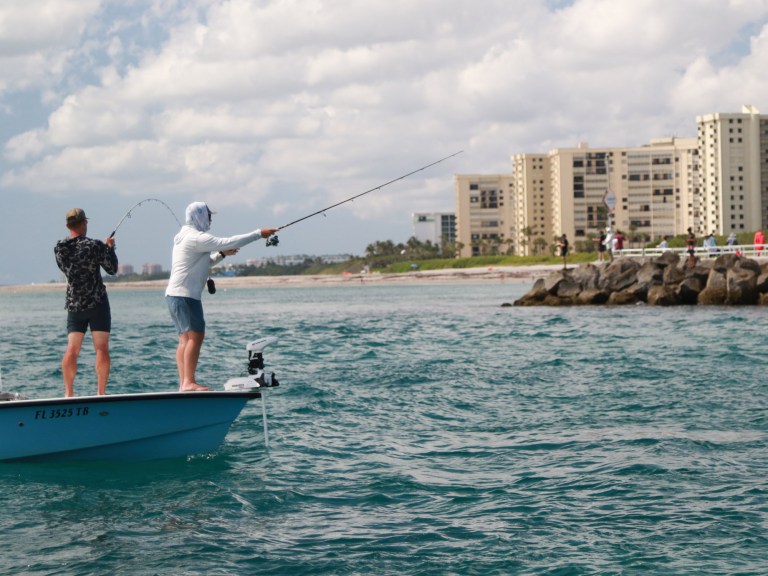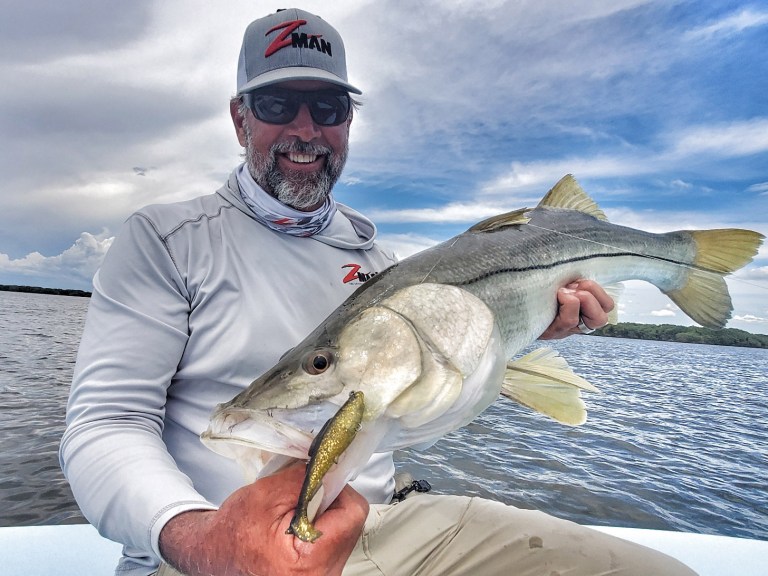
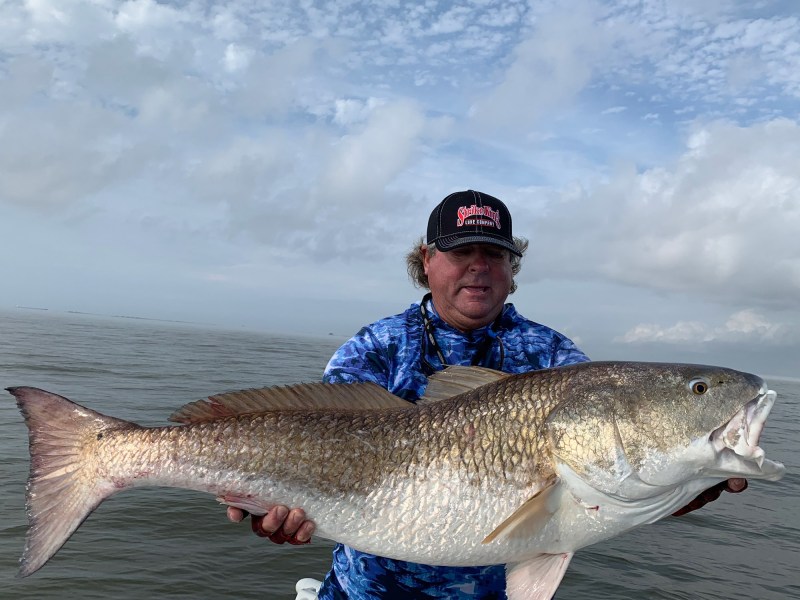
Mature oversized bull redfish earn the nickname “bull” for their hulking size, brute strength, and unapologetic aggression. Capt. Mike Frenette, of The Redfish Lodge of Louisiana in Venice, sees regular displays of the latter when using popping cork rigs.
Widely considered the most user-friendly, and fish-tempting option in many situations, a popping-cork rig starts with a brightly colored cork flanked by rattling beads mounted on a wire stem with line ties at both ends. Redfish anglers typically hang an 18- to 24-inch leader with a jig and paddletail or an artificial shrimp from the bottom swivel and chug or “pop” the cork to create surface commotion and draw fish to the bait below.
The only problem is that bull redfish tend to run in packs, if not herds, and they have no problem trying to steal whatever it was their buddy caught to eat. With a hooked bull ripping the cork through the water, the illusion of a fleeing baitfish often temps other fish to bite the float and typically break off the entire rig.
“If you fish popping corks enough, you’re gonna get corked,” Frenette said. “I probably get corked at least once a day. I don’t know how many corks I go through in a year.”
Note: Experienced redfish anglers often rig a stinger hook to their popping cork rig, in hopes of snaring that second fish. This plan might work with a couple of juvenile slot-sized fish, but the thought of doubling up on bulls makes Frenette shake his head.
“No sir, I do not want to have to fight two bull reds at the same time,” he chuckled.
What is a Bull Redfish?
The battle is the timeless allure of fishing for bull redfish—those mature, breeding-class fish that earn the nickname once they reach about 30 inches and carry the moniker well past the 30-pound mark. North Carolina lays claim to the IGFA All-Tackle record for the 94-pound, 2-ounce beast taken Nov. 7, 1984 by David Deuel, who fished a mullet chunk in the Avon surf.
Bulls roam the entire Gulf Coast, and much of the mid to lower Atlantic Coast, but it’s not a year-round deal — except for the magnificent Mississippi Delta. While most of the consistent bull redfish opportunities occur when these hefty adults leave their offshore homes and move closer to the bays and estuaries for their reproductive aggregations, Southeastern Louisiana boasts the closest thing to a 24/7/365 bull red fishery.
“We’re the only place that I know of where you can catch bull reds 12 months out of the year,” Frenette said. “Prime time is mid-August through November, but I can have knock-down-drag-out days in February, March, April and May.
“They start grouping up to spawn in mid-August and spawn through November. Many of the other places are very seasonal for the giants, and that’s usually relevant to the spawning season.”
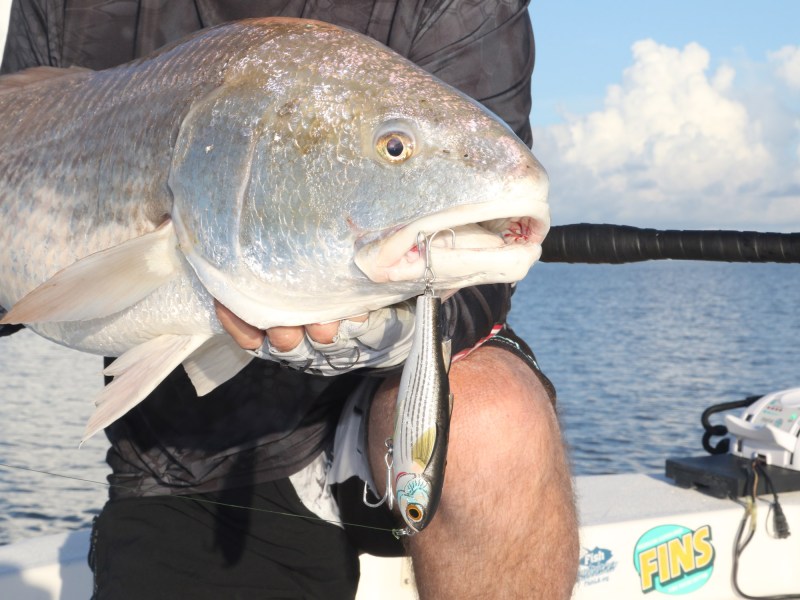
Frenette said bull reds won’t turn down cut mullet or a fresh blue crab, but the natural baits simply are not necessary when bull reds gather by the hundreds. His favorite bull redfish lures are lipless crankbaits, a Strike King Sexy Dawg or Strike King Mega Dawg topwater.
Big swimbaits like the Z-Man Mulletron, deep-diving crankbaits, 1/2-ounce weedless gold spoons and 1-ounce jigging spoons (for inlets and jetties) also get the big bites.
Here’s a sampling of areas that host seasonal influxes of big bull redfish.
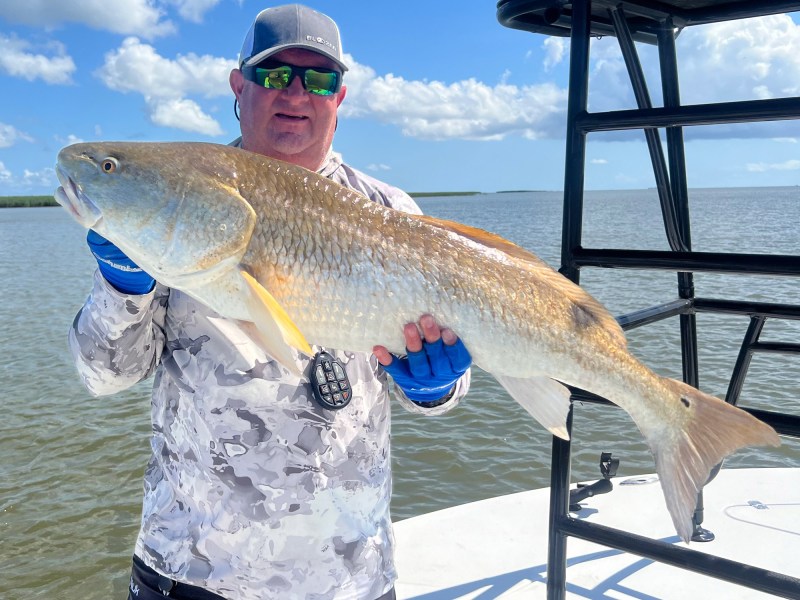
The Bulls of Matagorda Bay, Texas
Travis Land points to the Port O’Connor north jetties at the mouth of West Matagorda Bay as a top bull redfish location. With significant rock structure, this site benefits from proximity to the Matagorda Shipping channel, which provides the Gulf access.
“Several times during the summer, these large schools will surface and create a large feeding frenzy that’s very cool to see,” Land said. “Throw heavy jig heads and large paddletails while using down and side scan to locate the deep schools.”
Read Next: The Guide to Texas Redfish Fishing
Bull Reds at Mississippi Barrier Islands
Often overshadowed by the Louisiana aura, the Magnolia State’s barrier islands — Cat, Ship, Horn and Petit Bois — comprise ideal stopping points for bull reds coming and going during their spawning migration. Various points, shoals, bars and drop-offs offer prime feeding areas. Soaking cut mullet, pogies, or blue crab will produce, as will trolling spoons and sight casting big bucktails.
Dixey Bar, Alabama Redfish
While bull redfish often patrol the rigs in and around Mobile Bay, Dixey Bar is the real magnet. Running southwest between the western tip of Fort Morgan and the Sand Island Lighthouse, the bar sits east of the shipping channel and attracts bull reds that feed along its sharp drop offs.
Local pro Barnie White looks for outstanding bull red action from October through mid-December and recommends a two-pronged approach. First, he’ll hang a 4-inch Fish Bites Fight Club Butt Kicker under a Fairhope Rattle cork. He’ll complement the suspended presentation with a Butt Kicker on a 3/8-ounce jig head.
“I use the 3/8-ounce head for extra casting distance and because it sinks quickly,” he said.
For natural bait options, live jumbo shrimp, live croakers, and cut bait (mullet, blue crab) do the trick.
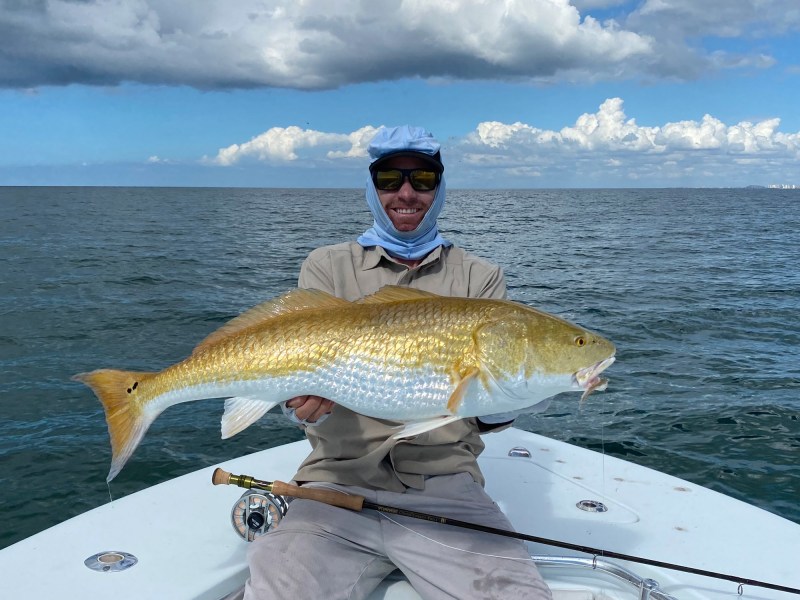
Redfish Fishing on the Florida Panhandle
In Apalachicola Bay, Capt. Krista Miller of Island Charters targets bull reds in West Pass between St. Vincent Island and Little St. George’s west end, at Sikes Cut—the manmade shipping channel separating St. George and Little St. George Island—and at East Cut, which runs between the east end of St. George and Dog Island. Miller rigs cut mullet or fresh dead jumbo shrimp (not frozen) on a Carolina rig and drifts them over high spots.
Read Next: Fishing Guide to Florida’s Forgotten Coast
West Coast of Florida Redfish
All along the state’s west coast, bull redfish gather in September and October around shallow reefs and rocks outside the major passes from the Cross Florida Barge Canal in Yankeetown, to the Egmont Channel entering Tampa Bay, to Captiva Pass (Sanibel). Capt. Cody Chivas said hurricanes in the western Gulf tend to push more bull reds toward the Tampa Bay Area.
Noting that he usually finds late summer through fall schools moving and eating, Chivas said distant frigate birds will give up the red masses. Topwaters and jigs with big paddletails are the common choices, but Chivas also puts fly fishing clients in position to throw EP Minnows, Clousers, and big streamer flies.
Mullet-Run Reds on Florida’s East Coast
The fall mullet run congregates hordes of predators, including massive bull redfish in the shallow surf and around inlets like Fort Pierce Inlet, Sebastian Inlet, or Port Canaveral. The action moves fast, so big swimbaits and topwaters are best.
Outside the mullet mania, soaking big baits in coastal rivers, around jetties or outer beach bars often scores bull bites. Notably, October 13, 2025 saw Capt. Don Dingman guide Emily Di Perna to a 20-pound redfish that set the IGFA Junior Women’s 10-kg (20-pound) Line Class World Record. Di Perna was fishing half a blue crab in Jacksonville’s St. Johns River.
Just north of Kennedy Space Center, resident schools of giant reds make their home in Titusville’s upper Indian River Lagoon and the connected Mosquito Lagoon. Minimal freshwater inflow and a significant distance to the nearest Atlantic inlet create a unique inshore spawning scenario where fish find salinity levels high enough to keep eggs buoyant.
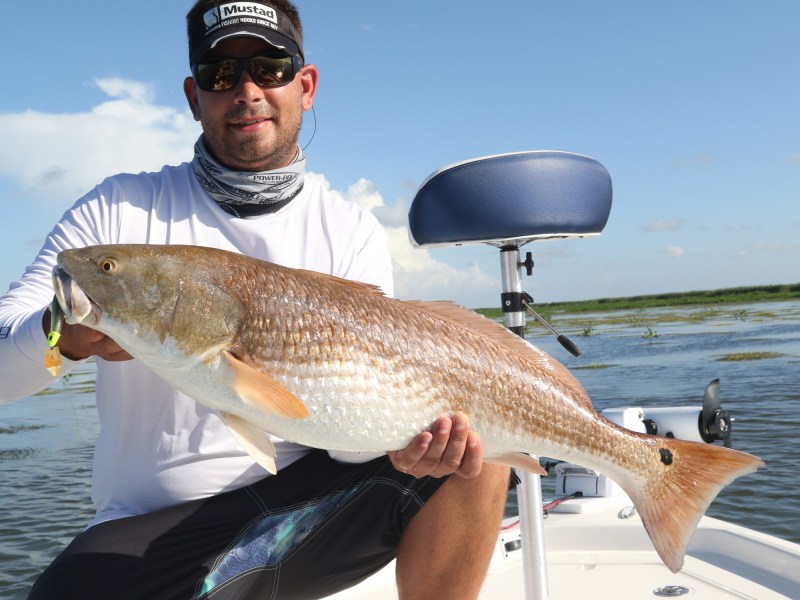
Bull Redfish off Georgia
With bull reds making use of the state’s many coastal portals, Capt. Greg Hildreth points to Sapelo Sound where he looks for schools roaming the bars and shoals just off the beach. Hildreth fishes live menhaden (pogies) or cut mullet on an Owen Lupton style rig (short leader to minimize deep hooking with an egg sinker flanked by red beads crimped in place.)
Spring and Summer Redfish in South Carolina
Mid-May is when Capt. Jamie Hough looks for the bull redfish to arrive. With the fish sticking around through the summer months, he suggests targeting deep rocks, jetties, bridges, and the shipping channel edges. Hough also catches bulls on bars with deep drop-offs and strong current exposure.
“You’re limited to live and dead baits,” Hough said. “Artificials are not as effective because there’s so much bait, and it’s very strenuous working heavy jigs in 35-plus feet. Also, it’s harder for the fish to see in deeper water.”
Hough prefers a big live or cut menhaden on a Carolina rig with a 6-ounce egg sinker and an 8/0 circle hook on a 2-foot 60-pound fluorocarbon leader. In heavy current and turbid conditions, he’ll link two circle hooks with 3 to 4 inches of monofilament.
At the jetties, Hough suggests hooking a menhaden through the nose with a big lead head jig and bouncing it on the rocks. You have to keep in contact with your bait or you’ll donate a lot of rigs.
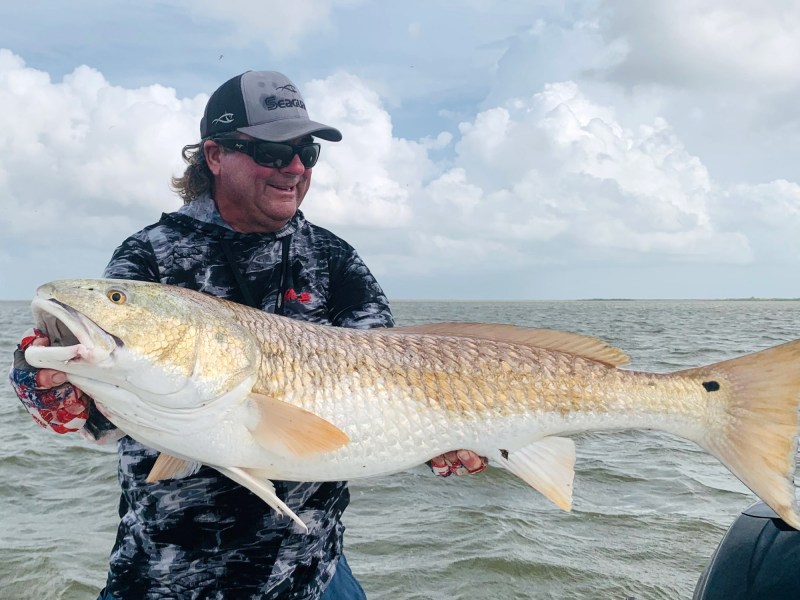
North Carolina’s Bull Reds in the Surf
The world-famous Outer Banks, particularly the Cape Hatteras area, is one of the most celebrated surf fishing theaters for the big reds that Tarheel State anglers call “old drum.” Bumper-mounted rod racks holding “Hatteras heavers” are common sights in towns like Avon, Buxton, Frisco, and Hatteras, but notwithstanding the well-founded OBX lore, Capt. Jerry Dilsaver points out a few popular options.
“The area of the Pamlico Sound that blends into the Pamlico and Neuse rivers may have become more of a hotspot for old drum than Cape Hatteras.” Dilsaver said. “There are some shoals off the mouths of both of these rivers, and the drum move miles up them from mid-summer into fall. This has been documented as a spawning area.
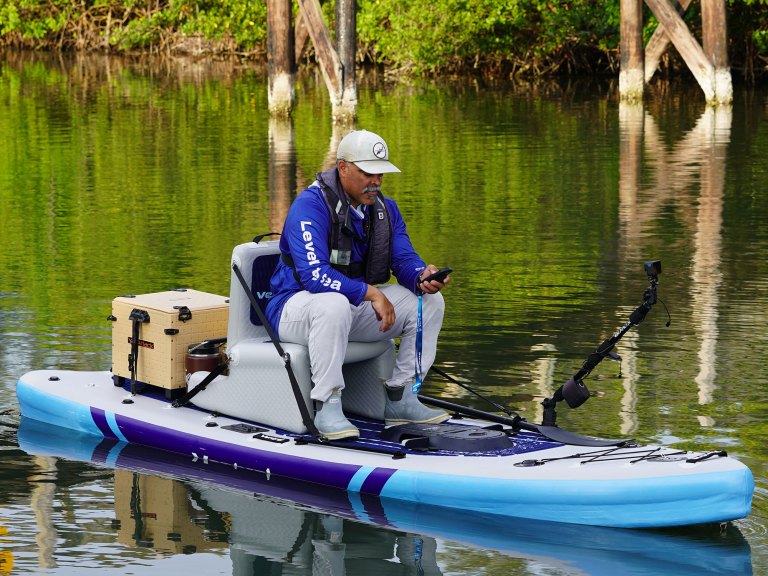
“Another area where old drum concentrate (primarily late August through the fall) is from Frying Pan Shoals at Cape Fear (Southport, N.C.) to Little River Inlet (Little River, S.C.). This fishery is in the ocean from the surf to the nearshore artificial reefs. Many kayak fishermen fish this area.”
Chunks of mullet or menhaden on an Owen Lupton rig are most productive, but Dilsaver said a live finger mullet or menhaden rigged on an 8/0 circle hook about 30 inches beneath a popping cork can make big things happen. As with anywhere bull reds roam, you better be ready for a serious fight, because these fish mean business.
“I like to fish both the Neuse River near Oriental and the nearshore ocean at Oak Island,” Dilsaver said. “The Neuse doesn’t have much for current, but you can usually find a bar or point where the wind or current is gathering bait.
“In the ocean off Oak Island, there are several wrecks close to shore, several artificial reefs only a mile or so offshore and sometimes you can find old drum following schools of pogies along the beach.”