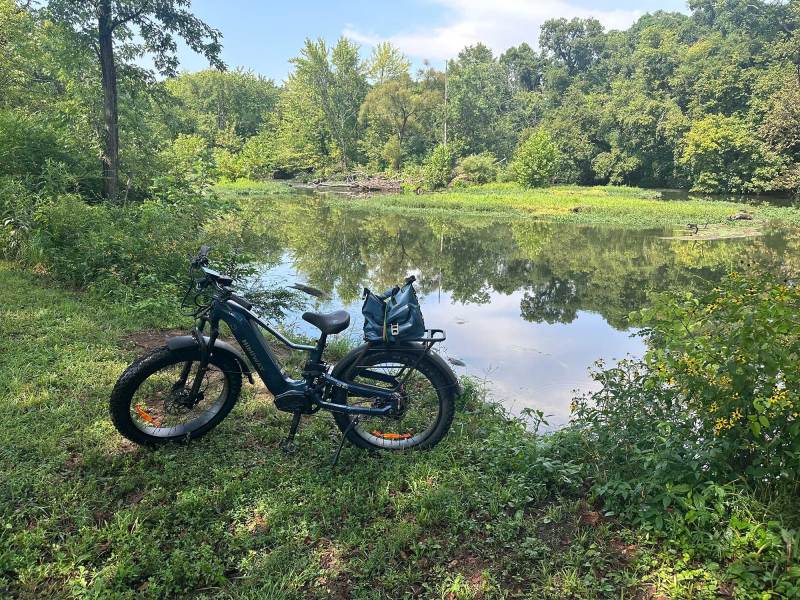
If you ask any bank angler, they will tell you that the best fishing usually lives behind a locked access gate. Inland drainage canals, spillways, and brackish culverts hold incredible, unpressured fish. The catch? Getting to them usually means hauling 30 pounds of gear down miles of overgrown, rutted towpaths under a blazing sun. By the time you reach the water, you are exhausted, drenched in sweat, and down half your energy before making a single cast.
I spent two weeks testing the Himiway D5 2.0 along remote ditch networks to see if a heavy-duty e-bike could realistically replace the dreaded foot-scout. After putting roughly 90 miles on the odometer across loose gravel, thick grass, and slick mud banks, here is how the bike actually performs when you trade pavement for canal levees.
Motor Torque & Real-World Trail Range
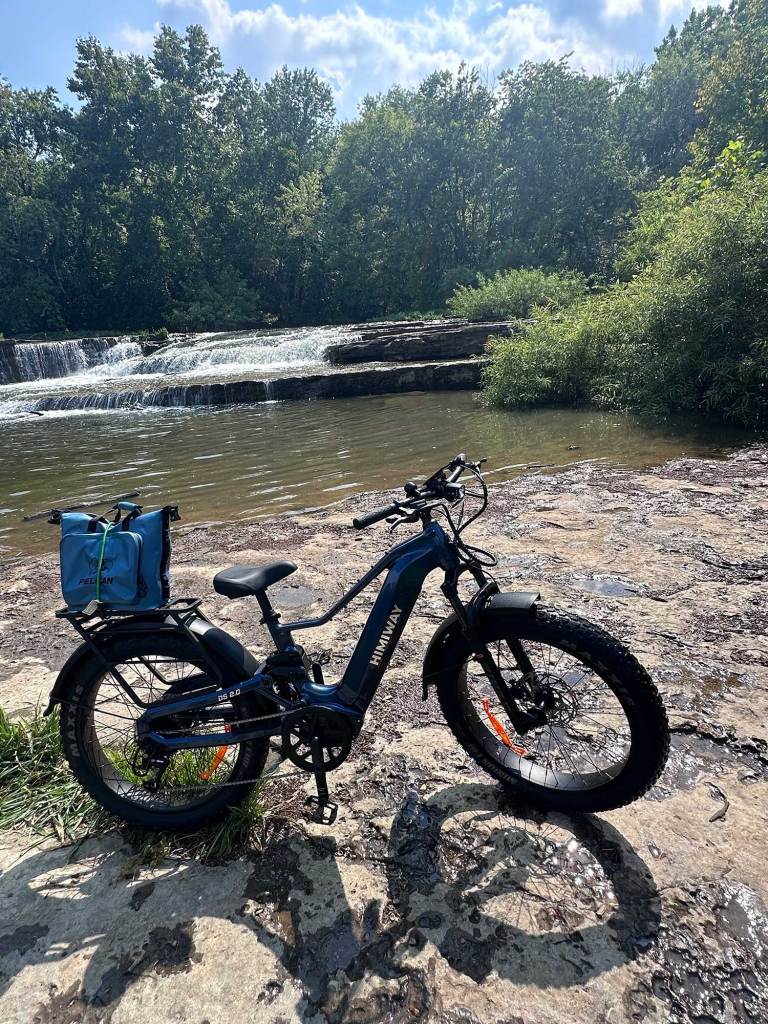
Navigating overgrown maintenance roads requires low-end muscle rather than top-end speed. The D5 2.0 is powered by a 750W geared hub motor that kicks in with immediate low-end torque. When hitting patches of soft sand or climbing steep levee inclines, the motor surges forward without bogging down or spinning out.
Range anxiety is always a concern when heading miles away from the truck. During testing with a full load of tackle, the 48V 15Ah LG/Samsung battery yielded realistic results:
- Throttle-Only Mode: I averaged right around 32 to 35 miles relying purely on the thumb throttle. This mode proved essential when creeping along narrow water edges or navigating tight culverts where pedaling might catch a crank arm on high grass or rocks.
- Pedal-Assist Mode: Switching between Assist Levels 2 and 3 yielded nearly 58 miles of range. The cadence sensor feeds power smoothly relative to pedal revolutions, making long-distance scouting trips along sprawling canal networks straightforward and efficient.
Hauling Capacity and Trail Dynamics
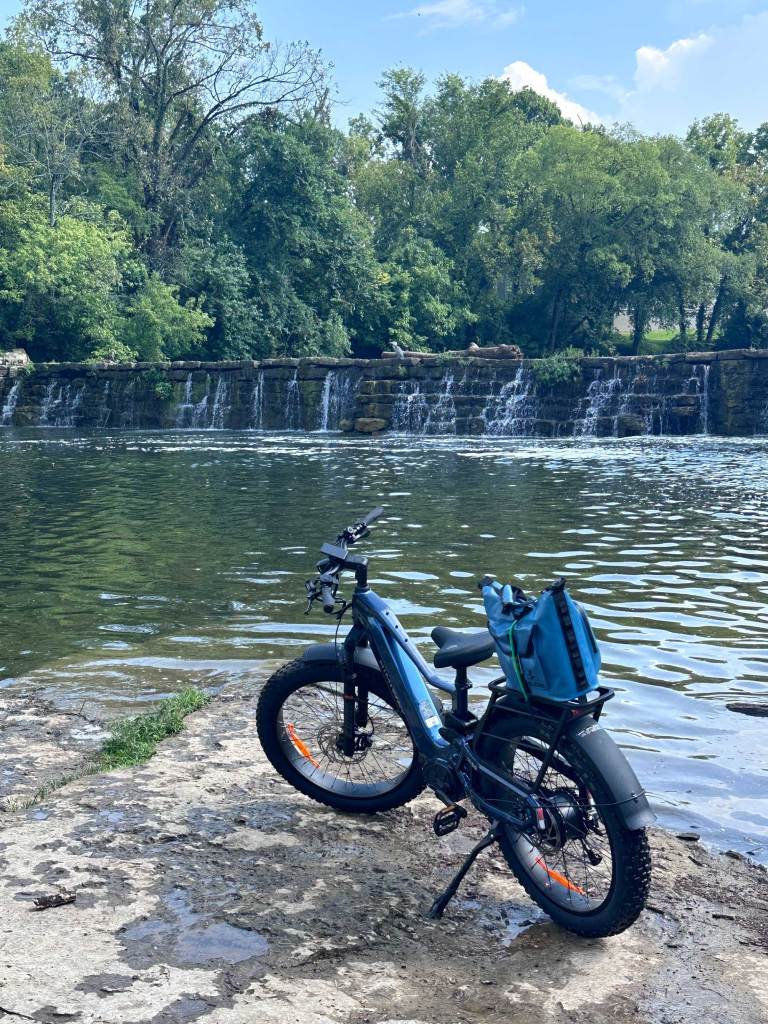
A legitimate fishing bike needs to function like a pack mule. Built around a reinforced 6061 aluminum frame, the D5 2.0 carries a total weight rating of 400 lbs. Thanks to the wide, rigid rear rack, securing a small cooler and a custom PVC rod holder along the frame took just a couple of bungee cords and about 30 seconds.
| 400 lbs. Payload Capacity | Easily handled a loaded cooler, tackle box, and secondary battery without frame flex. |
| 26″ x 4.0″ Kenda Fat Tires | Dropping tire pressure to ~12 PSI provided excellent flotation over slick mud and wet limestone. |
| Tektro Hydraulic Brakes | 180mm rotors offered sharp, reliable stopping power on steep 45-degree bank drop-offs. |
| Shimano 7-Speed Drivetrain | Essential for pedaling back to the vehicle if the battery runs low on steep canal inclines. |
| 48V Integrated Lighting | The front headlight provided ample illumination for pre-dawn setups along unlit water control gates. |
The Trade-Offs: What to Consider Before Buying
While the D5 2.0 excels at covering ground, it is not without compromises. Weighing in at over 70 lbs, lifting this bike over locked service gates or hoisting it into a tall truck bed solo requires real effort. Furthermore, while the 4-inch fat tires soak up bumps well, you will want to fine-tune your tire pressure depending on terrain—running high PSI on loose canal gravel will make the front end feel skittish.
The Bottom Line
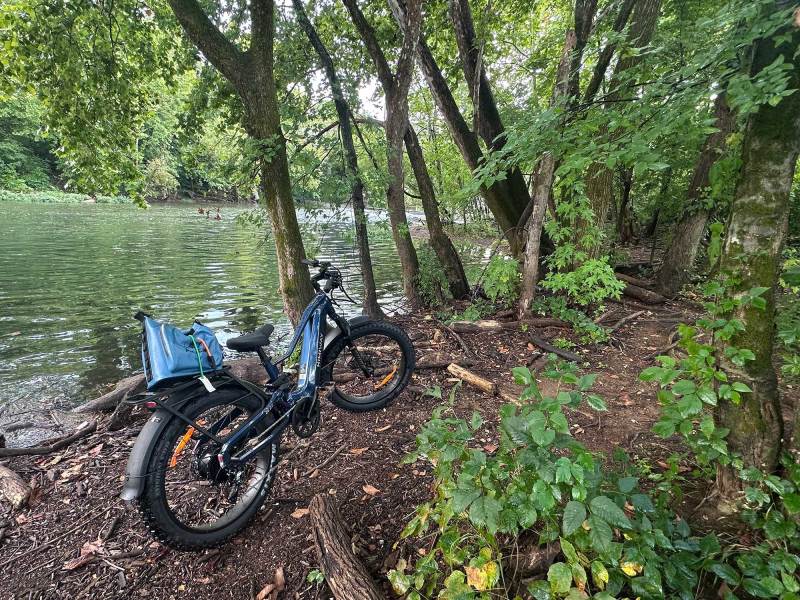
For anglers tired of limited parking and endless hiking, the Himiway D5 2.0 fundamentally changes how much water you can cover in a day. It delivers the payload capacity, traction, and range necessary to reach unpressured hot spots that boaters cannot access and foot anglers rarely reach.