Tides are the product of lunar and solar gravitational pull on the earth’s oceans. That’s the big picture, but while rising water gets most of the love by filling shallow areas, the opposite cycle brings tremendous opportunity.
No doubt, falling tides offer a wealth of potential for those quick to capitalize. Timing and current strength varies by location, but the outgoing tide cycle creates concentrated feeding opportunities that sport fish do not miss.
Examples are many, but here’s a roundup of falling tide scenarios where the ocean’s water movement can deliver bent rods.
Fish Marsh Drains on a Falling Tide
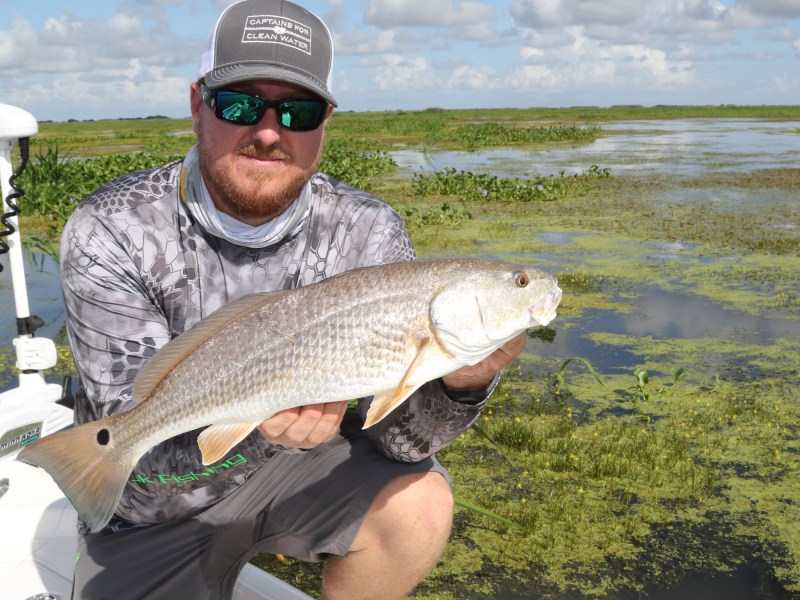
Taking a break from fishing the Louisiana’s Bretton Island perimeter for trout, I waded to the island’s edge and found a small runout that snaked its way from an inner tidal lagoon out to the Gulf. Barely large enough for a kayak’s passage, this rapidly dwindling artery bespoke the most basic principle that defines a falling tide’s appeal — food delivery.
As the leaving water trickled along the tiny artery’s banks, I found a dozen or so finger mullet at every turn, while blue crab after blue crab scurried toward the exit. My guide, Capt. Ross Montet said these drains are focal points when a high tide starts falling. Paddletails, topwaters, artificial shrimp and subsurface hard baits all produce.
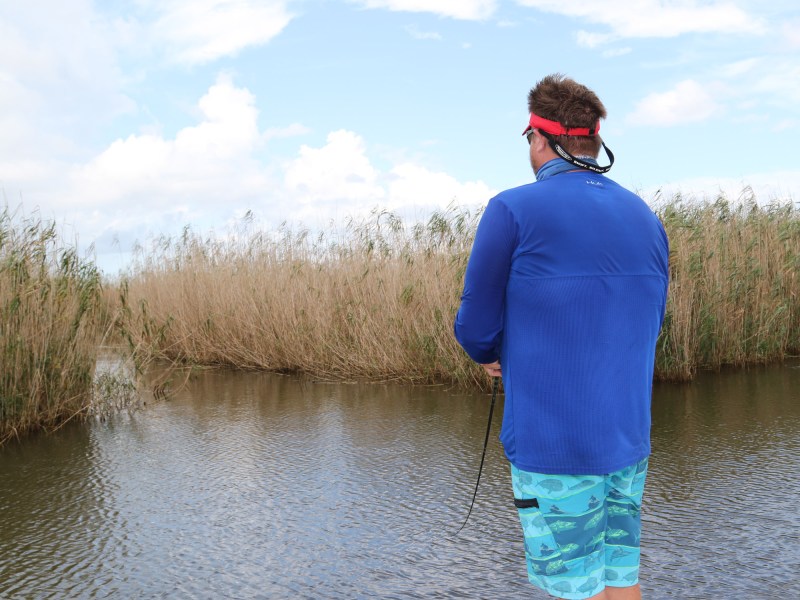
Inshore, Delta marshes offer a similar falling tide opportunity, as every backwater pond has one or more runouts that drain the interior. Locally called a trenasse, these openings direct all the finfish and crustacean forage toward a tight area, kind of like moviegoers crowding toward the exit.
A couple other points make a marsh drain attractive. First, falling water comes out of the marsh cleaner than it entered, thanks to filtering vegetation. Baitfish favor this cleaner water, so the areas directly outside of a trenasse often hold clusters of forage, which attract redfish, trout and flounder.
Pepper these areas with paddletails, soft jerkbaits and popping cork rigs.
Tides Concentrate Baitfish
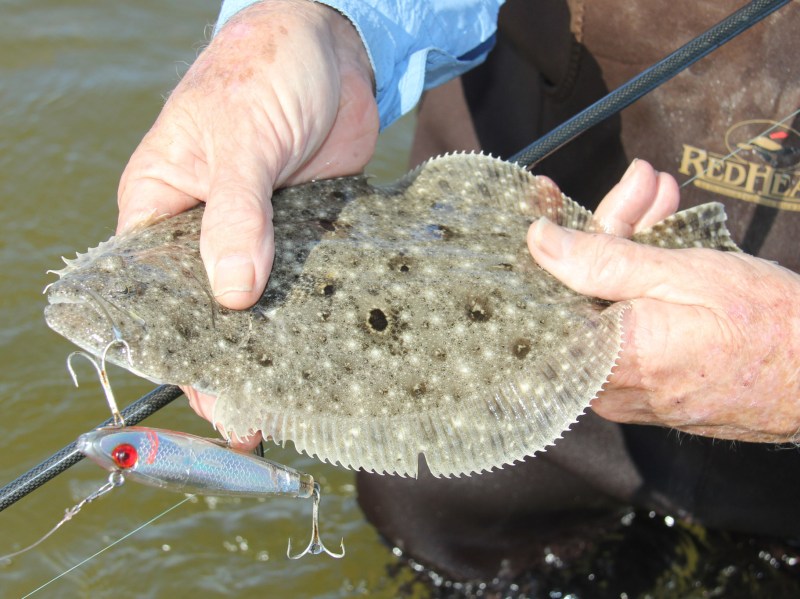
One of my most vivid falling tide memories took place in an Upper Tampa Bay creek, as the exiting tide pushed between a broad sand flat and an oyster bar. Wading the sandy side, I and a couple of buddies watched trout after trout rise from current-shielded low spots to blast our jigs and MirrOlure twitchbaits.
With baitfish twinkling in the departing water, the trout, along with a smattering of redfish and jacks were picking off easy meals. Notably, we also caught a few flounder — on the MirrOlures, no less. Probably not the most common technique, but a solid example of the falling tide’s opportunistic character.
Timing Tides in the Inlets
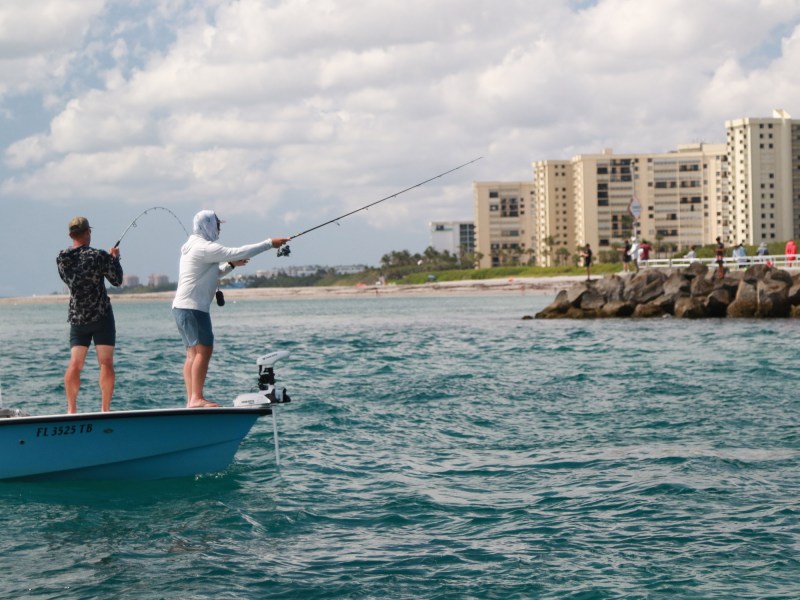
Passes and inlets see the ocean reaching into rivers, bays and the Intracoastal Waterway for daily visits and then retreating with a fish-stimulating force. As the water rushes past seawalls, rocky banks and jetties, snook, snapper and grouper take advantage of a predictable buffet.
Fishing the Jupiter to St. Lucie area, Capt. Ed Zyak trusts this formula so firmly that he’ll fill time fishing surrounding areas before positioning in the inlets at the right point during a falling tide. From experience, it’s simply a matter of efficiency and probability.
“They’re usually down on the bottom, letting that water flow by,” Zyak said of inlet predators. “The outgoing tide is sweeping a lot of forage out of the estuary, so they’re just in a buffet line. They can stay down there and wait for something desirable to go by.
“They can run up, suck it in and drop right back down to the bottom. They can’t be out running around and burning up a lot of energy. At the end of the day, they need to be talking in more calories than they’re burning, so they’re just gonna sit tight and let Mother Nature bring the food to them.”
To this point, Zyak offers a tip that’s applicable in pretty much any inlet scenario: “If your bait is 10 to 15 feet above their head, the fish probably is not gonna run up there and eat it, but if it’s a foot over their head, that’s easier for them to eat.”
Seasonal Bait Migrations
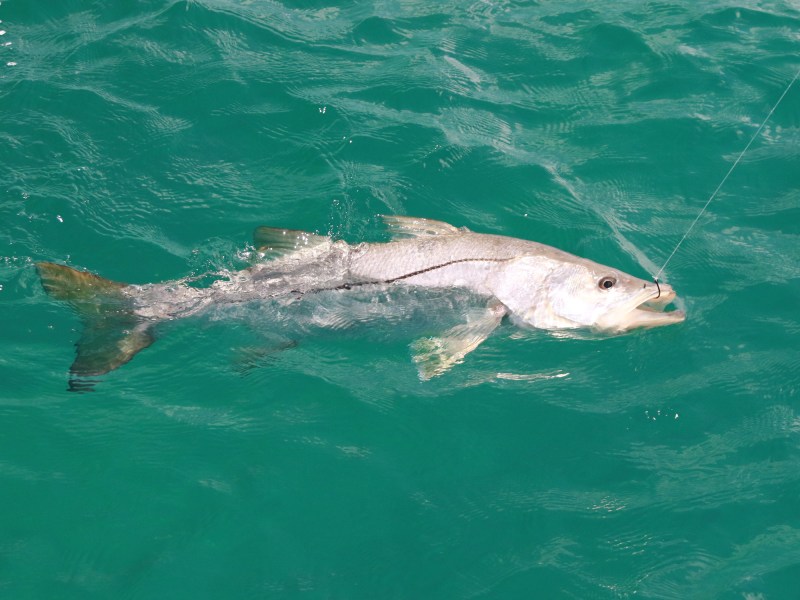
After spending the summer months inside bays and estuaries, fall’s cooling spurs remaining bait schools to exit the passes and head for warmer southern waters. Sarasota’s Capt. Rick Grassett has seen outgoing tides create white water feeding frenzies as tarpon, jacks, bluefish, mackerel, false albacore and sharks ravage the exiting baitfish schools.
New and full moons bring the strongest flows, but Grassett’s partial to the former. Baitfish will be moving on a fall full moon, but if this phase coincides with clear conditions, the fish will feed all night during that lunar brightness and leave daytime anglers struggling to tempt fish with full bellies.
In a similar scenario, vast marsh systems like that of Apalachicola Bay offer ideal nursery habitat for shrimp that depart in the fall for an offshore spawning run. When these tasty crustaceans are ready to depart, they’ll ride the outgoing tides into the bay and continue to their open water spawning grounds. During these departures, reds, trout and anything with an appetite pay close attention to daily tide schedules.
Fishing Crab Flushes
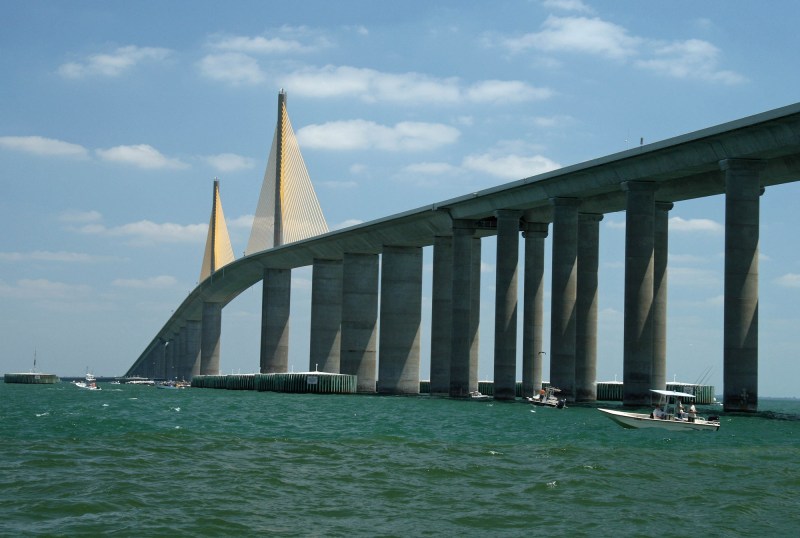
One more worth mentioning are the strong “moon” tides of spring and summer when hard outgoing water pulls thousands of swimming crabs out of Florida’s Gulf Coast backwaters and through the major tarpon areas like Boca Grande Pass, Sarasota’s Longboat Pass and Tampa Bay’s Egmont Channel.
Silver forms are often seen rolling through the current seams where crabs cluster, as they capitalize on the concentrated food service. Savvy fishermen armed with long-handle dip nets also leverage these crab flushes.
“Live bait anglers are actively scooping crabs on the outgoing tide surrounding full and new moons and then fishing the passes or along the beach,” Grassett said.
Respect the Tides
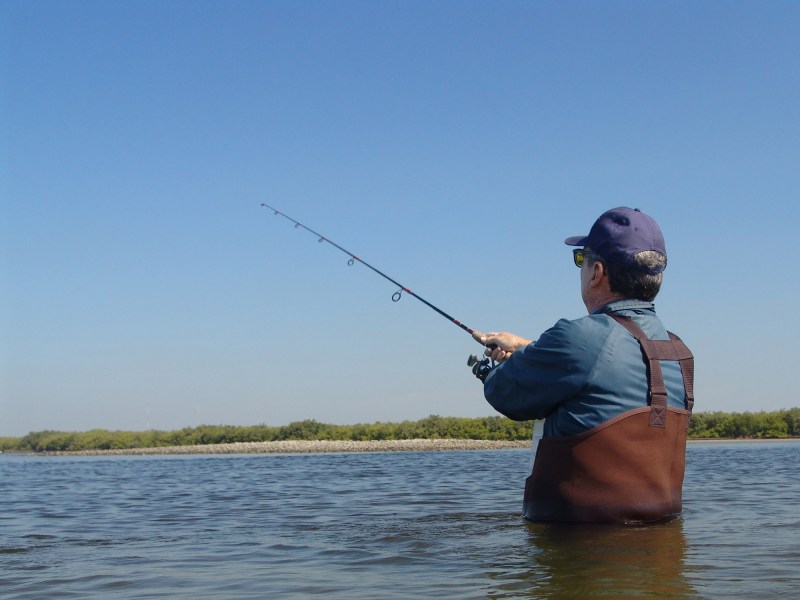
English poet Geoffrey Chaucer told us, “Time and tide wait for no man.” Anyone who’s overstayed their welcome while an outgoing tide drains a marsh, creek or backwater pond knows well the lesson learned by a tidal stranding.
Having spent an entire tide cycle stuck on a sand bar at the mouth of a Tampa Bay creek with an annoyingly chatty individual, let me spare you the agony: Know the tide schedule and don’t push your luck.
That’s good advice anywhere you fish, but it’s important to note how this principle bears varying levels of severity. For example, anglers fishing the Laguna Madre in South Texas face a relatively moderate tidal swing of a foot or two. Sure, you don’t want to park on the crown of a skinny flat an hour before the tide bottoms out, but it’s not really a rush kind of deal.
Conversely, anglers on the South Atlantic Coast face a very different reality. The South Atlantic Bight (aka the Georgia Bight), which extends from Cape Hatteras, N.C. to Cape Canaveral, Fla., comprises a coastal indention that sees tidal swings of 6 to 8 feet in the interior areas. Water moves fast on its way in and out, but the real danger is all the muddy, marshy habitat from Northeast Florida through the Carolinas.
Case in point: During the 2023 Bassmaster Redfish Cup Championship out of Winyah Bay, South Carolina, several teams missed the first day’s weigh-ins after getting stuck on mud flats. These were highly experienced anglers, so the point is not to pick on anyone; rather, take this as a cautionary tale and balance the falling tide’s tremendous opportunity with its requisite respect.