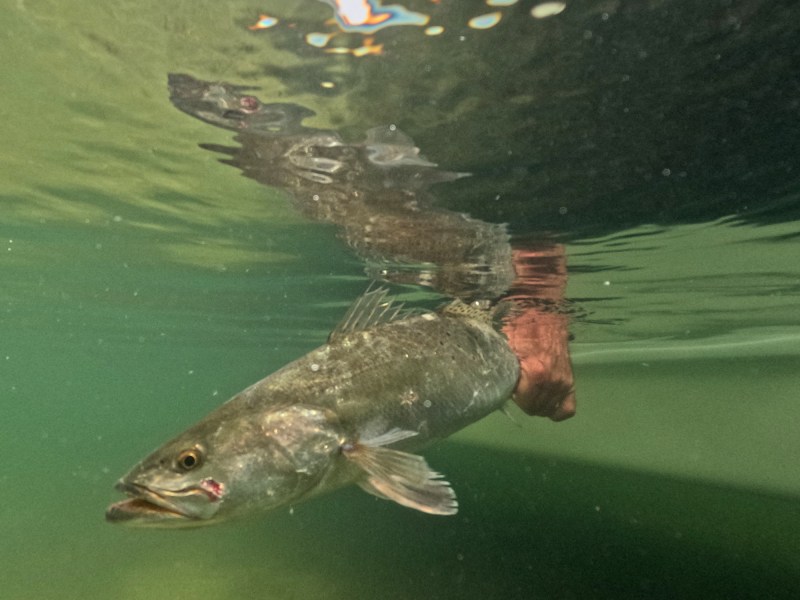
Slow-sinking and suspending plugs have long been vital components to the arsenal of serious anglers chasing sow speckled trout along the Gulf and Atlantic coasts. From Texas to the Mid-Atlantic, as water temperatures begin to cool during late fall, these trout lures become increasingly productive, particularly for large trout.
As a result, the timeframe between autumn and early spring is referred to as “slow-sinker season” by those who spend much of their time on the water tempting trophy seatrout.
Best Time to Fish Slow-Sinking Twitchbaits
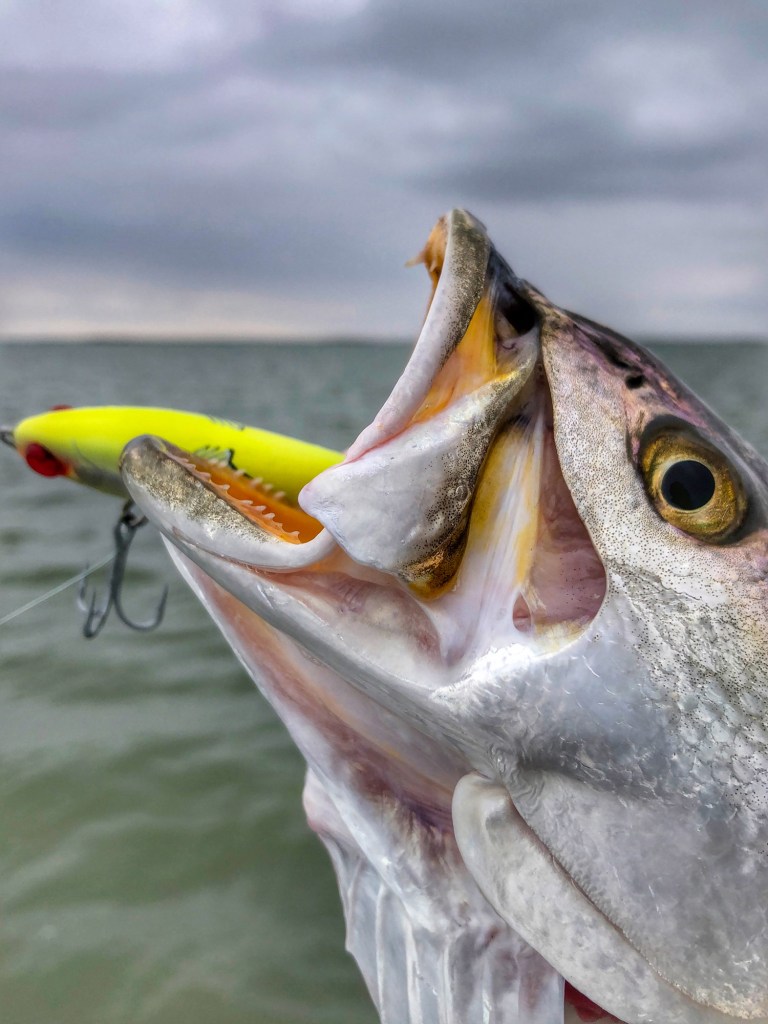
Essentially, these lipless lures evolved from the original MirrOlure 52M sinking twitchbait, which was introduced in the 1950s. The key to their effectiveness is, as the name suggests, the sink rate. Because they fall slowly through the water column, slow-sinking and suspending plugs can be fished in shallower water with a more leisurely retrieval rate. This makes them the ideal tool when fish are sluggish or lethargic, as is often the case in cool water. Slow sinkers can be fished effectively year-around, but they really stand out when fish are less aggressive.
In cooler water temperatures, trout move slower and feed less aggressively. They’re looking for maximum calories with minimal effort. Slow-sinkers move slower and appear more sluggish. They can also work well during warmer periods for similar reasons, as these lures appear vulnerable and easier to catch. However, when fish are active and aggressive, there are other baits that work equally well and are more efficient at covering water. During the cooler periods, covering water isn’t nearly as important as convincing nearby fish to strike.
Hard-Body vs. Soft-Body Twitchbaits
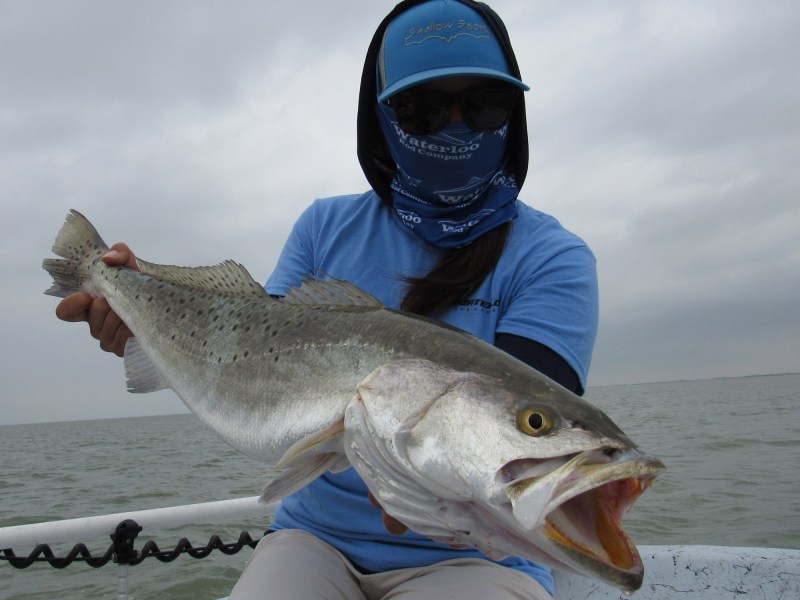
Thanks largely to Texas lure designer Paul Brown, who created the soft-bodied, slow-sinking Corky in the mid-1970s, today there is an array of both hard and soft slow-sinking and suspending baits. Although many anglers tend to stick with one style or the other, both have advantages and disadvantages.
Hard baits are very durable, offer lots of flash and are typically ready to fish right out of the package. Soft baits, on the other hand, take a little tuning, which involves bending the wire running through the bait’s body to achieve the desired shape. Sometimes these lures need to be tuned when taken out of the package. Often, they must be retuned after a fish hits and bends the body. On the plus side, skilled anglers can also tune their baits to react various ways during the retrieve. Both hard and soft baits come in a wide variety of color combinations, although soft versions have a duller finish than do hard baits. Hard-bait models are also available with more effective rattles for fishermen looking for noise-producing plugs, as the soft-plastic material tends to have a dampening effect on internal rattle chambers.
Other Factors in Selecting a Twitchbait
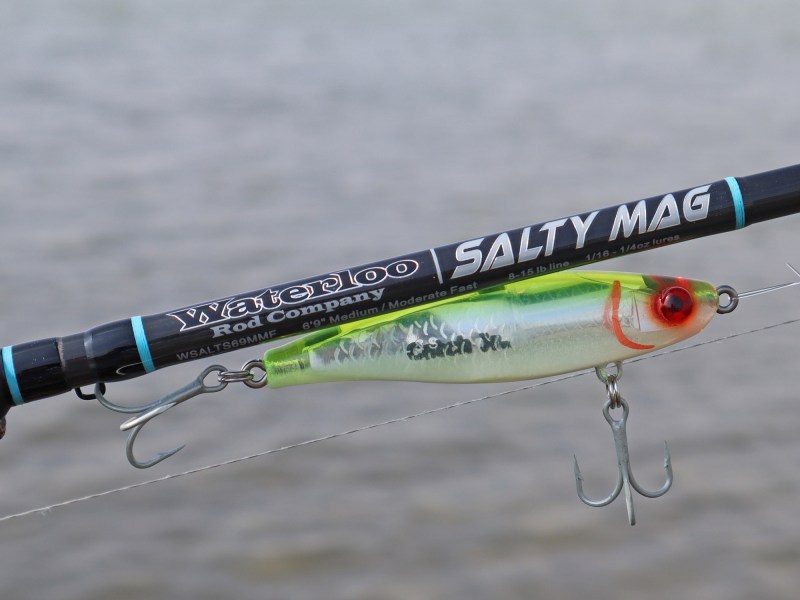
Sink rate and body shape are other factors to consider. Suspending baits have near-neutral buoyancy and fall very, very slowly — usually around 6 inches per second. Other slow-sinking baits can fall anywhere from 6- to 8-inches per second to over a foot per second. So, it is important to know how fast each lure model falls in order to pick the right one for the water you’re fishing.
The shape will affect not only the fall rate, but also the lure’s action during the retrieve. As a rule, flat-sided lures have a tight wobble and side-to-side roll. The wider the body, the wider and looser the wobble, and the more water is displaced as the lure moves.
Regardless of the model chosen, there are a handful of scenarios and situations where trophy trout fishermen typically have success with slow-sinking plugs. One is over grass flats in 2 to 4 feet of water. Another is over mixed shell bottom in that same depth range. To avoid hanging the dangling trebles in these situations, anglers typically opt for suspending versions.
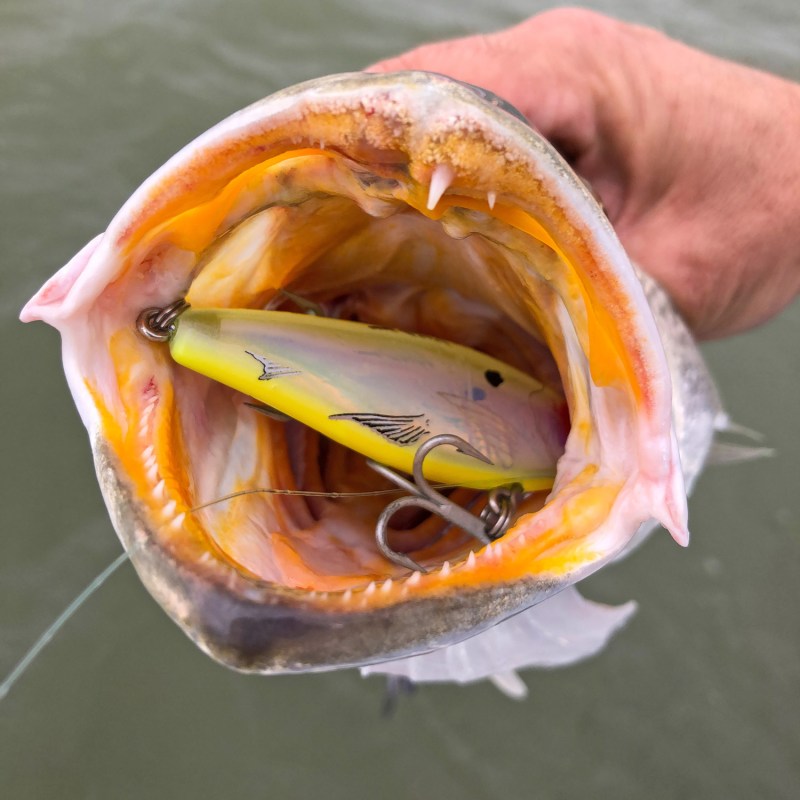
When to Throw a Twitchbait
While there are general rules of thumb, not everyone throws them the same way—or at the same times. For example, when fishing Texas’ Lower Laguna Madre, I love using slow sinkers to probe potholes on the shallow grass flats. However, South Padre Island guide Capt. Brian Barrera has had tremendous success on sow specks doing something almost completely opposite.
“When I think about throwing slow-sinking twitchbaits, I’m looking at throwing them right after a significant cold front,” said Barrera. “For us, that can happen any time from November through February. In our bay, which is really shallow for the most part, I’ve found big trout will often stage up on the drops right after a hard front moves in. So, I’m usually throwing those baits in 3.5 to 4 feet of water and sometimes in as much as 7 feet. Most of the time, I’ll be throwing them along the edge of the ICW or where a channel meets a deeper flat.
“Typically, in that situation, those big fish are just trying to find a comfortable area in the middle of the water column. When they get in that thermocline, they’ll just sit there. They’re not really feeding, so I’m basically trying to get a reaction strike. To do that, you don’t want to give ’em too long to look at it, but you also don’t want to jerk it away too quickly. I just use a jerk-jerk-stop retrieve and try to put it right in front of them, so they think it’s easy to catch.”
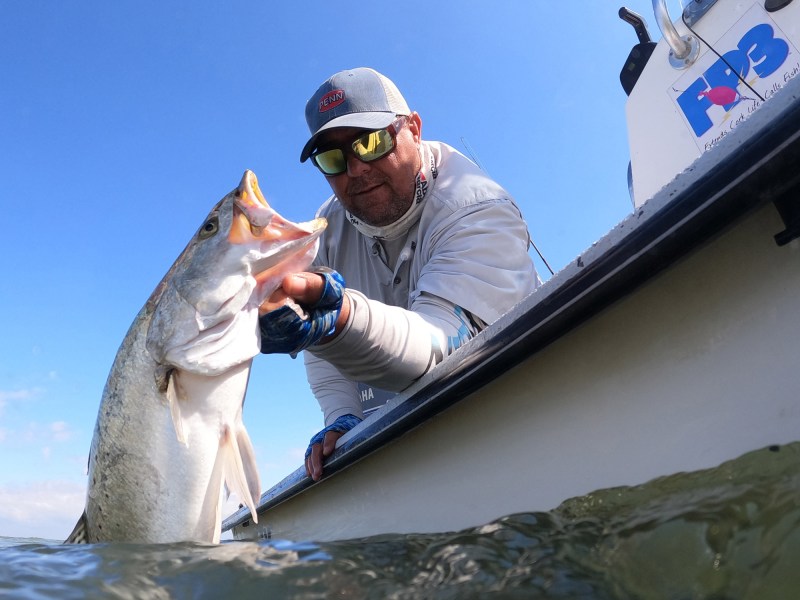
Twitchbait Fishing in Texas
While soft-body slow sinkers tend to be the most popular across much of the Texas Coast, Barrera says he prefers hard baits.
“If I’m throwing them on the shallower flats, I’ll use the standard MirrOdines most of the time. But, when the fish are on the drops or around structures such as docks or rip-rap up in the ship channel, I like throwing the C18MR Heavy Dine. That bait drops a lot faster and stays down deeper.”
Twitchbaits in Louisiana
Along the Northern Gulf Coast, Sabine Lake and Lake Calcasieu guide Capt. Chuck Uzzle usually opts for soft versions and says picking the right place to throw them is key.
“I’ll actually throw slow-sinkers any time of year in the right situation,” Uzzle stated. “For me, the best time to throw them is any time you know the fish are feeding on baitfish, especially mullet, as opposed to shrimp. In the summer, there will be times the trout are feeding on mullet and we can catch them on a lot of different plastics. In that situation, I’ll throw a Corky Devil, hoping for a better bite from a bigger fish. But, hands down, these nasty days in December, January and February are when these baits really stand out.
“When the water is cold and the fish are really lethargic, these baits are good because you can keep it in front of the fish a long time. In the summer, you can get away with a little twitchier, little jumpier retrieve. In the winter, you need a slower retrieve with a little more pause between movements.
“If we’re fishing Sabine, we’ll usually be throwing them along the shorelines, near marsh drains and around any areas where we have a bit of depth change. On Big Lake (Lake Calcasieu), there’s a lot more structure. So, there we’ll be focusing around reefs and areas with scattered shell bottom. But, wherever you are, the main thing is to throw these baits in areas where the fish are feeding on mullet.”
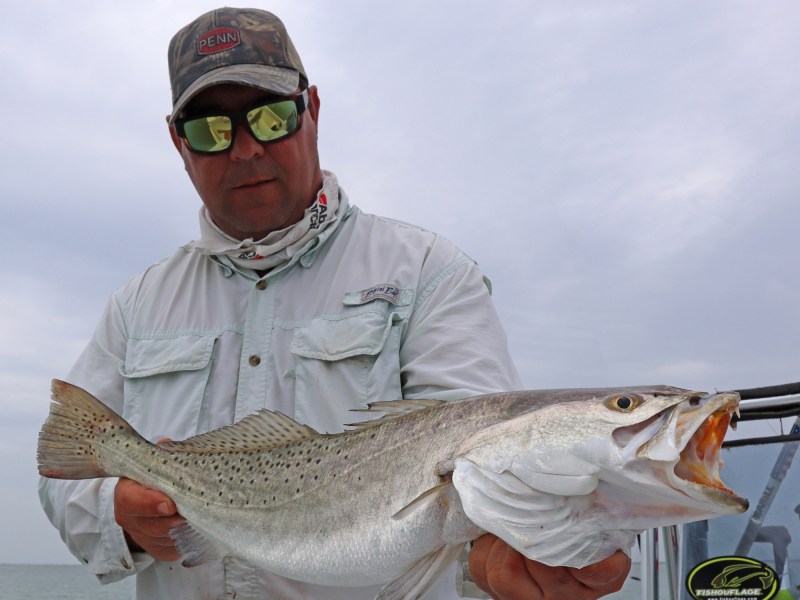
Florida Twitchbait Fishing
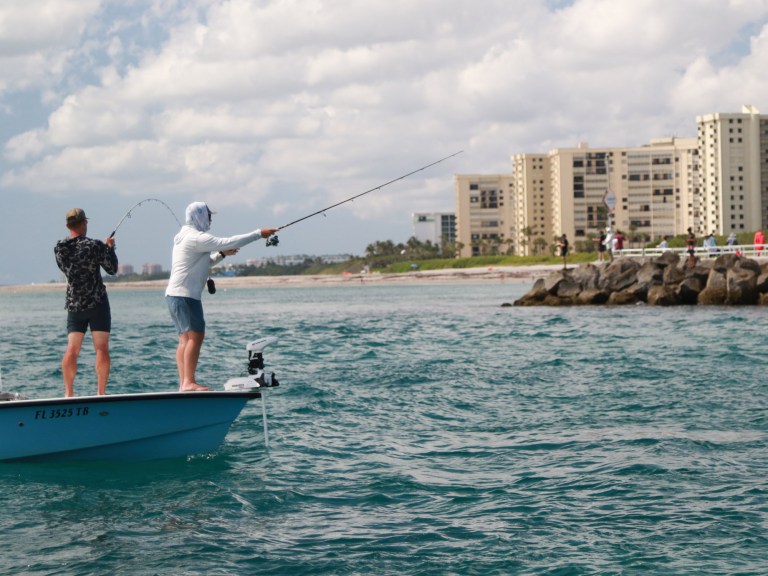
Along the east coast of Florida, Jensen Beach guide Capt. Ed Zyak says he likes throwing slow-sinkers in water so clear he can see the trout’s reaction.
“I usually start throwing slow-sinkers during the cooler time of year – basically as soon as we start getting strong fronts,” said Zyak. “The last few years that seems to be around the first of the year, although it could happen sooner.
“For me, the best scenario for throwing these baits is post cold front. On those days after a front when we still have a northeast wind, all of our southwest-facing shorelines will be in the sun and out of the wind. Most of those shorelines are basically a sunshine, golden-sand highway with gin clear water.
“Those big trout will be up there trying to get warm, but they are very, very wary. So, I like using a hard bait, like the MirrOdine, and casting it as far as I can away from the boat. If it’s warmer and there is bigger bait around, I’ll go with the XL. But, when it’s real cool, I’ll go with the standard. My favorite is using the gold side/green back – it almost matches the sand. I’ll also use an extra-long fluorocarbon leader – sometimes as long as 5 feet.
“Basically, we’re just casting down the shoreline as far as we can, parallel to the shoreline. I use just a subtle twitch-twitch-pause retrieve. I’m not trying to move it fast or erratic – I’m just trying to get it into that fish’s peripheral vision. When you do that, you can see them react. If they turn on the plug, you just want to keep it in front of their face as long as you can with slight twitches. Usually, they’ll hit it on the pause.
“Usually we’re doing this in a foot to maybe 2.5 or 3 feet of water. And, I do it all through the Indian River Lagoon and, actually, most of the east coast of Florida.”
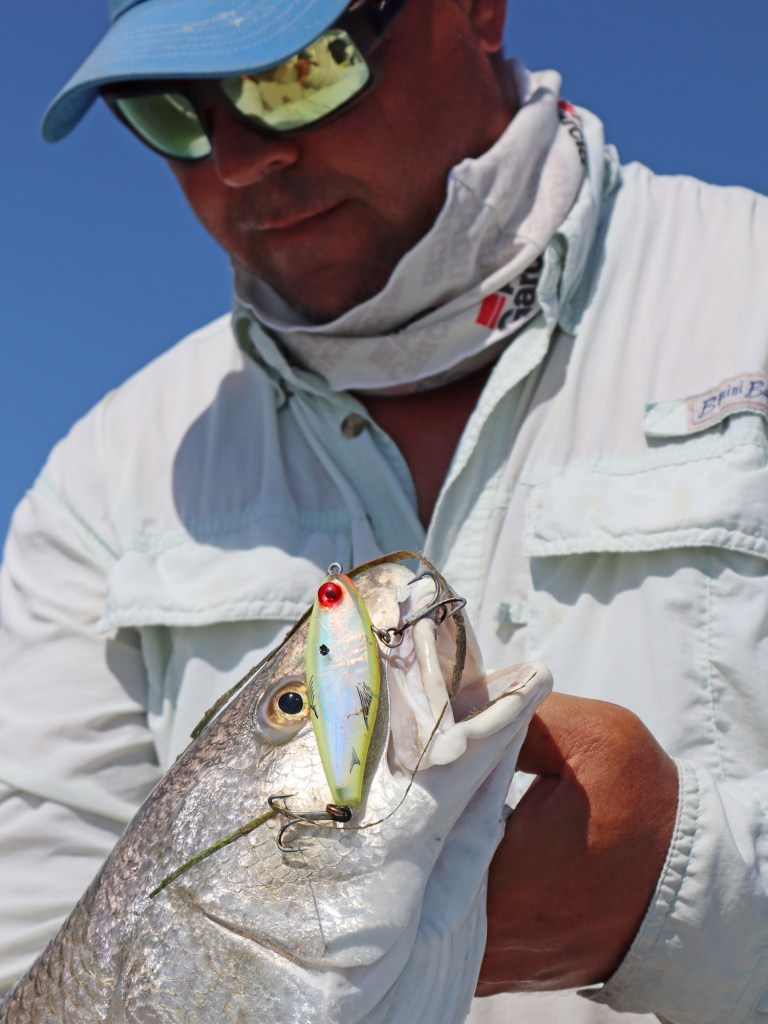
Redfish on Slow-Sinking Twitchbaits
While they are typically used to target trout, slow-sinking plugs can be very effective on redfish as well. Given that big trout are often frequenting the same waters as redfish, it is not uncommon to have reds slam them.
However, many who like throwing the soft variety of slow-sinkers despise having a massive red bite down on their bait. Not only do they see this as a wasted cast that was meant for a big trout, reds are also notorious for twisting soft-plastic slow-sinkers into unrecognizable shapes. But, sometimes the price you pay for searching for sow specks with slow-sinkers is a badly mangled bait thanks to the incidental catch of a bull red.