Most people fish the Calcasieu Estuary in southwestern Louisiana to catch trophy speckled trout. Indeed, the area can produce double-digit trout, but it also holds many other species.
The Calcasieu Estuary runs more than 40 miles along the Calcasieu Ship Channel from the port of Lake Charles to where Calcasieu Pass empties into the Gulf. The channel, originally constructed in the 1940s, straightened and deepened the old Calcasieu River course. The channel forms the spine of the estuary. On the way to the Gulf, the channel touches Lake Charles, the waterbody, Prien and Moss lakes.
If the ship channel creates the estuary spine, Calcasieu Lake forms its heart. Locally called Big Lake, the waterbody spreads 12 miles long by 9 miles wide. The shallow, oyster-studded lake covers 52,700 acres and averages about 6 feet deep.
The channel tangentially touches Big Lake and divides it from West Cove, which thrusts westward into marshes near Hackberry. South of Big Lake, Oyster Bayou runs through those marshes. Other marshes surrounding the lake create ideal redfish and flounder habitat.
Classic Fishing for Louisiana Redfish
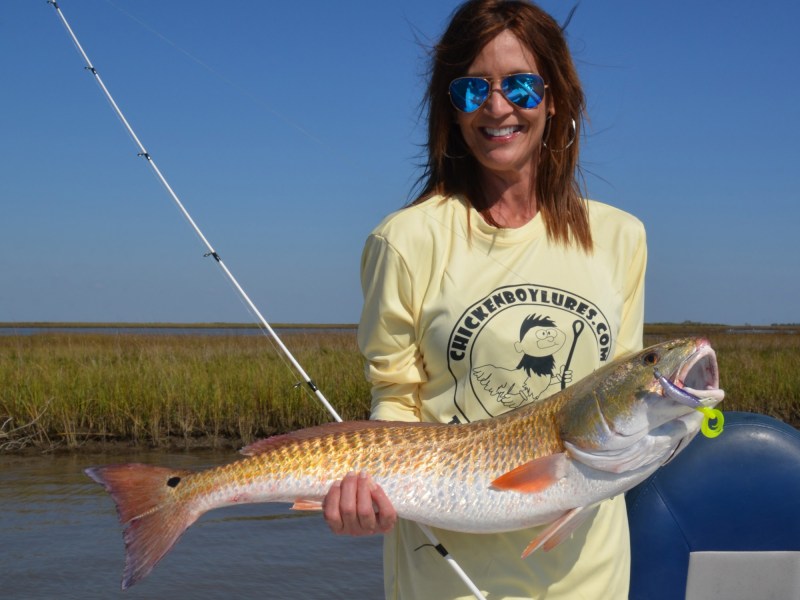
“The Calcasieu Estuary has great redfish action, especially from September through the fall,” proclaimed Brian Hanchey with Louisiana Backwater Charters, who runs a lodge in Hackberry. “West Cove is a great place to fish for reds in the fall, especially around Rabbit Island. We catch many redfish by sight-fishing with plastics. If we don’t see them, we’ll work the bank with a 1/4-ounce jighead tipped with a Down South soft-plastic bait or a Boom Boom Shrimp under a Four Horseman popping cork.”
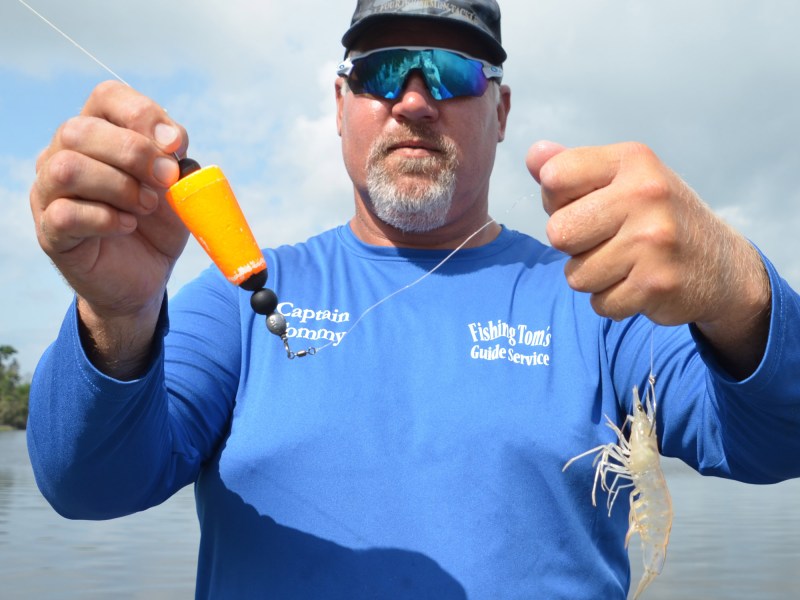
A popping-cork rig sweetened with a live or soft-plastic shrimp will catch anything that swims in Louisiana waters. When the angler jerks the rod, the cork disrupts the surface like a fish striking prey. The bait flies upward and sinks back down, exactly what a live shrimp would do to escape a predator. Besides shrimp, anglers can fish with many other natural temptations under corks. These include minnows, small baitfish, fish chunks, crab pieces or artificials that replicate natural forage.
Fresh and Saltwater Species of Sabine Lake and Black Bayou
Just north of Big Lake, the Gulf Intracoastal Waterway bisects the ship channel and flows west into Sabine River on the Louisiana-Texas line north of Sabine Lake. About 19 miles long by 9 miles wide, the lake covers 59,700 acres and averages about 8 feet deep. At the south end, Sabine Pass flows into the Gulf. Sabine Lake produced speckled trout exceeding 11 pounds in the past.
Between Big Lake and Sabine Lake, a vast tidal marsh offers one of the best places in Louisiana to catch multiple fresh and salty species. Fresh water from the Sabine and Neches Rivers pours into the marshes from the northwest. Black Bayou flows through the northwestern portion and holds bass, redfish and other species. Freshwater also flows down from the Calcasieu River through the ship channel.
Sabine National Wildlife Refuge conserves nearly 125,000 acres of this pristine wilderness crisscrossed by bayous, ponds and canals. Established for waterfowl, the refuge restricts boat access during the fall and winter. Anglers can also fish the Vinton Drainage Ditch, which crosses the Intracoastal and merges into Black Bayou. The East Cut connects Sabine Lake to Black Bayou.
In those marshes, freshwater mixes with brine coming up from the Gulf. The incredibly blurred demarcation between environments blends and moves constantly. This fertile mixing creates a piscatorial gumbo of diversity. Largemouth bass and blue catfish can tolerate some salinity. Redfish and flounder can live in fresh water.
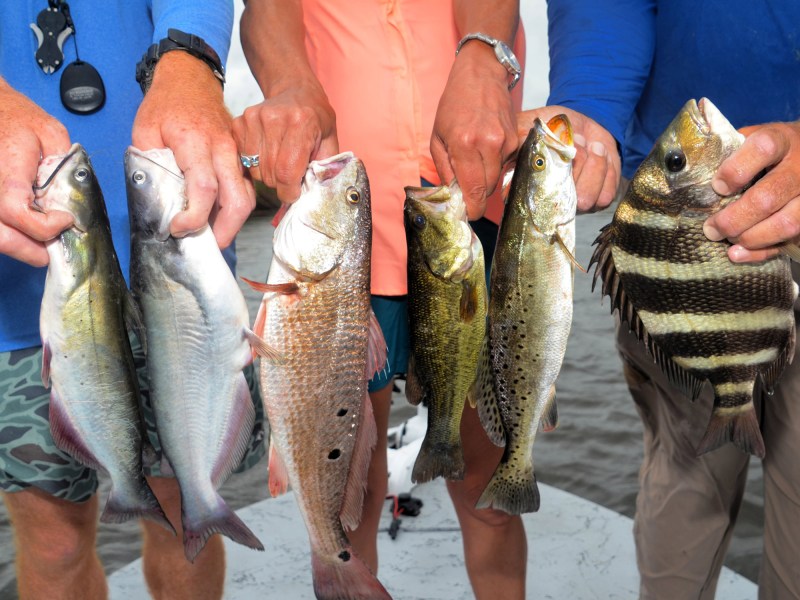
“Bass actively feed in up to eight parts per thousand of salinity,” explained Zane LeBlanc, a Louisiana Department of Wildlife and Fisheries biologist. “Once salinity levels reach about 12 parts per thousand, bass cease feeding. If they get stuck in high salinities for long periods, they die.”
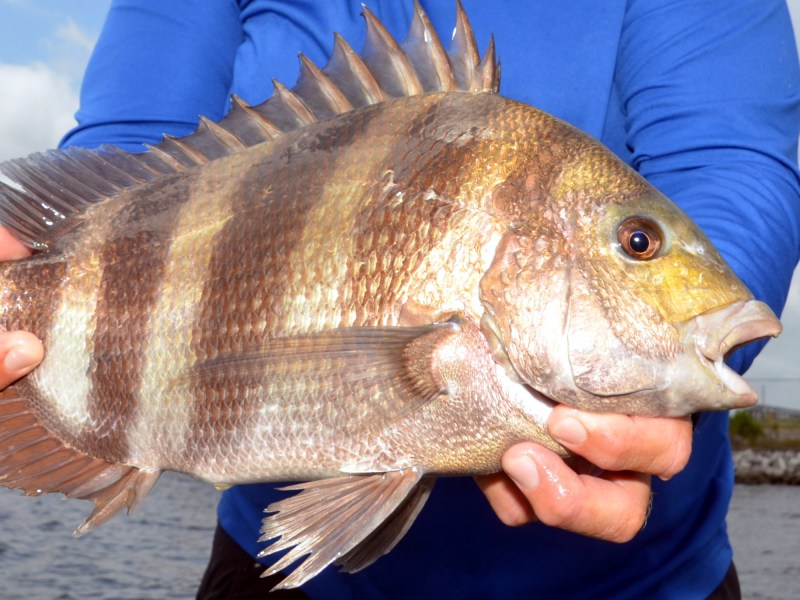
What one catches in any spot at a given time depends upon salinity levels, which fluctuate wildly. Anglers could catch mostly bass in the morning, maybe some redfish and flounder. Later in the day, the tide shifts and anglers catch mostly trout. Specks like saltier water. With natural bait, anglers catch might sheepshead, black drum or blue catfish.
“In the marsh, many species all hang out together in the same places,” noted Tom Adams of Fishing Tom Guide Service, who owns a lodge in Sulphur. “Fishing the marshes west of Big Lake, we’ve caught 20 different species, all on live shrimp, in one day. The Black Bayou area can produce excellent redfish action. We also catch many flounder and bass in the same places. It’s always a surprise what comes up on the line!”
Anglers commonly catch redfish and bass on the same lures in the same places. Both gorge themselves on the best forage from salty and sweet worlds. They eat freshwater species like threadfin shad, crawfish, bream or salty species like shrimp, crabs, cocahoe minnows (Gulf killifish), menhaden, known locally as pogies, mullets, croakers and uncountable other creatures.
Closer to Calcasieu Lake, the Black Lake area holds redfish, trout, flounder, sheepshead, drum and other salty species. Kelso Bayou connects Black Lake to the Calcasieu Ship Channel. Numerous canals and bayous create unlimited places to fish for multiple species.
“The waters around Black Lake are very good for redfish, trout, flounder and other saltwater species,” Adams said. “We never know what might bite when we put a live shrimp on a hook. That’s what makes fishing this area so exciting!”
Inshore East of Big Lake
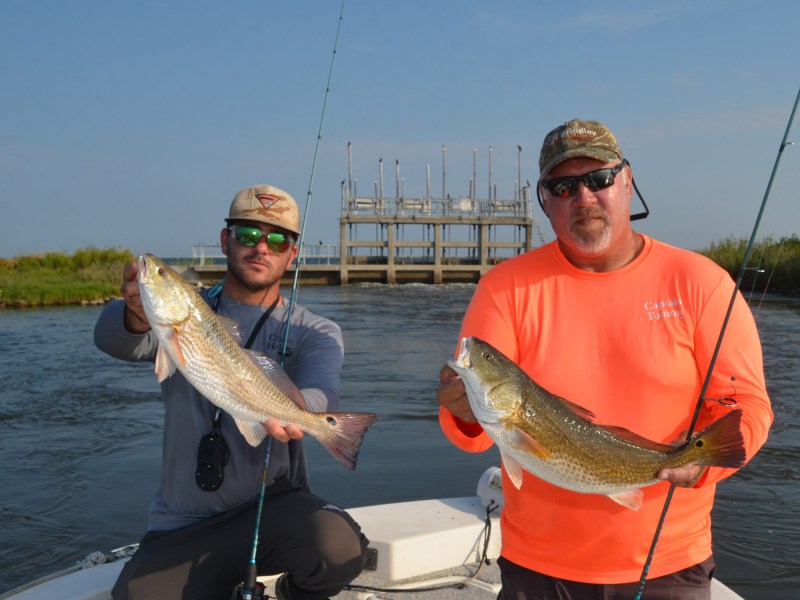
East of Big Lake, the East Cove Unit of the Cameron Prairie NWR conserves 14,927 acres of brackish to intermediate marsh. No-Name, Lambert, Grand and Mangrove bayous flow into the lake. The eastern marshes usually stay saltier than those to the west.
Weirs block some bayous, but the tide flows through gates, allowing shrimp, crabs, small fish and other morsels to pass. Anglers can always fish the lakeside of these concrete water control structures. Big redfish congregate on the downstream side of the weirs to eat whatever comes along with the tidal flow. For bull reds, fish mullets about 3 to 8 inches or small croakers.
“We’re very blessed to have an estuary and fishery where people can catch various fish species,” said Kevin Broussard with Cajun Paradise Charters in Hackberry. “It’s a fishing paradise. The marshes are where all the shrimp, crabs and baitfish go to grow. Shrimp, crabs and tens of thousands of pogies, other small hatchlings, are back in those marshes. All those weirs have fish around them when the water moves. Tons of bait moves through when the gates open.”
The refuge closes access to the marsh beyond the weirs during duck season. With limited access, these marshes receive far less pressure than Big Lake. Those marshes create outstanding habitat for redfish, flounder, trout and other species.
“When we target redfish behind the weirs, we look for places where the water flows pretty heavily with lots of mullet and shrimp,” Adams advised. “For trout, we like to fish points with good water flow. Watch for fish jumping or shrimp flicking out of the water. Wherever a bayou flows strong and starts to slow down, it creates little eddies. Trout won’t stay in the strong flow, but just outside of it.”
Topwater Redfish and Trout
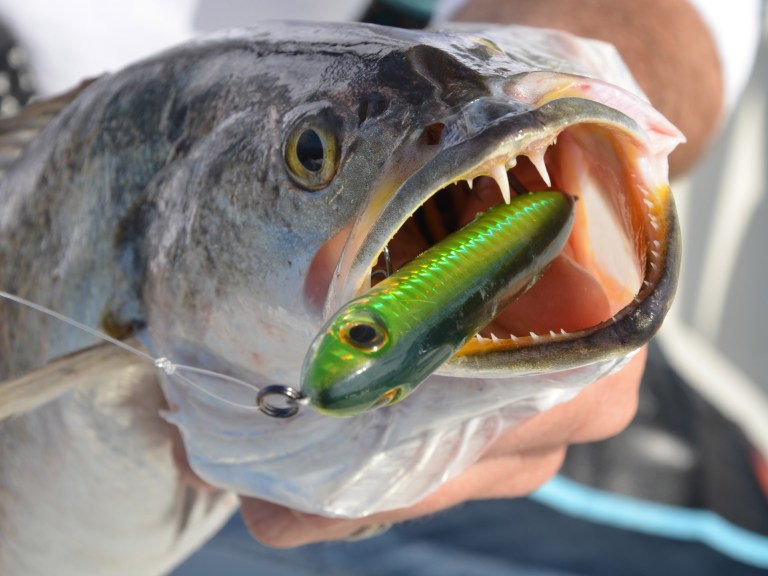
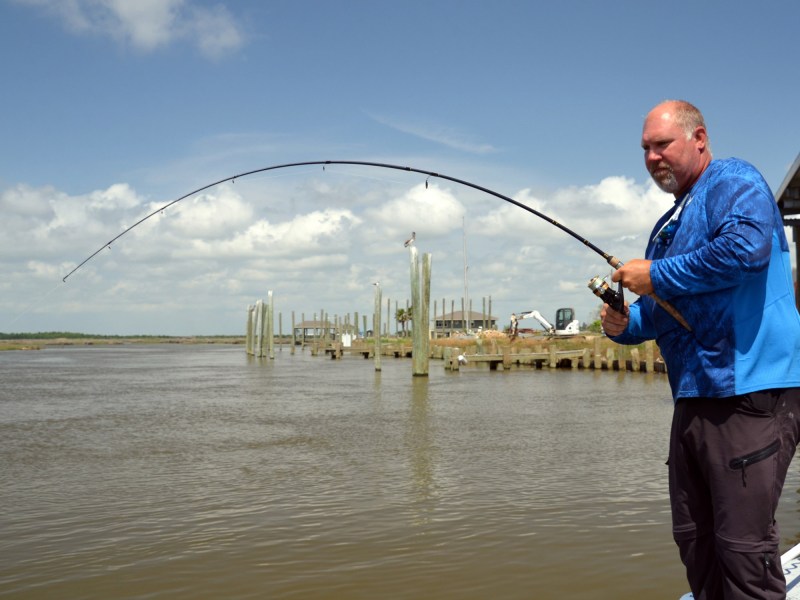
For an adrenaline rush, few experiences in inland waters come close to the savagery of big redfish smashing topwater baits in shallow water. When a redfish explodes on a topwater bait, it resembles someone throwing dynamite into the water. Topwaters also work for trout.
Anything resembling a mullet could entice both species. Walking baits sail long distances, making them excellent search baits. They zigzag across the surface, mimicking injured baitfish. Hot colors include bone, clear, red and white, green and silver or black and silver.
Fishing the Shrimp Runs
Nothing ignites a multi-species feeding frenzy in the marshes like a crustacean migration. Shrimp migrate in and out of the estuary in the spring and fall. Everything eats shrimp, including largemouth bass. When shrimp move, everything follows.
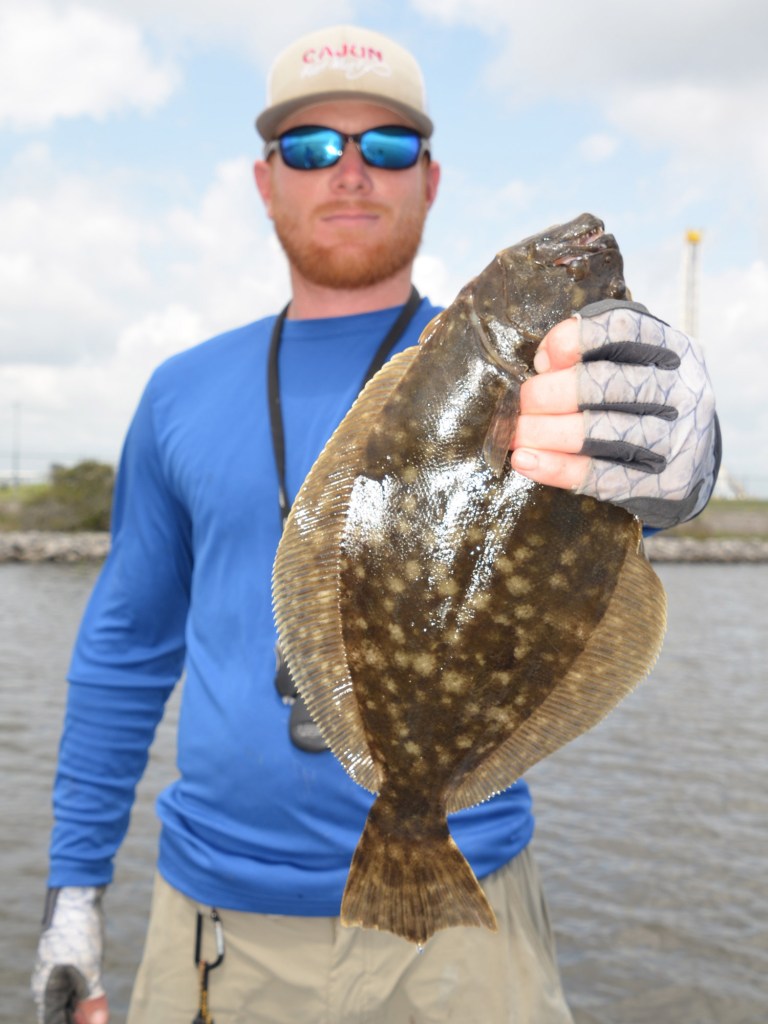
“Bass absolutely love live shrimp,” Adams remarked. “We fish grass lines with live shrimp under a popping cork for both bass and redfish. We also catch flounder in the same places, especially in the fall. Flounder like a 3-inch Berkley Gulp! Swimming Mullet. I also like a Gulp! shrimp or Swimming Mullet on a 1/8-ounce jighead. In off-color water, I throw chartreuse. In clear water, I use white.”
During a falling tide, multiple species congregate where any drains flow out of the marshes. Dropping water levels dislodge baitfish, shrimp, minnows, crabs and other morsels. Bass, redfish, flounder and other predators wait to ambush anything washing out with the tide.
Toss a cork upstream into the drain. Let the current carry the temptation downstream naturally. With artificials, let the bait flow downstream with the tide. If it hits bottom, pop it back up into the flow.
Northern Calcasieu Fisheries
Marshes north of Big Lake along the Intracoastal and ship channels also hold good fish. Also fish Moss Lake and Prien Lake. In Prien Lake, anglers throw weedless spoons, spinnerbaits or popping-cork rigs around the shorelines. Run the baits out over the drop-off edges.
“In Prien or Moss Lake, redfish get on the ledges in the channel in late summer,” Hanchey said. “They will hang in 6 to 7 feet of water dropping into 12 feet. I like to throw Carolina rigs baited with pogies. At times, we catch a lot of redfish, bass and speckled trout in the same places, depending upon the water quality.”
Lake Charles, the waterbody, covers nearly 1,000 acres. At times, it holds good fish populations, especially in late summer and fall. The lake averages 5 to 6 feet deep. People without boats fish off the seawall in downtown Lake Charles.
A saltwater barrier on the Calcasieu River just north of Lake Charles traditionally marks the northern edge of the estuary, but anglers can still catch a variety of freshwater and salty fish above it. Throw 1/4-ounce jigheads tipped with soft-plastic shrimp or minnows.
“Redfish will be all the way up into Lake Charles and the Calcasieu River in late summer,” Hanchey said. “Often, we catch redfish and bass in the same places.”
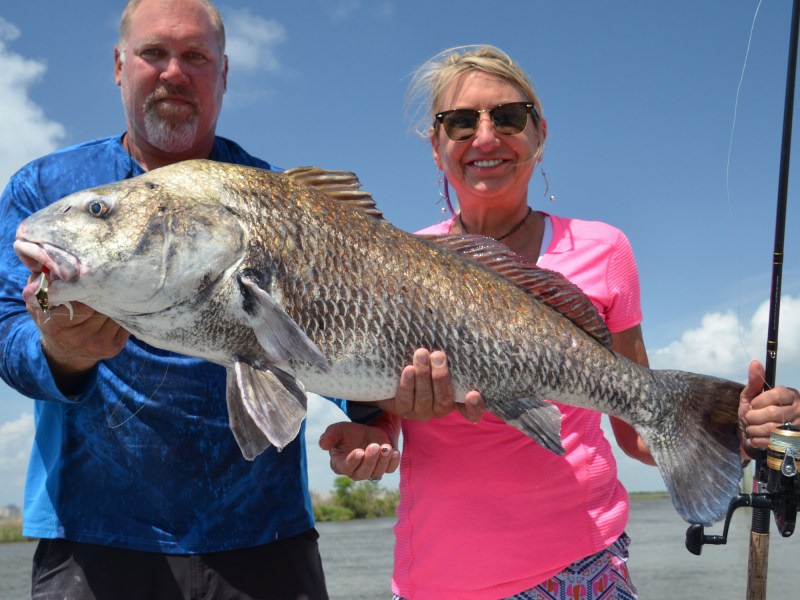
For the biggest redfish, head to the Calcasieu Pass jetties. Monster spot-tails and black drum congregate near the rocks gorging themselves on shrimp and crabs. Sheepshead love snipping barnacles off the rocks. The nearby beaches hold big trout. Also fish some closer petroleum platforms in the Gulf.
“In the summer, I fish the Cameron jetties,” commented Erik Rue of Calcasieu Charter Service in Grand Lake. “When the fish are on, it can be great down there. I free-line live pogies and let them drift.”
Many guides offer lodging. People can also stay in cabins at Sam Houston Jones State Park north of Lake Charles.
For area information, contact the Lake Charles Conventions and Visitors Bureau.