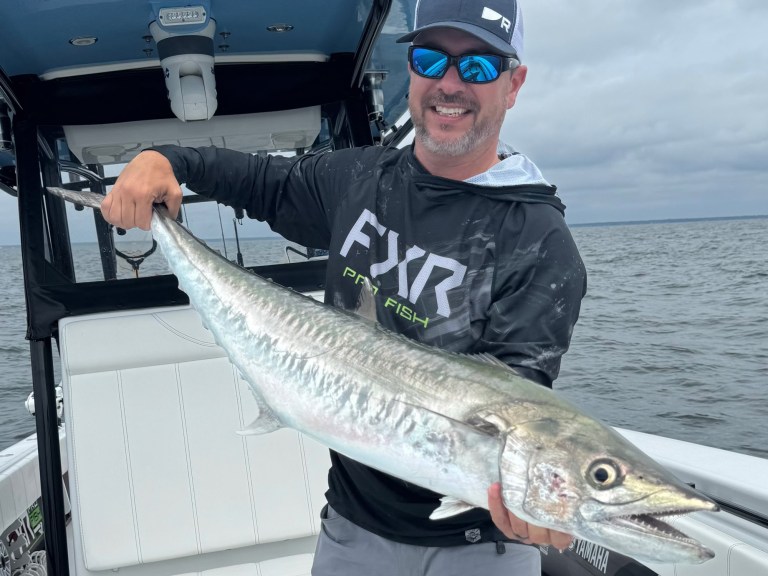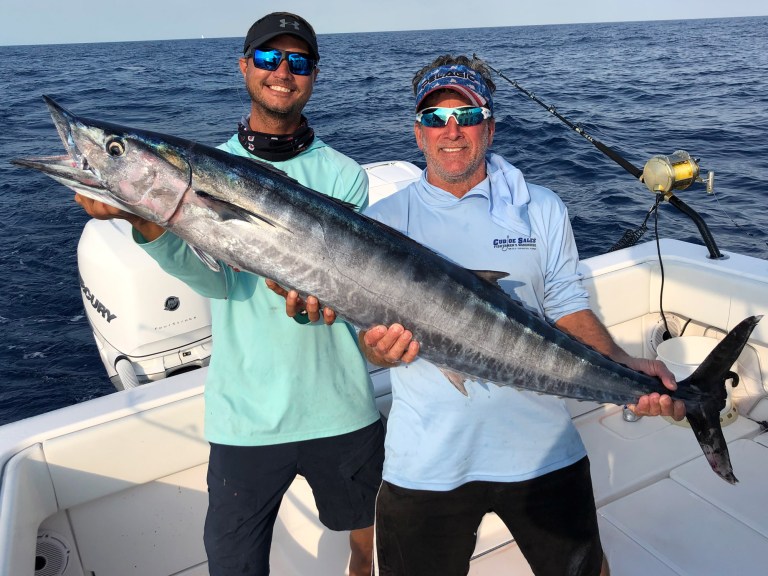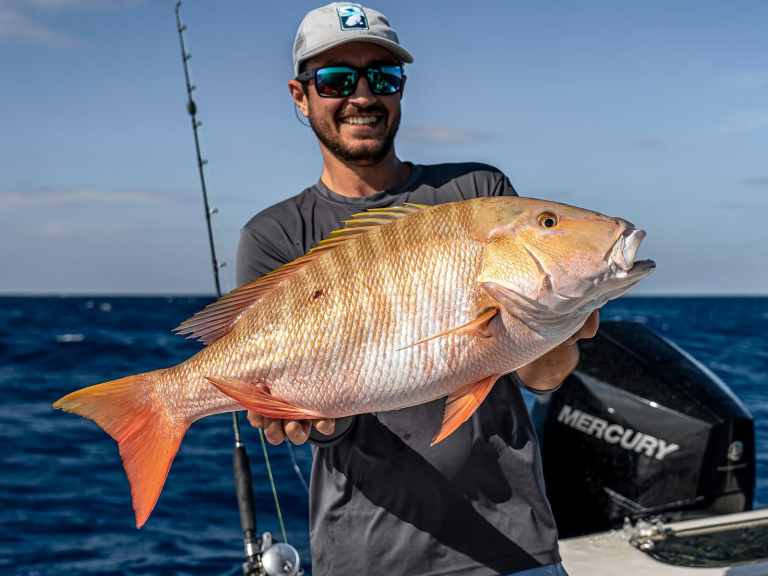

Bluefin tuna from 50 to 350 pounds and heavier pile into Atlantic waters off the coast of the northeastern U.S. from May through December each year. Here are three different techniques professional captains use to find and catch them from New Jersey through New England.
Popping and Plugging for Bluefin Tuna
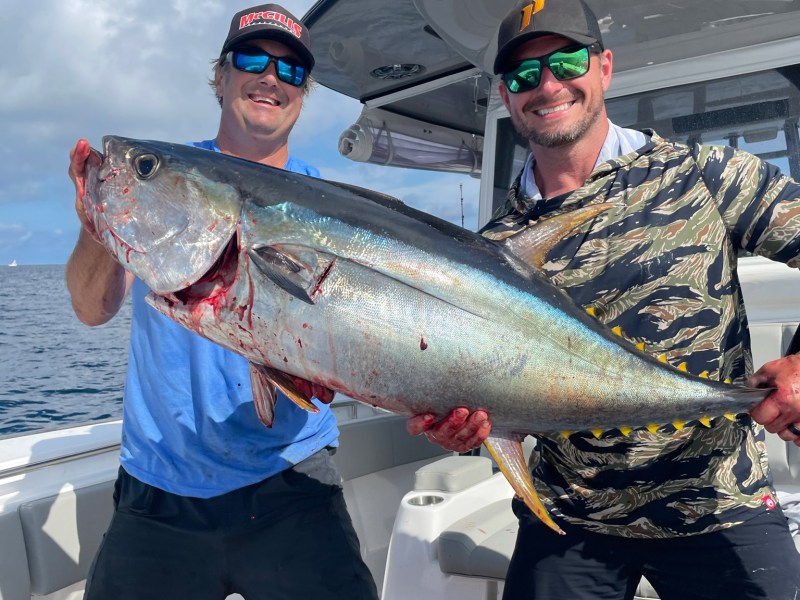
For many anglers, the most exciting way to catch bluefin tuna is throwing plugs and poppers at them when they’re schooled up and feeding on the surface.
“We start by using the best intel available and cover ground rapidly to find the fish,” said Capt. Jack Sprengel of East Coast Charters in Warwick, Rhode Island. “We search for bait concentrations, diving birds, feeding marine mammals, temp breaks, water color changes or surface slicks— they are all telltale signs tuna are around.”
Once bluefin tuna are located, Sprengel prepares large heavy-duty stickbait plugs and poppers while scanning for life and watching for surface activity from feeding tuna. He keeps a sharp eye focused on the sonar for any marks indicating fish feeding below.
If tuna are surface feeding, it’s time to start slinging long-casting poppers and stickbaits. Cast these lures on the outskirts of the school to get the attention of bluefin that will steal away from the group to whack at errant, fleeing baitfish.
Rip poppers super aggressively, throwing a massive spray once every second. Tuna will usually blast it during the split second when the lure is at rest. Stickbaits, slashbaits and sliders are worked in a severe walk-the-dog action to slash left and right through the water. some float on the surface while others sink at varying rates to fish just below the surface or deeper for when the surface is rough or the fish aren’t quite coming to the top.
Lures for the Technique
Savage Gear 3D Mackstick: Heavy-duty, long-casting, slow-sinking stickbait designed to mimic a real mackerel.
Yo-Zuri Bull Pop: 8-inch Bull Pop is built with a hard shell, through-wire construction and 3X-strong hooks and split rings for durability when battling big offshore game fish.
Gear for the Technique
Shimano Ocea Plugger: Built specifically for throwing poppers, stickbaits and plugs to large offshore game fish, with the backbone to handle the resulting battle.
Daiwa Certate 20000: With max drag heavier than 66 pounds and braid capacity of 330 yards, this reel is built to handle big, powerful fish. For plugging, it’s worth looking at the high-speed model, which picks up more than 54 inches of line per crank.
Jigging Metal for Bluefin Tuna
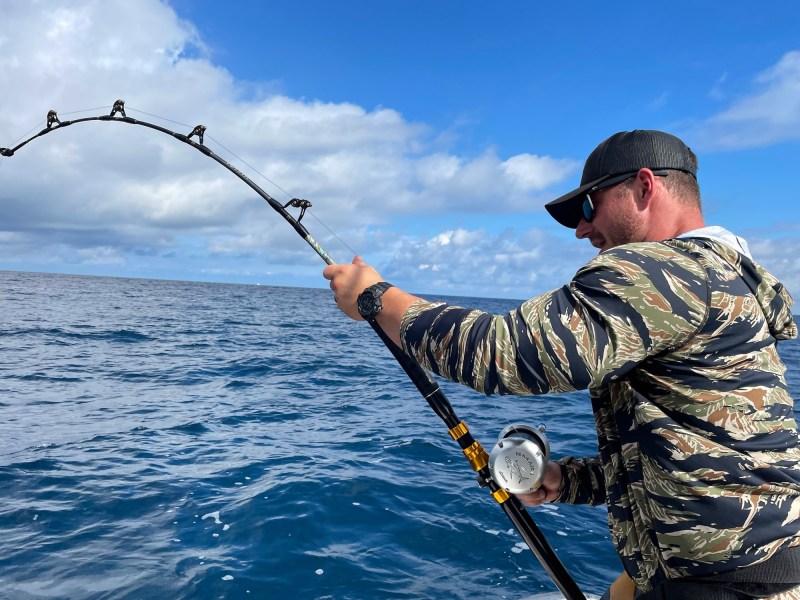
Capt. Kevin Albohn of Blue Line Charters in Watch Hill, Rhode Island, targets bluefin by trolling, casting and live baiting, but he loves the thrill of jigging.
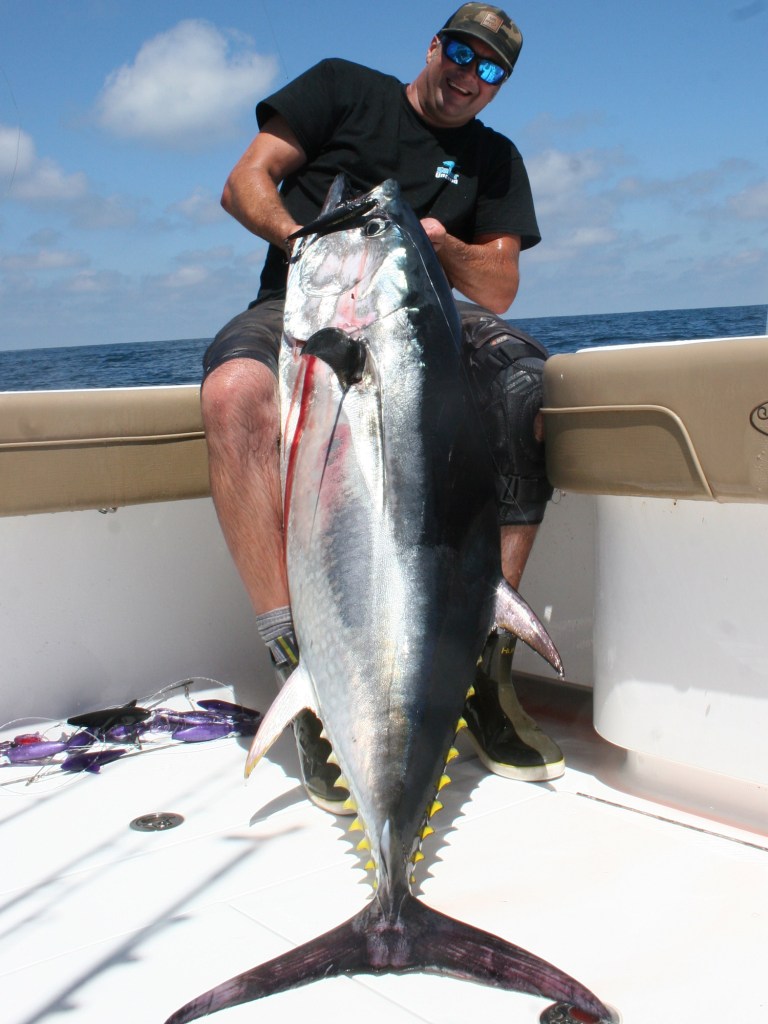
“Rule number one is to find the right blend of weight and action of the jig,” said Albohn. “Presentation has to be vertical to be believable. Go with lightest jig possible without creating a lot of scope. If we’re fishing 180 feet of water, generally I’m using 150-gram jigs. Depending on current, I can go up to 200 grams. Find the fit for the perfect blend.”
Heavier metal jigs put a lot of strain on the angler who is jigging it. A jig that’s too heavy can also lead to a stagnant presentation.
Mustad Moon Riser jigs and Daiwa Saltiga jigs perfect the slim profile for proper jigging action. Regarding cadence of snapping jigs, Albohn lets the bait and tuna movement dictate the methodology.
“Cadence is basically a yo-yo, 1:1 ratio of crank the reel and lift the rod in unison, Albohn said. The timing of the cadence is dictated by how actively the fish are feeding and the natural forage they are targeting. If the bluefins are feeding on fast-moving baits like sand eels or mackerel, jig with a quick cadence. Slower-moving baits like squid require a half-speed yo-yo action.
Color preference is also dictated by the baitfish that are present. Albohn prefers a Yellowfin Candy color or light green with a silver body when sand eels are around, but will turn to orange-glow or pink-glow when squid are more prevalent.
Lures for the Technique
Mustad Moon Riser Jig: Streamlined profile with weight concentration near the head allows this jig to sink fast with minimal water resistance. Built for slower, longer strokes, which is easier on the angler.
Daiwa Saltiga SK Jig: Flutters, spins and slaps on the fall to imitate a wounded baitfish. Designed for Japanese slow-jigging technique.
Gear for the Technique
Jigging World Luminous Hi-Pitch Conventional Jigging Rod: Sensitive tip loads parabolically for light or aggressive jig control, backed by enough power to handle heavy offshore gamefish like bluefin tuna. Available in three conventional models to match jig weights.
Daiwa Saltiga LD Conventional: High performance lever-drag reel available in numerous models including a single-speed model specifically for jigging. For larger tuna, a larger two-speed model is recommended.
50- to 80-pound PowerPro Braid
Troll Up Bluefin Tuna with Spreader Bars
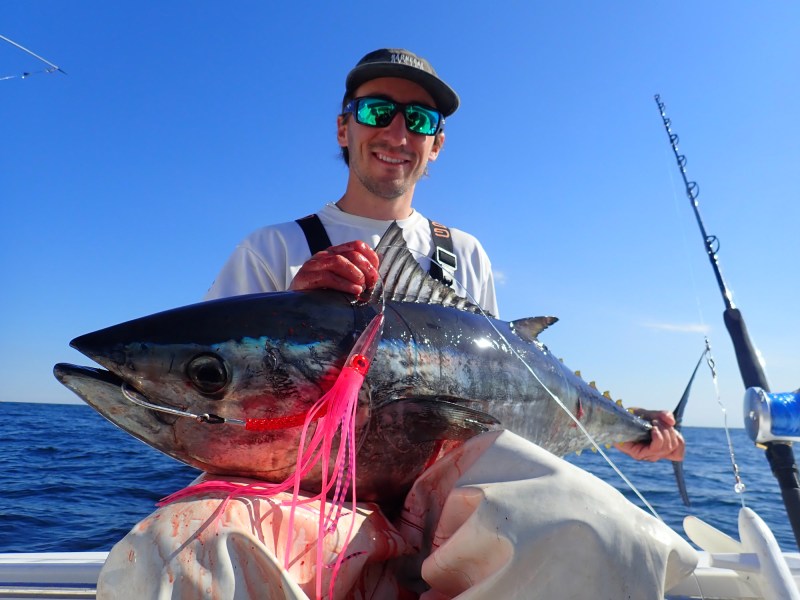
Capt. Craig Angelini of Canyon Runner Sportfishing, in Point Pleasant New Jersey, consistently puts bluefin tuna limits on deck using spreaders bars such as Chatter Lures or Sterling Tackle, and though many variations exist, anglers need to understand which models to utilize and why.
“It’s obvious to say match the hatch, but generally our bait to mimic revolves around squid, with the key being to pay attention to the size and color of the squid when selecting a spreader bar,” says Angelini. “If we are seeing the large, orangish squid at night, we’ll throw out the 9-inch pink/brown combo or red squids. Otherwise, if it’s a general pink size, then the 6-inch squids go out, usually in Bloomin’ Silver or Mini Mamba color patterns.”
If mackerel are the predominant bait, which may happen as well during the early part of the season, then Angelini will opt to throw out larger 9-inch squids on the bar.
Water clarity also plays a big part in determining spreader selection. “When we get that clean and clear cobalt blue, I’ll go with brighter colors,” says Angelini. “Use the rainbow and yellow patterns in those crisp clean waters, but when the waters are a darker green or bluish green, dial down to dee- hued colors like electric green and deep blue or purple.”
For trolling speed, a 6-1/2 knot pace is the standard to pull spreader bars, but if seas are glassy flat, bump it up to 7-1/2 to 8 knots.
Sprengel sets seven trolling lines out to incite a bite starting with four side-tracker spreader bars rigged with rubber squids. “In addition to the four tracker bars, we will also often deploy a deep-diver lipped lure that will get down 30 to 50 feet below the spread and can often trigger a bite from less brazen, deeper-holding fish,” Sprengel added. “The last two of the seven rods are rigged with ballyhoo baits fixed with weighted Joe Shute skirts. The ballyhoo are fished shotgun style, way back down the middle.”
Pick your tactic, the bluefin tuna are waiting.
Lures for the Technique
Chatter Lures 19-inch Side Tracker with 9-inch Bulb Squid: Multi-directional spreader bar to maximize the coverage of your spread. Available in many different sizes with a variety lures and colors.
Sterling Tackle 36-inch Tracker Bar with 6-inch Bulb Squid: Side-tracking spreader bar to pull your spread outside of the wash. Available in many different sizes with a variety lures and colors.
Gear for the Technique
Penn Carnage III Offshore All Roller Conventional: High-performance lightweight but powerful blank, built for offshore trolling. Can be paired with a bent or straight butt.
Shimano 50 Tiagra: Premium, heavy-duty two-speed lever-drag conventional reel built for offshore big-game fishing.