Captain Recommended Louisiana Inshore Lures
- Matrix Shad
- Strike King Tidal Shrimp
- Marker 54 Shrimp
- Berkley Rattle Shrimp
- Boat Monkey Cork
- Down South Lures
- Stanley Ribbit Frogs
- Strike King Redfish Magic
- Strike King Thunder Cricket
- Rage Swimmer
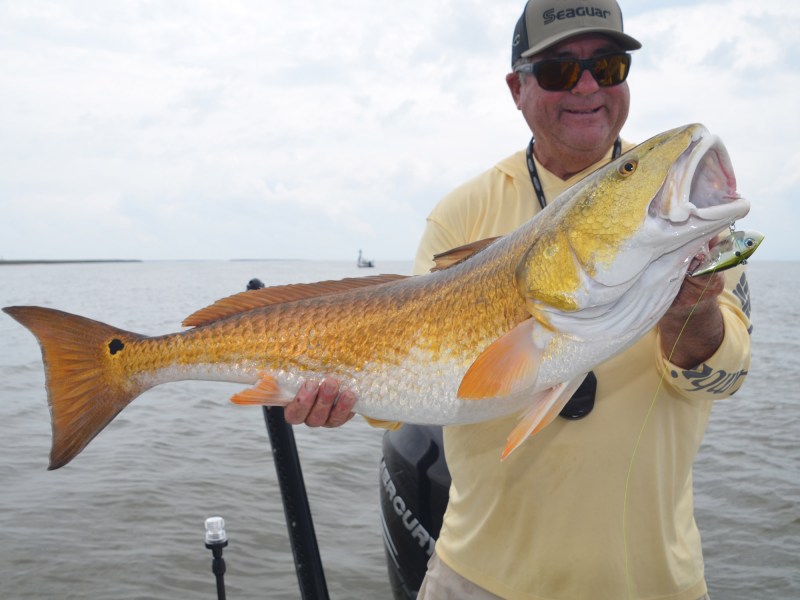
Fishing the Louisiana Bayous
There may not be a more prolific inshore fishery than the Louisiana coast. The southern end of Louisiana stretches about 300 miles from state line to state line, but because of numerous lakes and bays, the coastline actually measures about 7,721 miles. These coastal wetlands create a gumbo of life for multiple fish species.
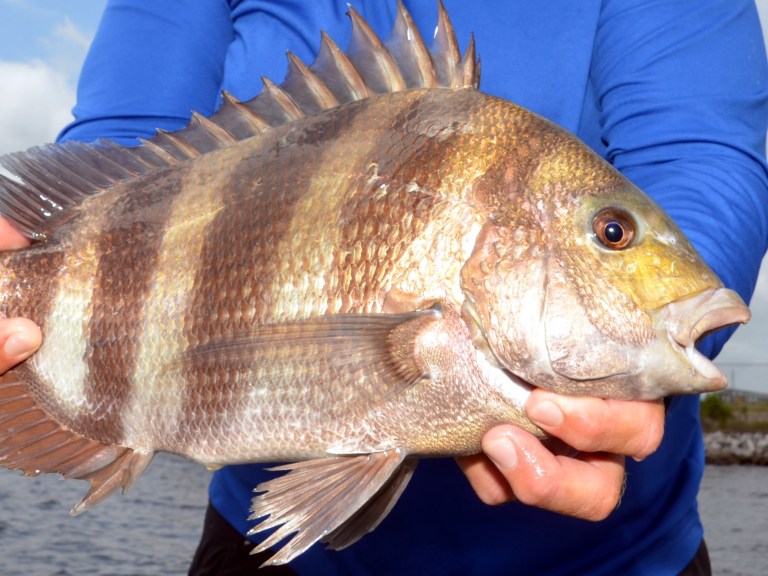
With the third longest coastline in the nation and 40 percent of the wetlands in the contiguous United States, the Sportsman’s Paradise offers anglers incredible fishing opportunities. On any day, the catch might include speckled trout (spotted seatrout) redfish (red drum), flounder, black drum, sheepshead and many other species.
In places where fresh and salty waters mix, like the massive Mississippi River Delta, the catch might even include largemouth bass and other freshwater species. Anything a bass might hit, a redfish might hit and vice versa.
“Catching freshwater and saltwater fish in the same place at the same time happens all the time,” said Mike Frenette, owner of Redfish Lodge of Louisiana in the Mississippi River Delta at Venice. “We can sit in one spot and whack the bass, redfish and flounder without moving. I’ve caught as many eight fresh and saltwater species in one day.”
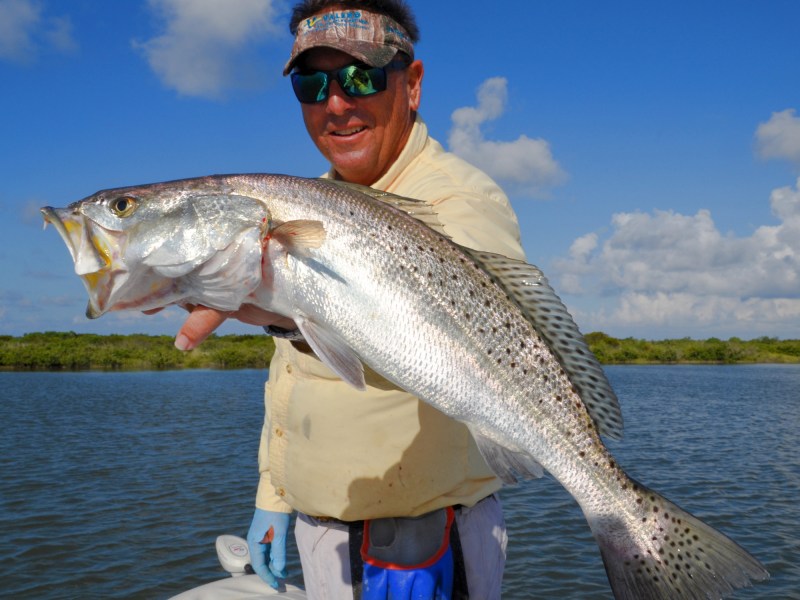
Louisiana Speckled Trout Fishing
Speckled trout prefer saltier water. Anything that might interest a trout would also interest a redfish, but nothing ignites a multi-species feeding frenzy like a crustacean migration. When shrimp migrate in and out of the marshes every spring and fall, everything follows. Everything eats shrimp, including bass.
Many people fish popping corks sweetened with live shrimp for tempting trout, redfish and other species. When an angler jerks the rod, the cork gurgles on the surface, simulating a fish striking bait. When spooked, a live shrimp naturally flicks its tail to escape and rises to the surface.
“A popping cork rig is a great way to locate feeding trout because it can cover so much water,” explained Mike Gallo of Angling Adventures of Louisiana, in Slidell. “I also use a popping cork to catch redfish. I use both live shrimp or Matrix Shad under a popping cork. I’ll pop the cork twice, then wait 10 to 15 seconds and pop it again.”
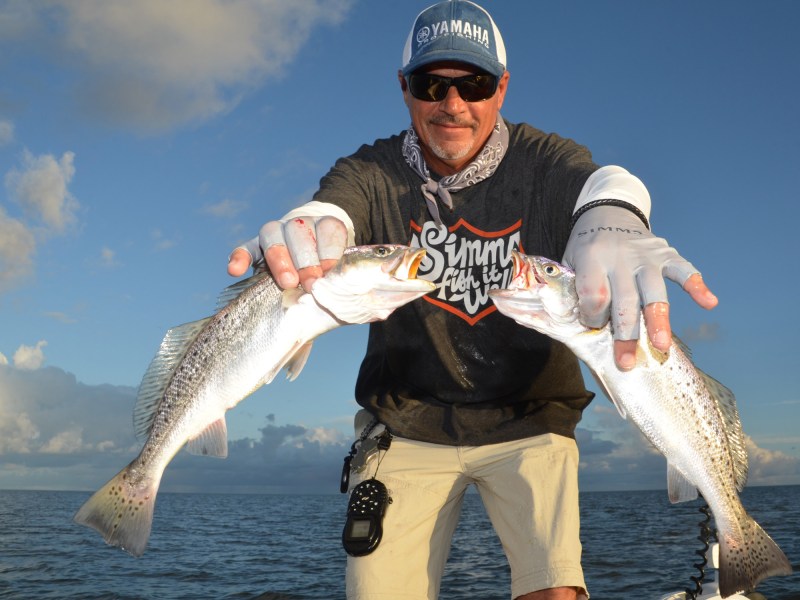
Baits and Tactics for Louisiana Seatrout
Besides live shrimp, live minnows, menhaden, locally called pogies, small mullets, croakers, pinfish, cut fish, dead shrimp and many other natural temptations can tempt trout under corks. Lure aficionados can fish various artificial shrimp imitations under cork or on jig heads. When the cork pops, a plastic shrimp flies upward and then sinks again, which is exactly what a live shrimp would do.
Toss the rig so that the prevailing wind or tidal flow carries the bait along a weedy shoreline or over an oyster reef. Pop it every so often. Points also make great places to fish corks. Predators typically hold on the leeward side looking into the flow, waiting to pounce on anything delicious. Toss a cork past the point and work it around the tip.
Trout feed best during moving water. During a falling tide, dropping water levels dislodge shrimp, minnows and other bait and pulls them into deeper water. Trout, redfish, flounder, even largemouth in the right place, wait at drain mouths looking for something to eat.
Toss a live or plastic shrimp under a cork as far upstream as possible. Let the current carry it downstream naturally. Occasionally pop it.
Also, rig a soft-plastic shrimp on a jig head or with a split-shot on the line. Use just enough weight for casting heft. Let the tide bounce the shrimp along the bottom naturally. Use the reel only to take up slack. If the bait stops, feel for a fish. If nothing bites, lift the bait back up into the flow.
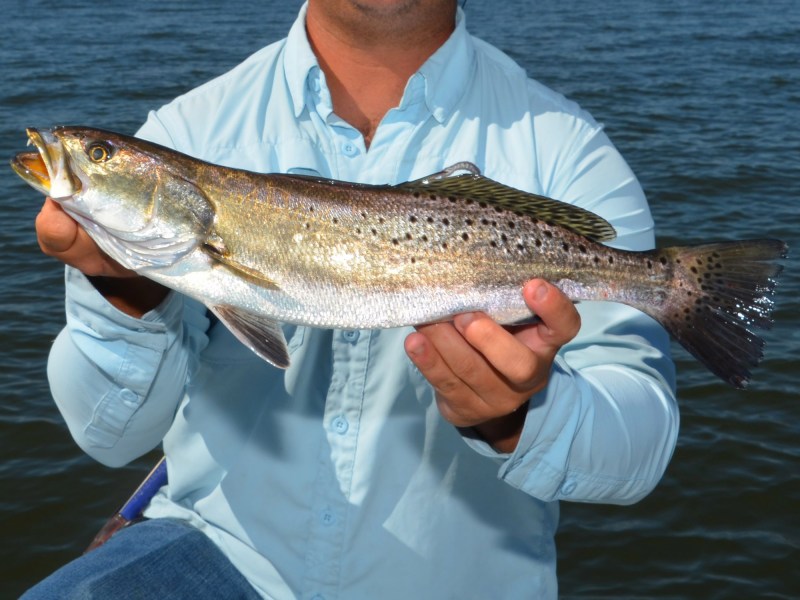
When trout get into a feeding frenzy, use a jig head tipped with a soft-plastic trailer to eliminate constant rebaiting. When trout want shrimp, use shrimp trailers. When trout feed on minnows or pogies, use something with a swimmer or paddle tail to replicate small fish. Work these baits from just under the surface to the bottom. With a shrimp trailer, hop it off the bottom and let it drop back.
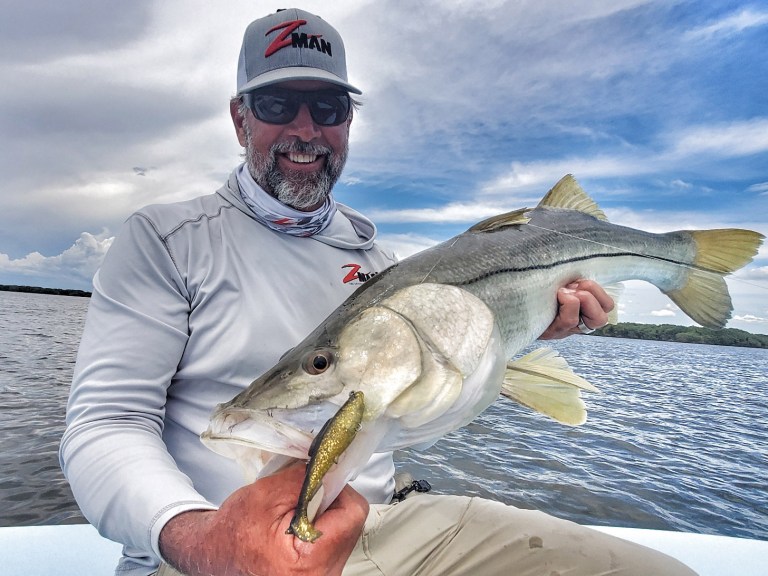
“With live bait, we catch a lot of trout and many other species as well,” advised Kip Plaisance with Tidewater Charters in Port Fourchon. “Often, we’ll catch bigger trout with plastics. I like a Strike King Tidal Shrimp or a Marker 54 Shrimp on a 1/4-ounce jig head in natural colors.”
Often, trout gather in huge schools. They herd shrimp or baitfish to the surface. Birds quickly spot the commotion and dive for their share. Not every diving bird indicates feeding fish.
“If only one bird dives over here and another over there, ignore it,” said Tommy Pellegrin of Custom Charters in Cocodrie. “I want to see a bunch of birds all diving at the exact same spot. When we’re on a bird frenzy, we don’t need live bait. I like a Berkley Rattle Shrimp in coastal candy or a natural color. Rig it two feet under a Boat Monkey Cork.
How to Catch Trophy Seatrout
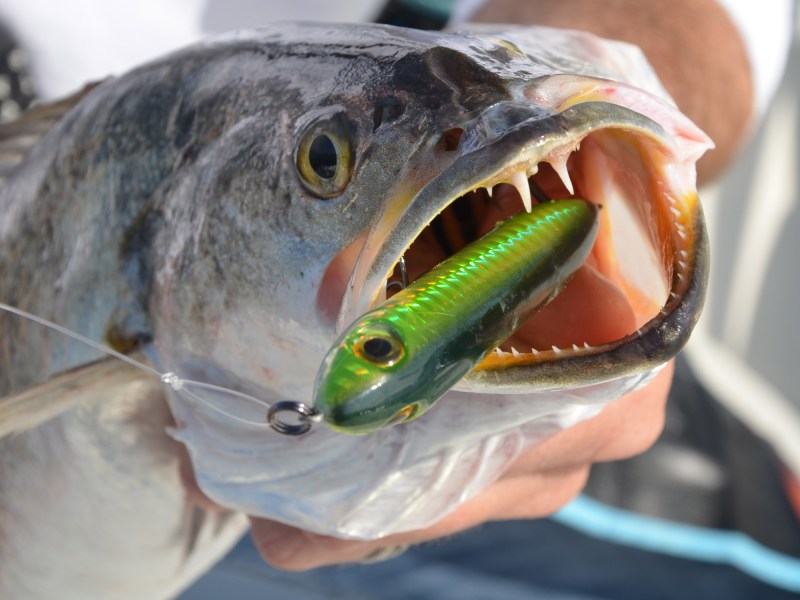
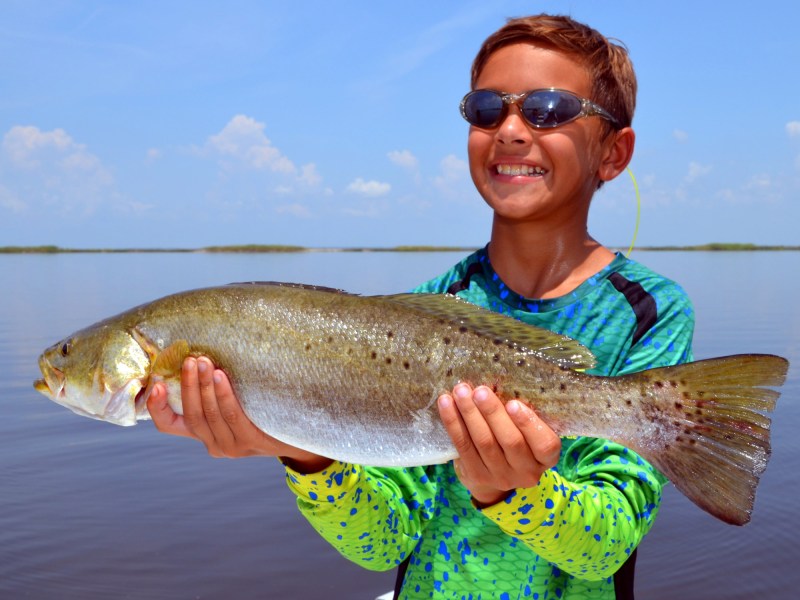
Schooling trout chasing shrimp tend to run small. Larger trout could follow the school to snatch smaller trout. A 5-pound speck can easily inhale a 12-inch fish. Lipless crankbaits in trout or pogie colors make good enticements. When fishing specifically for large specks, anglers won’t catch as many fish, but any cast could produce the trout of a lifetime.
For trophy specks, use larger baits. Free-line live mullets, pogies or croakers about 3 to 8 inches long. With a large baitfish, be patient. A trout or redfish must swallow a fish head first to fold the fins down and avoid choking. Usually, a trout hits a fish first to shock or kill it. Then, it comes back to swallow it. After grabbing a fish, it repositions it in its mouth to swallow. Put slack in the line and wait for the fish to begin swimming off. When fishing live bait with a circle hook, just start reeling.
Trout attacking oily baitfish like pogies or mullet create “slicks” that resemble a petroleum sheen. A tight, well-defined slick means fish just beginning to feed at that spot. Wind and tide can move slicks, so head upwind to find the fish.
“When we find a slick about the size of a basketball and growing, that means fish are feeding right there,” observed Brian Hanchey with Louisiana Backwater Charters in Hackberry. “We can smell slicks. They smell almost like watermelon. Around slicks, I like to throw 1/8-ounce jigs tipped with Down South Lures in opening night, blue moon, chicken of the sea or tequila colors. Purple rain is another good color.”
Louisiana Redfish Fishing
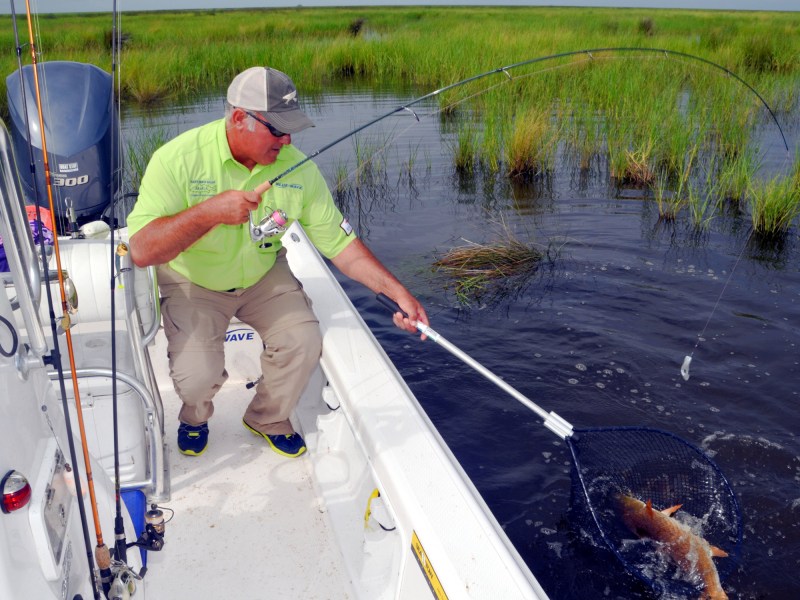
Topwaters can produce explosive action from big trout and redfish. Nothing in inshore waters compares to a bull redfish pulverizing a topwater bait. A strike might resemble someone tossing a hand grenade into the water.
“I’ve caught a lot of big fish offshore, but nothing compares to catching big redfish on topwater baits for pure fun and excitement,” Frenette opined. “They strike like someone dropping a concrete block into the water. It’s exhilarating!”
Most saltwater anglers prefer walk-the-dog topwaters. Mullets regularly swim with their noses protruding from the water. Zigzagging walking baits mimic wounded baitfish struggling on the surface. Toss topwaters into any pockets or around points along weedy shorelines.
Redfish commonly feed in water barely covering their backs, and shallow areas are great places to throw topwaters. Frequently, big reds wave their spotted tails like flags as they forage for bottom morsels. In shallow marsh ponds, many anglers also enjoy sight-fishing for reds with fly tackle.
Many marshes grow thick with grass. Redfish habitually hunker down in dense vegetation to ambush prey. Spot-tailed marsh marauders hammer topwater baits, but treble hooks easily snag weeds. Nothing slithers through or over salad like a soft bait with the hook inserted into a plastic body.
Fishing Floating Frog Lures for Redfish
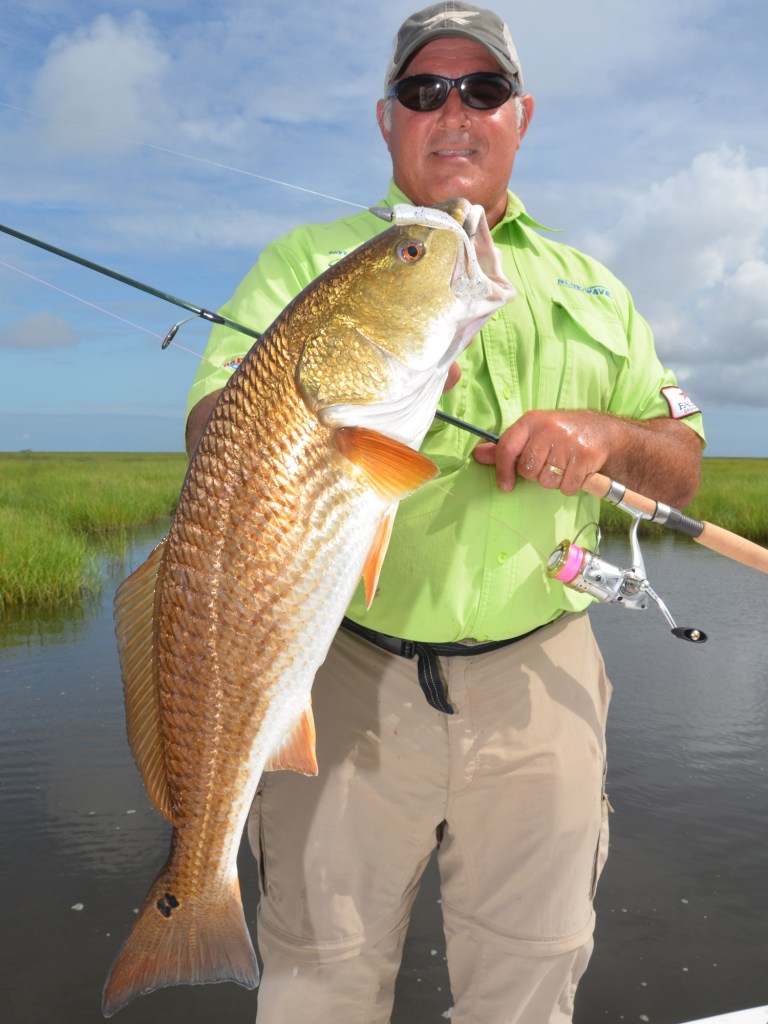
Anglers normally don’t think of redfish preying upon frogs, but a hungry redfish might eat anything. A frog thrashing the surface can entice spot-tails where few other lures can go. Often, a redfish explodes up through the vegetation, engulfing the frog and a mouthful of weeds at the same time.
“People tease me when they see frogs on my rods while going for redfish, but a redfish will blow up on a frog,” remarked Troy Nash with South Louisiana Redfishing, who fishes out of Cypremort Point. “Frogs live in the marshes. The feet on a buzzing frog makes a commotion that sends vibrations through the water. I catch redfish on green Stanley Ribbit Frogs with pearl bellies.”
In extremely thick weeds, use a steady buzzing retrieve. Occasionally pause to let the bait sit atop grass mats for a few seconds. With a sinking frog, pull it off the mats so it sinks a foot or two before resuming the retrieve.
Spoons, Spinnerbaits and Bladed Jigs for Redfish
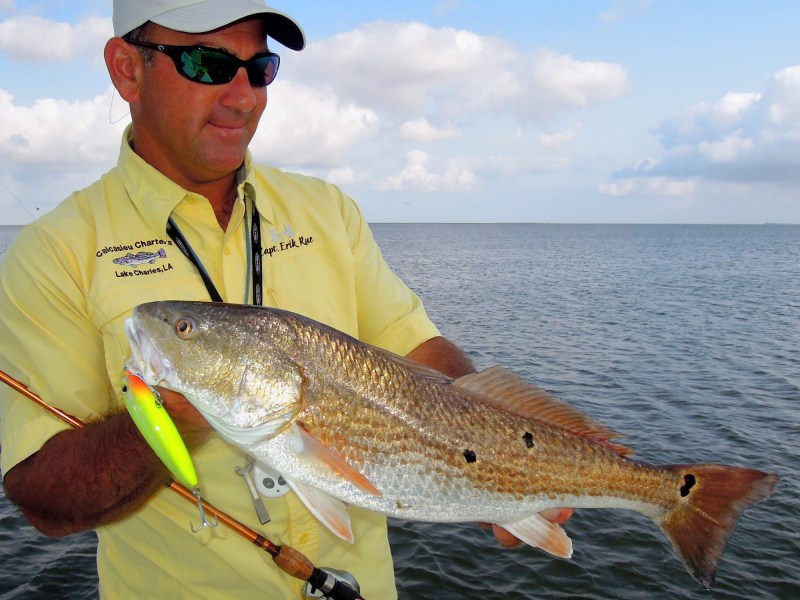
An old favorite, weedless gold spoons wobble through any depth. Periodically, let the spoon sink like a dying baitfish. Another versatile temptation, spinnerbaits with rounded Colorado blades give off tremendous thumping vibrations. The flickering blades simulate the rounded “swimmer” fins on a crab. A redfish likes nothing better than crunching a juicy crab.
“I use Strike King Redfish Magic spinnerbaits at drains coming out of the marsh during a falling tide,” Frenette said. “I work a 1/8- or a 1/4-ounce Redfish Magic slowly through the cut. For colors, I like white with a red tail or chartreuse with the red tail.”
Bladed jigs also give off good vibrations with inverted blades that wobble and flash. Run swim jigs just beneath the surface or at any depth. Pause periodically to let it flutter down like a dying baitfish.
“Fishing a bladed jig is almost like fishing a spoon, jig head and soft plastic all in one,” Frenette described. “The blade flickering through the water mimics a crab. That drives redfish nuts. I use the Strike King Thunder Cricket bladed jig with a Rage Swimmer trailer in Carolina Chrome color.”
If redfish want to eat a crab, give it to them. For big bulls, use a whole blue crab. Crack the top shell to let succulent juices ooze out. For more bites, remove the top shell. Break the remaining body into two pieces. Run a hook through the meaty part of one half and out through a leg hole.
“It’s hard to beat a cracked crab when fishing for big reds, except when using a soft-shelled crab,” Pellegrin quipped. “I use a 7/0 circle hook on a Carolina rig. A circle hook catches fish in the corner of its mouth, so it’s very easy to release it unhurt.”
Among the most fertile habitats in North America, river deltas and brackish marshes abound in life. In the lush gumbo of nature, one never quite knows what might hit on any cast.