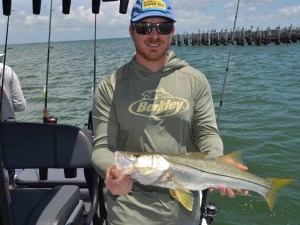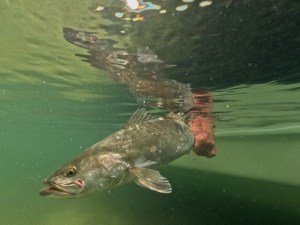
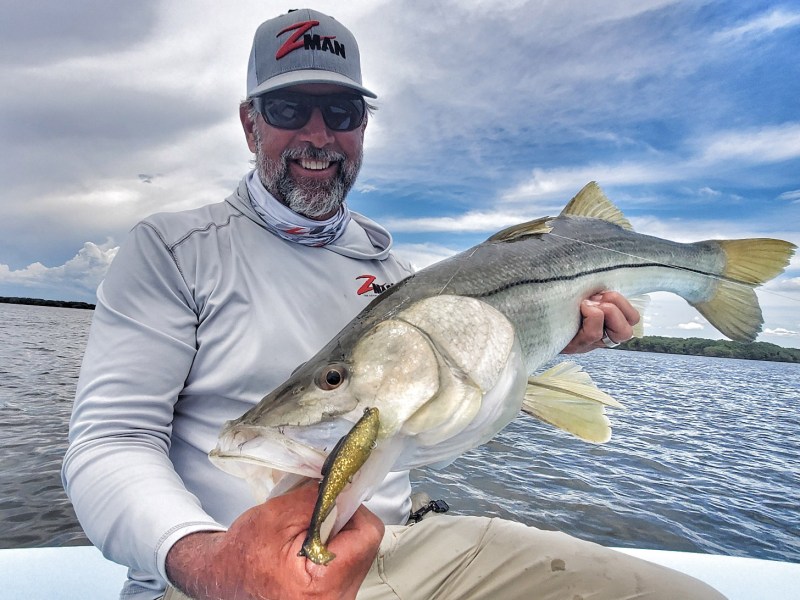
As fall approaches, snook feel the days getting shorter and begin migrating toward their winter holding areas. Summer’s conclusion may be a bittersweet moment for beach lovers, but for Gulf snook anglers, it’s one of the year’s best fishing opportunities. The seasonal shift from miserably hot days to cooler times cracks the whip on snook and puts them in full-on feed mode.
Leaving the beaches and inlets where they’ve spent the hotter months, snook point their narrow noses toward the deeper protected waters of rivers, canals and marinas. With normal weather patterns, the fish settle into those winter sanctuaries sometime in the November-December timeframe, but en route to those destinations, there’s a lot of eating on their schedule.
“I think their mood lightens up, so that translates into better opportunities,” said Tampa Bay guide, Capt. Josh Johnson. “The fish are definitely more eager to eat. You’re prone to get them on them on artificials or live bait, and you’re more prone to find feeding fish instead of fish that you’re just looking at.”
Fishing Florida’s Nature Coast region, Capt. C.A. Richardson looks forward to the influx of more cooperative snook.
“It makes my job easier,” Richardson said. “They bite in the summer, often at night and early morning, but during that fall transition, when the water temperature is in the ideal range, you can be catching fish all day long.”
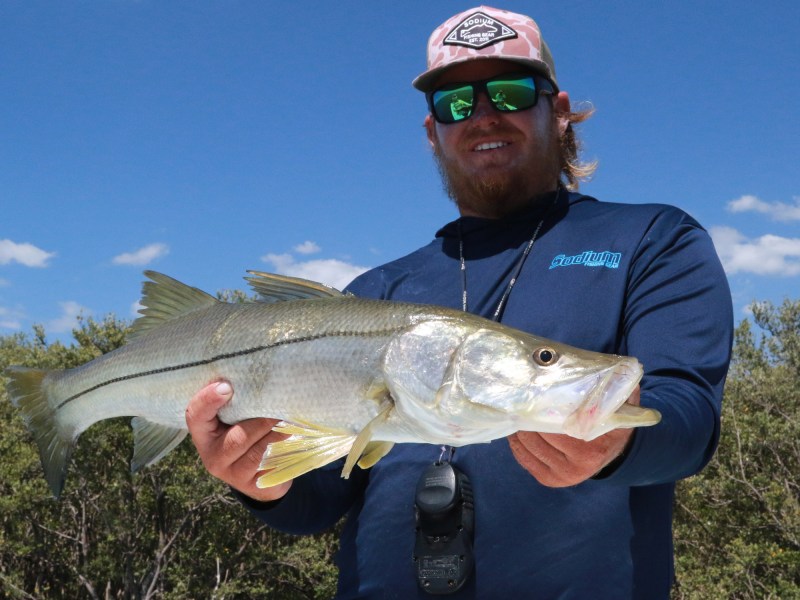
Timing the Snook Bite
In the northern hemisphere meteorological summer ends August 31, 2026, while astronomical summer concludes Sept. 22 with the autumnal equinox (when day and night are equal in length). While the former system works on exact three-month blocks, the latter is driven by the earth’s position relative to the sun.
Both matter, but in terms of fish behavior, the transition of astronomical seasons has more direct impact. Once the autumnal equinox passes, nights grow progressively longer as daylight shortens.
“Once we get into the fall when things start to cool down, the fish are feeling the days shortening, they’re really starting to fatten up for winter, when their metabolism slows way down,” Johnson said. “They’re gonna feed really heavy, kinda the same way they would in the spring when they’re coming out of the backcountry.”
Richardson notes that shorter days and early fall cold fronts lower water temperatures. This, he said, spurs temperature-sensitive snook.
“When the water temperature falls below 80 degrees, they know something is happening,” he said. “They’re in a hurry to feed, because they know the cooler water temperatures are coming.”
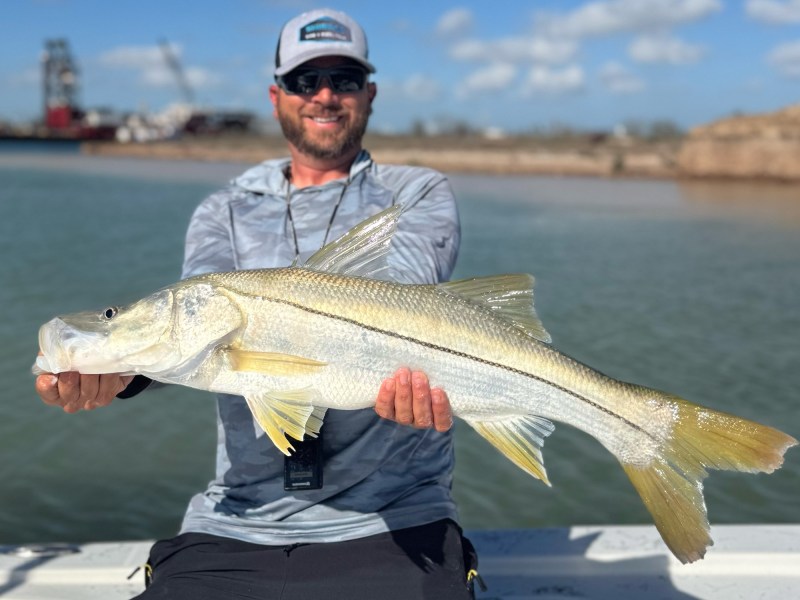
Where to Find Fall Snook
“For us, the snook like to go shallow before they go deep,” Johnson said. “They’ll get up on the flats, mangrove shorelines and oyster bars before heading to deeper wintering holes. They want to feed on all those finfish that live up on the flats.
“I usually find transitional snook around the mouths of rivers and bays like Terra Ceia and the Manatee River. Anywhere that’s close to backwaters. If something happens, like an early cold front, they can run somewhere and get away from that cold.”
In Sarasota, longtime guide and fly-fishing instructor, Capt. Rick Grassett looks for transitional snook around docks and bridges in the Intracoastal Waterway. On shallow flats, he finds them along the edges of bars and in potholes during low tides, or along mangrove shorelines during high tides.
“I always like high water, either coming in or going out,” Johnson said of his home waters. “The entire Tampa Bay area is a high-water area. Our fish are skittish, so they like a lot of water over their backs. Some spots are better on incoming, some are better going out, but high water is the key in my area.”
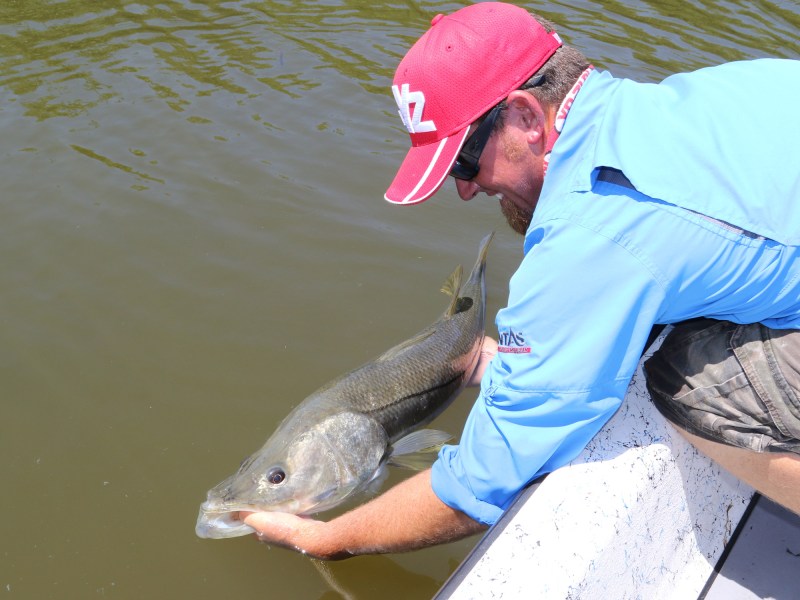
Tips and Tactics for Fall Snook Fishing
Texas guide Brian Barrera said annual aggregations finds fall snook more motivated to eat whatever they see. More mouths in close proximity leaves little time for indecision.
“When bunched together like this, they tend to be quite aggressive due to the competition around them, whereas during summer months they spread out into smaller groups,” Barerra said. “This time of year, I don’t fish the surface as much unless it’s a real calm and warm day. I tend to stick to jigging the bottom and running horizontal baits such as Rat-L-Traps throughout the thermocline in search of large suspended schools.”
Early in the fall transition, Johnson leverages the abundance of scaled sardines (aka pilchards or whitebait), which snook readily gobble. Live bait’s usually an easy sell, but he’s also fond of cut pinfish and threadfin herring (aka greenbacks).
“A lot of people overlook cut bait for snook, because they think they’re only surface feeders, but some of the largest snook I’ve caught ate a piece of cut bait on the bottom.”
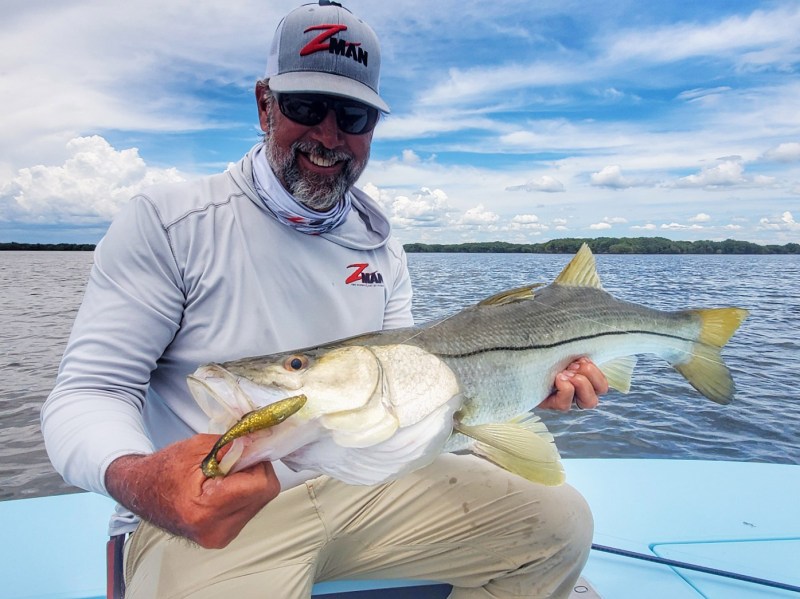
When he turns to artificials, Johnson knows the snook appeal of walking a red and white MirrOlure Top Pup across the surface. His other fall transition go-to is a MirrOlure Provoker rigged weedless on an EWG hook.
“I can throw that bait all day,” he said. “I like pitching the Provoker into gaps in mangroves. You don’t get tangled as much and it skips very easily.
“I like to work it pretty fast, almost like a topwater plug, because snook like to trap their prey near the surface. That’s why their mouth faces up and their eyes are on top of head.”
Around docks and bridges in the Intracoastal Waterway, Grassett likes white flies, DOA Shrimp or C.A.L. Jigs with shad tails. On the flats, where he expects the snook to target mullet and larger baitfish, he’ll go with larger Clouser style flies, a mullet-imitating DOA Baitbuster or a topwater like the DOA PT-7 on spinning tackle.
Along with big walking topwaters, Richardson likes a MirrOlure MirrOdine XL and big swimbaits like the 5-inch Z-Man Diezel MinnowZ and the Z-Man Mulletron. The latter’s one of his top performers, as he finds it equally effective for long casts to spooky fish or skipping under docks and mangroves.
Read Next: Conquering Florida’s Jetty Snook

Move with the Snook
Know the fall transition’s dynamic nature; Richardson says success demands mobility.
“Move around as much as you can to find the fish quickly,” he said. “They’re going to be moving in a wad. If you spend too much time in one spot, you’ll miss them.
“I spend a lot of time on the trolling motor this time of year. You have to cover lot of water.”
Johnson concludes with this transitional snook tip: “Fish structure, and not just rocks or docks, but any structure. If you’re going down a mangrove line, and you see a tree overhanging just a little bit more than the other ones, that’s the one you want to fish.
“And don’t overlook open flats. A lot of snook sit on open flats and they use that grass as their structure. Fish need three things: an ambush point, they need bait and they need an escape route.”