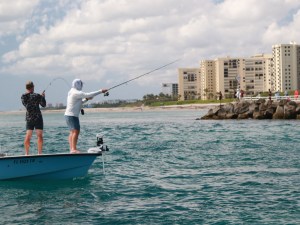
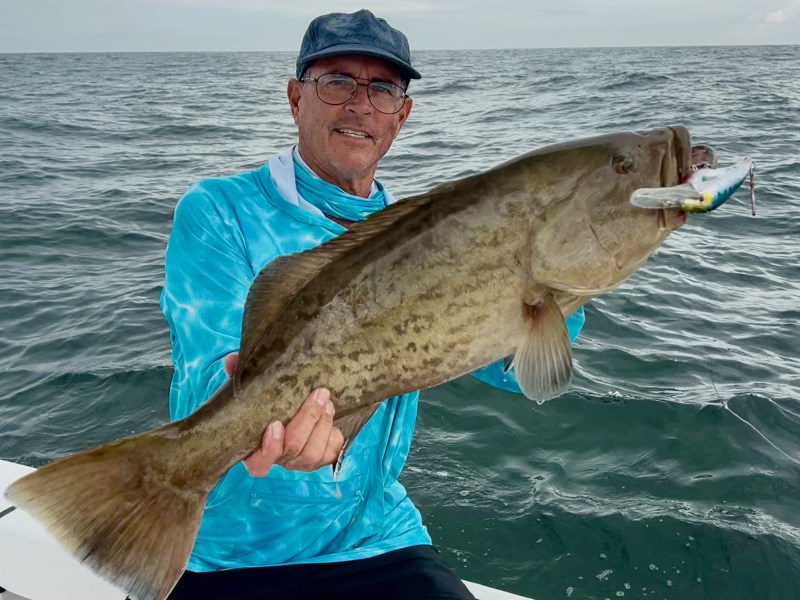
The west coast of Florida offers some of the most amazing and unique gag grouper opportunities in the Gulf. With short runs to grouper-holding structure in relatively shallow water, trolling is a good way to cover water and prospect during the short September season.
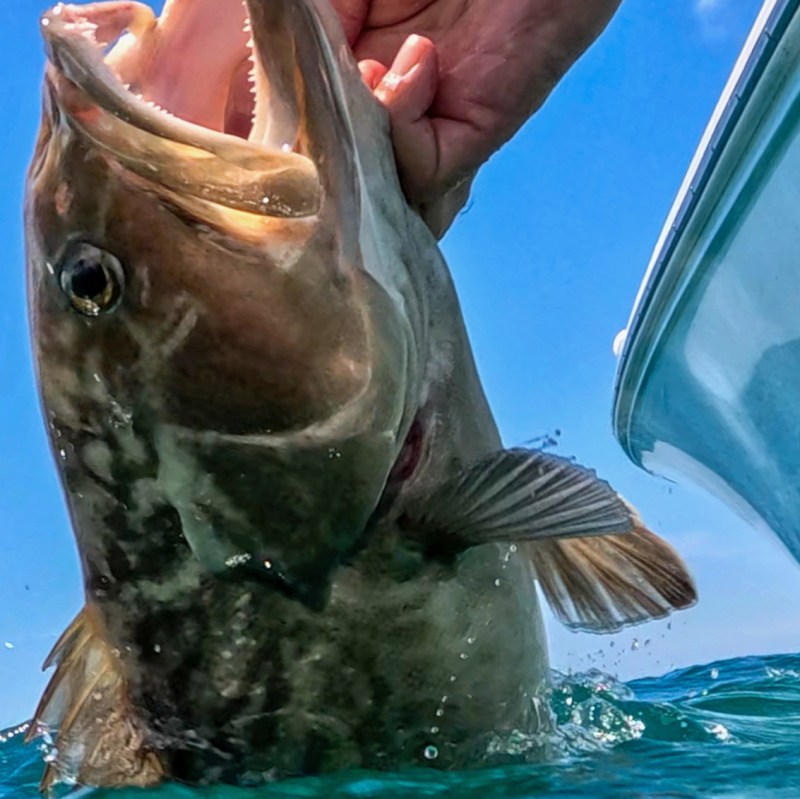
After a 6-mile run, I set a couple of lines and trolled past the first of several big rock piles. Almost instantly a drag started screaming. When grouper fishing, this sound seems like it might end with a heartbreaking separation of angler and fish when a gag finds safety in a jagged hole. However, this was exactly what I was hoping for, and the reason I wait eagerly for gag season to open on Sept. 1. When trolling, this is the sure sound of a big grouper being turned away from the safety of its home.
The Gulf gag grouper season is great. For one, there’s no requirement for long runs across a slowly receding bottom to deep water. Big gags make their homes anywhere from shallow-water nearshore reefs to wrecks in up to 500 feet of water. It’s the near-shore proximity that makes them easily accessible and extremely popular.
This popularity has resulted in much shorter seasons, but gag grouper seem to be rebounding nicely, and the season is expanding.
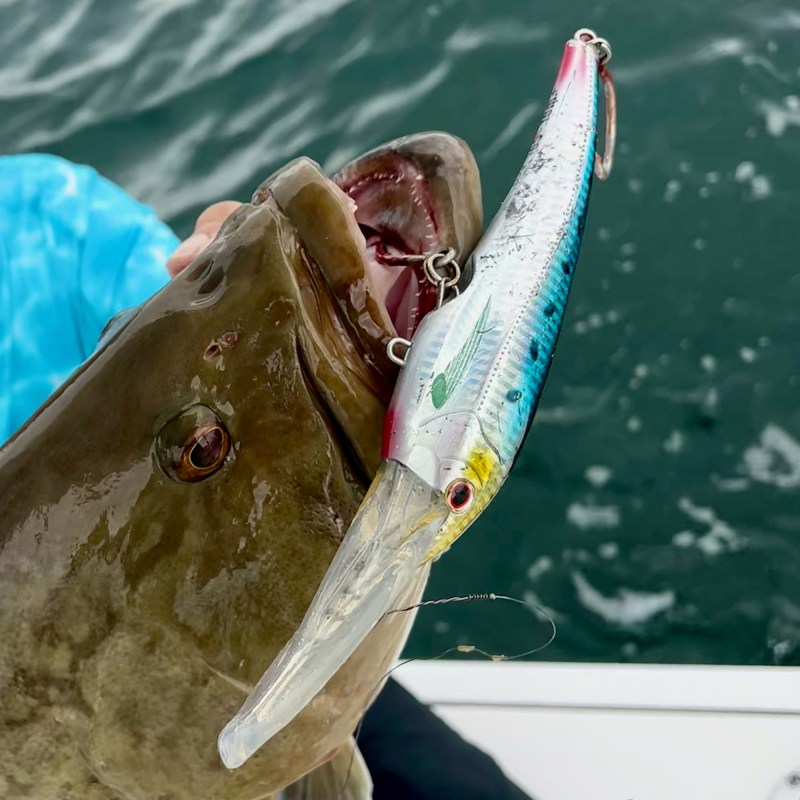
Trolling Techniques for Gag Grouper
Gag grouper in shallow water open possibilities for using different techniques than you would employ for red or other grouper species, which require long runs and dropping baits into deep water.
When you find fish in just 20 to 50 feet of water, it allows for fun and different ways to grouper fish. Sure, you can still just drop down a hunk of squid or a live pinfish like you do in 100 feet of water, but there are other presentation options, too.
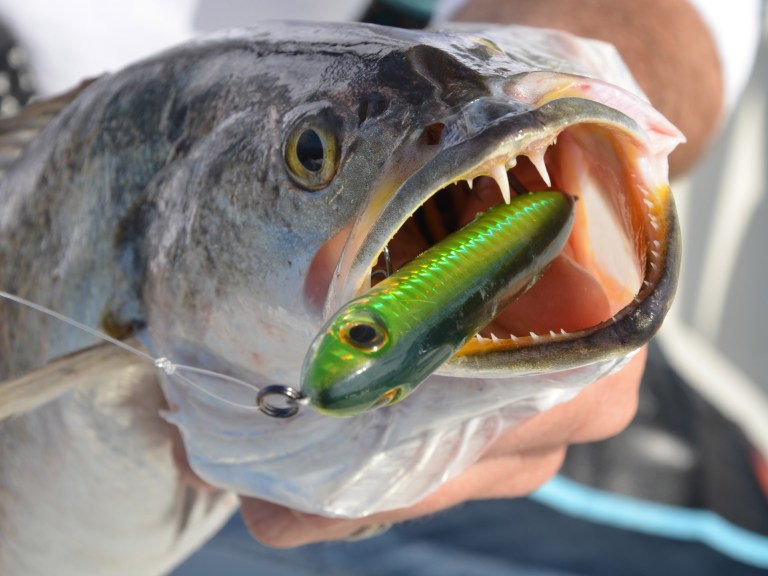
Big-lipped plugs bouncing off the rocks and ledges create a ruckus as they rattle past a grouper’s home. Often, it’s too enticing not to provoke a hit. It’s a fun change of pace for catching a species that’s normally associated with anchoring and sinking bait.
Plus, trolling is a great way to explore much more area, uncovering new hangouts and hidden fish. If you have not tried trolling large plugs, you are missing out on an extremely productive way to experience grouper fishing. Tolling is easy to learn, and it’s quick to pick up with just a few key fundamentals.
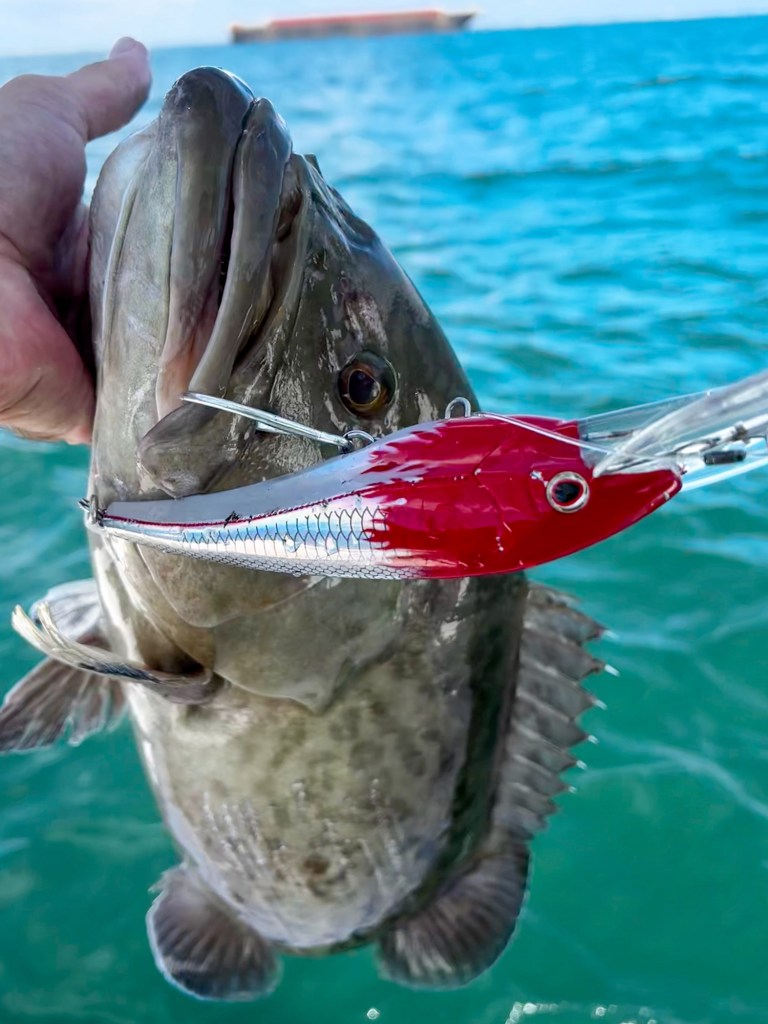
Trolling Depth and Speed for Gag Grouper
While trolling may seem like just tossing a few plugs behind the boat and driving around, there are some elements that require some detail to be productive. The biggest key by far when trolling for grouper is to keep your lure in the strike zone.
The idea is to have your plug running just above the bottom, even to the point of bouncing off anything sticking up more than a foot or so. Many people think, “I’m fishing in 30 feet of water, I just need a plug that dives that deep.” While technically accurate, getting a plug rated for 30 feet down to 30 feet is a different story. That 30-foot rating is based on maximum depth, which relates to boat speed, line length and rigging efficiency.
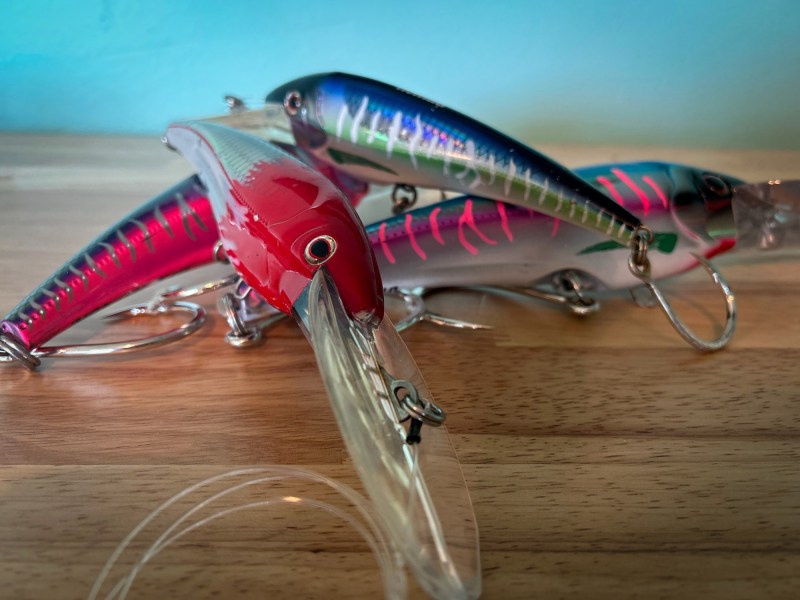
Rarely do I use a lure with a maximum depth equal to the depth I am fishing, I usually go one step further. My go-to lures are Nomad DTX Minnows, which dive anywhere from 20 to 50 feet. While I have caught gags in 30 feet of water using the 165, which dives to 30 feet, I’m much more effective using a 200, which is rated down to 40 feet. The reason is based on a few variables, with the two most critical being boat speed and the amount of line, or distance the lure is pulled behind the boat.
These lures are rated for speeds up to 12 knots, but I’m going closer to 6 knots when trolling for gag grouper, which is going significantly affect the depth they dive. The other key issue, which you can use to offset the slower speed is the amount of line you have out. Slower speed equates to a flatter angle of descent, so you need to let more line out.
This is the biggest detail between failure and success. As you start out trolling, watch for signs that your lure is bouncing off the bottom. If you don’ see that, let more line out. Keep in mind this also opens the risk of snagging the bottom, which is a forgone eventuality. If you’re not occasionally hanging up, you’re not in the strike zone.
The good news with Nomad DTX plugs is the lip is what usually hangs up, and if not, the single hooks come free much easier than treble hooks. Regardless, don’t try to winch the lure off structure. Instead, circle the boat back around behind the hang up, and the new angle will usually dislodge your lure.
Trolling Pro Tip
Using metered line makes setting a trolling spread much simpler. Metered line changes colors every 20 to 30 feet. Once you’ve determined how much line you need to let out to achieve the right depth, setting the spread is as simple as dropping the lure back until you see the predetermined line color. This is especially useful when others are helping set the spread; just tell them to drop back to the appropriate color.
Best Tackle for Gag Grouper Trolling
As you would expect with grouper fishing, you need some stout tackle. In this case, drag is of the upmost importance. Pulling these big plugs takes a strong drag to keep them from slowly drifting back.
I like the Shimano Talica 16 A on a heavy Shimano Terez rod. With up to 44 pounds of drag, you have more than enough holding power, and the rod is stout enough to withstand the pressure applied by the lure. Also, heavy drag pressure serves to pull big grouper away from structure as soon as they’re hooked. The lever drag allows you to easily loosen the drag to fight fish once they’re out of the danger zone.
As mentioned, I like the Nomad DTX Minnows, and the 165 and 200 sizes achieve the depths I need for this fishery. The bite is reactionary, so color choices may not be as significant. That said, I tend to have great luck with the Hot Pink Mackerel, Sardine and Fireball colors.
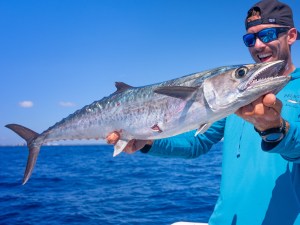
I crimp my mono leaders and use up to 150-pound test. This keeps things streamlined and helps with diving efficiency. I also fish these same areas for kingfish, so I have some rigged with #07 single-strand wire, and it doesn’t seem to deter grouper from hitting it.
Where to Find Gag Grouper
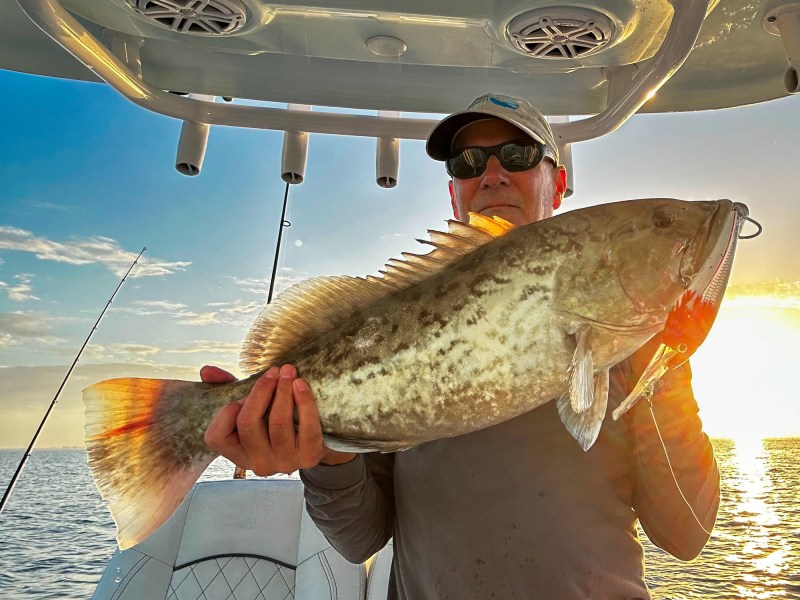
The last key to the equation is where to fish. Look for hard bottom with rocks and ledges. Rocky channels are full of ledges that make great hangouts for gags. Nearshore reefs can be like gag condos. Structure is prime living space for gag grouper and can be home to large numbers of fish. Relief shading on your depth finder is a great way to find new ledge areas, and trolling around likely structure is a great way to expand your fishing grounds.
Gag grouper are a staple of the west coast of Florida. They are abundant and fun to catch. Gags are often found near shore, and trolling for them is a nice change of pace and a great way to explore new areas efficiently. With attention to just a few details, you can master this technique and collect some great table fare at the same time.