Spanish mackerel are built for speed, adorned with brilliant paint jobs and fitted with the kind of gear that says “bad to the bone.” No question, they are the souped-up sports cars of the sea’s highway. But… these instantly recognizable hotshots are remarkably accessible to anyone interested in taking a spin. They’re all about performance, but mackerel rarely discriminate.
If you’re willing to invest just a reasonable amount of effort in Gulf Coast waters, chances are good for experiencing a memorable mack attack.
Spanish vs. King and Cero Mackerel
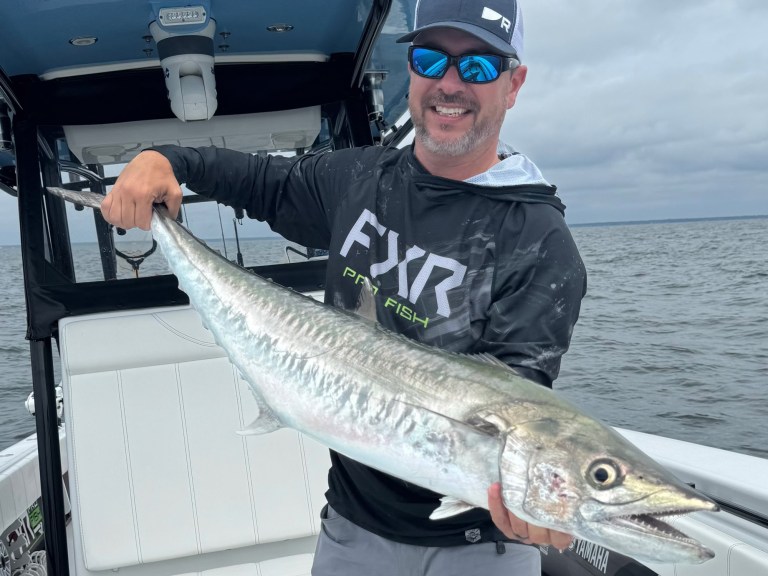
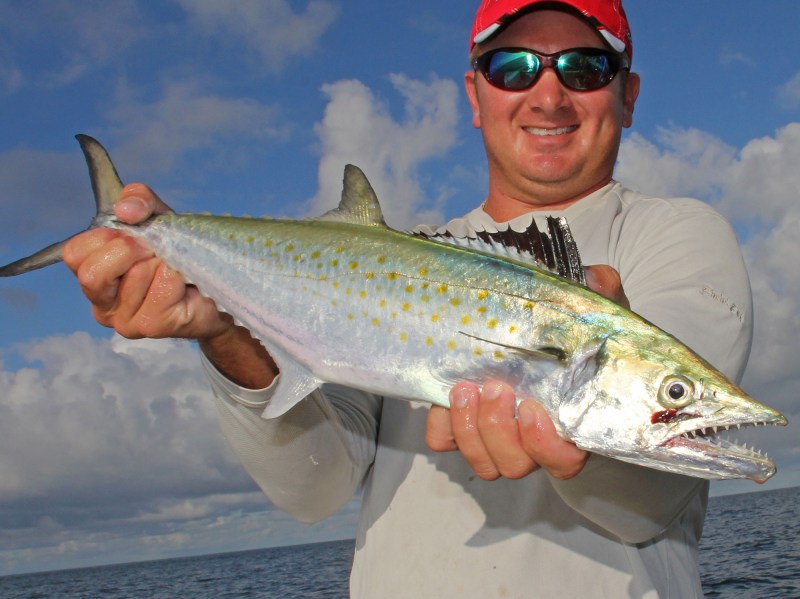
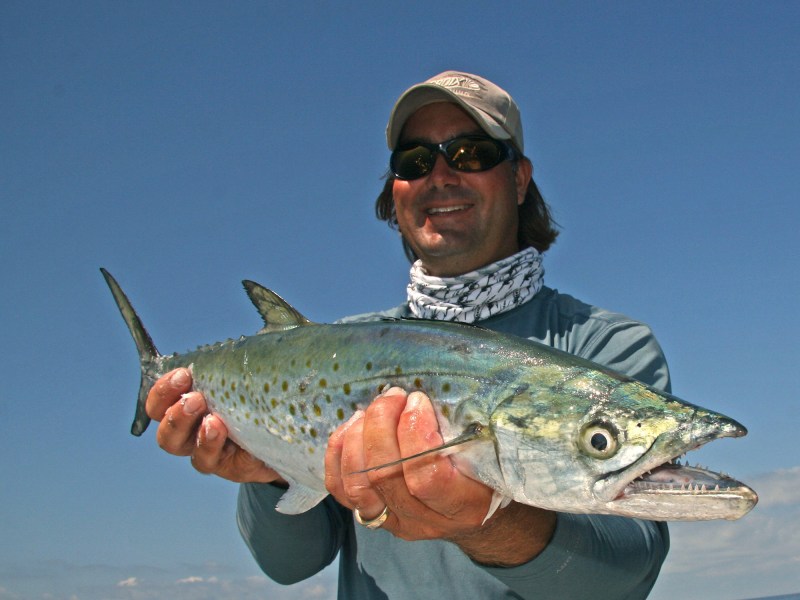
Spanish mackerel follow the same basic body design as two similar relatives, so let’s clarify. Juvenile king mackerel, aka “kingfish,” typically have dark gray spots that fade as the fish matures, while Spanish mackerel sport golden spots throughout their life.
The lateral line on a Spanish mackerel meanders down its side, while a king’s lateral line makes a nearly 90-degree drop below the dorsal fin, before continuing to the tail. The clearest distinction between kings and Spanish mackerel is the primary (collapsible) dorsal fin. When extended, the leading section is jet black on a Spanish mackerel and translucent on a king.
Kingfish also differ in their size potential, with adults commonly reaching 30-plus pounds, while a 5- to 7-pound Spanish is considered huge. Cero mackerel, which can grow a little larger than Spanish, also have golden spots and a dark primary dorsal section, but they add a distinctive golden lateral streak.
All three share the same silver-missile form with rigid, deeply forked tails built for blistering speed and jaws packed with sharp dagger-like teeth designed for slicing and dicing. That dental equipment gives us a clear picture of the hyper-aggressive speed-centric feeding style that ranks the Spanish mackerel among the most popular of inshore/coastal species.
Where to Find Spanish Mackerel
I’ve caught mackerel on a topwater plug over grass flats in 4 feet of water and over a reef in 60 feet. These little hellions zip around pretty much everywhere from the Northern Gulf’s nearshore drilling rigs to rock piles, shallow wrecks, and anywhere they find baitfish concentrations.
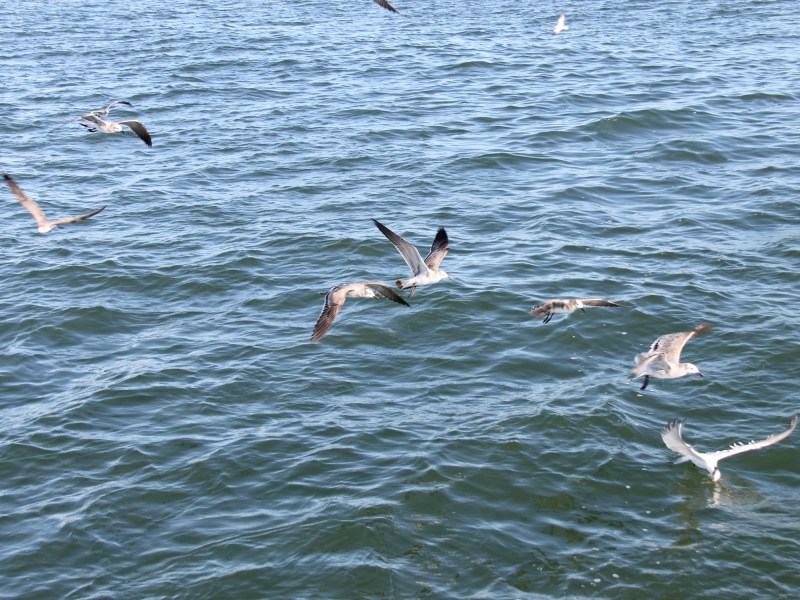
Big schools of menhaden (pogies), scaled sardines (whitebait) and threadfin herring (greenbacks) moving along beaches and throughout bays and inlets won’t evade mackerel for long, and once the predators corral the prey, the white water frenzies bespeak the carnage below. Between the attacks, birds will point you to the active areas, as pelicans, sea gulls and terns take advantage of the vulnerable baitfish pushed topside.
During the fall bait flushing, when outgoing tides pull southbound bait schools through coastal passes, these concentrated buffets are mackerel gold mines. When the action spills onto Gulf beaches, Sarasota’s Capt. Rick Grassett often finds mackerel mixing with false albacore (little tunny), but he can always distinguish the two, as the mack’s slashing style contrasts to the little tunny’s surface pops.
Boats obviously help you chase down the mackerel mayhem, but this is an equal-opportunity predator. From terra firma, or a little wading action, mackerel spread the love.
Prime example: My fellow Floridian Paul McKinnis recently posted a photo of a respectable mackerel that attacked a topwater plug in the Titusville surf. Elsewhere, when incoming tides push sardines and greenbacks close to piers and pedestrian-accessible bridges, land-bound anglers enjoy the smash fest.
Best Gear and Bait to Catch Spanish Mackerel
If you’re handy with an 8- to 10-foot castnet, you’ll can catch plenty of live baitfish over grass flats, along beaches and near channel markers. If not, a “sabiki” rig anchored by a 1- to 2-ounce clip-on weight offers a viable option.
The ideal setup: a 7- to 7 1/2-foot medium-heavy spinning outfit with a size 2/0 hook set through the bait’s nose. A mackerel’s sharp teeth will slice through braided or fluorocarbon main line, so anglers often attach a 12- to 18-inch wire leader with a swivel or an Albright knot. Long-shank hooks are another option to protect from cut-offs.
Free-lining or floating live shrimp works when you know the mackerel are feeding, but because shrimp instinctively swim to the bottom, floating them under a cork keeps them on the radar.
As for artificials, it’s hard to beat silver spoons, Got-Cha Plugs and various baitfish-imitating hard baits, from topwater walkers like the Heddon Super Spook, to subsurface twitch baits like the like the MirrOlure MirrOdine and diving plugs like the Yo-Zuri Crystal Minnow—cast or trolled.
Spanish Mackerel on the Fly
Baitfish pattern flies fished on an 8- to 9-weight outfit with floating line, a 10- to 12-foot leader and a 40-pound bite tippet also deliver.
Pier Fishing for Spanish Mackerel
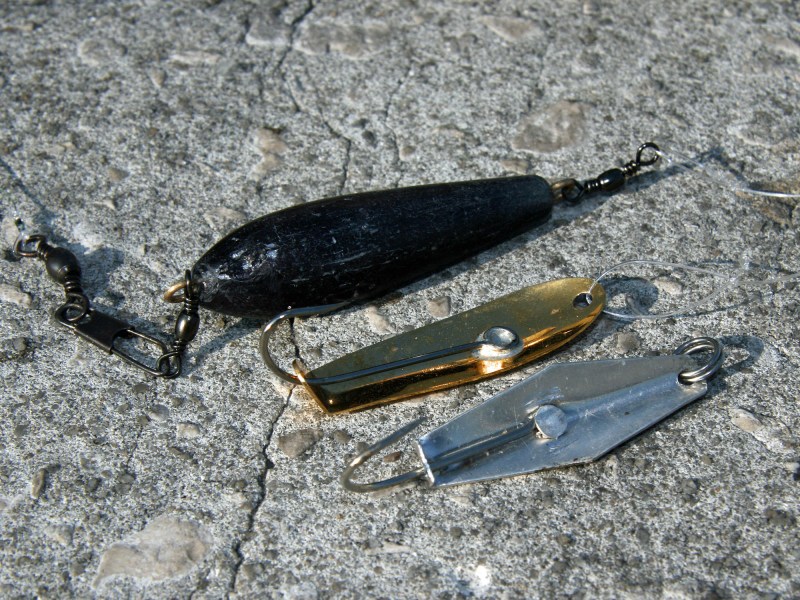
Pier anglers do a lot of their mackerel work with spoons, either in casting presentations, or with a heavy sinker rigged above a long leader terminating with the flashy metal lure. When retrieved, the weight goes to the bottom and the spoon flutters higher in the water column.
Another option: Rig a spoon below a popping cork to float the bait higher in the water and attract mackerel with the surface chugging. With this and any of your artificials, 6 to 8 inches of wire leader will keep you from donating pricy baits.
Notable Nuances
This will upset the purists, but in addition to perky live sardines, I’ve caught mackerel on cut bait and dead shrimp hung below a cork. That’s an understandable trait for a schooling fish that lives with nearly constant feeding competition; however, Spanish mackerel occasionally become so fixated on a particular forage that they ignore everything else.
I’ll never forget running out of Tampa Bay and spotting the telltale white water slashing a couple miles from the Sunshine Skyway. As we approached, a pack of mackerel raced toward the boat and passed our starboard beam close enough for us to see a couple dozen studs of 3-plus-pounds literally finning across the surface as they chewed up tiny glass minnows, maybe 2 inches long.
Circling around, we motored ahead of the still active group and threw absolutely beautiful 4-inch sardines right in their path. Any other predator—snook, redfish, cobia—would’ve smoked those baits the second they hit the water, but the mackerel were so locked onto those glass minnows that they completely ignored the more substantial meals.
They’ll eventually fill their bellies and break out of their food-focused trance, but short of trying to match the hatch with small jigs, spoons or flies, you’re better off looking for more general interest mackerel.
Chumming for Spanish Mackerel
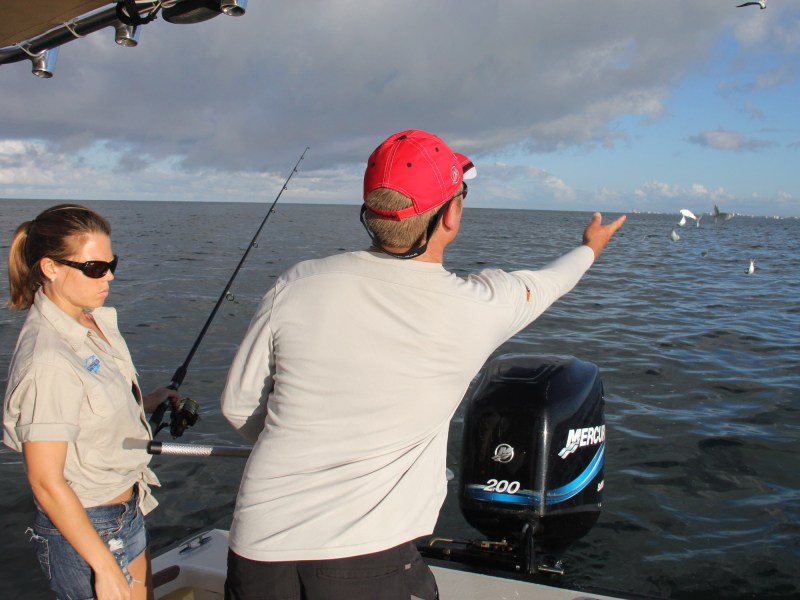
Spanish mackerel rarely need convincing, but you may need to get their attention and attract them to your area. Start with a frozen chum block made of ground baitfish and concentrated fish oils. Placed in a mesh bag and hung from a stern cleat, the chum block melts in the waves to form an enticing trail of scent and appetizers that draws fish from afar.
Complement the chum block with freshly cut baitfish chunks. A filet knife works, but keep a pair of kitchen shears or bait shears handy. One of the most effective chum techniques I’ve ever seen took place on a trip with the late Capt. Gene Turner. This St. Petersburg kingfish legend hosted me and a buddy for a morning that also turned up several big mackerel.
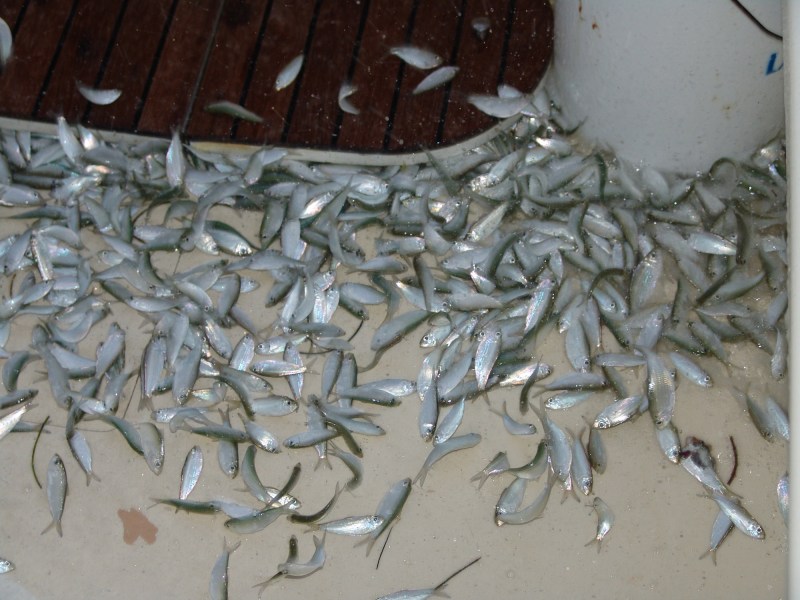
Basically, Turner found a wad of juvenile sardines hugging a shoreline and used a small mesh castnet to fill several inches of a 5-gallon bucket. Once we started slow trolling full-size sardines, Turner sat at the stern and dribbled out handfuls of those silver shards.
It didn’t take long for a tempting chum line to form and within minutes, we could see mackerel flashing behind the boat, no doubt gobbling as many of the freebies as they could find.
Elsewhere, Tampa’s Capt. Billy Miller once showed me how he capitalizes on the fall run of big Spanish mackerel that invade Central Gulf Coast beaches. After loading up on live sardines, with some held in a 5-gallon bucket for chumming, he anchored up-tide of a rock pile or artificial reef and slung generous loads of appetizers toward the target zone.
The mackerel made no effort to hide their presence, and once Miller had ’em buzzing, he and his crew free lined nose-hooked livies on wire leaders. Bites were vicious, but if one failed to come tight, Miller offered broadly applicable advice: Open your bail to let the bait drift back and another take was seldom far behind.