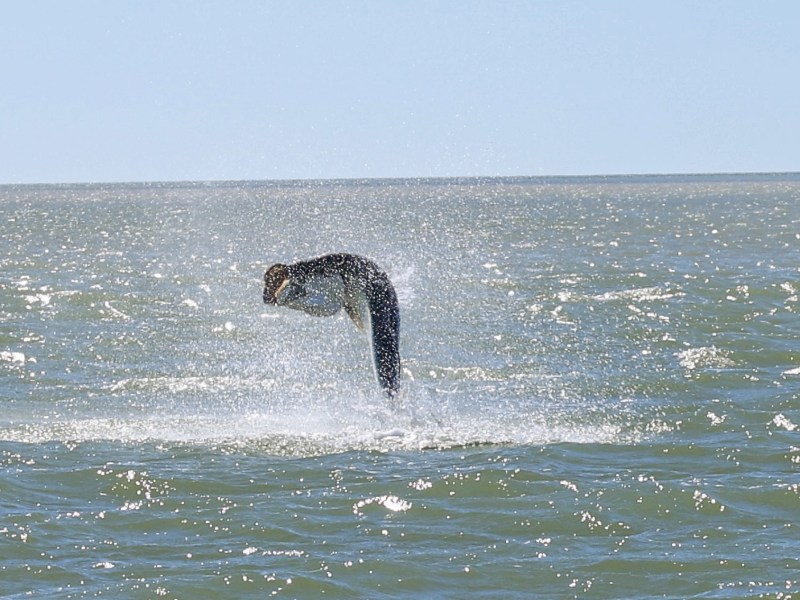
It’s May in Islamorada, the heart of the tarpon fishing season in a fishery that harkens back to the glory days, when pioneers of the sport guided dignitaries and a new railroad ushered in development, much of which was wrapped up in pursuit of the silver king.
Over the decades, tarpon have experienced declines and rebounds in this storied fishery, both partly at the hands of recreational anglers, whose enthusiasm seems to drive cycles of overfishing followed by conservation—sometimes voluntary, sometimes by mandate. Right now, tarpon fishing in the Upper Keys is in stable place. Florida regulations make it a pure sport fishery, intended to preserve this magnificent animal and access to it. But inklings of a new potential threat are beginning to creep out along the coconut telegraph.
The latest advances in sonar technology have put some Keys guides on alert. Looking for fish on a screen is replacing the traditional techniques for finding tarpon, and increased angler efficiency is just one more threat these giants face during their annual migrations.
Islamorada Tarpon Fishing
It was tough to envision any threat whatsoever as Capt. Joey Murphy pushed us up on plane outside the docks at Bass Pro’s World Wide Sportsman in Islamorada. It was calm, flat calm, and the 300 Yamaha on his 25-foot Contender Bay whipped us through the channel-marker sticks like we were racing the Florida Bay slalom course. I think we were racing to beat the fly fishers in flats skiffs to one particular shoreline along one particular little key, but hordes of mullet crashing with the sound of a gentle surf over blue-green shallows stopped us.
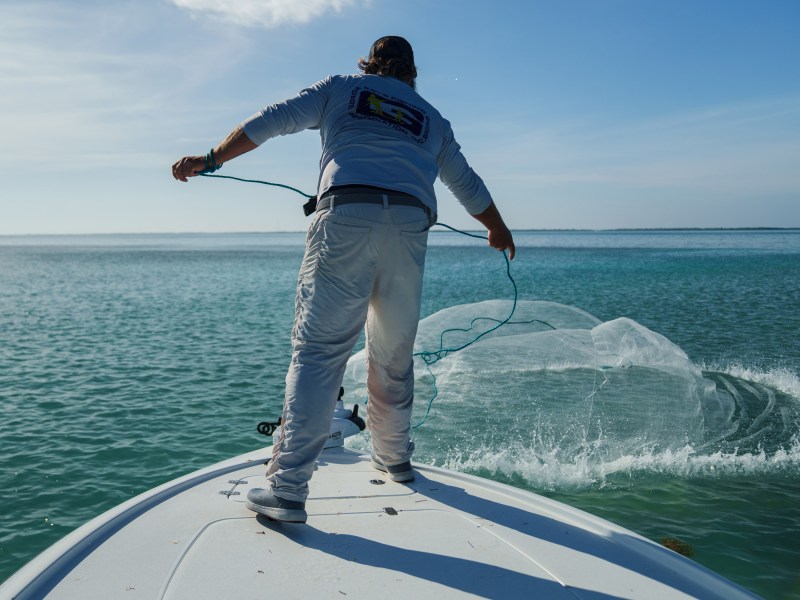
Murphy had some mullet on ice, but you don’t pass up live bait when it’s this easy. With the trolling motor down, he stalked them along the edge of the shallows before timing his throws. He only tossed the net a couple times before we had live mullet to spare. Then we were back on the hunt.
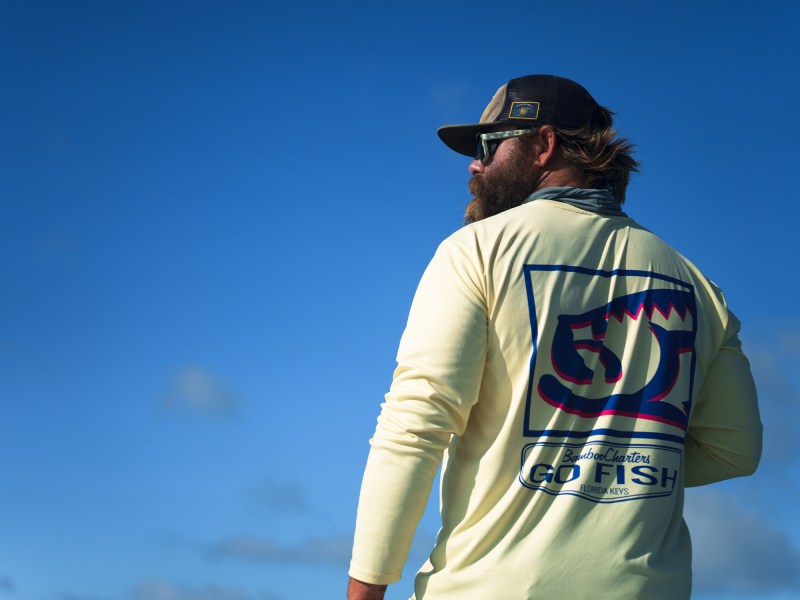
Capt. Murphy is a giant man with a giant beard, a giant sense of humor and giant respect for the ecosystem he’s been immersed in for the last 15 years. He captains for Bamboo Charters. We had the pleasure of fishing with him for a couple days during a media trip hosted by Islander Resort, which offers luxury accommodations on Islamorada (more on that later).
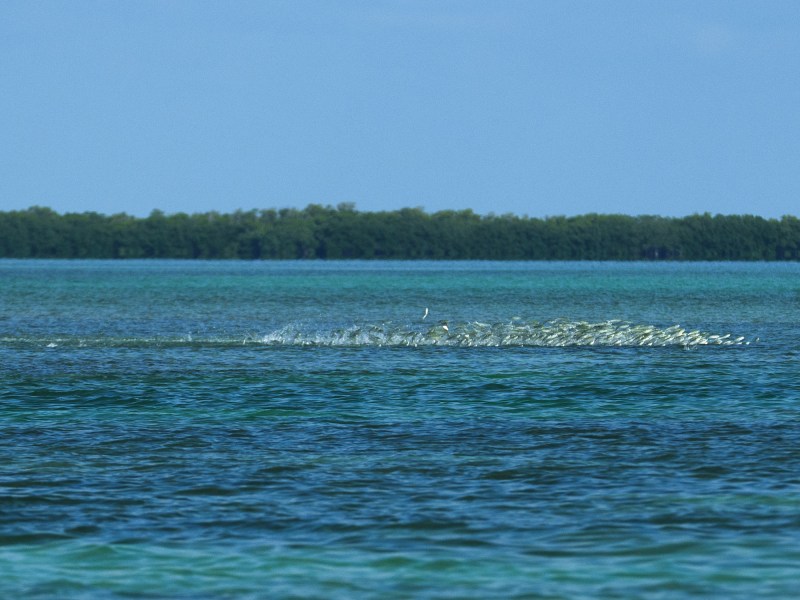
“This time of year, it’s pretty much all mullet they’re chasing, so I’m looking for bait and muds, and I’m also just looking in areas where they would normally be,” Murphy said. “I don’t have any of that fancy technology, you know, the side scan, live view or anything like that. I’m just relying on eyesight and local knowledge of where the fish push through.”
Mullet are the primary food source March through May, when tarpon push across Florida Bay in waves and stage up for weeks at a time before moving offshore to spawn. At other times of year, Murphy might drift live blue crabs or pilchards or sink salted Spanish mackerel strips for tarpon, but the great migration coincides with the spring mullet run.
This time of year, it’s all about mullet. So that’s what we deployed when Murphy dropped the trolling motor and spot-locked us maybe 150 yards off a little island that experience has taught him funnels tarpon.
Tarpon Fishing With Sonar
It hasn’t been too long since local knowledge of the fishery and learning annual movement patterns of tarpon were the gold standard in finding tarpon in the Keys. At the bridges, in the channels and on the flats, a fisherman looks for signs of life like bait, birds, tarpon on the surface, or the milky patches of water known as muds, where baitfish churn bottom sediment that draws in gamefish like chum.
With the advent of side-scan sonar, the traditional skills of knowledge, observation and intuition were already being eclipsed by tech that allows anglers to see fish beneath the surface on a screen. The latest sonar advances on the market are even more powerful. Generally known as forward-facing sonar or live sonar, these tools allow anglers to watch and target fish with baits and lures in real time, almost like a video game, 80 feet or more in front of a transducer.
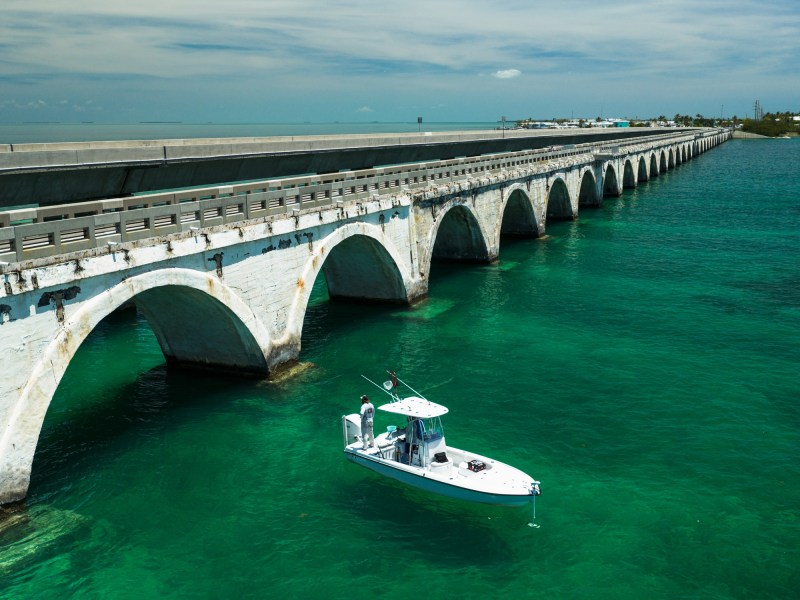
Fishing with Murphy, who knows Florida Bay well, we saw tarpon at every bridge, channel and flat, and we caught fish. These fish were actively moving and feeding, which is how we located them without sonar. The concern of some Keys guides is that live sonar leaves no place to hide for tarpon and other species.
Targeting Tarpon at Rest
Bonefish & Tarpon Trust (BTT) recently issued a statement warning of potential negative effects of forward-facing sonar and called for precautionary management measures in Everglades National Park, stating that sonar exposes tarpon to added angler pressure when they are inactive or holding deep and would otherwise be undetectable.
I spoke with Nick Roberts and Will Johnson, of Bonefish & Tarpon Trust, briefly at a recent industry event, and they said the statement was in response to what Keys guides they work with are seeing on the water. BTT has not conducted any studies on sonar in relation to tarpon.
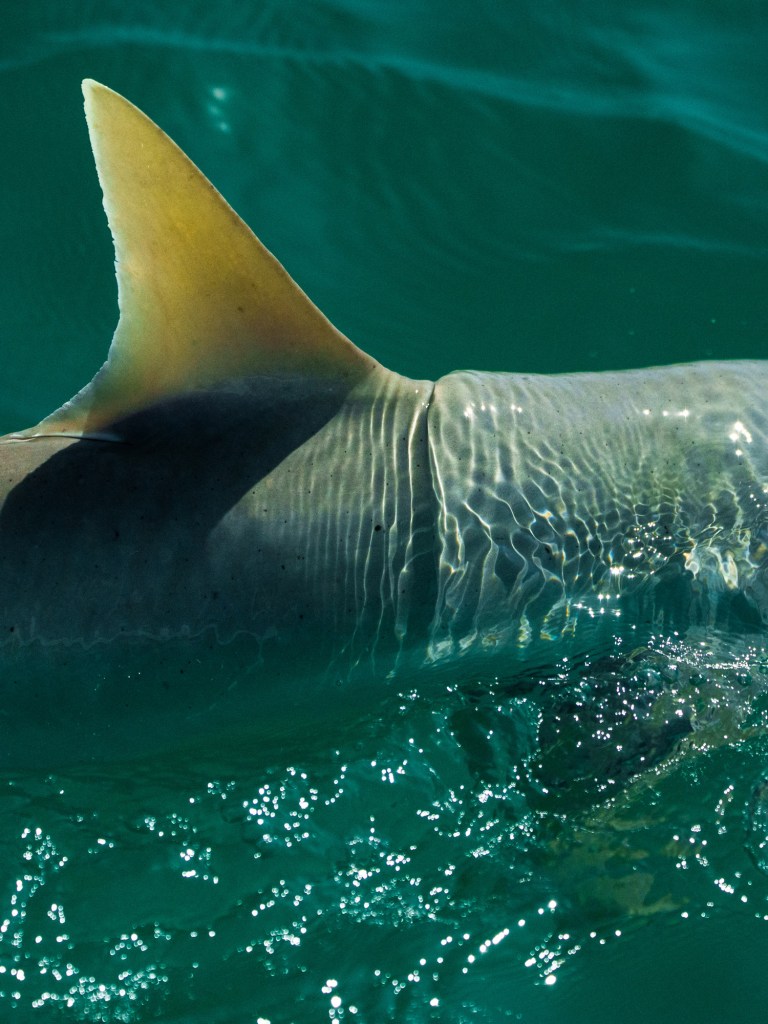
The Keys Tarpon Fishing Experience
Murphy does not begrudge his colleagues for using all the tools available to put paying clients on fish, but he worries that hounding fish while they are at rest is just one more stressor for tarpon staged up during migration.
“If you put too much pressure on a species, you’ll see them leave the areas where they normally, or historically, would come to visit as they’re passing through,” said Murphy.
Beyond that, he said the searching and observation that go hand in hand with traditional tarpon fishing are a huge part of the experience.
“We all want to catch fish, you know, but in the nearshore waters of the Florida Keys, the fish are a bonus,” he said. “You get to see some of the most beautiful waters in the continental United States. At certain times of the year, we have flamingos, which is amazing, and we have roseate spoonbills and all these birds and wildlife, from manatees to dolphins to turtles. If you’re just driving around staring at a screen, what’re you doing? You’re completely missing the whole point of it.”
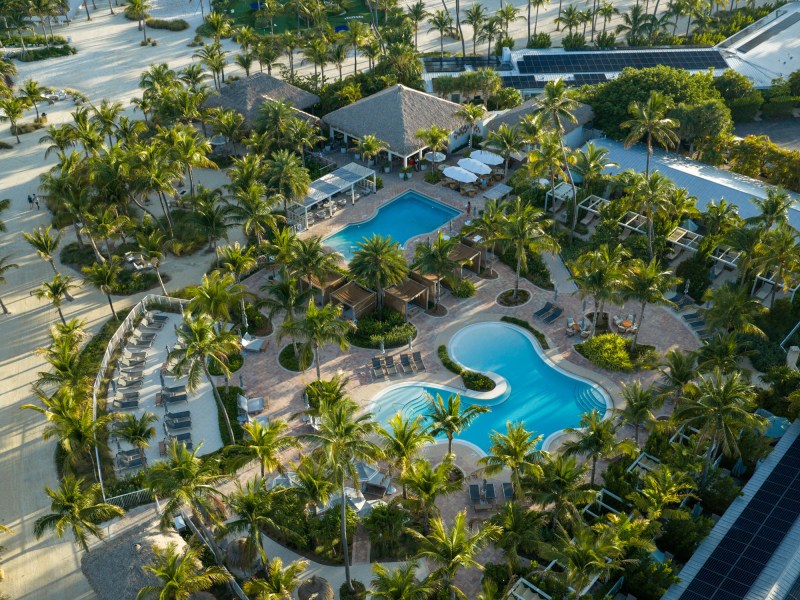
The Islamorada Experience
Another part of the Islamorada experience is island life. If you go to the Keys for the fishing, you might as well be comfortably entertained during evenings and lay days. Islander Resort is a highly rated property, centrally located on the island, just a couple minutes from anything you might want to do.
The Islander sits on the Atlantic, inhabiting property that was a historic fishing camp around the turn of the last century. While it’s an excellent base camp for fishing expeditions, it could hardly be described as a fish camp these days.
The food, drink, landscaping and lodgings were all top-notch, with an air of laid-back luxury. There are two pools, a nice beach area, pickleball, mini-golf, kayaks, paddleboards and a bunch of other beach and watersports options and programs to keep the family happy. We particularly enjoyed the comfortable rooms and rounds of mini-golf with drinks before dinner. The course is no joke. It’s challenging.
The resort is also part of the history of Islamorada, which is evidenced by the 1950s-era design of its iconic street-front sign. It’s a nod to the legacy of the resort, which is now updated thoughtfully and eco-consciously with modern comforts and conveniences. Take a look at Islander Resort when planning your next Keys fishing adventure. We thoroughly enjoyed our stay.