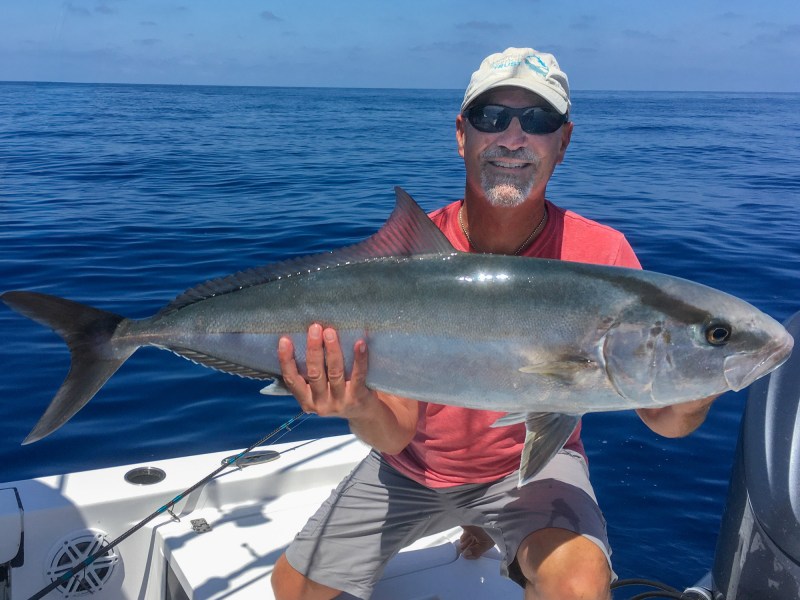
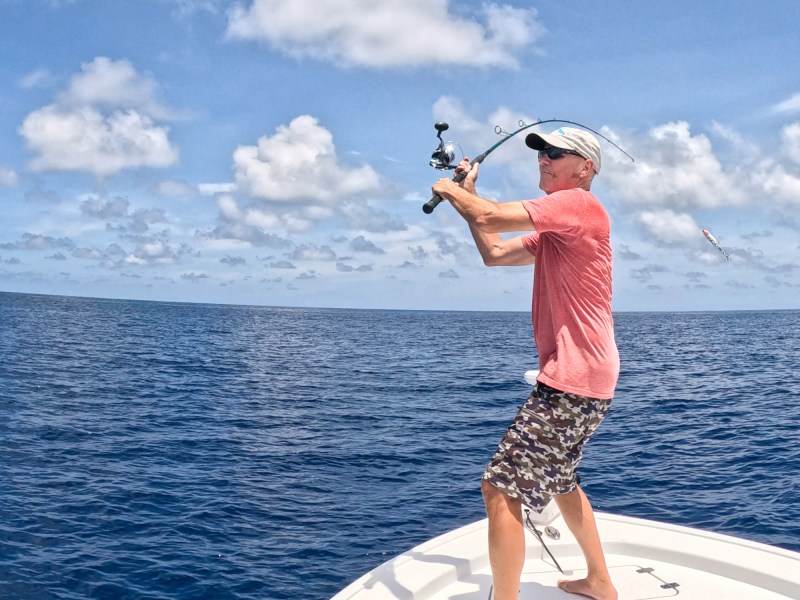
Fishing for Gulf amberjack with topwater lures is exciting, to say the least. These brawlers will hammer a topwater plug worked quickly over deep-water wrecks, and the resulting fights are brutal.
With each sweep of my rod, a large stickbait threw a plume of water and darted side to side, inciting dark shadows hovering nearby to charge in, only to turn at the last second as the lure paused. Sweep after sweep created a rush of pursuers but no takers.
The next cast I changed it up. After getting their attention with a couple of sweeps, instead of pausing, I reeled fast, skipping the bait on the surface to bring three fish in for a battle to see who would get the escaping prey. I was the winner, as the plug disappeared with a vicious splash and line screamed off the reel.
There’s nothing like a topwater strike. It’s even better when the adversary is large and ferocious. Amberjacks are just that, brutes that savagely explode on topwater plugs. These powerful predators, affectionally known as reef donkeys for their stubbornness, fight as hard as any fish in the ocean. Surprisingly, they’re widely overlooked for this type of fishing.
Topwater fishing for Gulf amberjack reminds me of fishing for giant trevally, probably because they are in the same jack family, Carangidae. Even better, you don’t have to travel to the other side of the world to find them.
The Rebound of Gulf Amberjack
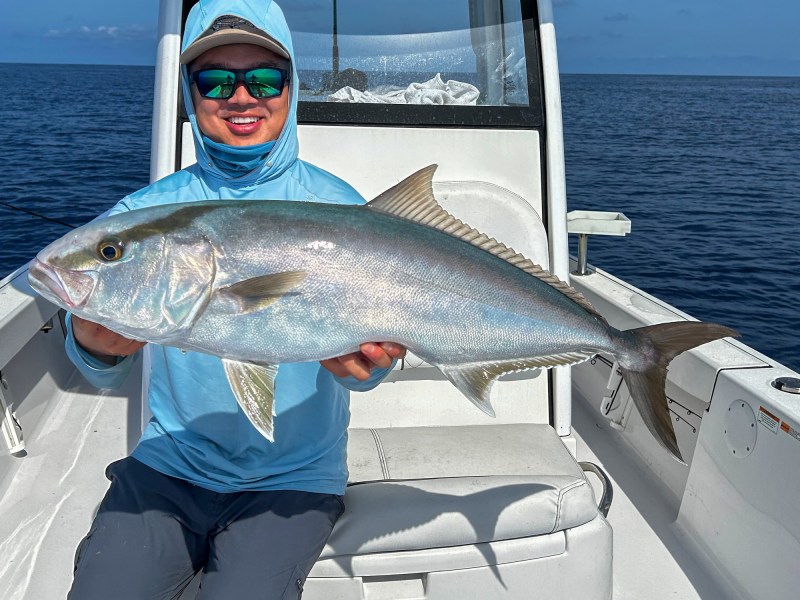
Greater amberjack, which are found worldwide in tropical and temperate waters, are bouncing back in the Gulf from years of overfishing. Sought for their firm, rich flesh — which makes great sushi-grade table fare or grill-worthy filets — they were overfished because they are eager eaters when presented lively baits and great targets for charter captains with clients who want to prove their strength.
With today’s stricter harvest restrictions and limited Gulf season, the population is rebounding nicely. Furthermore, many anglers would rather not tangle with them because battling amberjack can be a back-breaking endeavor. This means there isn’t nearly as much pressure on them as there once was. As a result, they are less boat shy and perfect to chase with topwater plugs.
Where to Find Amberjack
Another great thing about amberjacks is they are not overly difficult to find. Abundant in the Gulf, they tend to hang around deep-water structure. Where I fish off the west coast of Florida, they like deep wrecks, which can require quite the run. This, too, leads to a lack of fishing pressure. I usually start in 100-foot depths about 40 miles out.
Upon arrival over a wreck, it’s not unusual for Gulf amberjacks to be circling the boat before we even get set up. If they don’t show up immediately, live chumming with threadfins, sardines or other lively baits usually brings them to the surface quickly. When they show themselves, it’s time to gear up and test your fortitude.
Best Fishing Lures for Amberjack
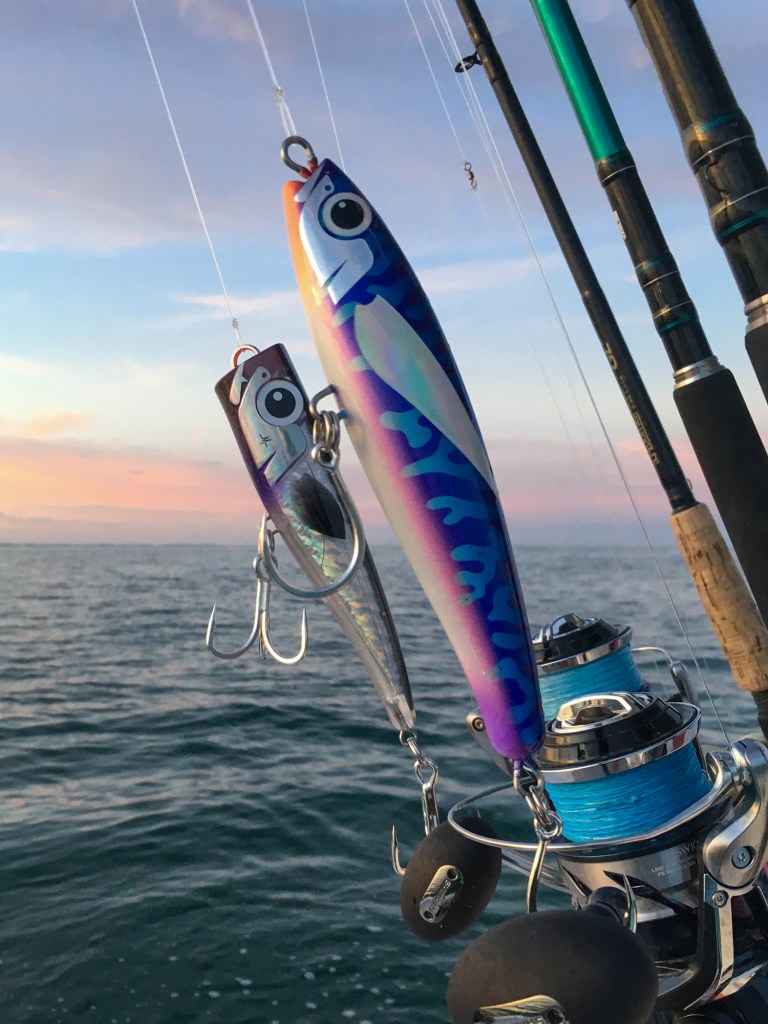
Large topwater poppers and floating stickbaits are designed to draw the attention of aggressive predators like amberjacks. I like fishing with giant floating stickbaits like the Malosi Chieftain. I know stickbaits, especially large ones, can seem daunting, but Malosi has really refined their baits to provide fool proof actions.
A simple sweep of your rod tip starts the show with a nice attention-grabbing splash. From there, the side-to-side slashing action effortlessly follows. On the pause, the lure is often grabbed by a hungry predator.
A constant, slow, walk-the-dog retrieve will give you a great slashing swimming action that is easy to achieve and productive. Perhaps the best part of the Chieftain’s action in this fishery is the ability to reel fast and skip it across the surface. Often it seems the thrill of the chase is what really gets amberjacks going.
I also love using a cup-faced popper like the Malosi Tyrant. There’s something about that big sploosh that sends water skyward and gets me as excited as the fish. Poppers are also very easy to work. Make a long cast and sweep your rod to the side and watch it do its magic. Not only does it create a giant splash, but the sound it makes emulates the commotion of other fish feeding, which brings jealous rivals in to get their share.
Rigging Tips for Topwater Lures
- It’s a good idea to change out the treble hooks for singles, especially in catch-and-release situations, as these big hooks can do real damage.
- Attach surface plugs with either a loop knot or a heavy-duty swivel with a split ring. The swivel is great for quick changes and keeping twist out of your line. Either way, the loop knot or split ring gives the plug freedom to move and creates great side-to-side movement.
- Make sure terminal tackle is stout, nothing less than 150-pound test. Stronger is even better.
Tackle Recommendations for Amberjack
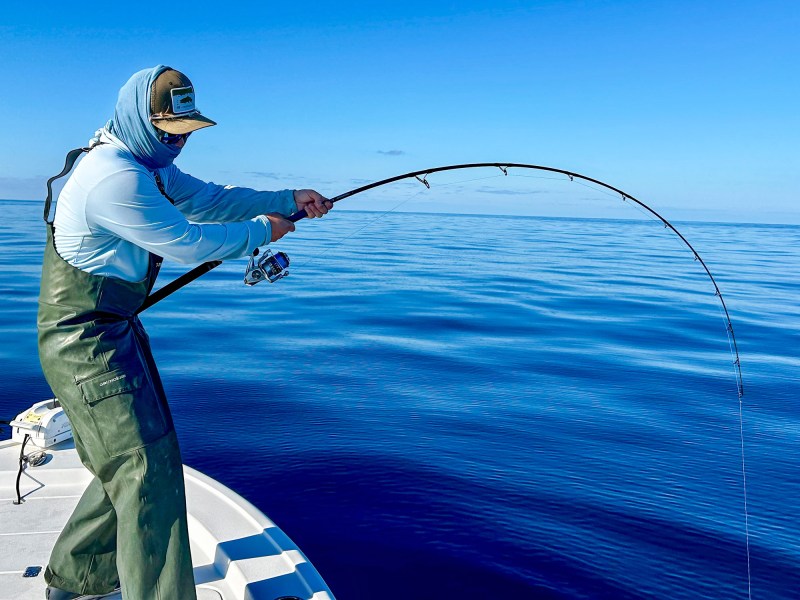
For tackle, you’ll want something with a stout backbone, as amberjacks are strong. You’ll need plenty of drag, as these guys run hard for the cover of the wreck. They must be turned before they can cut you off.
I use spinning rigs, Shimano Teramar PX 8- foot XX heavy paired with Shimano Twin Power 10000 and 14000 reels. The long rods allow me to cast large plugs seemingly a mile. The tip is just right for imparting action to the stickbait, and there’s plenty of lifting power with the high-power x blank.
Lined with 65-pound braid the Twin Powers have the stopping power to turn these brawlers before they get into the dangers below. I do tend to like faster retrieves on my reels, as it’s a bit less work when working the plug all day, but the most important thing is a strong smooth drag which the Twin Power is known for.
Since it’s a bit of a run for me to get to the depth that amberjacks hang out, I often make it part of a bottomfishing trip. Ending the day with some explosive topwater action is a great change of pace and always makes for great stories. Regardless of whether they are near or far, amberjacks on topwater plugs makes for an action-packed outing that will produce great tales you’ll be telling for years.
Amberjacks on a Fly Rod
For the real masochists, you can also catch amberjacks on a fly when they’re chummed up to the surface. Because they really like fast moving baits, I like to use big streamers versus poppers. I cast with a sinking line and let the streamer drop down 15 to 20 feet.
Then I tuck the rod under my arm and use both hands to strip the fly in as fast as possible. A 12-weight rod is a must to have any chance of getting one of these brutes to the surface.