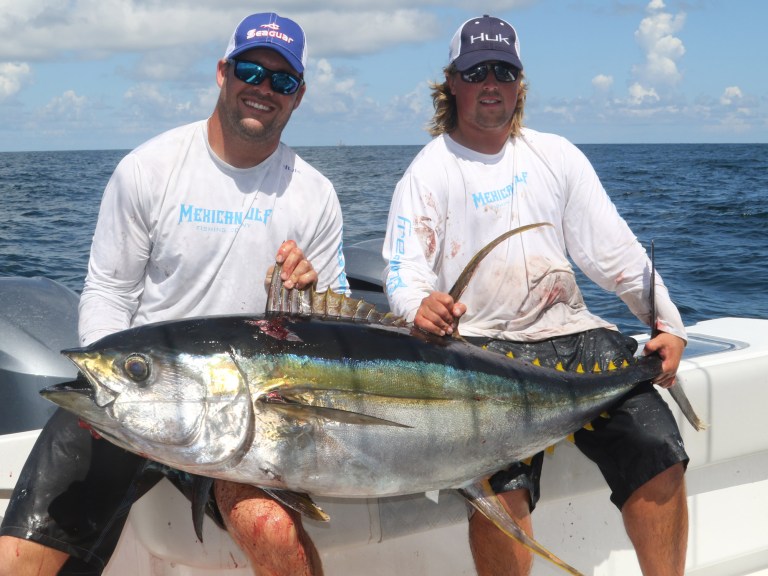
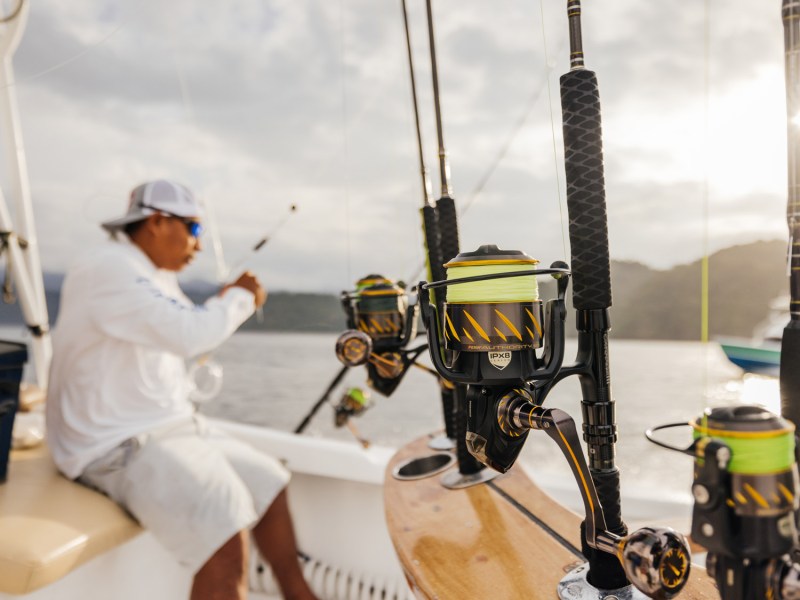
Offshore spinning reels have evolved into legitimate big-game tools. What was once secondary to conventional gear is now a primary weapon for targeting tuna, amberjack, striped bass, sailfish and other powerful species, including large pelagics.
Today’s offshore spinners combine higher line capacity, stronger internal components, advanced sealing systems and drag platforms capable of handling sustained pressure that would have destroyed spinning reels manufactured a decade ago.
Understanding Components of Saltwater Spinning Reels
Before comparing models, it’s important to understand the three mechanical elements that drive performance of offshore spinning reels. Drag, bearings and gear ratio are critical factors in choosing the right reel for your intended use.
Drag Output for Offshore Fishing
Drag is more than just a “max-drag” number printed on the box. In offshore applications, consistency and heat management matter far more than peak output.
Modern reels use larger-diameter drag washers, advanced carbon or composite materials, and improved load distribution systems to reduce heat buildup during long, powerful runs. A higher maximum drag rating doesn’t mean you should fish at that limit — it means the reel is built with structural headroom.
When you’re fishing 25 or 30 pounds of drag on tuna or amberjack, you want internal components that aren’t operating at their ceiling. That margin translates directly into durability and smoother performance under sustained pressure.
Gear Ratio Means Speed and Torque
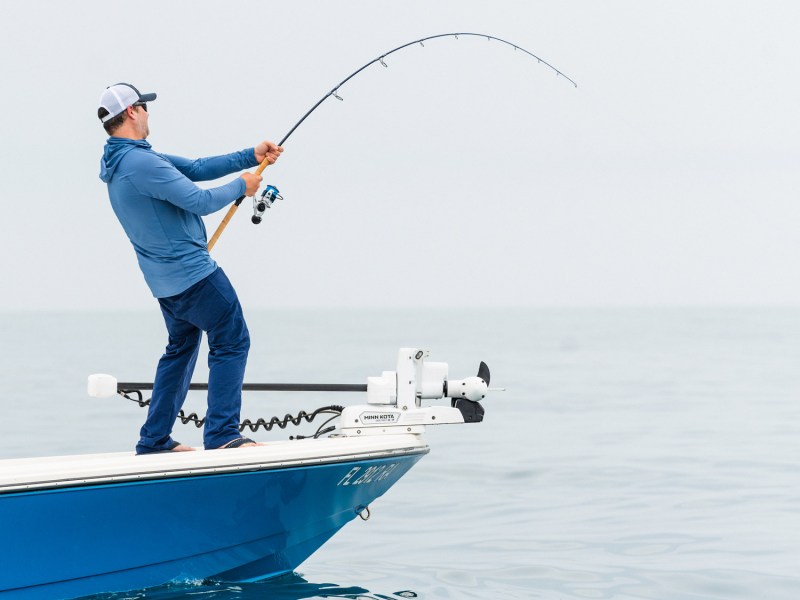
Gear ratio determines how quickly you recover line with each turn of the handle, but offshore anglers know gear ratio on a spinning reel is really about torque.
A higher gear ratio retrieves line faster, which is valuable when working topwater lures or clearing slack during erratic runs. Lower ratios typically provide more cranking power, which can matter when fish settle deep and fights turn vertical.
A factor that’s often overlooked is gear size and engagement. Modern offshore spinning reels feature larger drive gears, improved tooth profiles, and reinforced shafts to prevent flex under load. The result is more efficient power transfer and less resistance when the reel is under heavy drag.
The Importance of Bearings in Saltwater Spinning Reels
Bearings affect smoothness and longevity of an offshore spinning reel — but quantity of bearings alone doesn’t equal quality. Corrosion resistance, placement, and how well a reel is sealed matter far more than raw bearing count.
Offshore spinning reels now incorporate stainless steel or shielded bearings in high-stress areas, along with improved body sealing to keep saltwater intrusion from compromising performance. When properly protected and maintained, quality bearings ensure a reel remains smooth after repeated exposure to spray, heavy use and brutal fights with large, powerful fish.
Together, these systems define how a reel performs when it’s pushed hard — not just on the first trip, but season after season offshore.
For this guide, we focused on saltwater reels that represent real offshore durability — platforms built for heavy drag use, saltwater exposure and long, powerful fights. From flagship performers like the Shimano Stella SW D, the Quantum Cabo and Daiwa’s Saltiga 25 to proven workhorses like the Penn Slammer, Okuma’s Tesoro and Shimano’s Saragosa SW, these reels aren’t just impressive on paper — they’re built for real offshore punishment.
What’s New in Offshore Spinning Reels?
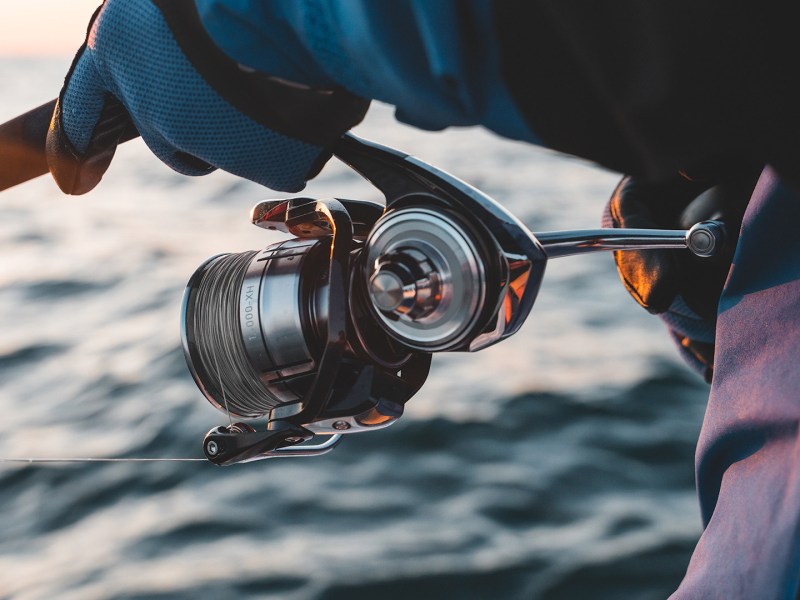
The biggest shift in offshore spinning reel design over the last decade has been driven by braid and line capacity. With braided line allowing anglers to fish heavier drag pressures in smaller diameters with more line capacity, manufacturers had to reinforce critical internal components.
“The biggest difference between inshore and offshore reels is making sure the offshore reels can handle heavier drags,” said Shimano ambassador, Capt. Max Dispoto. “We beef up spool shafts so they don’t flex, increase gear size and use the most rigid materials possible in larger models.”
That philosophy shows up in reels like the Penn Authority 10500, which introduced a solid stainless steel main shaft for increased rigidity and durability. Daiwa expanded gear dimensions in the Daiwa Saltiga 25 with its PowerDrive design, increasing torque and improving load transfer. Shimano reshaped gear engagement in the Shimano Stella SW D through Infinity Drive and Infinity Cross technology, increasing durability while reducing resistance under heavy pressure.
Drag systems have also matured. It’s no longer about chasing extreme drag numbers — it’s about consistency and heat control.
“No one realistically needs 60 pounds of drag,” noted Penn senior product manager Ben Joyce. “But when you build a reel capable of that, you’re not stressing it fishing 25 or 30. We test our reels for hours at sustained drag pressure to make sure there are no failures.”
Daiwa’s DRD system in the Saltiga 25 replaces traditional carbon washers with a metal roller drag designed to reduce heat buildup. Shimano’s Dura Cross drag in the Stella focuses on longevity and reduced wear. Quantum continues to use full carbon fiber systems with a specialized lubricant for sustained use in reels like the Quantum Cabo.
Sealing Saltwater Spinning Reels
“Keeping saltwater out is the single most important factor in long-term reliability,” said Quantum’s Mike Rice. “Once salt and sand get inside, the clock starts ticking.”
That’s why we now see Magsealed components in the Daiwa Certate SW, IPX7-rated full-body waterproofing in the Okuma Tesoro, and multi-seal systems in Quantum’s fully sealed IPX8-rated Cabo. Hydrophobic coatings and tighter tolerances even help expel water as the rotor spins, improving longevity over time.
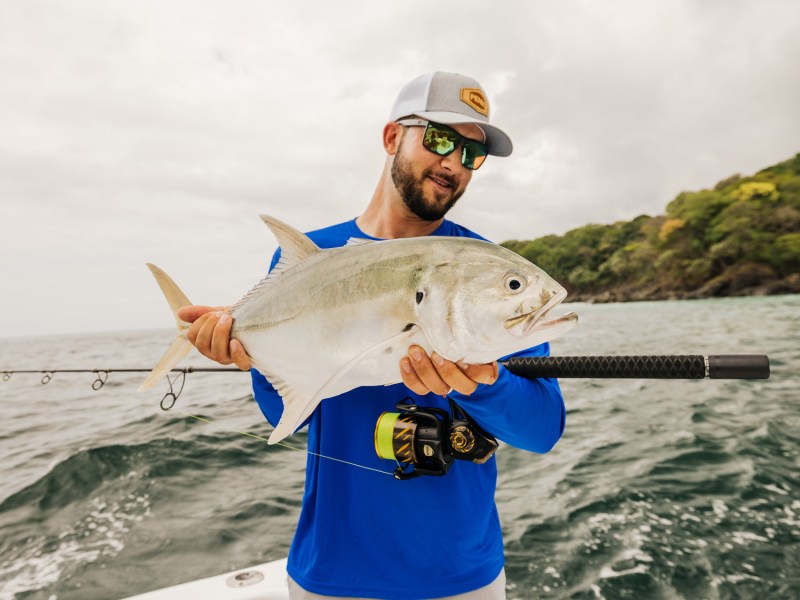
Top Offshore Spinning Reels for 2026
In no particular order, here are our picks for the top-performing offshore spinning reels on the market today.
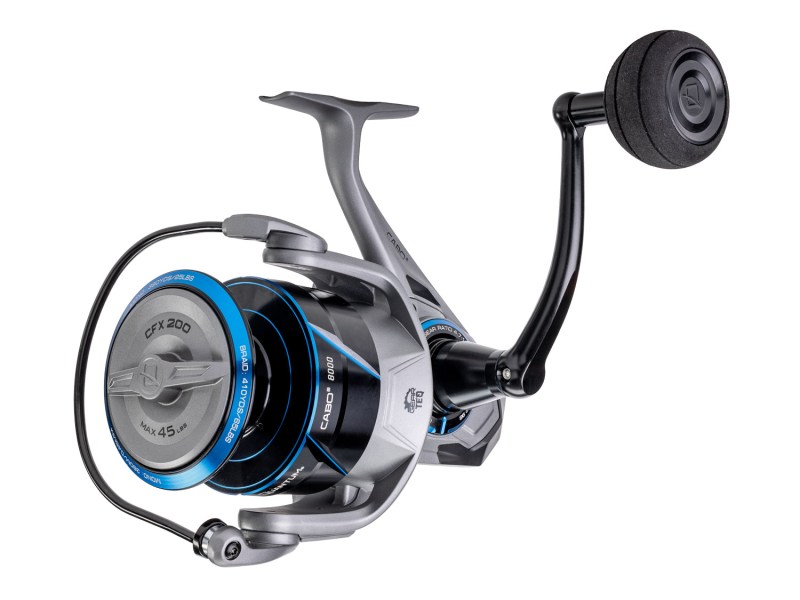
Quantum Cabo
With a Best in Category award at ICAST 2025, Quantum resurrected its legendary Cabo spinning reel to great acclaim. This is Quantum’s flagship reel, but it’s offered for a much lower price than other top-tier spinning reels.
Sealed to high IPX8 ratings for the gearbox and drag, the Cabo is the only fully sealed reel on the market at its price point. With machined brass gearing in larger sizes, the platform balances durability and smoothness.
The largest Cabo available is an 8000, which is suited for medium-duty offshore work with 45 pounds of max drag. If you’re looking for a top-notch reel at a reasonable price, the Cabo is a great choice.
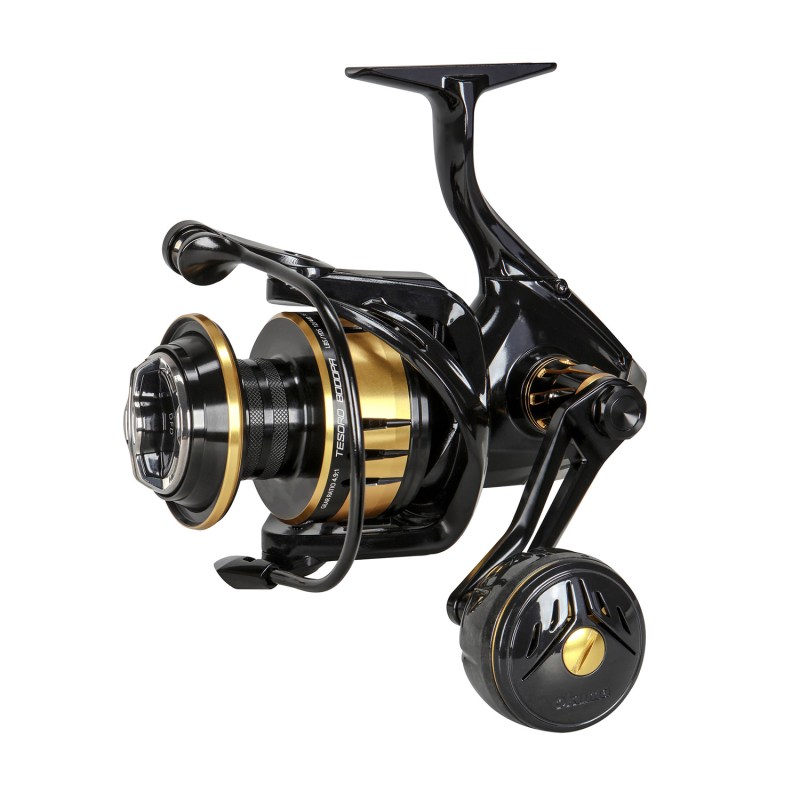
Okuma Tesoro
Built from the ground up with IPX-7 waterproof construction, oversized brass gearing, and more than 55 pounds of drag in its larger models, the Tesoro is designed for anglers who demand maximum sealing and structural integrity fishing in harsh offshore environments for hard-pulling fish.
It’s available in 4000 through 20000 sizes, and the two largest models (18000 and 20000) feature a 4.4:1 gear ratio, which provides ample torque while retrieving about 42 inches of line per crank.
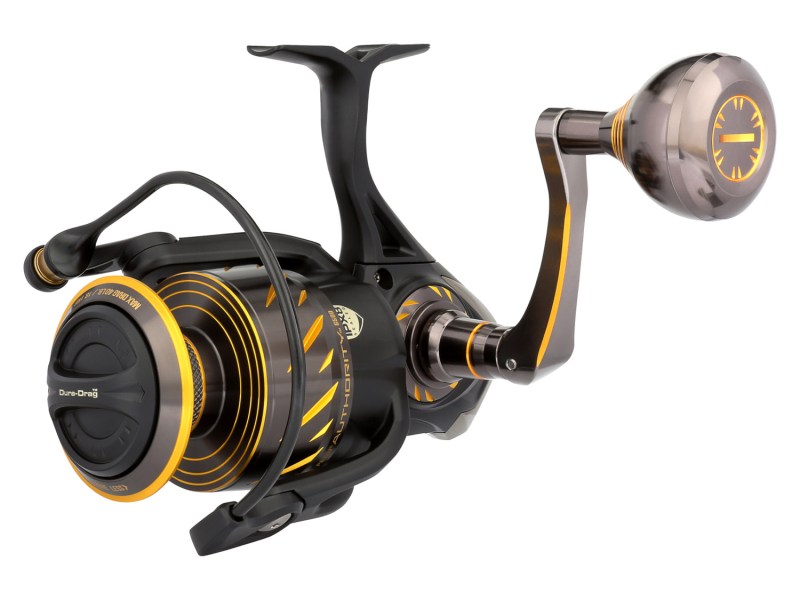
Penn Authority
Penn made a name for itself building no-nonsense saltwater reels that are durable and high performing. Penn’s Authority line is the brand’s flagship spinning reel.
“When we designed the Authority, the goal was simple — build the best spinning reel we possibly could,” said Ben Joyce.
The shift to a solid stainless steel main shaft, reinforced internal components, and high drag ceiling make the Authority ideal for anglers fishing heavier drag pressures consistently.
The largest size Authority is a 10500, which features 60 pounds of max drag and holds 780 meters of 65-pound-test braid, which should prove more than enough for all but the largest offshore fish.
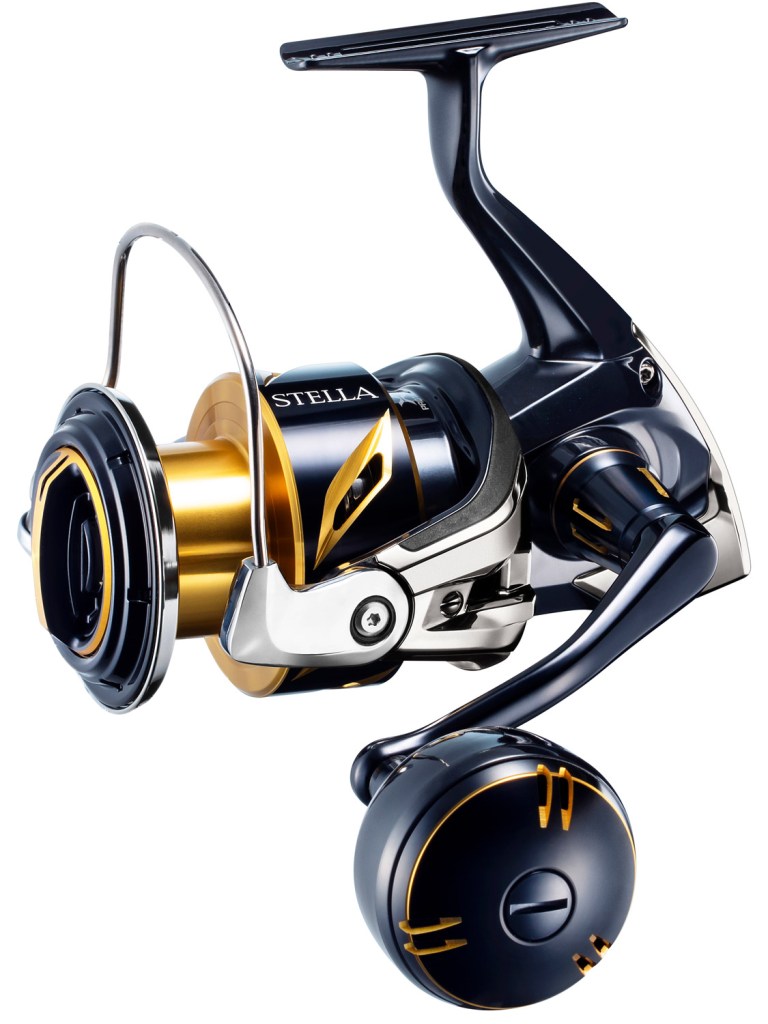
Shimano Stella SW D
“The engineers at Shimano are all fishermen,” said charter captain Max Disposto of Rhode Island. “They come out with things that we as captains don’t need to tweak much at all.”
With Infinity Drive, Infinity Cross gearing, and Dura Cross drag, the Stella remains one of the smoothest and most refined offshore spinning reels available. It’s an all-around solid choice that’s ideal for targeting yellowfin, bigeye, bluefin, and striped bass where consistent drag and long-term durability matter most.
The Stella SW D is offered in sizes from 4000 up to 30000 to offer high performance no matter the species you’re chasing. Their new 25000 model was specifically designed for anglers in the Northeast and California to sling big poppers at bluefin tuna.
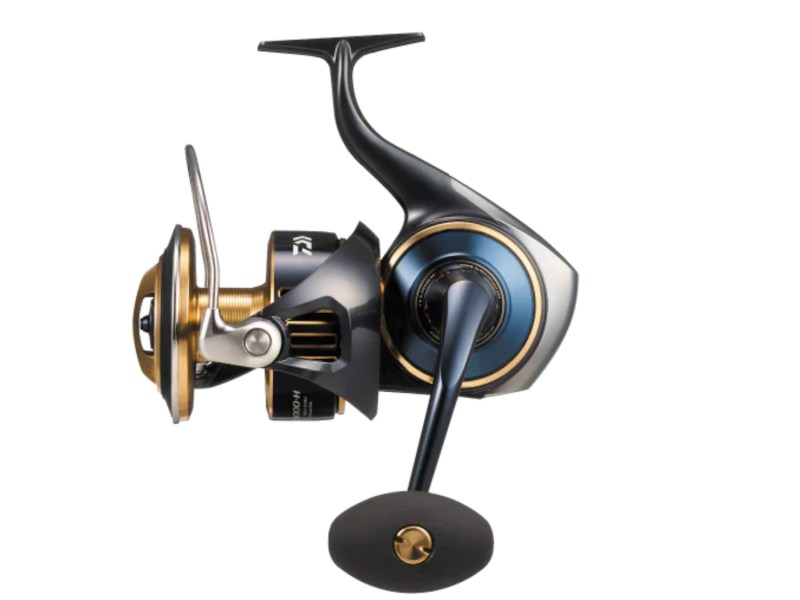
Daiwa Saltiga 25
Advanced engineering, specifically in the drag system, makes the Saltiga a high-performer for anglers who prefer heavy drag settings to end battles quickly.
Daiwa’s DRD (Durability Roller Drag) system represents one of the biggest changes in offshore drag design in decades. Built around a larger, thicker drive gear and a rigid monocoque body, the Saltiga 25 is designed to handle sustained high-pressure fights without excessive heat buildup. This is a strong option for anglers who fish aggressive drag settings on powerful fish.
The DRD system is available on Saltigas in sizes 18000 through 30000 and deliver a backbreaking 66.1 pounds of max drag.
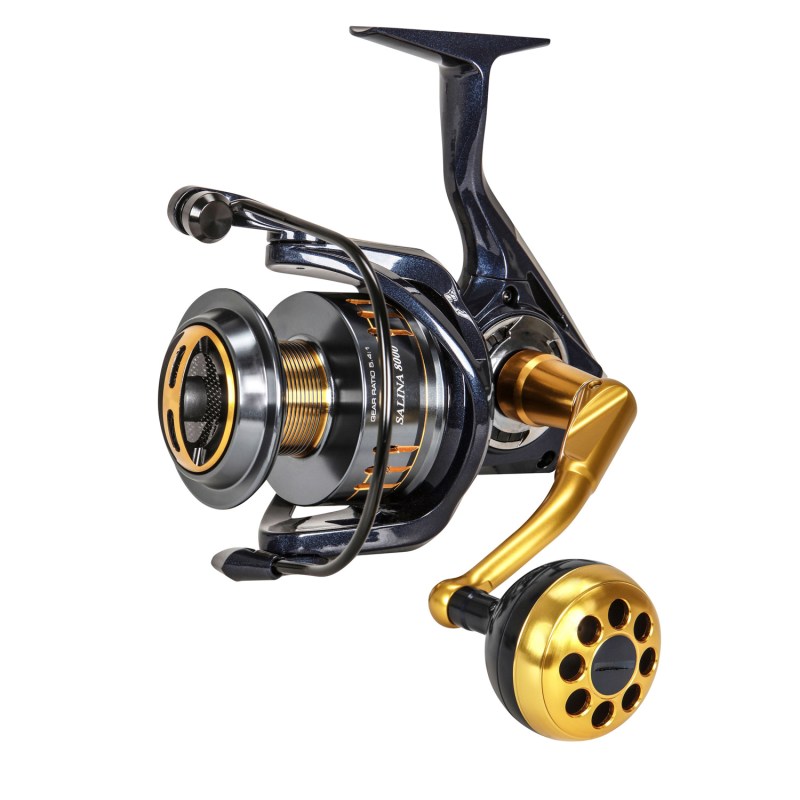
Okuma Salina
Constructed with LITECAST body material and a Carbonite DFD drag system, the Salina bridges the gap between heavy inshore and offshore use. Available in sizes up to 14,000, it provides versatility for anglers fishing multiple applications.
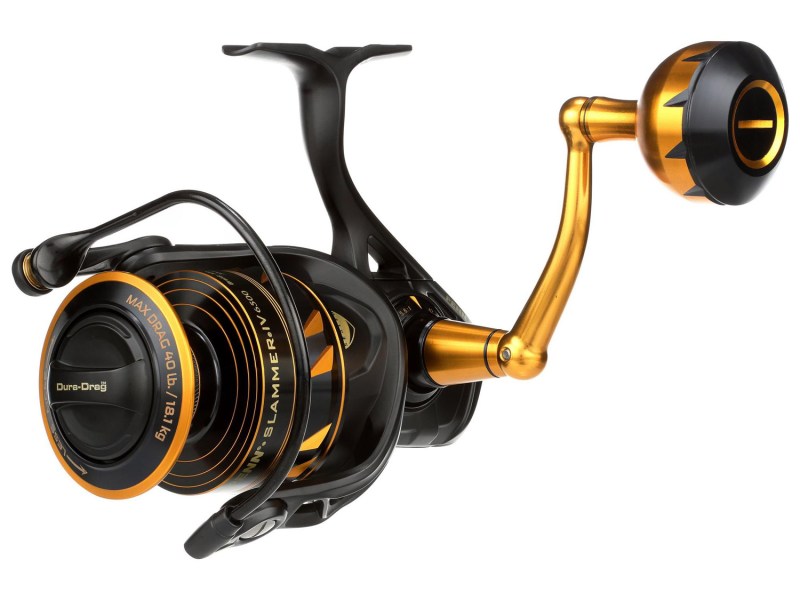
Penn Slammer IV
Penn’s Slammer series spinning reels are best-sellers for a reason, and the Slammer IV is a dependable workhorse that’s built to handle large offshore targets in its larger sizes.
The Slammer series was the first to introduce Penn’s larger-diameter Slammer drag system into spinning platforms. It remains a durable and dependable option for anglers who want reliability at a more approachable price.
The Penn Slammer IV 10500 model features 60 pounds of max drag and holds 780 meters of 65-pound braid. The Slammer drag system is designed to deliver a wide range of useable drag, and the reel is IPX6 sealed to perform over the long haul.
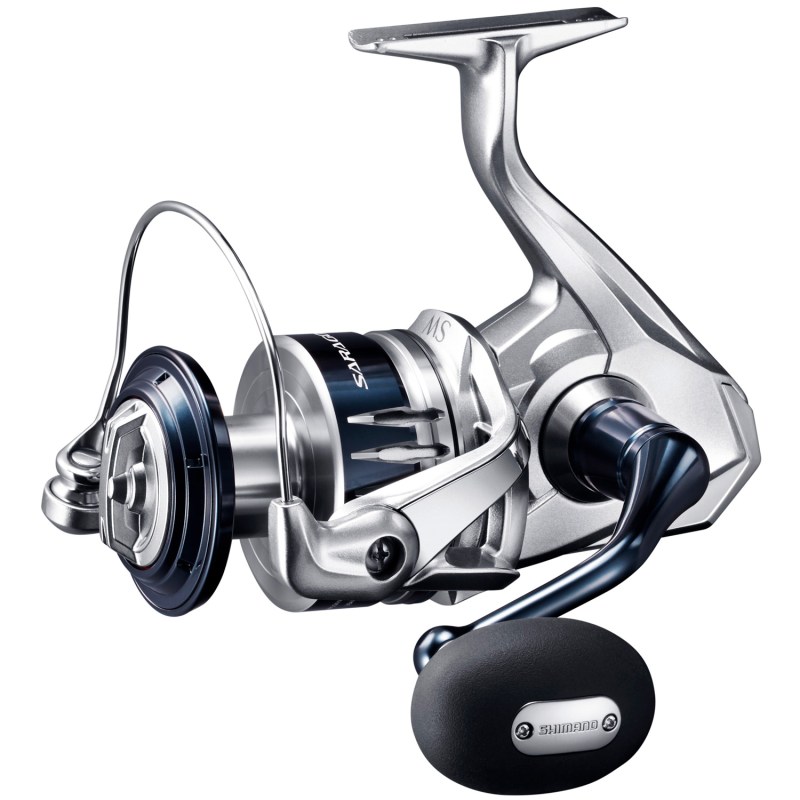
Shimano Saragosa SW
Looking for a solid offshore spinning reel that won’t break the bank?
The Saragosa continues to deliver reliable drag performance and effective sealing at a price point well below flagship models. For many anglers, it represents one of the best value-to-performance ratios offshore.
Available in sizes from 5000 to 25000, the Saragosa is a workhorse offshore reel, with a body sealed to an IPX8 rating and a drag system that’s highly water resistant. It’s built to take a beating and come back for more.
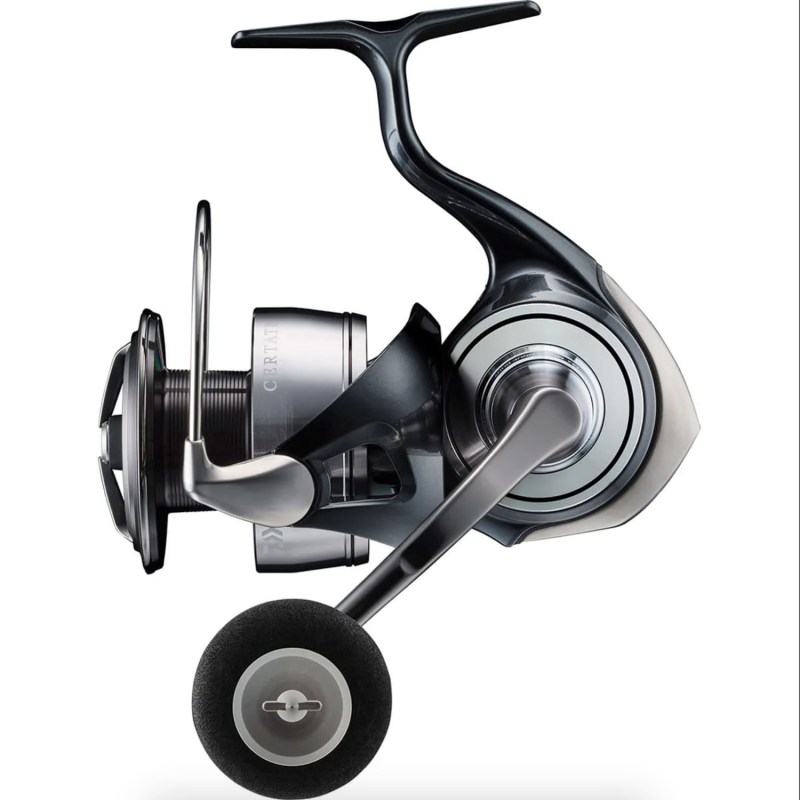
Daiwa Certate SW
Built with a Monocoque (MQ) aluminum body and Magseal technology, the Certate SW offers increased torque and improved waterproofing while maintaining a lighter overall profile than many spinning reels.
The Certate borrows technology from the Saltiga’s MQ body and its large G1 Duralumin drive gear for impressive strength and power. It’s operation is light and responsive, yet it packs the punch in its larger sizes to turn big game fish belly-up. It’s available in sizes 8000 through 18000. The Certate 18000 has a crushing 65 pounds of max drag.
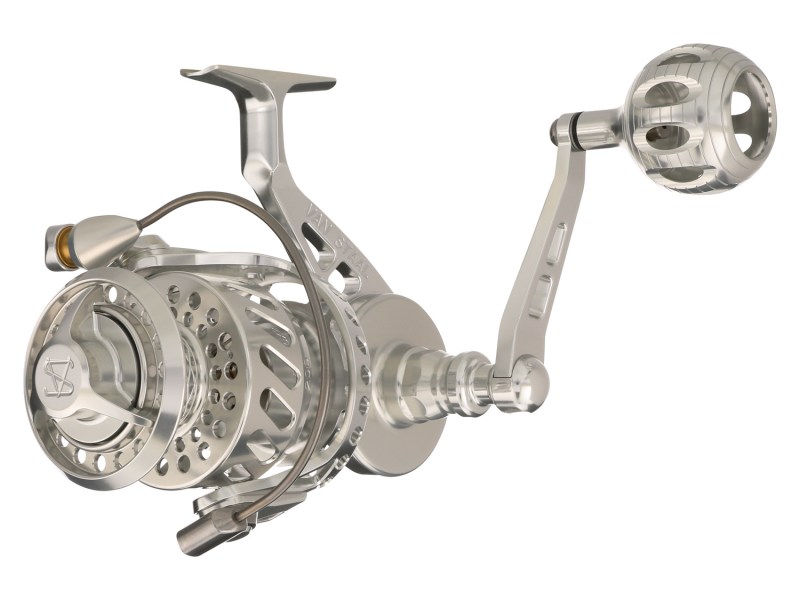
Van Staal X2
Originally driven by surf anglers demanding extreme corrosion resistance, Van Staal spinning reels are famously overbuilt. With a fully sealed, machined one-piece body and stem and a titanium main shaft, their durability in harsh salt environments is unmatched, plus they just look cool.
X2s are available with a bail or without. The 200 to 300 sized X2s feature 42 pounds of drag and are suited to light to medium offshore duties.
What size spinning reel is best for offshore fishing?
The size offshore spinning reel you need depends on the style of fishing you’ll be doing and the species you’ll encounter. Generally 6000 to 8000 size reels are standard set-ups for the offshore situations most anglers use spinners for, such as pitching live baits or casting lures to smaller tunas, mahi and smaller sailfish. This size range has the line capacity and drag pressure to battle most offshore species without being so large that handling them becomes unwieldy or tiring.
Spinning reels size 10000 and larger are for targeting large pelagics like marlin and big tunas. Larger spools also hold more line for long runs or fishing deep, and some anglers have even begun trolling with larger-sized spinning reels.
What is an IPX rating?
IPX rating stands for Ingress Protection rating. It is a measure of a device’s water resistance on a scale from IPX0 to IPX9, with IPX0 indicating a device has no water resistance and IPX9 indicating a device is protected against water ingress from high pressure and high temperature water jets. Obtaining an IPX rating requires a device be subjected to independent testing.
For saltwater fishing reels, IPX7 and IPX8 are important considerations because these ratings mean the reel is protected from leaks when immersed. Saltwater intrusion into a reel’s internal components leads to corrosion and decreased performance over time.
An IPX7-rated device is water resistant at up to a meter deep for 30 minutes. An IPX8-rated device is protected at depths deeper than a meter for an extended period. IPX3 through IPX6 ratings indicate increasing protection from water incursion due to splash or spray.
How does the number of bearings affect a spinning reel?
Bearings are used to reduce friction in the moving parts of a spinning reel. Higher bearing counts such as 6+1 or 8+1 generally indicate greater friction reduction, which equates to smoother performance.
However, bearing location and how well they are sealed sometimes mean more than the number of bearings, especially for saltwater spinning reels. These are factors that affect the longevity of reel’s performance.
How much drag do I need for an offshore spinning reel?
Maximum drag is a specification many anglers look at when considering a saltwater spinning reel for offshore applications. Max drag is the measure of how much pressure can be applied before the spool begins releasing line.
There are not many anglers who can—or want to—hold onto a spinning reel for long when it’s locked down with a max drag of 45 pounds or heavier. The max drag measurement is, however, an indicator of how well a reel’s drag will perform at lower settings of 20 or 30 pounds.
For offshore fishing, maximum drag of 20 to 50 pounds is usually adequate, but you’ll want to set the drag to 25 or 30 percent of your line’s breaking strength.
There are situations when you’ll want a heavier drag setting, such as pulling big grouper off bottom structure or fast-reeling smaller fish to the boat to avoid sharks.