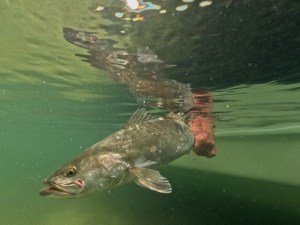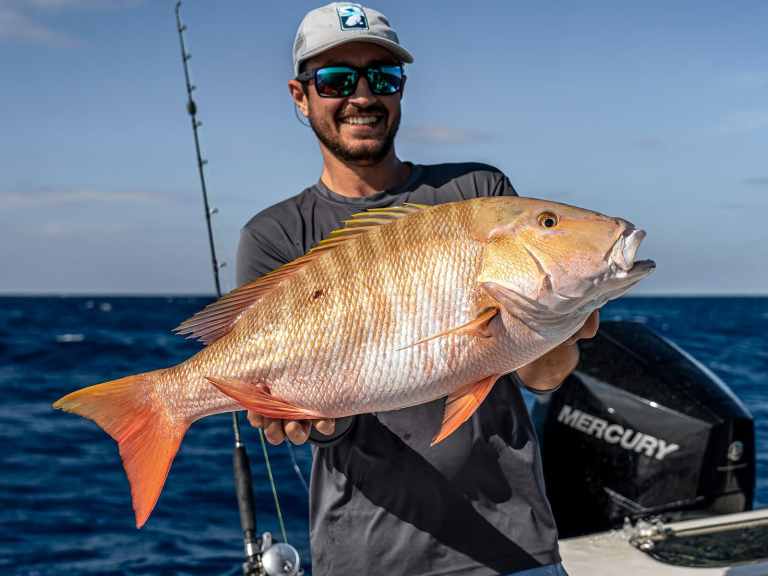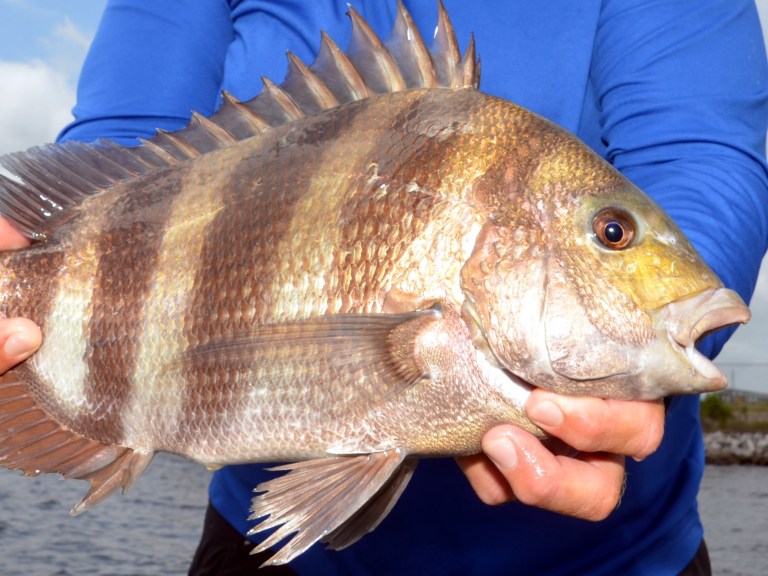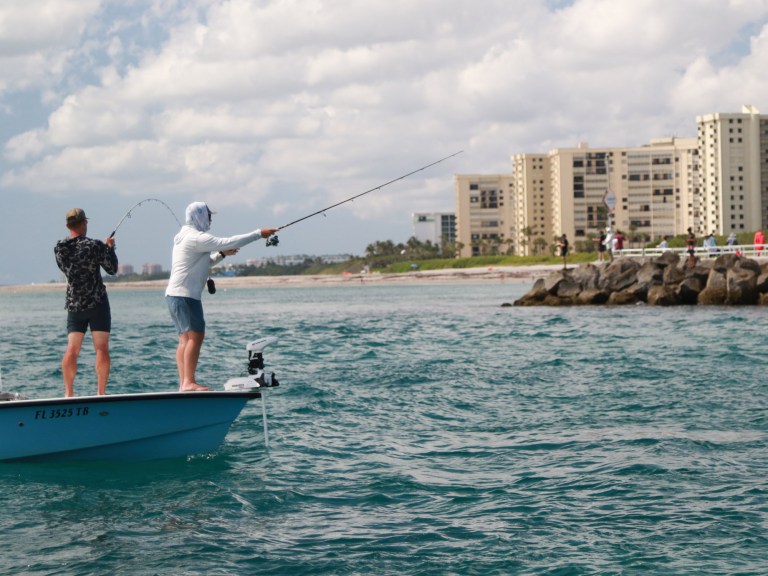
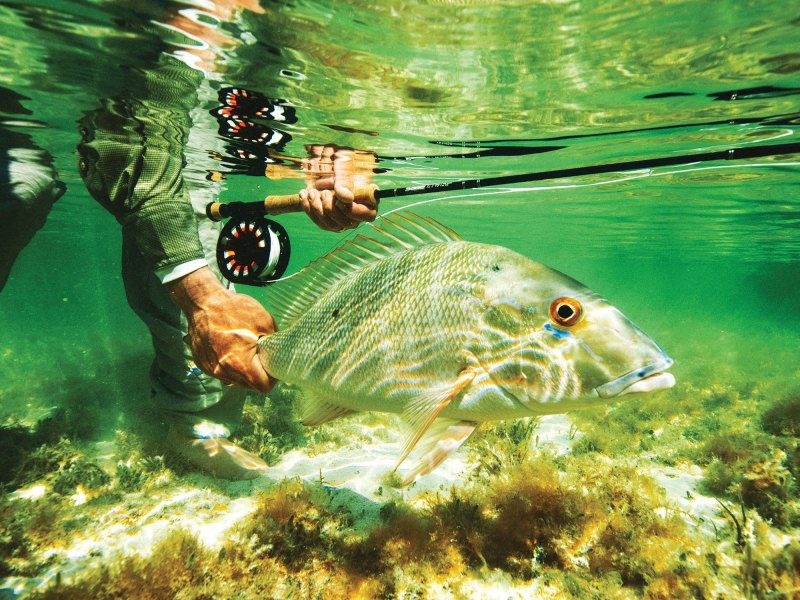
It’s difficult imagining the relatively shallow finger channels of south Florida’s Biscayne Bay holding quality mutton snapper. Yet, with the right conditions and know how, pink surface flashes and boiling fish trigger numerous double-takes.
Lots of Live Bait
Live chumming and baiting with pilchards while anchored in the current are the keys, along with block chum in a small mesh bag. At the risk of drawing in sharks, block chum attracts a wide variety of juvenile species; this commotion attracts more life, including aggressive mutton snappers! An outgoing tide filters chum seaward, drawing in fish from oceanside fingers (if bay side). Ballyhoo also move in, so gold hook several. Even dead, a fresh ballyhoo floating with the tide, and one sitting on bottom via a knocker rig or 1/4-ounce jig head, will not go unnoticed.
Light ‘Em Up!
After the block chum ushers in life, scoop up several live pilchards, pop an eye out of each and pitch them into the slick; they’ll twirl about and ultimately draw up muttons in explosive surface action. Keep the boiling fish going with two or three chummers every minute. Impale a live pilchard onto a 4/0 in-line circle hook (under lower jaw and out upper lip), cast into the fray and freeline until it’s consumed. A 25- to 30-pound-test fluorocarbon leader is ideal.
Read Next: Target Monster Mutton Snapper in the Keys
How Good Are You?
When muttons are high up, tie on a lure resembling the size and coloration of the pilchards. Broadcast more live chum and pitch the plug to the blitzes. Sometimes it’s best to just let the lure float and mimic the stunned bait to entice a mutton to attack. If you’re a fly fisherman, use a floating fly line and tie on a pilchard imitation. Give it a twitch-dart action, and be ready for an aggressive take. Targeting top-water muttons in the finger channels of Biscayne Bay is certainly an entertaining experience coupled with fine dining afterward. However, fooling them on an artificial raises the boasting game to another level!