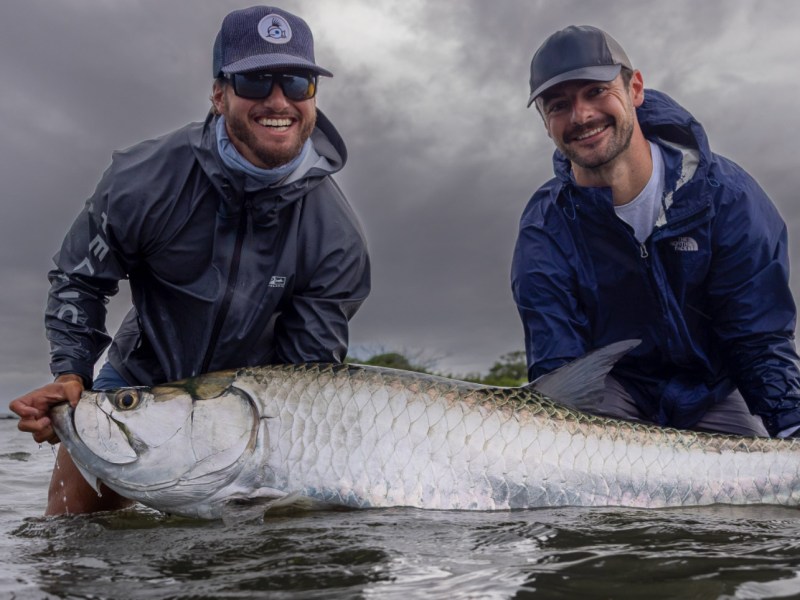
Tarpon fishing in North Carolina isn’t a phrase you hear all that often, but dedicated anglers have been targeting summertime tarpon in the waters that feed the Cape Fear River and Pamlico Sound for more than 50 years. According to reports coming in from Southport to Kitty Hawk, the fishery is only getting better and more predictable.
Every summer, a subpopulation of silver kings instinctively pushes north, expanding their range along the mid-Atlantic coast. Dedicated anglers along their path welcome the opportunity to target this iconic sport fish in their own backyard, as huge schools of tropical migrants work their way up the coastline and into estuarine river systems and sounds.
During summer months, tarpon can be found along the beach or well upriver rolling on the surface and chasing bait. The terminus of the Pamlico, Neuse and Cape Fear watershed has become a popular destination for hardcore anglers willing to dedicate the time it takes to target these large, elusive and often hard-to-pattern fish.
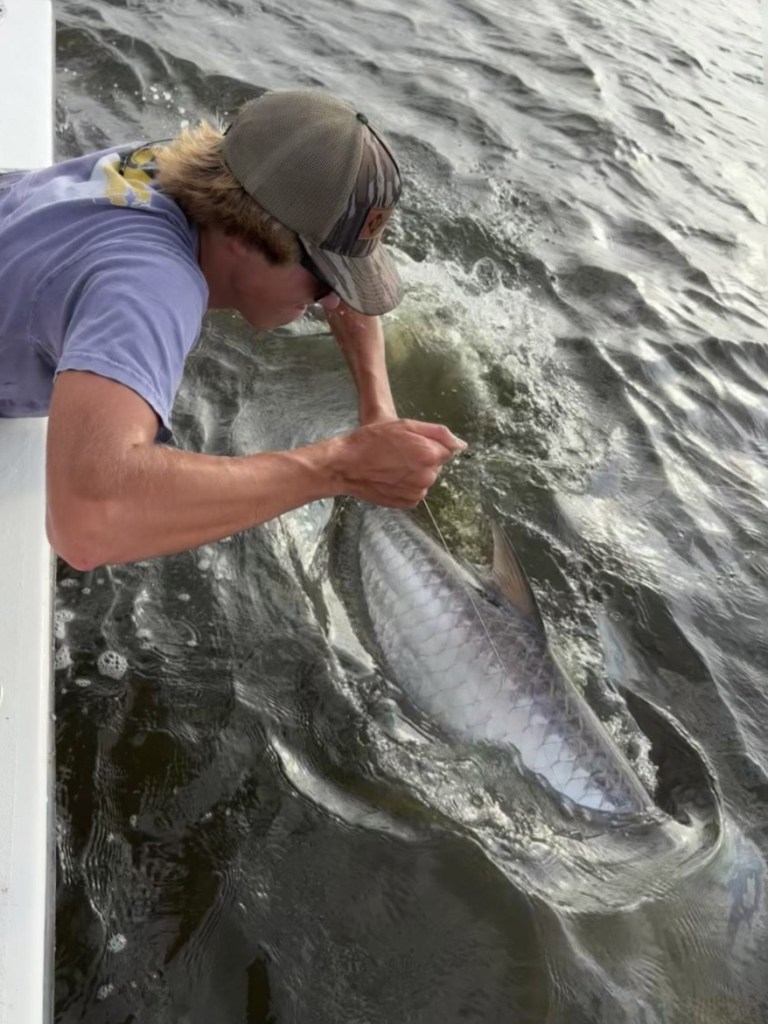
Timing the North Carolina Tarpon Bite
Based on the Pamlico River in Chocowinity, North Carolina, Captain Mitchell Blake, of FishIBX, starts looking for tarpon to arrive as early as May each year, usually around Mother’s Day. Capt. Blake has been targeting tarpon on the Pamlico and Neuse rivers for more than 25 years, and what used to be a mid- to late-summer fishery is evolving.
Over the years, the fish have continued to arrive earlier as regional water temperatures slowly rise. While the fishery has a rich history, it seems more tarpon are making the long migration into North Carolina waters. Also, in a fishery historically dominated by large tarpon, Blake reports seeing good numbers of 40- to 60-pound fish in recent years. Things are certainly changing along the mid-Atlantic coast, and more anglers are getting involved because the action is intense.
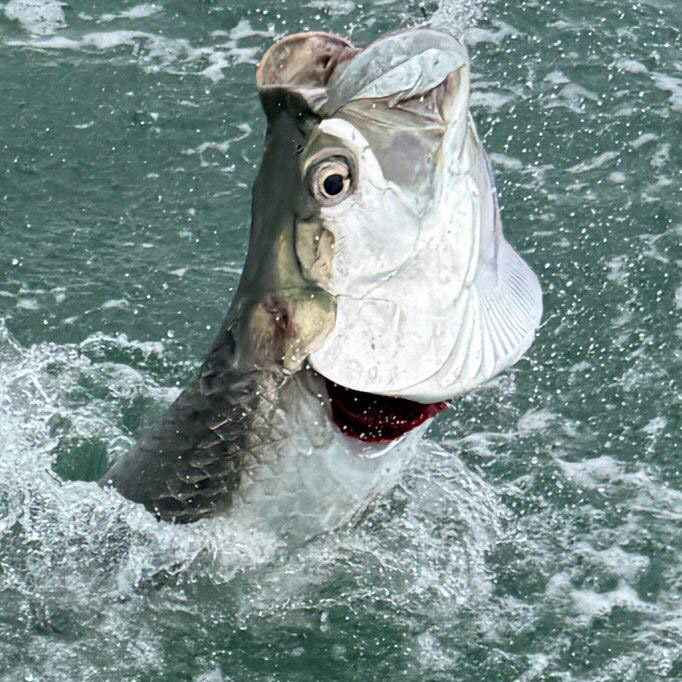
Where to Find North Carolina Tarpon
Mitchell covers a lot of ground each spring from his home port near little Washington, N.C. He typically runs out of the mouth of the Pamlico River and then back up the Neuse towards New Bern, crisscrossing Pamlico Sound searching for schools of menhaden and surface-feeding activity.
While it’s a huge body of estuarine water spread thin, he follows the river channels that tarpon and large red drum utilize, keeping a constant eye on his side-scan sonar searching for predatory activity, usually in 8-15 feet of water. When he sees the right conditions come together, he will get out ahead of the fish and deploy a shotgun spread of live baits, sometimes maintaining as many as six rods at a time.
“They are crushing mullet in the river right now, but a menhaden or small bluefish can be the ticket, too, when fishing natural bait,” Blake said.
Sometimes tarpon and the big redfish, or old drum, the region is known for will push shallow, providing anglers with an opportunity to cast a variety of artificial lures to actively feeding fish.
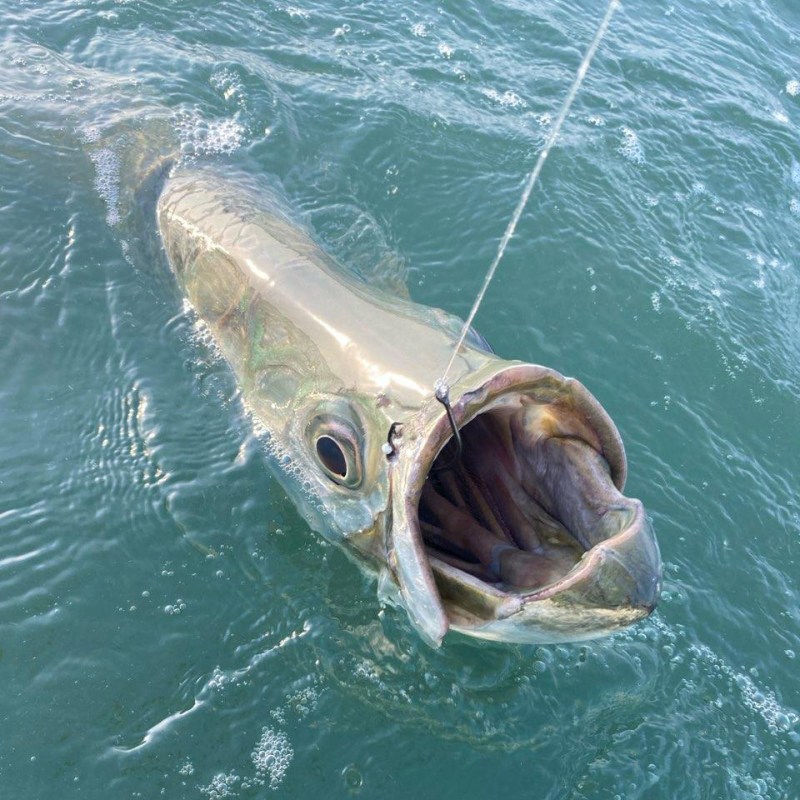
Tarpon on the Beaches
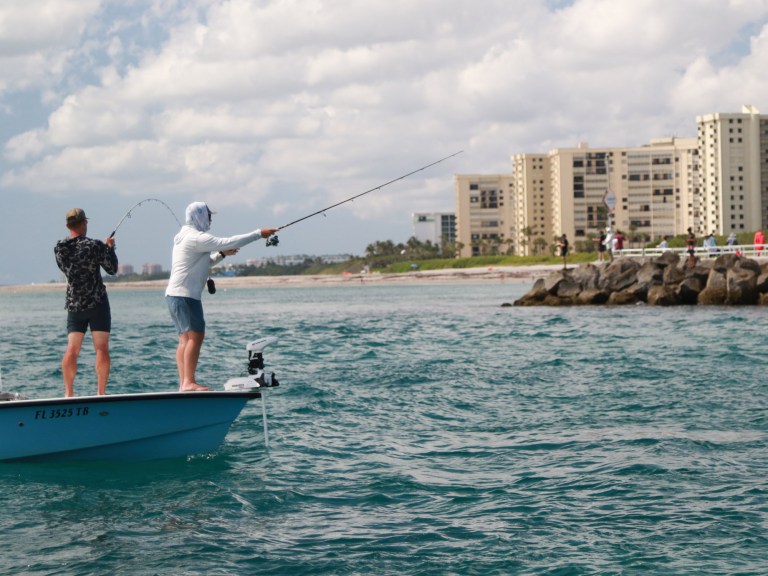
Not all tarpon landed in North Carolina are caught in the river systems; many move within earshot of the shoreline as they pass local piers and inlets, providing anglers with stout tackle a chance to do battle with the silver king.
Capt. Jot Owens, of Jot it Down Fishing Charters, fishes the southern coast of North Carolina near Wilmington. Over the past month he’s had consistent action targeting tarpon on the shoals and sloughs that form just off the coast around Wrightsville Beach. Local structure and inlets provide shots at multiple species from redfish to Spanish mackerel, but Capt. Owens always has heavy gear ready in case tarpon cruise through. During the summer months this has become a pretty consistent opportunity.
“I first started opportunistically targeting these fish over 20 years ago, but there is no doubt that things have changed, and we are seeing more chances each summer,” said Capt. Owens. “It used to just be the bigger fish pushing north, but now we are seeing a healthy population of multiple year class tarpon showing up.”
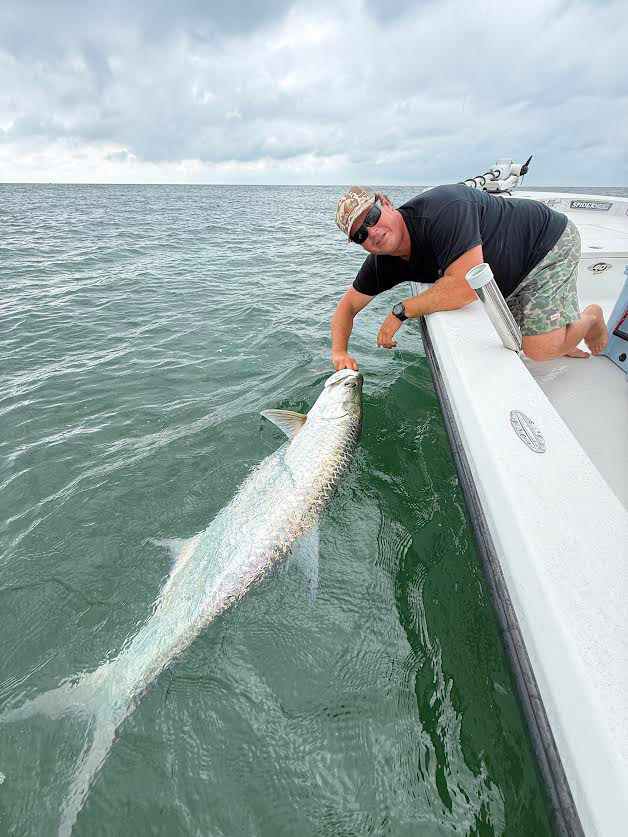
North Carolina’s Current Conditions
Recently, numerous fish have been landed along North Carolina beaches among crowds of thousands of summer tourists, from Southport to Nags Head. While not unusual, the numbers of fish that have moved into the area definitely indicate that things are changing along the coast, with huge tarpon being reported caught as far north as New Jersey.
With more and more fish making the move, anglers have been quick to adapt and focus on the silver king for good reason. It is important to reiterate the need to show these true trophies the respect they deserve. Capt. Owens emphasized using the appropriate tackle for the job. “I go a bit heavier on tackle than most. I like to put a lot of heat on these fish and get them to the boat for a safe release,” he said.
Capt. Blake also emphasized the importance of handling tarpon properly and leaving them in the water as you unhook and release your catch. Research is clear that tarpon will fight to exhaustion and removing them from the water— even for a brief amount of time—can have damaging impacts. As more North Carolina anglers have the opportunity to bow to the king, let’s not forget to treat them like kings boatside so we can continue to enjoy having these magnificent fish in our own backyards each year.
Tarpon Fishing Gear & Tackle
The following are Capt. Jot Owens’ recommendations for tarpon fishing gear and tackle for different tactics on the North Carolina coast.
Bait Fishing
- Conventional Reel: Penn Torque 25N spooled with 40-pound mono
- Conventional Rod: Penn Carnage III 40- to 80-pound class
- Spinning Reel: Penn Authority 5500 or 6500 spooled with 50-pound braid
- Spinning Rod: Penn Carnage III 50- to 130-pound class
- Hooks: Trokar TK5 Baitsaver live bait hook in 8/0 or 9/0
Casting Lures
- Baitcasting Reel: Penn Fathom low profile casting reel, size 400 spooled with 40-pound braid
- Baitcasting Rod: Penn Battalion II, 7-foot
- Spinning Reel: Penn Authority 4500 or 5500 spooled with 40-pound braid
- Spinning Rod: Penn Carnage III Boat Rod