
Trailer-boating anglers heading off of the beaten path to fish new, less-pressured skinny water might also find challenges getting to the waters. Backcountry boat ramps are often nothing more than a clearing in the brush that leads to water’s edge. No pavement. No docks. Just dirt, rock, gravel, sand or mud.
Poor traction is a big issue, as is the incline angle. Some are too steep, while others have little incline. The surfaces can be irregular, and there might be unseen drop-offs. Fortunately, there are steps boaters can take to improve their odds at these extreme ramps, including having tires that provide the best grip possible once you’ve left the pavement behind.
Ideal Tow Vehicle
Having four-wheel or all-wheel drive is the best bet for dealing with slippery or steep ramps. Often, the rear wheels are in the water, and having the front two that are high and dry is a huge advantage. If your tow vehicle is equipped to put power to all four wheels, use it. Don’t wait until there’s a problem. The worst-case scenario is thinking the two-wheel setting is sufficient, only to lose traction and slip backward or dig a trench.
The next best thing to all-wheel drive is a limited-slip differential rear axle. This delivers power to both drive wheels and shifts more power to a wheel that is slipping. Keep in mind that these systems use clutches that need to be maintained, or your vehicle reverts to one-wheel drive. Limited-slip systems can be added later, but cost several thousand dollars. If you don’t have either option, your vehicle only has one tire being powered by the engine, which can make traction difficult on an extreme ramp.
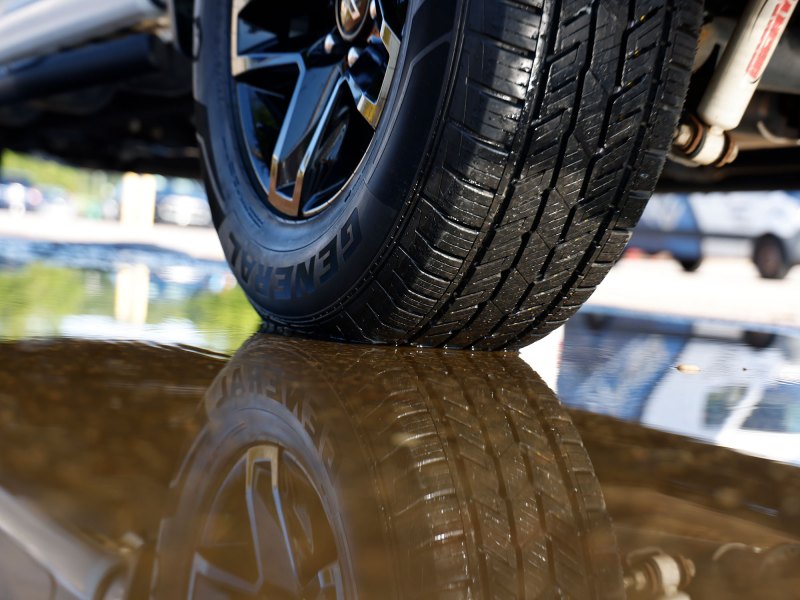
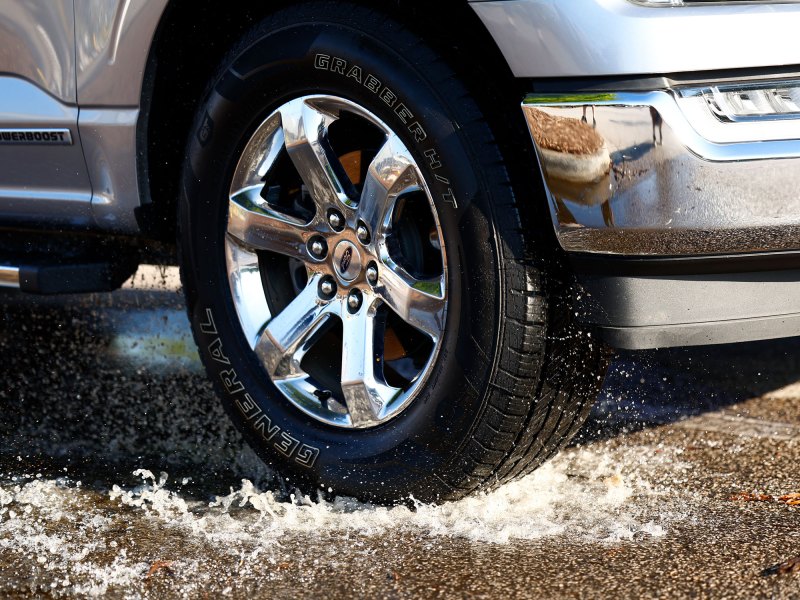
Also of great importance is having fresh tires with a tread pattern such as General Tire’s Grabber H/T tires designed to enhance off-road traction and grip.
Steep Ramps
Ramps with steep angles of incline are a challenge because the tow vehicle is also fighting gravity, which makes the boat heavier and makes traction more tenuous. And, if the rig’s tires lose their grip, it can result in the tow vehicle becoming a submarine, since the incline angle usually continues into the water, making it extra deep.
To make backing down easier, shift the vehicle into neutral and let gravity be your friend. Without the engine pushing the vehicle and boat down the ramp when in reverse, it’s far easier to control, and it’s less prone to going off line.
Have a friend ready to place chocks behind the vehicle’s rear wheels when launching or retrieving as a safeguard against slipping backward. Attach short lanyards to the chocks and tie them to the trailer tongue so that when the vehicle pulls forward, the chocks follow along without the driver needing to get out and retrieve them.
Make sure to engage the parking brake before shifting into park, or it can be difficult to put it in drive when it’s time to go.
When launching or loading on a steep ramp, keep the bow strap connected to prevent the boat from sliding off the trailer.
Gaining Traction
With the boat loaded on the trailer, it’s time to go. But when you press the long skinny pedal, the tires spin, and the rig goes nowhere. Now what? If you didn’t do it the first time, before giving the vehicle gas, press the brake pedal down and gently release most of the pressure as you add power. If it’s still a no-go, there are several things you can try. Wet, slippery algae can be the culprit, and you might be able to clean the area in front of the tires with a stiff-bristle brush. Next, try throwing coarse sand under the tires or using a rubber traction mat. More weight over the drive wheels can help. If the tow vehicle is a pick-up truck, enlist the aid of bystanders to add some human ballast to the truck bed. Always carry a tow strap. Even a compact car can add just enough additional power to help extract your rig if it’s on dry level ground.
Shallow Incline
Many backwater ramps don’t have much incline, making it difficult to launch because you can’t back the tow vehicle far enough to float the boat. Having the right trailer setup can make all the difference. One with rollers or low-friction bunks, topped with products like Taco’s Glyde Sticks, can make it easier to slide the boat off the trailer, even if it’s not fully submerged. With the bow strap off, the driver can back up briskly and hit the brakes to slide off the boat. Make sure the water is deep enough and tie a line to the boat. If that doesn’t work and the ramp has a finger dock, back the boat up, angling slightly toward the dock and get as close as possible. Tie a line to a stern cleat and the other end to a piling on the dock and gently pull away to release the boat.
By using the right vehicle, the right trailer, the right tires and the right techniques, anglers can take advantage of the path less traveled to float their boat and find more fish.
Choose the Right Tires
Tire’s are an often-overlooked factor for tow rigs that launch boats on challenging ramps. Choose an all-season tire like General Tire’s Grabber H/T series, which is designed to provide more traction in slippery conditions and is designed to carry heavy loads. They feature an alternating series of S-shaped tread blocks, with cuts in the treads called sipes, which provide more biting edges and help maintain grip on wet or slimy ramps. If more traction is needed, carry a portable compressor and deflate the tires slightly to increase surface area and grip, then reinflate to the proper level when done.