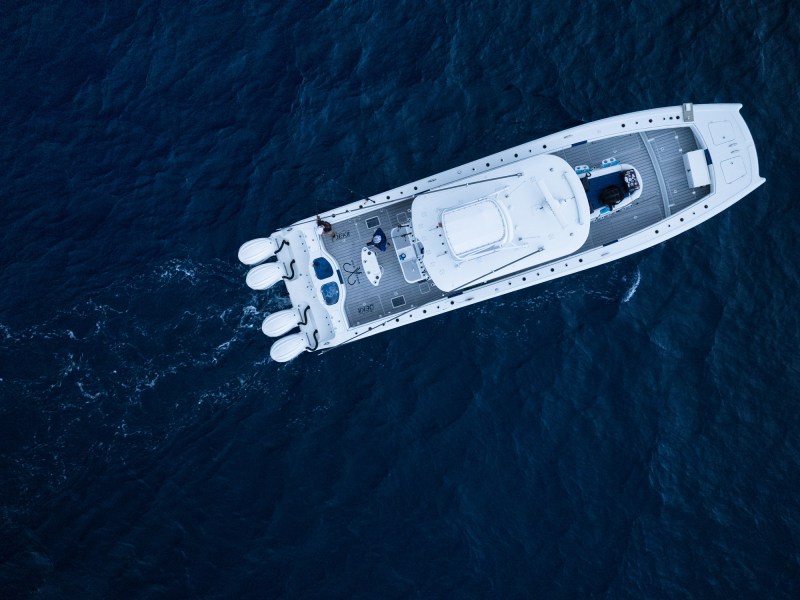
Technology is all around us and advancing daily. This is true from endless cell phone upgrades to new products for boating anglers.
I remember when going fishing meant picking a compass heading and running for 45 minutes to fish on what we hoped was productive bottom, with only a flashing depthfinder for reference. Then Loran provided us with actual productive locations and now our MFDs (multi-function displays) give us a GPS route and imagery of what’s below.
Yet, as far as we have come, there are seemingly daily advancements that can make our fishing more productive and the whole boating experience more pleasurable and safer. I’m a big fan of technology, and it seems like every time I add a new gadget to my boat I wonder how I ever lived without it.
It also seems that with each addition I find yet another tool that will help me in some way. There’s an endless list of tech products that make boating and fishing experiences better. Here, I will spotlight a few of the top products that I have personal experience with and feel would benefit anyone looking to add some new toys to their helm.
Buy Into the System
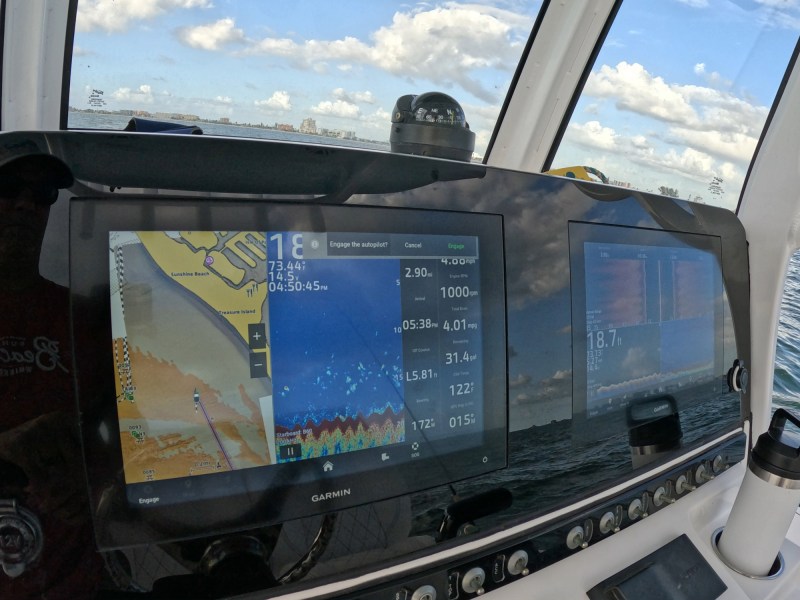
Disclaimer: My boat is equipped with Garmin products, including two MFDs and a host of different accessories, some of which you will read about. Many manufactures such as Garmin, Furuno, Lowrance, Raymarine, Simrad and Minn-Kota (Humminbird) make very similar products with similar capabilities, and although these systems vary in cost, ease of use and detail quality, the products and systems are comparable.
It makes sense in most cases to stay within your boat’s ecosystem, meaning you should pick a brand and stick with it where possible. Each brand optimizes its software and hardware to work with its own accessories and displays. This will allow you to get the most out of the product and features and often saves money and space on dedicated screens, as a single MFD can handle all the controls for multiple accessories.
Autopilot for Boats
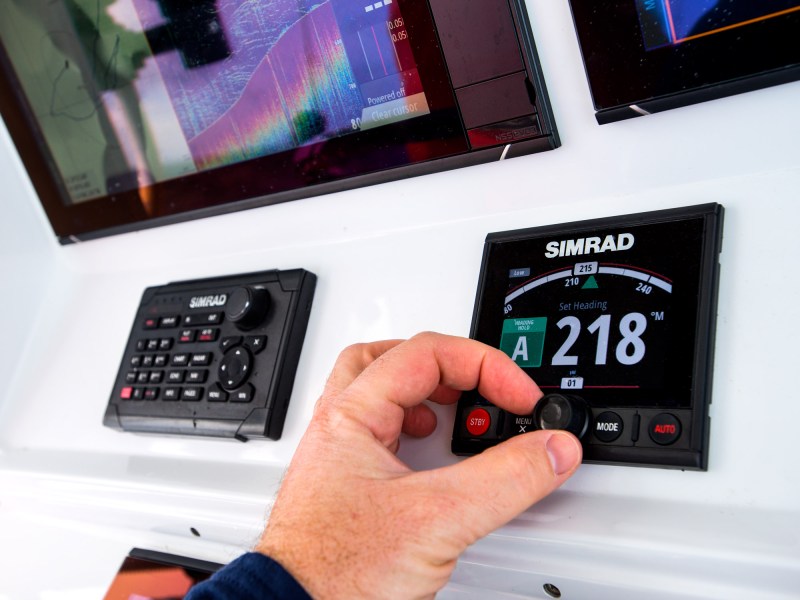
Does your boat really need an autopilot system? Maybe not, but boy is it nice. I know this is a product that many boaters who head offshore already have, and if they don’t it should be top of the list. It’s also great for smaller boats that stay nearshore as well. I use autopilot on virtually every trip. On long runs it saves fuel and fatigue, especially when fighting sloppy seas.
Inland, the hold-heading feature is great for long idle stretches or running down a shoreline. Inshore or off, once you install autopilot, you will wonder why you haven’t had it all along.
Practically all major boating electronics manufactures make units that work as stand-alone devices or in tandem with MFDs. Their features are similar, and staying within your MFD’s ecosystem can simplify the process. For instance, by using my Garmin MFD, I was able to save a considerable expense (and space) of a dedicated autopilot screen. When shopping for an autopilot system, understand that it’s not a one-size fits all device. Your boat, its steering system and your requirements for an autopilot will determine what technology works best.
Using my MFD and Garmin Autopilot, I simply pick a waypoint and select “Go To.” From there, GPS charts the course and asks if I would like to engage autopilot. All that’s left is to set the speed and sit back. Today’s systems can route direct courses or multi-step courses guiding you through marked channels and around known hazards. While this technology makes life simpler and safer, you can’t just set it and forget it. While autopilot gives you a path and relaxing ride to your destination, it does not avoid other boats, crab traps or other obstacles that aren’t permanent or known to the GPS system. It is imperative that you remain vigilant while using autopilot.
Night Vision for Boats
I’m on my boat a lot in the dark. In the summer, I love to fly fish around dock lights. Navigating inland waters around markers, buoys and other debris in the dark can be tricky. I also like to get what some would call a “very” early start, especially when heading far offshore. I admit, I’m wary of running into hard-to-see obstacles, and anything to help me avoid doing so is a welcome addition.
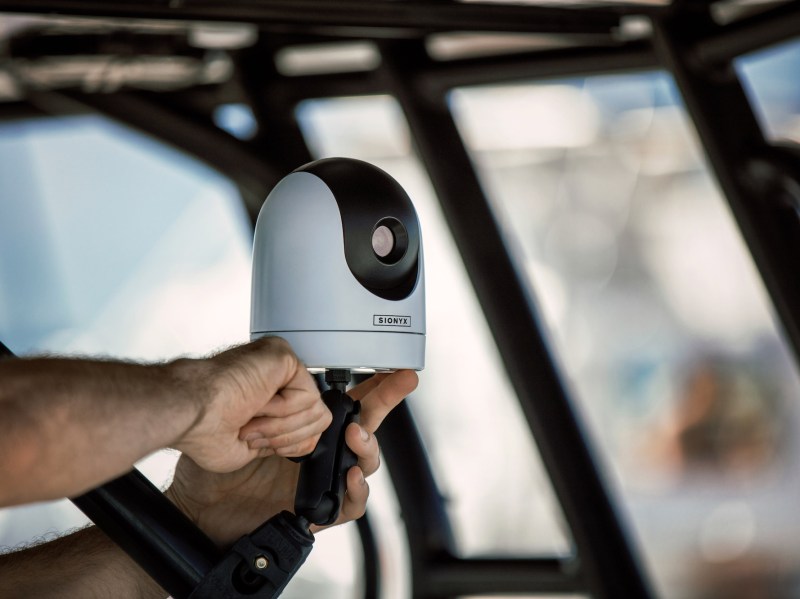
Thankfully night vision has come a long way evolving from expensive thermal imaging to more cost-effective color night vision cameras. These accessible cameras utilize highly sensitive sensors that use existing ambient light to create full-color images on your MFD. The quality of the sensor is of great importance. The sensor is going to affect how much light is needed for useful images. Inshore usually has plenty of ambient light around to allow for most devices to clearly see other vessels and markers. The real challenge is when heading offshore on extremely dark nights. I’ve found the Sionyx Nightwave to be excellent, even on moonless nights as I head away from shore under only starlight.
Connectivity is another major key. There are HD (high definition) and SD (standard definition) cameras on the market, and they are not created equally. HD is going to be much sharper, but just having an HD camera is not all that matters. Most MFDs have some sort of video input, and many only have standard definition or analog inputs. This means even with an HD camera you will only get an SD image, which tends to be grainy in low light. If your MFD doesn’t have HD inputs, another advantage of the Sionyx Nightwave is it connects via the network input. Regardless of your video input, you can get HD-quality video, which is much clearer.
Installation on these cameras is simple; they are pretty much plug and play. Some cameras do require separate power, but even that is not overly complicated. Most people opt to permanently mount cameras on a T-top, but there are also options for temporary mounts. Whether you are an early riser or find yourself coming in late from a day of cruising and dinner, night vision is a great addition.
Better Kill Switches
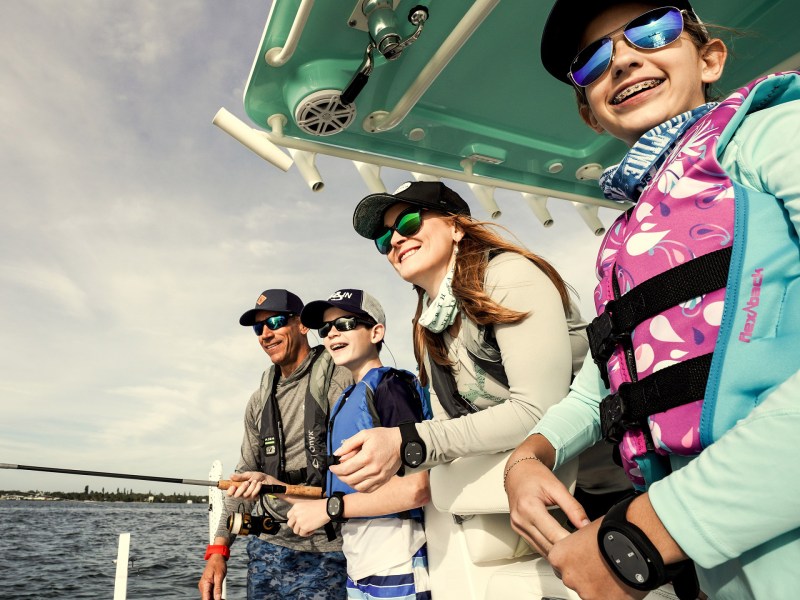
I believe the kill switch is the most under-used safety item on the boat, despite being mandated on boats under 26 feet while on a plane. The biggest complaint with kill switches, and the reason people don’t use them, is that traditional devices tether you to the helm. However, as boats have gotten smarter, so has the kill switch. The Fell Marine 1st Mate system uses geo fencing to define your boat’s area and activates the system should the small wearable fob cross that boundary.
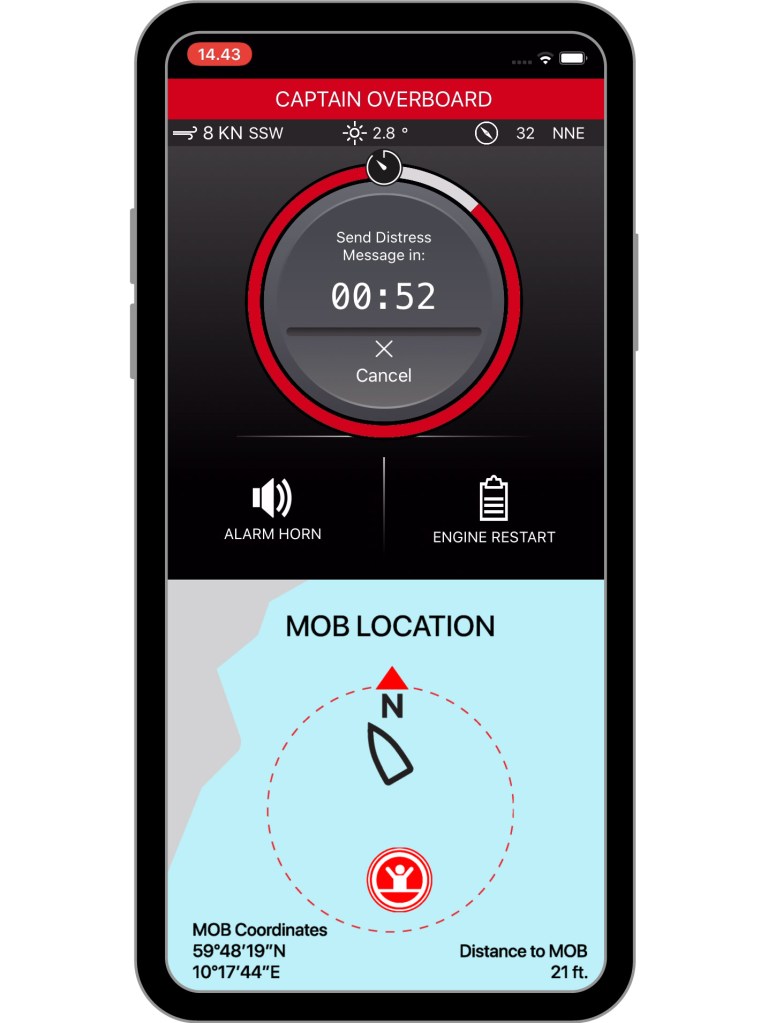
You can wear the fob like a watch, on a lanyard or just put it your pocket like I do. The fob automatically connects to the boat when started and allows you to freely move around knowing that should you and your fob go overboard, the engines will stop. Furthermore, via the 1st Mate app, if the system is not reset in a user definable amount of time, your phone sends messages for help. This is great for solo fishing where an errant wave while reaching for a fish or setting your trolling spread could be disastrous.
Installation is a breeze; you simply plug the 1st Mate harness into your existing kill switch wiring. As a bonus, it can also be used as an anti-theft device with settings in the app that won’t allow the boat to start without permission. Should you forget your fob, there’s no worries either, your boat will start and run as normal. I fish solo often and this smart safety device can truly be a life saver.
Advanced Mapping Finds More Fish
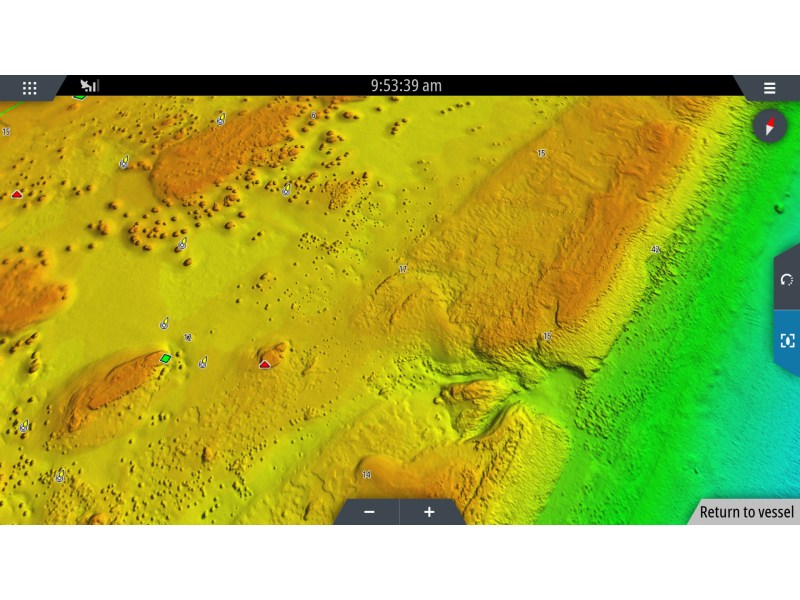
Relief shading and high-resolution seafloor maps are game changers when it comes to finding new fishing spots. These high-definition views of the bottom show wrecks, reefs, rocks, ledges and any other dramatic depth changes. These maps have been around for a while, but I still find many anglers who don’t utilize the technology.
They come as an add-on to your MFD’s maps from companies like Navionics and CMOR. It’s a simple download to install, and functions like any other map but with great graphic details of the bottom. Finding fish-holding structure is a breeze.
Using relief shading, I often find new, even better ledges and structure very close to areas I had marked prior to installing relief shading. Furthermore, depending on the system you are using, you can often view these maps on phones or tablets, allowing you to hunt for new fishing spots from the comfort of your couch.
Read Next: Tips to Best Use Marine Radar
Side-Scan Sonar
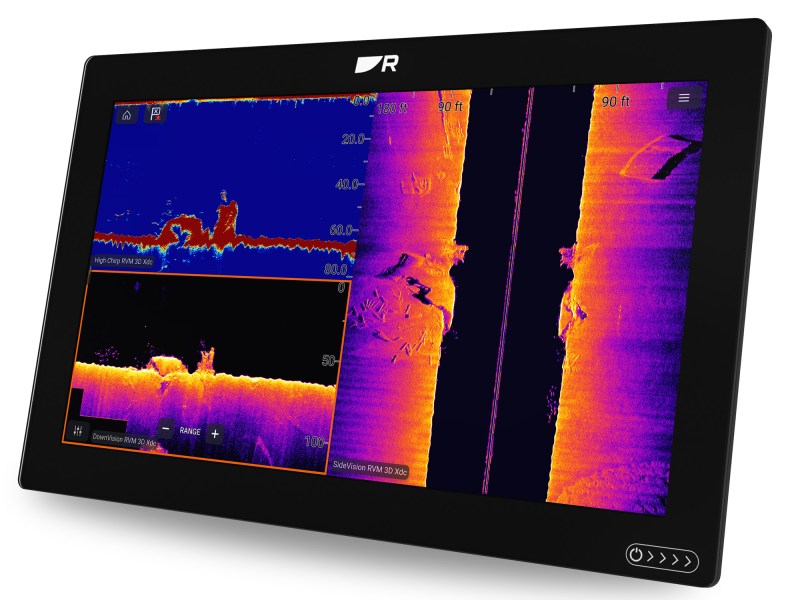
Similar and somewhat related to relief shading, side-scan sonar can show you details of the bottom that normal sonar would not pick up. Forward-facing live sonar is the newest sonar technology everyone is talking about right now, but I find side-scan to be more useful for the fishing I do. It’s an incredible tool for finding and identifying fish and structure.
You can spot fish, sometimes with unbelievable clarity, as well as bottom contours and features. It’s also great when searching for structure that might not be exactly where you thought it was. When looking for wrecks, if you are not directly over the structure, traditional sonar might miss it, but with side scan you may notice it’s just several yards to the side.
Like relief shading, and often more detailed, you can see definition of the bottom itself. Side-scan does have a learning curve to truly understand what you are looking at. The best way to describe the view is like lying on the bottom and shining a flashlight to the side. Elevated items get illuminated and then cast shadows. The shadows are the more obvious indications and tell a lot, but missing the illuminated object is a common mistake. Usually showing as a lighter mark, the object itself can be harder to see but it reveals its location.
Suspended items, like fish and bait balls will be separated from their shadows, while elements on the bottom will be in contact with the shadows. Adjusting the depth and settings also makes a big difference, and it pays to experiment. Despite a bit of a learning curve, if you stick with it and figure it out, the amount of information available from side-scan sonar is priceless.
The good news on side-scan is you may only need to add a transducer. There are thru-hull versions as well as transom mounts. Transom mounts are typically less expensive and, depending on the shape of your hull, you might need two transducers for through-hull configurations (one on each side of the keel).
Many systems like the Raymarine’s RealVision give you multiple sonar views: SideVision, DownVision (and HD down view) and traditional chirp all in one. Installation typically includes mounting the transducer and running the cable to the back of the MFD, where it’s plugged into the sonar input.
How to Stay in Touch Offshore
As technology has allowed us to venture farther offshore, it’s essential we have reliable communications. I am frequently well out of cell phone reach and have had to look for other options to be able to stay in touch.
Many boaters are familiar with emergency position indicating radio beacon (EPIRB) systems that when activated send a distress signal along with your location to a Maritime Rescue Coordination Centre. These and personal locator beacon (PLB) systems are great in an emergency; but they do not offer two-way communication, nor the ability for non-emergency communication.
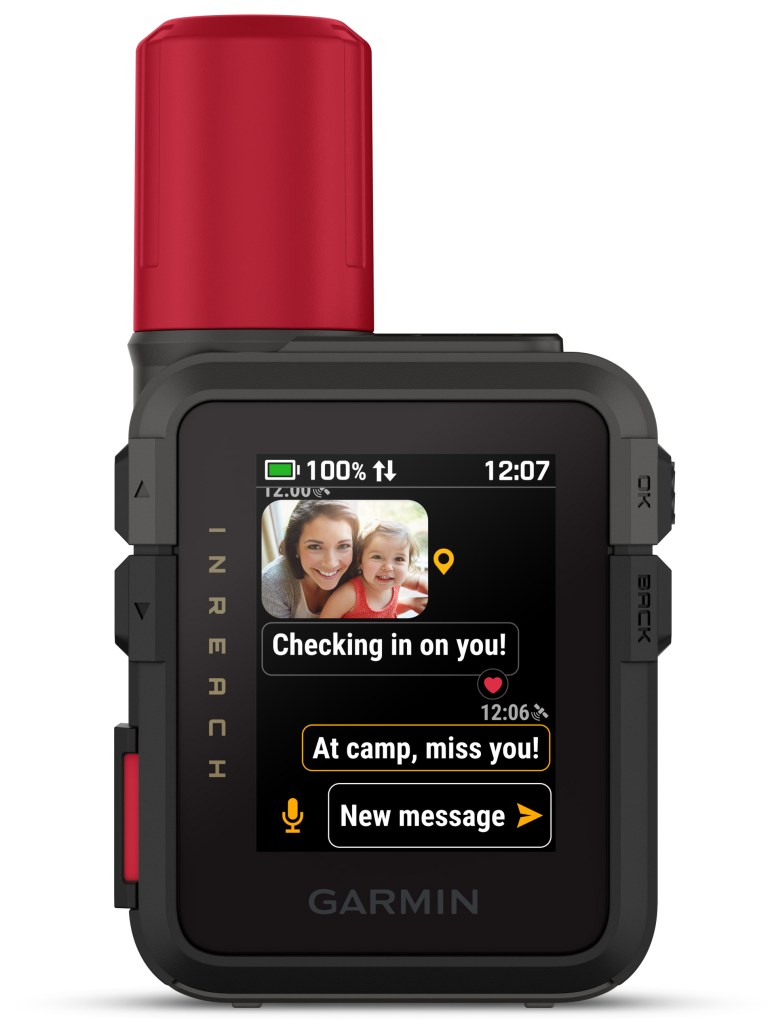
For that, there are affordable and easy to use systems such as the Garmin InReach or GlobalStar SpotX. These are two-way satellite messaging systems. Some units now use voice messaging as well as Bluetooth connectivity to your cell phone to easily compose messages and can even send photos. Importantly, an SOS feature sends a distress message along with your location when activated. The two-way ability allows you to communicate with rescuers as to the nature of your situation.
While not approved to replace the EBIRP on commercial vessels, these are a great option for recreational anglers to keep you connected for emergency purposes or just to check in.
Onboard Cell Phone Chargers
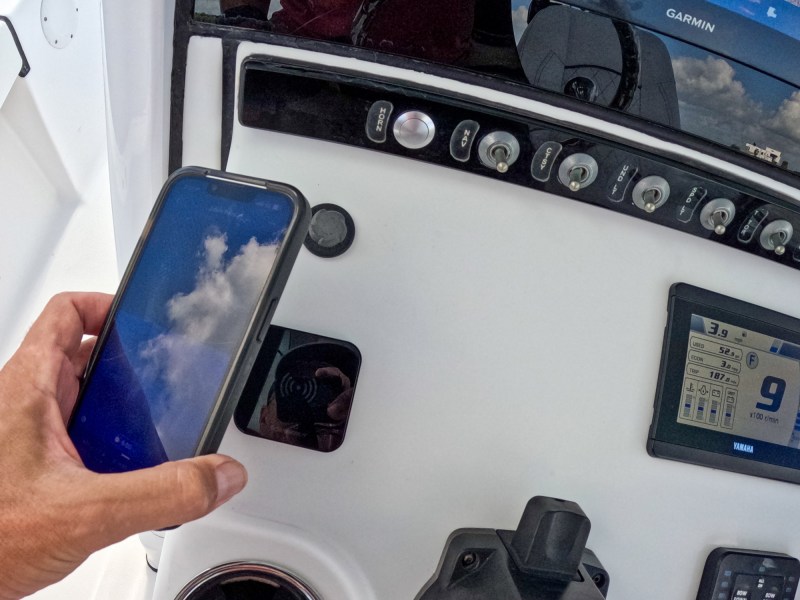
From airports to restaurants and now even boats, people everywhere always need to charge their cell phones. While simple charging cables will work, Scanstrut has a better solution with marine-ready waterproof wireless chargers. I love the wireless aspect. There are no cables lying around and cluttering the boat, and I usually forget or lose cables anyway.
I really like the Scanstrut Ultra, a small unit that magnetically holds my phone and charges it. I mounted it directly on my dash, so I always have my phone in reach and can also see the screen to monitor incoming calls and messages. These units are easy to install, budget friendly and will be used constantly. There are many options available from the Ultra, magnetic holders, to discreet hidden wireless chargers and these make great addition to any boat.