The best knot is one that’s strong and that you can tie correctly, consistently. Every angler has a favorite fishing knot, and usually it comes from experience—not theory. A knot becomes “the one” after enough fish are landed on it, enough leaders are pulled against the rail, and enough bad weather forces you to tie it in conditions that are far from perfect.
Talk to enough captains and you realize something quickly: most don’t care about fancy. They care about repeatable. A knot that tests incredibly strong in perfect conditions doesn’t mean much if you can’t tie it quickly with wet hands while fish are blowing up behind the boat.
Over time, though, certain knots separate themselves for specific jobs. Some are simply better for braid to fluorocarbon. Others shine for mono connections or quick day-to-day rigging.
Here’s where each line-to-line knot really fits in—and the knots that consistently stand above the rest
FG Knot: Best Knot for Braid to Fluorocarbon
The FG Knot has become the gold standard for serious braid-to-fluorocarbon applications, especially for anglers casting artificials or fishing heavy drag.
Unlike traditional connection knots, the FG works by weaving braid around the leader instead of sharply bending the fluorocarbon. The result is an incredibly slim connection that slides through guides smoothly and maintains outstanding strength.
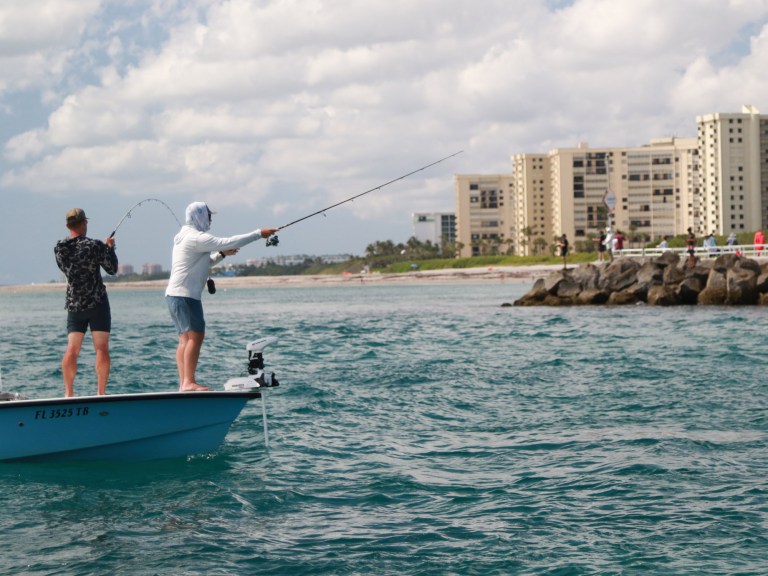
I really started appreciating the FG knot while fishing heavier spinning setups offshore and around structure in Florida. Throwing big swimbaits and topwaters at tarpon and big snook, you realize quickly how much smoother an FG casts compared to bulkier knots. With longer fluorocarbon leaders, it simply fishes cleaner.
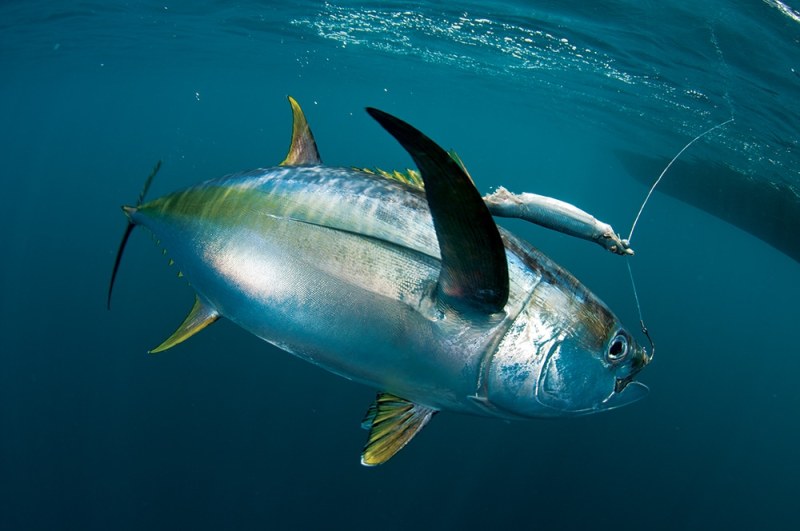
Offshore, it became even more noticeable. Watching tuna anglers repeatedly cast and retrieve heavy leaders through guides without hangups made it obvious why so many serious crews trust the FG knot.
Capt. Chris Schultz of FishJax Charters agrees. “I love the FG for the strength and how smooth it is through the guides,” Schultz said. “That’s important for spinning and lighter trolling setups.”
Best Uses for the FG Knot
- Casting artificials with spinning tackle
- Tuna jigging and popping
- Tarpon and snook fishing
- Long fluorocarbon leaders
- Heavy drag applications
Pros
- Extremely strong
- Slim profile
- Excellent casting performance
- Great for heavy fluorocarbon
Cons
- Takes practice to tie correctly
- Harder to tie in rough conditions
- Easy to rush and tie poorly
Verdict of the FG
For braid to fluorocarbon, the FG is the clear winner when maximum performance matters most.
Double Uni Knot: Best Everyday Braid-to-Mono Knot
The double uni knot may not get the same hype online as the FG, but it’s still one of the most practical knots in fishing. It’s quick, reliable, and forgiving. That matters when fish are feeding and rigs need to get back in the water immediately.
I’ve used the double uni countless times for everyday inshore fishing, especially when guiding friends or rerigging quickly during a bite. It’s one of those knots you can tie confidently in low light, rough seas, or while drifting down a mangrove shoreline chasing snook and redfish.
A lot of charter captains still lean on it for exactly that reason. It may not be the slimmest knot, but it consistently works. Capt. Justin Anderson of Historic Coast Outfitters keeps things simple with a uni-to-uni setup for most of his fishing. “I use uni-to-uni and loop knots mainly for the stuff we do,” Anderson said. “Uni is for braid to fluoro and loops for my jig heads.”
Capt. Adam Jeffrey of Reel Dream Fishing also likes the versatility of the double uni, especially when tying braid to braid or mono to mono. “Double uni works good for braid to braid too,” Jeffrey said. “I just do a few more wraps—like six or seven. Double uni also works good for mono mono.”
Best Uses for the Double Uni knot
- Live bait fishing
- General inshore fishing
- Spinning tackle with shorter leaders
- Quick rerigs
- Schoolie offshore species
- Braid-to-braid backing connections
Pros
- Fast and easy to tie
- Extremely dependable
- Beginner friendly
- Great all-around knot
Cons
- Bulkier profile
- Doesn’t pass through guides as smoothly
- Less ideal for very heavy leaders
Verdict
The double uni remains the real-world workhorse for braid-to-mono applications and one of the most versatile connection knots in fishing overall.
Blood Knot: Best Mono-to-Mono Knot
When connecting mono to mono—or fluorocarbon to fluorocarbon—the blood knot is still tough to beat. It creates a clean, streamlined connection that moves smoothly through guides and maintains excellent strength when tying similar diameter lines together.
I’ve used blood knots most while building custom leaders and extending fluorocarbon topshots offshore. Once you get comfortable tying them, they create a really clean finished product that feels noticeably smoother than bulkier alternatives.
It’s not the fastest knot to tie, especially when conditions are sloppy, but for finesse rigs or carefully built leaders, such as those used in fly fishing, it’s one of the cleanest options out there. Schultz also prefers the blood knot for that same reason. “It’s strong and smoother through the guides than a uni-to-uni,” he said.
Best Uses for the Blood Knot
- Custom leader building
- Mono topshots
- Fluorocarbon extensions
- Similar diameter line connections
- Light tackle finesse rigs
Pros
- Clean profile
- Strong with equal-size lines
- Excellent guide clearance
- Great for technical rigging
Cons
- Takes practice
- Not ideal for drastically different diameters
- Slower to tie
Verdict
For mono-to-mono connections, the blood knot remains the cleanest and most refined option.
Where the Other Fishing Knots Fit In
Improved Albright Knot
The improved Albright sits somewhere between the FG and double uni knots. It’s slimmer than a double uni but easier to tie than an FG, making it a strong middle-ground option. It works especially well when connecting drastically different line sizes, which is why many offshore anglers still trust it for trolling, chunking, and bottom fishing.
Bristol Knot
The Bristol knot—often called the no-name knot—is built for heavy offshore applications. Big-game crews targeting tuna, marlin, and swordfish still rely on it because it handles extreme drag pressure extremely well, especially with doubled braid and wind-on leaders. For most inshore anglers, it’s probably more knot than necessary, but in the heavy tackle world it remains highly respected.
Three-Turn Surgeon’s Knot
The three-turn surgeon’s knot wins in one category above all else: speed. It’s simple, quick, and surprisingly effective for lighter tackle. I’ve used it as a quick fix plenty of times when conditions were rough or fish were actively feeding and I needed to get a bait back in the water fast. It’s not the strongest or sleekest option, but it absolutely still catches fish.
Bottom Fishing: When Weak Links Matter
One thing that came up repeatedly talking with captains was the idea that not every connection in a rig should be equally strong. For bottom fishermen, especially, having a controlled weak point can save an entire setup.
Schultz builds his rigs with that in mind. “For leader to hook, I want that to be the weak link in a bottom fishing scenario,” he said. “If the hook gets hung up, it’s nice to be able to break just that part off and not lose the entire rig.”
His standard bottom setup reflects that approach: a 100-pound mono topshot to a three-way crane swivel, a 40-pound loop for the bank sinker, and an 80-pound fluorocarbon leader tied to the hook with a loop knot.
“If the weight or hook snags, you almost always get the swivel back,” Schultz said. That kind of practical rigging mindset is something a lot of experienced offshore guys eventually learn the hard way. Sometimes the smartest knot setup isn’t the absolute strongest one—it’s the one designed to fail in the right place.
Final Take On Saltwater Fishing Knots
If you forced most experienced saltwater anglers to narrow it down, the modern winners probably look like this:
Best Braid-to-Fluorocarbon: FG Knot
Best Everyday Braid-to-Mono: Double Uni
Best Mono-to-Mono: Blood Knot
At the end of the day, though, the best knot is the one you can tie correctly every single time. That’s the common theme you hear from good captains. Confidence matters. A perfectly tied “simple” knot will always outperform a poorly tied complicated one—and when a big fish is dumping line off the reel, that’s the only thing that really matters.