
Numbers from the Big Rock Blue Marlin Tournament indicate that boats using omni sonar can experience catch rates 60% to 84% higher than those without this powerful technology.
No one would argue with the premise that omnidirectional sonar is a great fish-catching tool. A new scientific study crunched the catch information from the popular offshore fishing tournament and backs up that premise with hard data.
A trio of scientists analyzed two years’ of information from the Big Rock Blue Marlin Tournament, held each June out of Morehead City, N.C.
Comparing catch rates between boats with and without omnidirectional sonar, the scientists found that the technology significantly improved catch rates both for blue marlin and other pelagic species. The study, published recently in the ICES Journal of Marine Science, found that boats with omni sonar caught 60% to 84% more billfish than those without sonar.
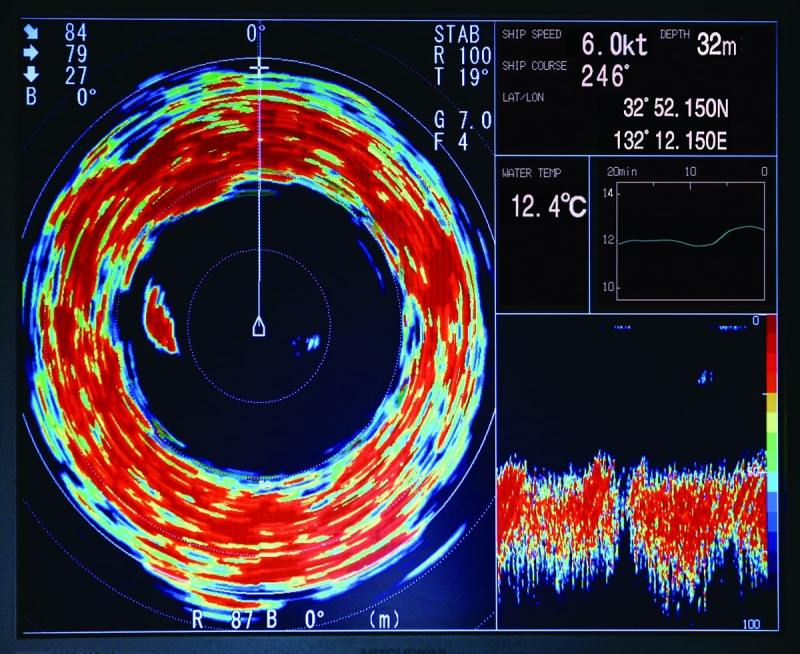
What is Omni Sonar?
Omnidirectional sonar is technology that has changed the face of offshore tournaments. Capable of scanning thousands of feet, both in depth and 360 degrees around the boat, it allows tournament teams to see fish in near real time. With the ability to lock onto and track individual fish, it’s easy to see the huge advantage it provides.
At a cost that can run up to more than $100,000 for purchase and installation of this high-end tech, omni sonar currently resides primarily in the arena of big-money billfish tournaments, where multi-million dollar boats compete for millions of dollars in winnings.
Omni sonar is now widely considered a necessary tool to compete in these high-stakes tournaments, and its rise has led to separate sonar and non-sonar divisions at many events.
The Omni-Sonar Study
Brendan Runde, a marine scientist with the Virginia Chapter of The Nature Conservancy, teamed up with North Carolina State University researchers Paul Rudershausen and Jeff Buckel on the study. The three have worked on several other research efforts connected to the Big Rock, including analyzing stomach contents of mahi mahi and looking at mercury content of blue marlin flesh.
“We noticed a few years ago when the Big Rock created a non-sonar division that we had enough information to determine if sonar boats or non-sonar boats were the ones catching enough billfish to end up on the leaderboard,” said Runde, who received a masters degree and PhD from N.C. State under Buckel’s tutelage. “Because the tournament is confined in time and space, and there’s huge participation, we thought we could get something with serious statistical power.”
And that they did.
Sonar By The Numbers
The team obtained data from 302 entrants in 2024 and 272 in 2025. The 2024 entrants caught a total of 272 billfish during the event (200 blue marlin; 38 white marlin; and 34 sailfish). The next year produced 424 billfish (242 blue marlin; 73 white marlin; and 109 sailfish).
Of the 574 entrants, there was an almost even split between the 291 that used omnidirectional sonar and the 283 that did not.
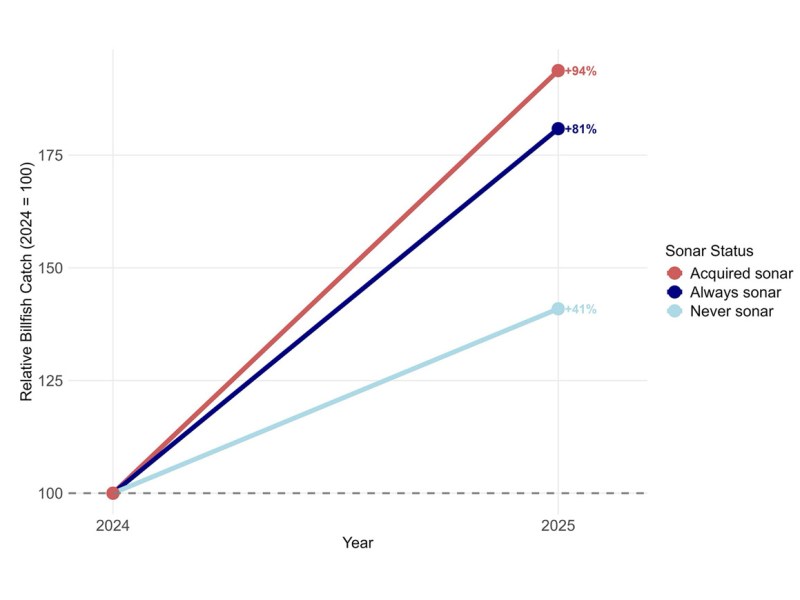
For one modeling run, the team considered only the 289 individual boats between 40 and 70 feet long. For another, they looked at the 174 boats that fished the tournament both years. Among the 174 boats that fished both years, 85 used sonar both years, 73 never used it and 16 went from not using sonar in 2024 to using it in 2025.
The sonar-equipped teams far out-caught those without sonar.
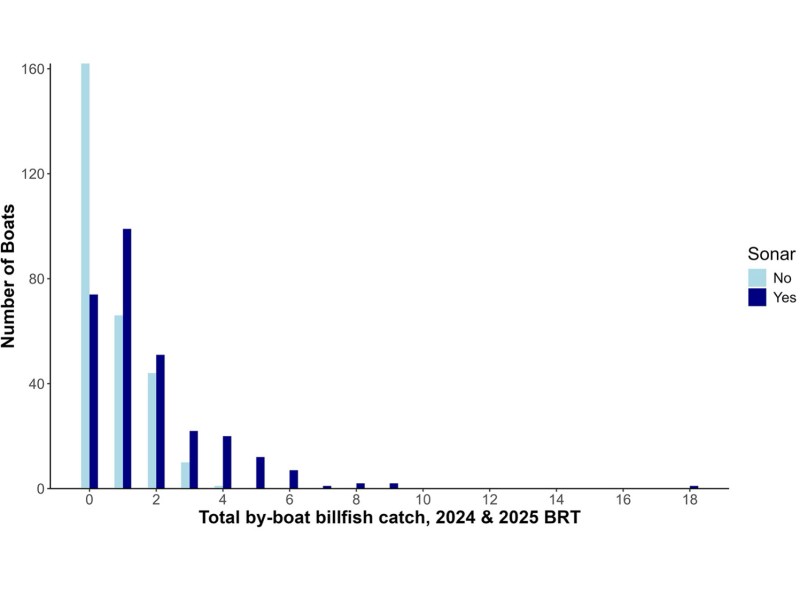
“In the two years we looked at, there were 46 boats that caught four or more billfish during the week,” Runde said. “Of those, 45 had omnidirectional sonar. Of the 25 boats that caught five or more billfish, all of them had it.”
Fishing success was significantly better across the board at the 2025 Big Rock, when entrants set a record with 420 billfish caught, including 238 blue marlin. But the difference between sonar- and non-sonar-equipped boats was comparable both years.
The Benefits of Omni Sonar
On the other side of the coin, the researchers also looked at teams that struggled.
“There were roughly the same number of boats that used sonar and didn’t use it,” Runde said. “But of the boats that didn’t catch any billfish, more than twice as many were those that didn’t have it.”
Jacky Dufour is among those who is using omnidirectional sonar.
“It’s helped us tremendously,” said Dufour, captain of Play it by Ear, a 61-foot Viking out of Morehead City, who was quick to note that it doesn’t always ensure getting fish to the boat.
“The only thing it guarantees is that you’re going to be driving over more fish. It gives you faith to stay in areas where you’re marking fish.”
While luck can play a part on the micro scale — Dufour dourly noted that of seven blue marlin Play it by Ear hooked in the 2025 Big Rock, they got only two to the boat — the data from two years of the Big Rock show that on a larger scale, marking fish and targeting those fish does result in more fish being brought to the boat.
“In ecology you don’t have a lot of clean results,” Runde said. “Nature is complicated, but this was pretty clean. The boats that catch a lot of billfish are the ones with omnidirectional sonar.”
Other Factors for Billfish Success
Runde said there are other potential factors that could be at play. For example, teams that have the resources to outfit their boats with omni units could also have resources to hire more experienced crew. The quality of other equipment — rods, reels, lines, etc. — could also vary.
Additionally, the researchers did not attempt to differentiate between specific sonar units. It’s also possible that newer units could be even more effective as the technology continues to evolve.
Interestingly, boats that went from no sonar in 2024 to using sonar in 2025 showed even more significant increase in catch rates. They experienced a 94% increase in catch, compared to 81% for teams with sonar both years.
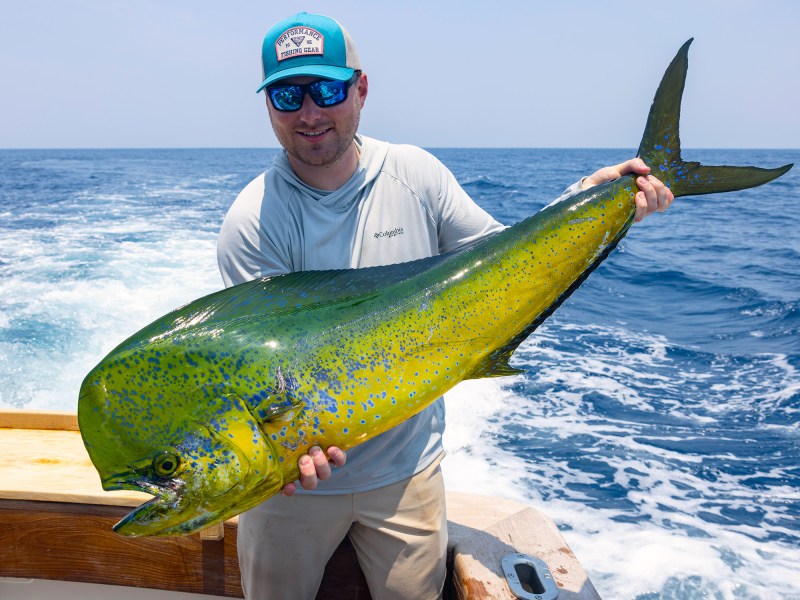
Sonar also helped teams boat more non-billfish. Of 17 weekly prizes awarded for mahi mahi, wahoo and yellowfin tuna, 13 went to boats with sonar while only 4 went to non-sonar boats.

Omni Sonar’s Future
The paper noted that the scientists’ findings could have implications for fishery managers who “ensure the sustainability of pelagic stocks in the face of emerging technologies.”
“This is just the latest in a long, long line of technological advancements,” Runde said. “Humans are predators and fish are one of our prey. This isn’t about whether this is a problem or makes it too easy to catch fish. It’s about figuring out how much of an increase in efficiency this is so we can account for that when we’re managing these publicly held resources.”
Dufour said he is interested to see how the technology will impact fish behavior over time.
“We’re going to educate a lot of fish,” he said, chuckling wryly. “We see it all the time. You get away from the sonar fleet and we get more aggressive bites.”
He also envisions a day in the not too distant future when tournaments won’t need to offer separate categories or points systems for non-sonar users because everyone will be using some version of the technology.
“I kind of feel bad for the next generation,” he said, setting up a sarcastic punchline. “They will never know the anguish of fishing for 10 days without a blue marlin bite.”