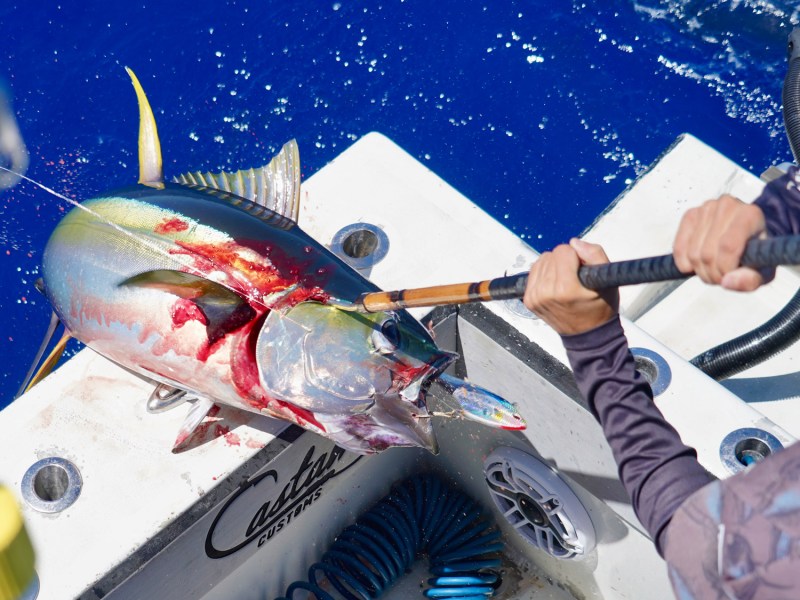
Out of Cape Canaveral, yellowfin tuna fishing isn’t about running blind—it’s about narrowing the ocean down until it makes sense. Capt. Adam Jeffrey has spent years doing just that.
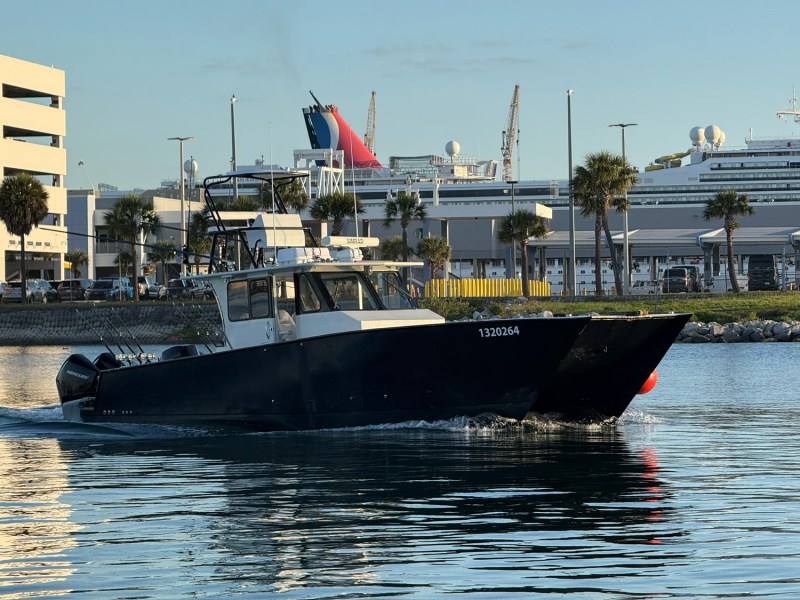
When we eased out of Port Canaveral aboard Jeffrey’s 42-foot RazorHead catamaran Reel Dream, it was already light—one of those clean Florida mornings with just enough breeze to keep the heat honest. The marina carried that familiar mix of diesel and salt, and the tone onboard was steady: No hype, no nerves—just quiet confidence. I’d seen Jeffrey’s track record. The only question was whether the ocean would line up.
Seventy-five to 80 miles later, under power of quad 300 Mercs, it did.
Finding Yellowfin Tuna
“Proximity is ideal here,” Jeffrey said. “You can stay out of the sharks by not pushing too far toward the Bahamas, and you don’t have to make a six-hour run to get into them.”
That middle ground—largely along the east side of the Gulf Stream—has quietly become one of Florida’s most consistent yellowfin fisheries. But consistency offshore doesn’t mean easy. It means repeatable—if you know what to look for.
“We’re first looking for the temperature change,” Jeffrey explained. “That’s where they are. The birds tell you the exact spot.”
It’s a system built on layers: temp breaks, edges, and bird life working together. Miss one factor, and you’re guessing. Line them up, and things happen fast.
“The window for this bite really starts in March, and you may only see small packs of frigates,” Jeffrey said. “However, you can find the tuna. Terns are the ones that school up and give you a clear sign of tuna all the way through June, with May being the pinnacle.”
“Early in the year, March and April, they’re in warmer water on the east edge of the Gulf Stream (76 to 81 F) when the ambient water on the east side is too cold (73 to 75 F). Many people run by them,” he continued. “Later in the year when the water warms up, like May and June, we commonly find the tunas in the cooler 80- to 84-degree water on the east side, when the Stream can reach temps of 85 to 86.”
Tuna Birds and Radar
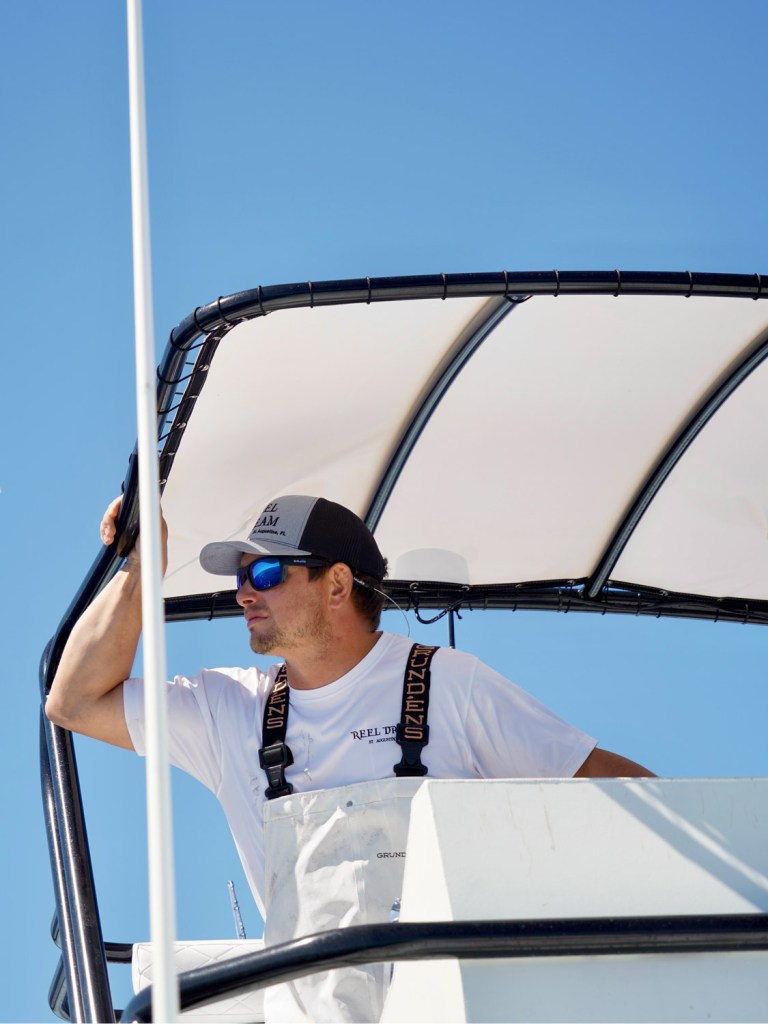
That morning, the ocean looked empty until it didn’t. A flock of terns (commonly called tuna birds) showed just enough life to matter. Jeffrey didn’t make a big call—he just adjusted. Tanner, the mate, was already moving. Lines went out.
“Radar is huge,” Jeffrey said. “I’m looking for birds that are lower on the radar and grouped up. Later in the day, they bunch tighter—that’s when it really gets good.” Jeffrey runs a Simrad 10kw Open Array Radar.
The outriggers got bit first—a daisy-chain of squids fooled a small blackfin tuna. It was a good sign. “Life brings life,” Jeffrey said. “You don’t ignore that.” We started clearing lines, trying to stay ahead of it. Then it escalated.
Tripled Up on Florida Yellowfin
The first clicker cracked, then another, then a third—staggered within seconds. “Stay on it—this is them,” Jeffrey called.
We were tripled up. The cockpit snapped into motion—Drags dumping, lines crossing, bodies moving. Tanner directed traffic, keeping rods separated and anglers moving with purpose instead of panic.
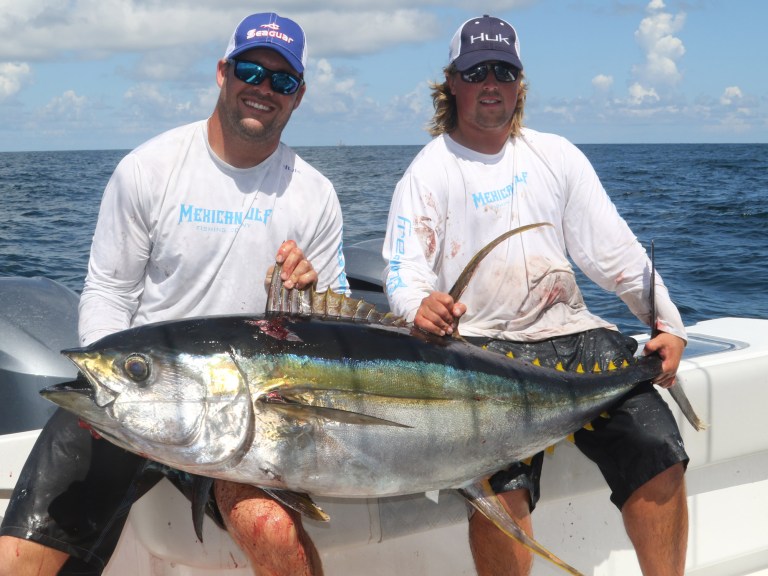
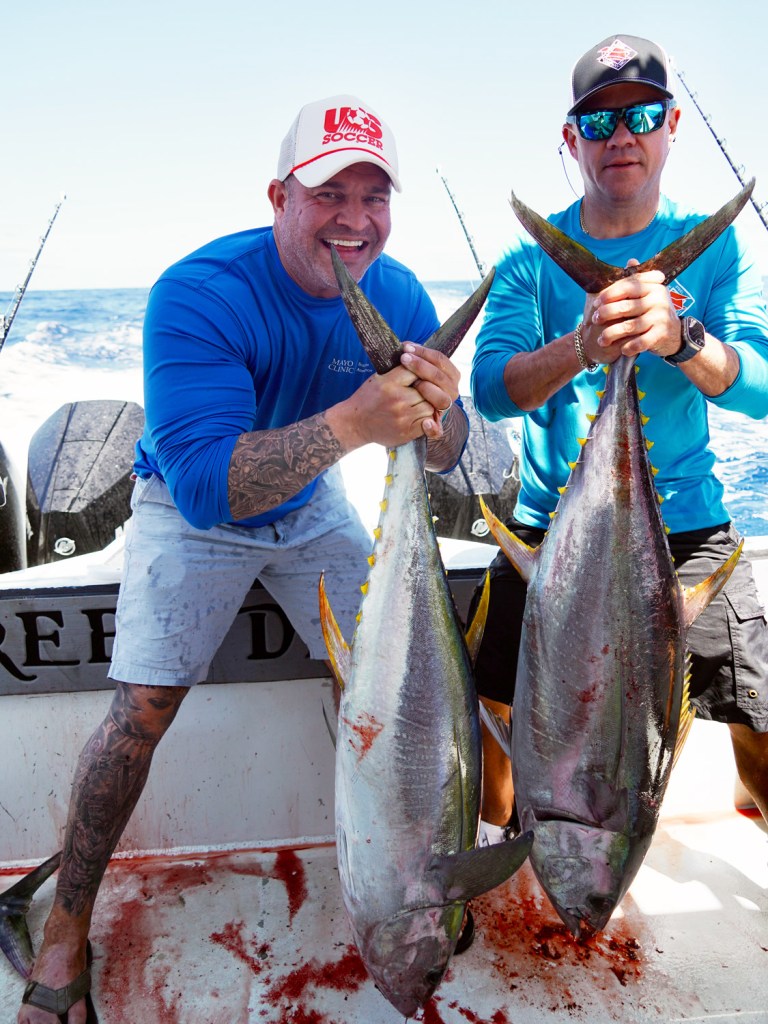
These weren’t blackfin tuna. Forty- to 50-pound yellowfin tuna dug deep, steady and unforgiving. There were no wild surface runs—just weight and pressure.
“They’ll stay down and work you,” Jeffrey said. “You’ve got to stay tight the whole time and watch your lines if you want to land them.”
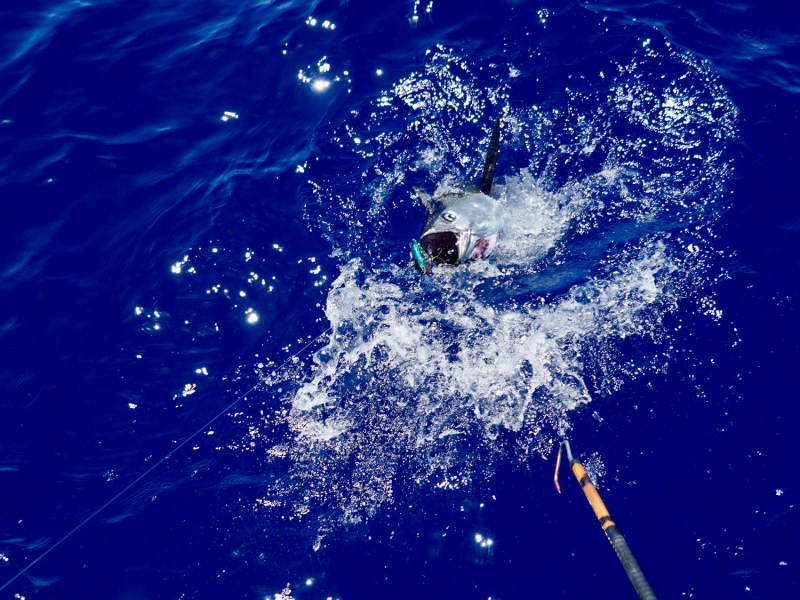
Each fight settled into a rhythm—gain a little, lose a little, repeat. When everything is right, it’s efficient. “When done right, a fight takes about 15 minutes on a good fish,” Jeffrey said. “But that comes down to keeping your spread clean and everyone doing their job.”
Clean is everything. A messy cockpit costs fish. “Priority one is getting lines clear and landing fish,” he added. “You can’t afford chaos if you want to convert.”
When the first fish came into color, you could feel the shift. Relief—but not release. More than once, a tuna saw the boat and turned hard, ripping drag on that last surge. “No celebrations until it’s over the rail,” Jeffrey said calmly.
The gaff shots were clean—committed and controlled. Fish hit the deck, and only then did the energy break loose. We were fired up.
Stay With the Birds
The water was deep cobalt, clean enough to spot flyers skipping across the surface. Birds came and went all day, never sitting long enough to get comfortable. You had to stay on them—read them.
“Tuna push the bait up, but it takes time for birds to find it,” Jeffrey said. “A lot of guys run right past fish at first light.”
It’s a game of patience without wasting time. “If there’s no birds, don’t waste your time,” he added. “But when they’re there, you stay with them.”
Artificials for Yellowfin
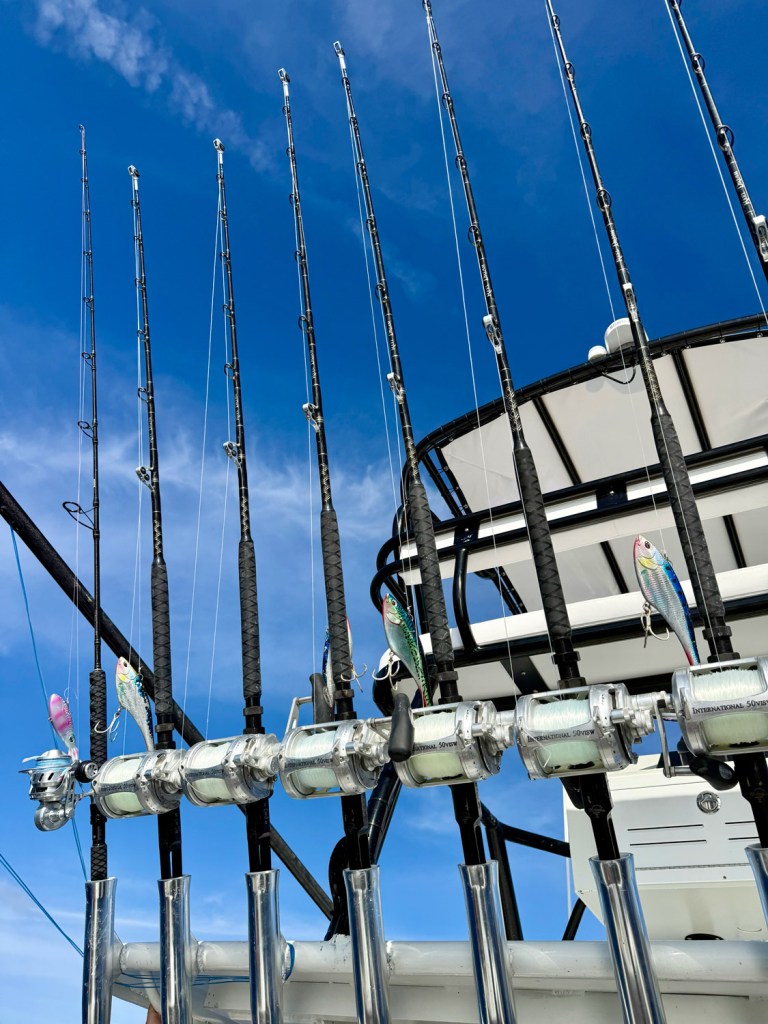
Jeffrey prefers artificials for a reason. “I like pulling artificials so we weed out the smaller fish like blackfin and mahi,” he said. “Keep it as natural as possible—Nomads and squid.”
But matching the hatch still matters offshore. Sometimes it’s squid, ballyhoo and flying fish, but it really depends on what they are eating. “If you’ve got flyers around and you’re dragging something that doesn’t match, they won’t eat,” he said. “It’s not that you’re scaring them—they just want what looks right.”
Below the surface, the sonar picture matched what we were seeing up top. “Big marks, consistently in the column—sometimes as deep as 300 feet,” Jeffrey said.
Tackle for Tuna
Running this program isn’t casual. It’s built. “You need the fuel, the speed, and the ice,” Jeffrey said. Adjust fuel capacity depending on burn rate, and run twin engines at a minimum for safety.
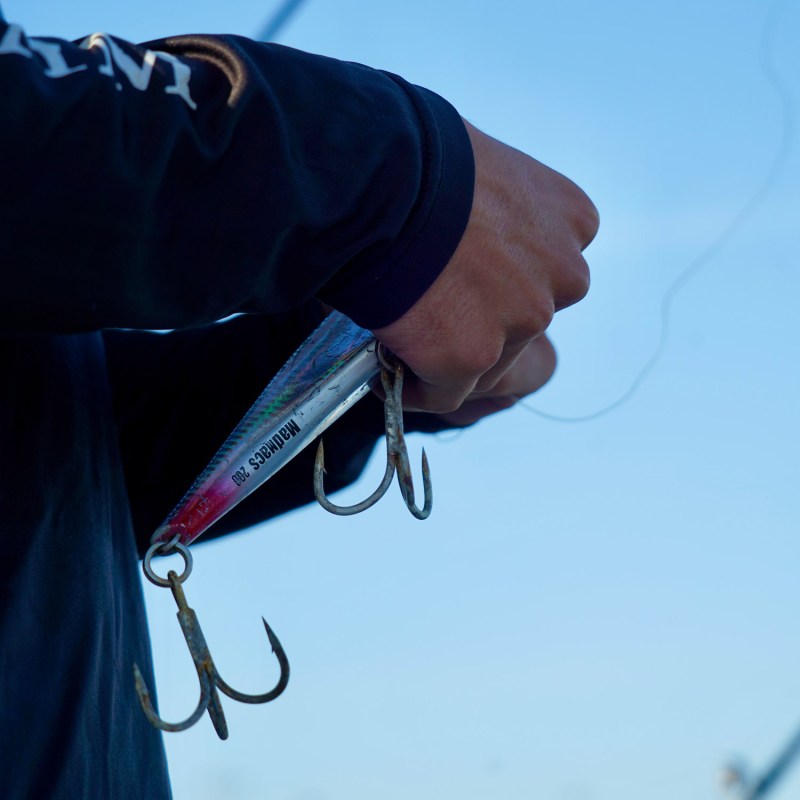
And when it comes to finishing fish, the gear is straightforward—heavy, reliable setups like the Penn International 50VISW, spooled with 80-pound braid backing and mono topshots on 30- to 50-pound rods of 6 to 7 feet. Baits are traditional. Nomad Design Madmacs are a favorite out here and the Nomad Madscad work as well. We used Squidnation Squids on a homemade daisy chain commonly used for teasers with a hook on the last one for our outside rods.
It’s not finesse. It’s execution.
Prepping Yellowfin for the Table
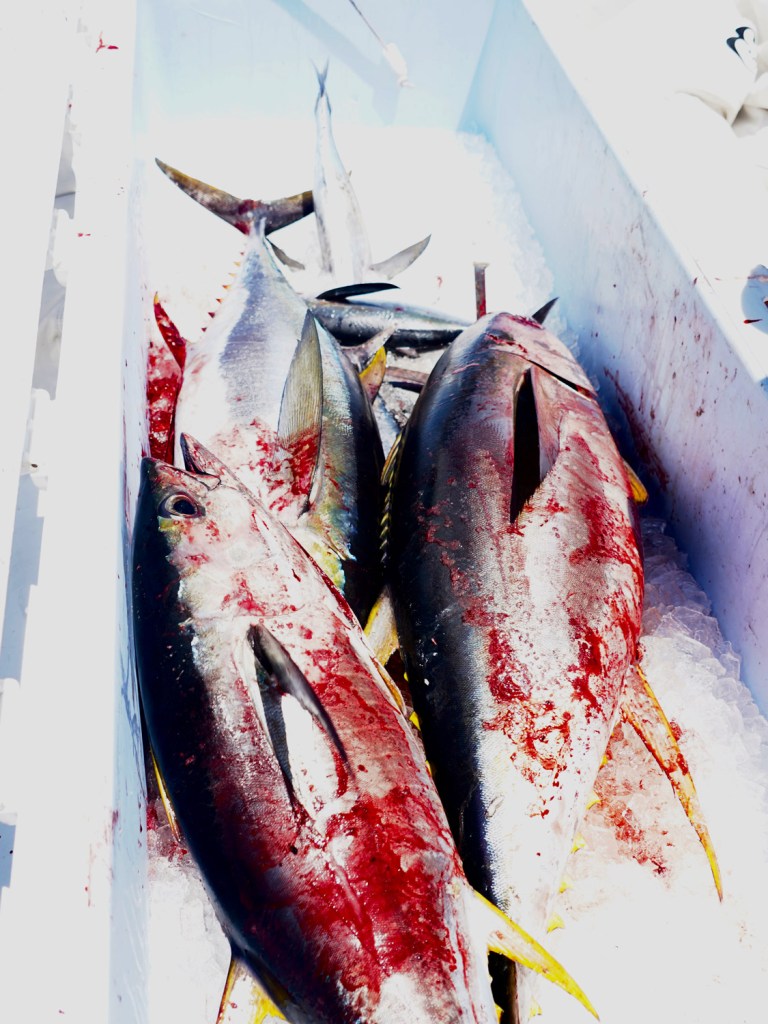
Six yellowfin were in the box, solid fish across the board. Capt. Jeffrey asked the guys if they would like to deep-drop the rest of the day for swords. And then, just like that, it was over.
“They’re best fresh. Freezing yellowfin changes the quality unless flash frozen with a commercial-grade freezer. Slower freezing processes will break down the fibers, making it less firm. The best way to keep your tuna fresh is to bleed it out, pack with ice (not a slush). Once filleted, keep fillets wrapped in paper towels and change them every 12 to 24 hours once they are saturated. This allows the tuna to stay fresher longer”
In a fishery where the bite can build, pulling off the yellowfin tuna was a disciplined call—but the right one.
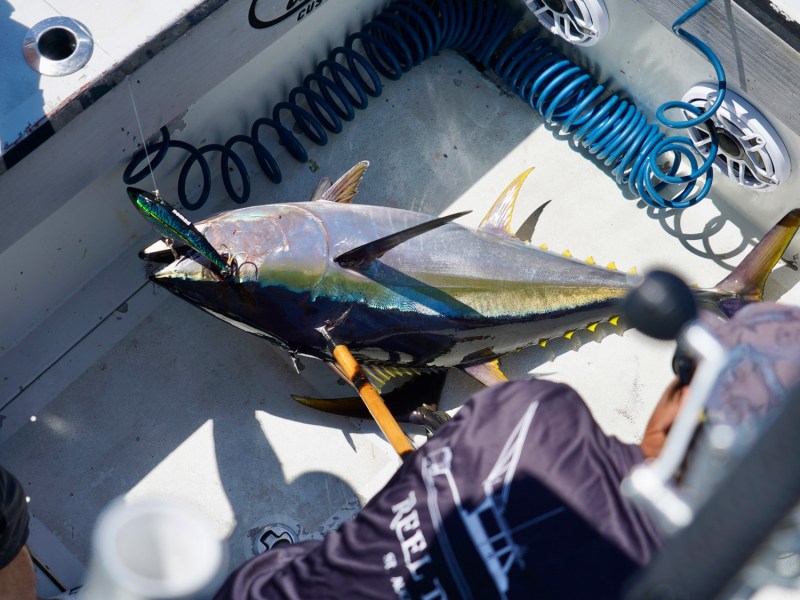
Yellowfin Tuna out of Cape Canaveral
For a lot of anglers, yellowfin tuna still feel like a distant, high-effort target in Florida. But out of Cape Canaveral, that perception is shifting. “I’ve caught fish as heavy as 95 pounds on my boat and have friends who have managed to find them upwards of 130 pounds. Fish over 100 pounds are rare but do exist out here,” Jeffrey said. “And this fishery is consistent.”
That’s the word that sticks: consistent—if you understand the fishery. You don’t need to run forever. “I’ve caught them as close as 66 nautical miles out here,” Jeffrey told me. You don’t need luck. You need to read the water, trust the birds, and execute when it happens.
Because when it does happen—when three clickers light up within seconds and the cockpit erupts—you realize something quickly: This isn’t a one-off bite. Out of Cape Canaveral, it’s a system, and when you get it right, it’s repeatable.