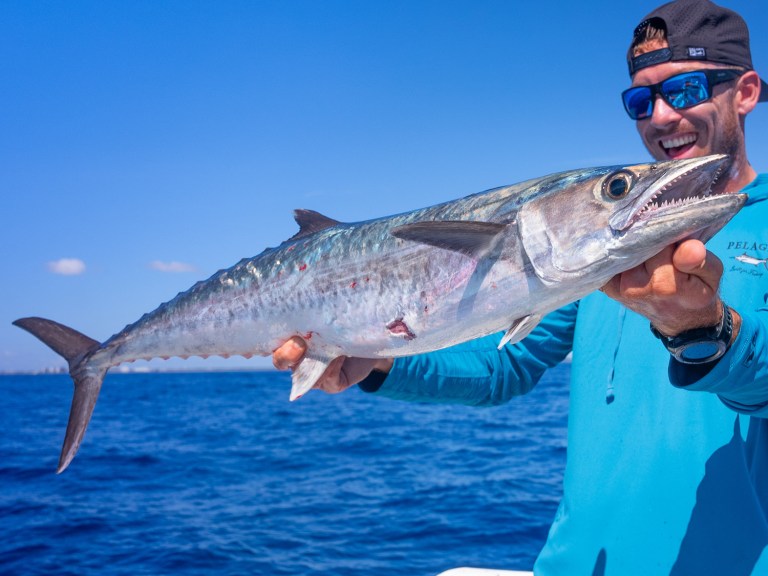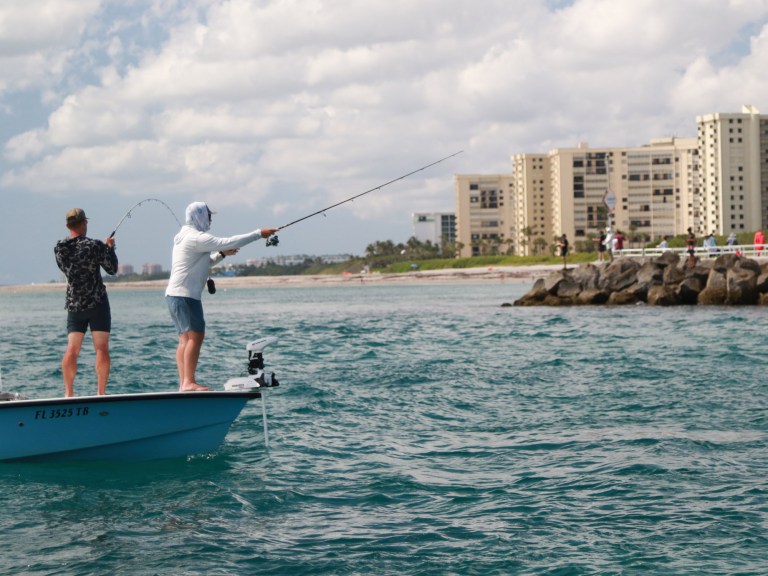
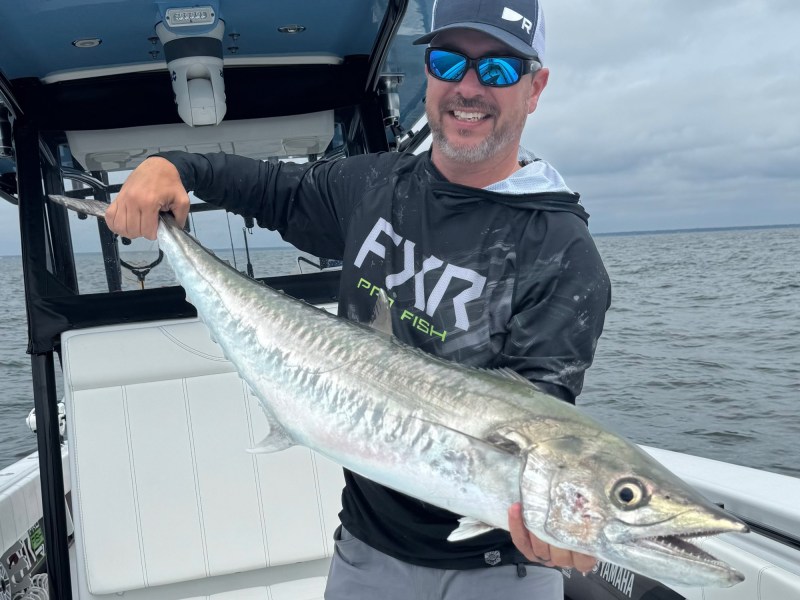
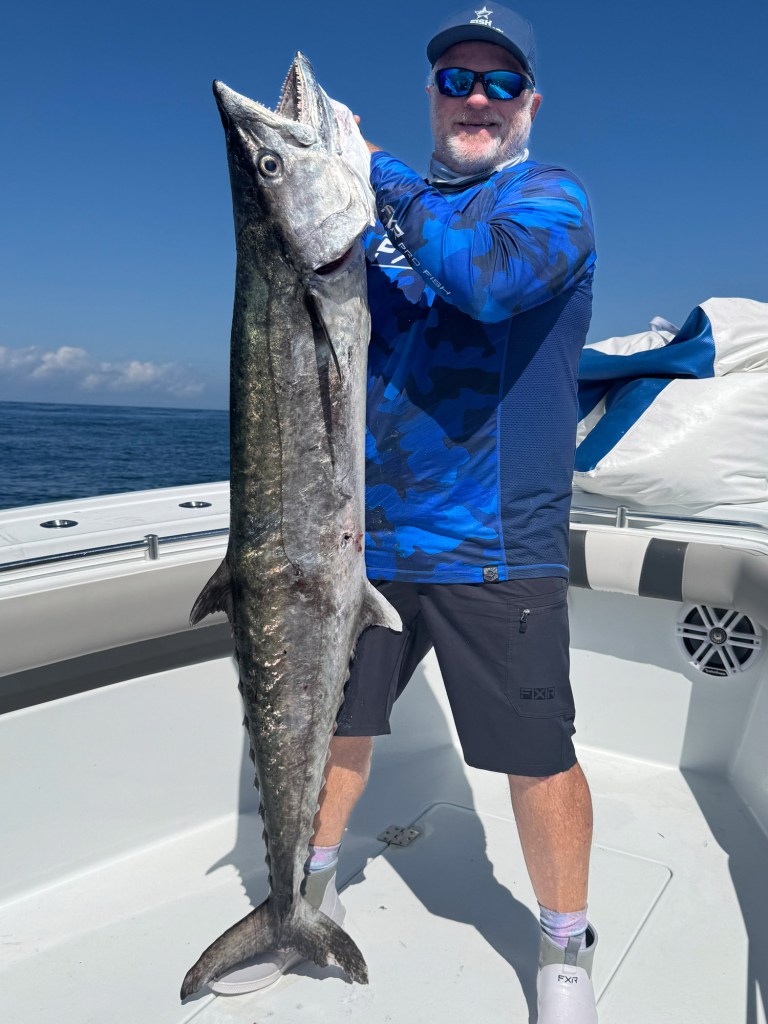
If you want to catch big king mackerel, get to know the ribbonfish. Scientifically known as Atlantic cutlassfish, ribbonfish delight kingfish from Texas to the Carolinas.
Sure, slow trolling live baits such as blue runners, menhaden, sardines and threadfin herring holds fireworks potential, but there’s something about one of the sea’s real oddballs that giant kingfish can’t resist. Resembling something out of Hollywood’s horror vault, these long, skinny forage fish sport silver sides, a body-length ribbony dorsal fin, a thin, wispy tail and a fiendishly wolf-like head bursting with a wicked set of dental daggers.
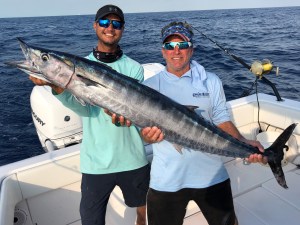
Louisiana’s Capt. Mike Frennette also finds ribbonfish charming big Delta wahoo. In the North Carolina, tournament pro Mark Henderson attributes the ribbonfish appeal to their abundance and the practical attributes they bring to a trolling spread.
“They’re a plentiful food source and, at times, they show up en masse like a mullet run,” Henderson said. “They’re shiny, easy to see and you can put three or four hooks in them so that gives you more opportunities to hook up.”
With bait-quality ribbonfish usually running about 18 to 24 inches, these lengthy baits help diversify a spread and offer picky kings another profile to complement more compact live baits. As Henderson noted, starting with a mixed spread helps dial in what the fish prefer.
“At times, that’s all they want,” Henderson said of the ribbonfish attraction. “One time, on a ledge in Florida, we had goggle eyes, blue runners, speedos and every bite was on a ribbonfish.
“Up in North Carolina, when there’s a ribbonfish run up in the port at Beaufort Inlet, that’s obviously what they’re eating, so you match the hatch.”
How to Catch Ribbonfish for Bait
Intentionally and incidentally, ribbonfish often turn up in cast nets, but Henderson stresses his preference for baits caught on hook-and-line.
“Hand-caught ribbonfish are much better than net-caught, because the ones caught in a cast net are scarred and not as shiny,” he said. “Catching them one at a time is ideal. They’re gonna be dead when you use them, but you want them in the best condition so they keep their color.
“It’s better to catch 50 good ones than 250 that aren’t in good condition.”
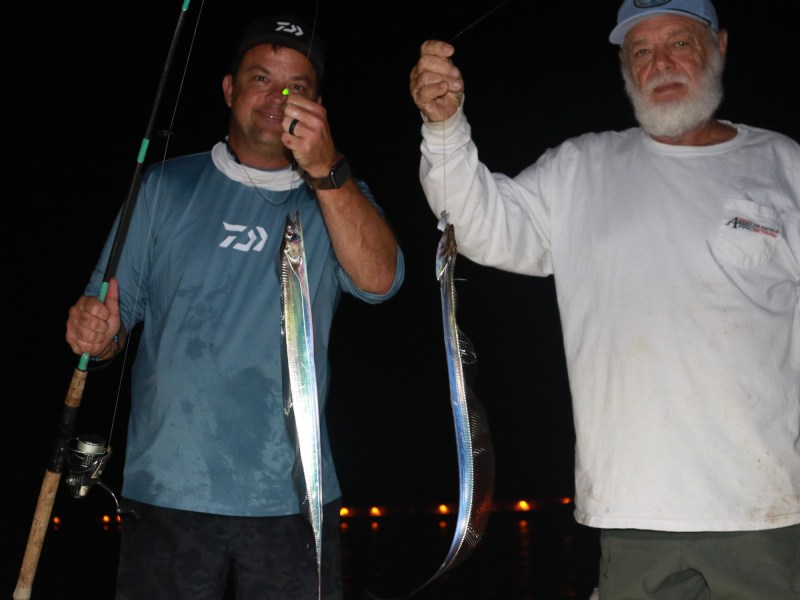
Henderson typically catches his own ribbonfish, and that starts with anchoring in a port and submerging a green light next to the boat. This clusters baitfish, and ribbonfish quickly find the buffet when they invade deep-water ports in the warmer months.
If Ribbonfish are spread out, casting shiny lipless baits or diving plugs is a good way to locate them. When ribbons stack into fairly confined areas, a piece of cut bait on a long-shank hook does the trick.
Chunks of glass minnows, cut mullet and even dead ribbonfish will deliver. If you use shrimp, go with fresh live ones or the firmer food-quality shrimp, rather than the mushy frozen option.
Gear and Tackle for Catching Ribbonfish
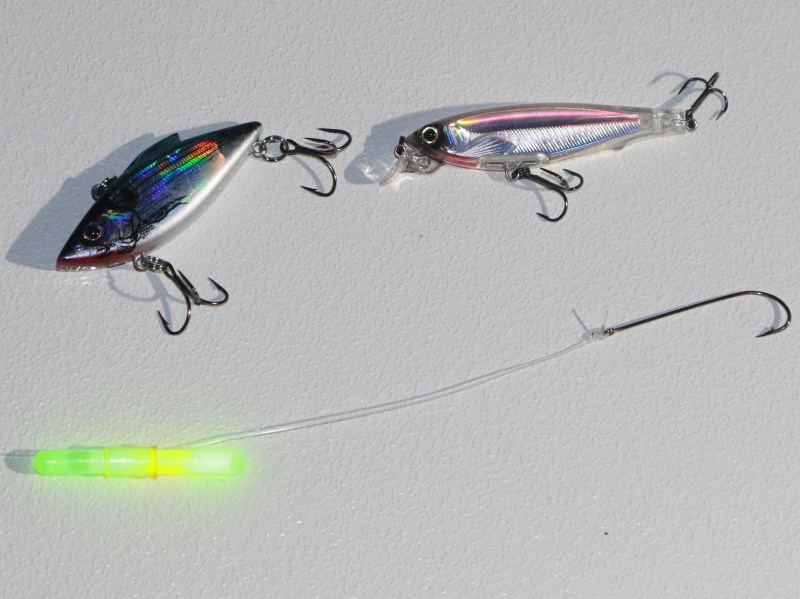
Florida’s Rodney Sahr likes medium-heavy spinning tackle and fishes cut mullet on a size 2 or 4 hook with a small light stick positioned about 18 inches up the leader. Split shots are optional, but keep them handy in case a breeze picks up or strong tidal movement challenges your bait positioning.
Sahr offers this rigging tip: “The light sticks I use come with a full-length band, but I cut it in half and use only one piece. That makes it much easier to thread your line through than the whole band.”
Land-bound anglers can join the fun, and if you visit a popular port when the ribbons are running, you’ll see glowing missiles piercing the night, as bait slingers and artificial anglers fire cast after cast toward the sweet spots.
Stay Safe: A hot ribbonfish bite can find your crew bending rods on every cast, so keep a long-handle dehooker handy—as much for maintaining bait quality as for keeping your hands clear of those wicked teeth.
Sahr also points out that the raspy ridge on a ribbon’s underside will leave a nasty scrape if you get too close. He also noted that hooked ribbons like to wrap around your forearm like a boa constrictor, and that’s often when that underside does its damage.
How to Prep Ribbonfish for Kingfish Bait
Since most ribbonfish fishing takes place at night, even next-day use will find the baits dull and fragile. Direct freezing will yield a mushy bait when thawed, so on-site brining is key to locking in that shiny appearance and toughening ribbons for future use.
Here’s the standard formula: Keep a cooler on deck with a 3-to-1 mix of coarse kosher salt and baking soda, along with 2 gallons of seawater and a couple bags of ice. For immediate dehooking, a 5-gallon bucket with only the dry ingredients and sea water gets the process started until you transfer fresh ribbons into the brining cooler.
Henderson said it’s critical to freeze ribbons flat and individually for convenient storage and end use. For optimal results, he offers a few pointers.
First, if you have time to remove the entrails, this minimizes the risk of “blow-out,” where the body swells during the decay process and the abdomen bursts. An efficient brining process usually eliminates this, but it’s never a bad idea.
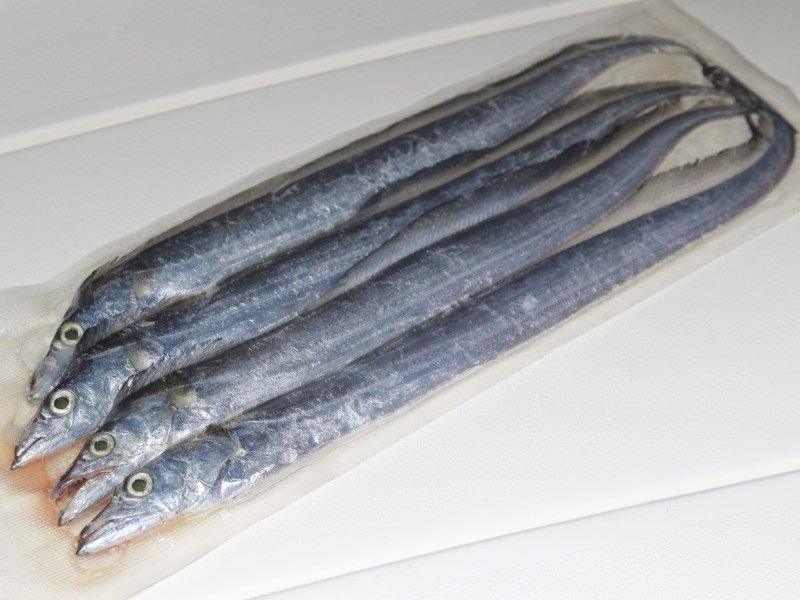
“Vacuum sealing keeps the ribbonfish in ideal condition, but their teeth may pierce the bag,” Henderson said. “You can put a piece of paper towel around the teeth so you prevent puncture and protect the bait too.
“Also, when you’re fishing, keep them in an insulated ribbonfish bag to maintain their condition until you’re ready to use them.”
If you’re buying frozen ribbons from a bait shop or a private supplier, Georgia kingfish pro Doug Watters offers this advice: “I’ve found that bigger isn’t always better when it comes to ribbonfish, but I look for a clear-eyed 22- to 26-inch fish that look fresh.”
Rigging Ribbonfish Baits for King Mackerel
As with any king mackerel effort, you’ll want to deploy your ribbonfish with a wire leader on a stinger rig. Just consider that the bait’s length requires more hardware.
“I’ll start with a 4/0 single hook in nose with a green, blue or pink duster skirt above it on the leader,” Henderson said. “I’ll run a piece of wire down to No. 2 or No. 4 4x-strong treble hook and then add as many additional segments as I need, with about 3-4 inches between segments.”
Henderson pins two points of each treble hook into the bait’s side, but he stresses proper spacing. Allow a little sag between segments so the bait can swim naturally. Rig it too tight, and the pinching distorts the presentation.
A couple of ribbonfish rigging options include replacing the lead hook with an upturned jig head, also set through the mouth, to keep the bait tracking straighter. Also, some anglers spray paint their stinger segments silver to blend into a ribbon’s profile, while others go with red paint to give the appearance of a bleeding, vulnerable bait.
Creative types often show the kings a hybrid live/dead bait presentation known as the “zombie rig.” Essentially, you add a treble hook and a swivel to the looped end of a wire leader. Link a stinger segment to the treble and add a second leader with a ribbonfish rig to the swivel.
Rig your dead ribbonfish first, then attach the lead treble to a live bait. True to its name, the zombie rig gives the appearance of something dead chasing something alive. The live bait probably doesn’t care about the goofy theme, but its panicked reaction to being tailed by a big shiny predator puts on the kind of erratic show that kingfish notice.
“I always, (position) ribbonfish on a downrigger, specifically splitting the thermocline in the water, one above and one below by about 10-20 feet,” Watters said. “I’ve found they work great in all conditions and consider it a must-have in the spread. Big kings can’t resist a ribbonfish presented correctly at depth.”
Henderson agrees with the downrigger dominance, but he’s also open to sliding a big ribbon way back in the spread — just in case.
“If one’s back there swimming nice and shiny, that might appeal to a king mackerel,” he said. “It has its own little action, so it might be something different that attracts attention.
“And, with multiple stinger segments, it gives you more chances of hooking a big king.”