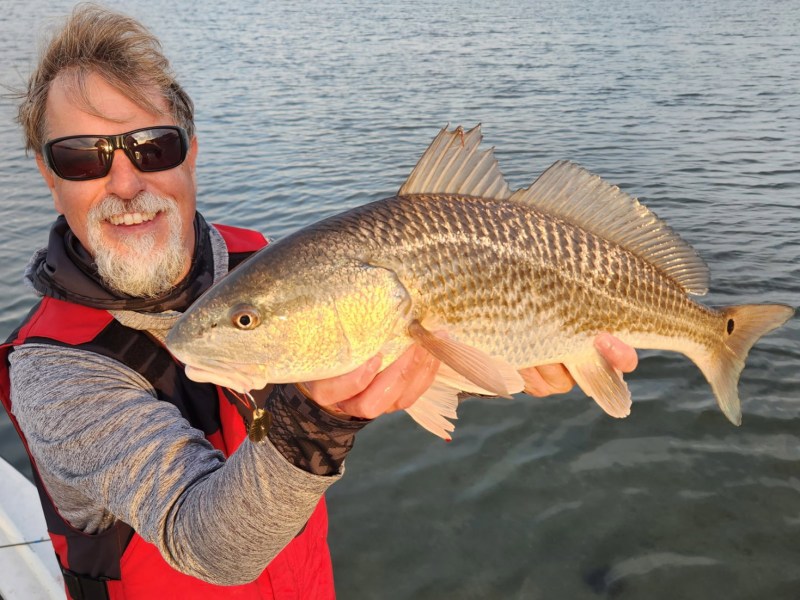
Thanks to a healthy population of resident winter redfish, fishermen along the Mid-Atlantic coast can get their fishing fix throughout the winter. Large schools of slot-sized red drum spend the cold months way up in shallow estuaries, where a shallow-draft skiff or kayak is the best way to pursue them.
Dedicated anglers along the North Carolina coast keep their eye on the weather, waiting for the winds to switch to a light, comfortable southern flow allowing for slightly warmer trends. These warming patterns typically last three to five days, often bringing shallow estuarine water temps up on sunny days from the lower to mid 40s F in the dead of winter into the mid to upper 50s, especially in areas with dark muddy bottoms, which warm faster in the sun.
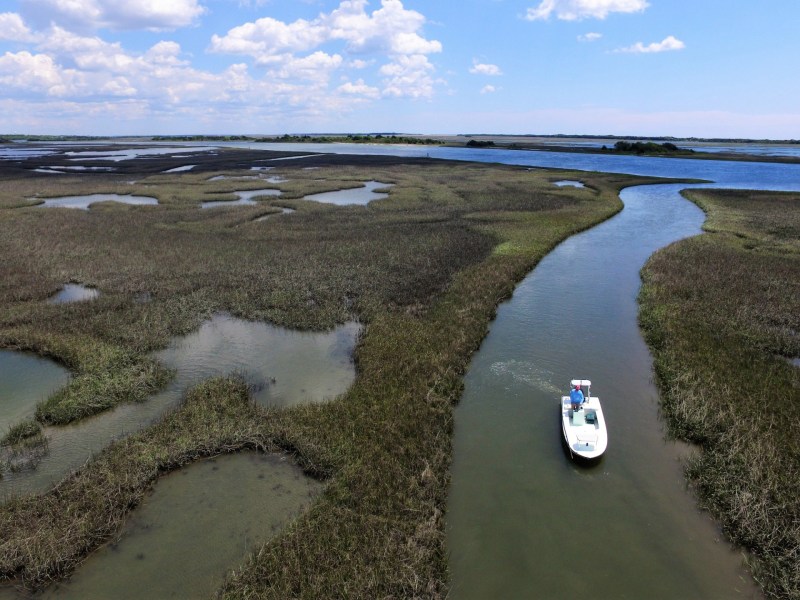
Slot-sized red drum overwinter in the backs of these secluded waterways, hiding in the deeper holes that form beyond the reach of most boats. Huge schools are accessible to hardcore kayak fishermen and specially designed shallow-water skiffs, which can be poled across mud flats in inches of water.
Where Do Redfish Go in the Winter?
Capt. John Mauser, of Tailing Tide Guide Service, works hard to stay on reds year-round near his home in Swansboro, North Carolina. Winter redfish tend to school up and stay on the move, so it requires a willingness to cover ground and hunt for fish in the backs of tidal creeks that are often within earshot of an ocean inlet.
These high-salinity estuaries provide the most consistent water temperatures, allowing bait to overwinter in the area. They also provide red drum a quick escape out of the inlet to the ocean if there’s a major cold snap.
Mauser likes to arrive at his first spot a little before dead low tide, as that guarantees he will have enough water to pole his skiff back out later in the day as the water rises. At lower tidal stages, fish are forced to concentrate in the deeper holes that form in the bends of the creeks. A slow steady approach with the rising tide allows those fortunate enough to be standing on the bow of John’s boat the opportunity to sight cast to hundreds of redfish all pushed together in tight spaces. Accessing these special locations, where most boats fear to go, requires a shallow-draft skiff or kayak capable of moving like a ninja along the shoreline in inches of water.
Stealth is Key for Shallow Redfish
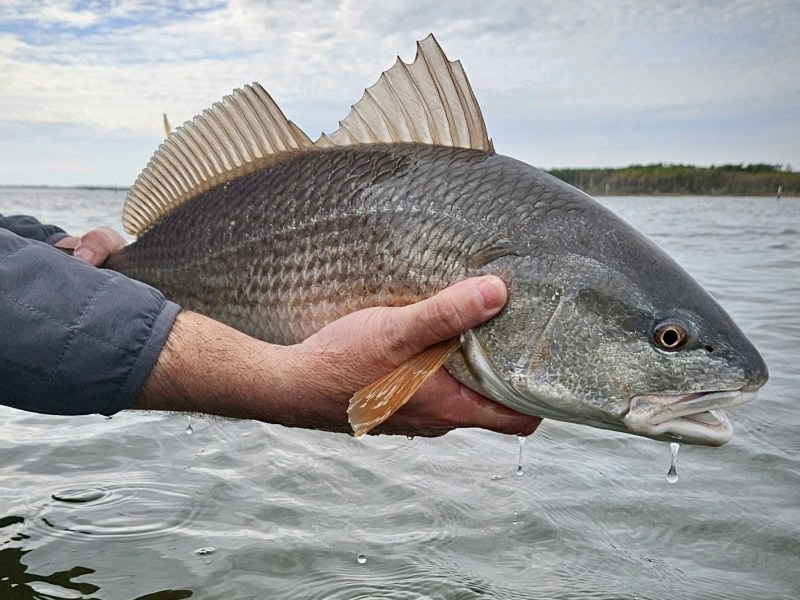
Capt. Mauser emphasized the need to cover ground quietly and remain undetected, or the reds will push out of the area or sometimes just quit eating when they are hyper aware.
When possible, Mauser uses structure to his advantage, hiding behind dock pilings or exposed oyster bars that pop up at low tide. Keep in mind that redfish have excellent hearing and can see shadows and an angler’s movement. Keep small talk to a minimum and try to remain steady as you read the water searching for activity, always ready to make a cast in the direction the captain may call out.
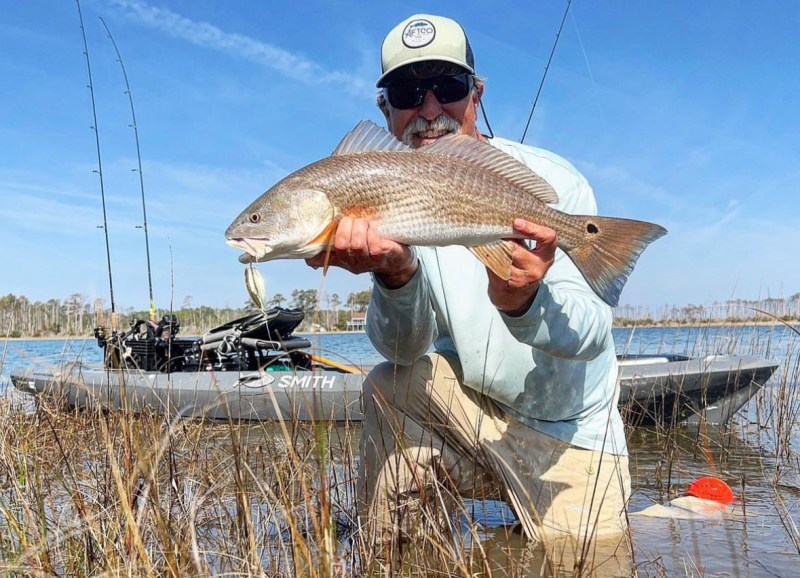
Successful anglers learn to develop a calm nature under pressure, as red drum can pop up at any time. You spend a lot of time searching, so you want to make sure you have everything prepared once you find them. More time is spent hunting the shallows than actually fishing. A good pair of polarized sunglasses helps cut down the glare so you can spot redfish. I keep an extra pair of Smiths in my tackle box because without them you might as well stay home.
While you may need to cover a lot of ground, hundreds of fish in inches of water tend to give themselves away if you know what to look for. Winter redfish tend to be a little lethargic, so you may not see a lot of big pushes or wakes, instead look for color changes and subtle mud puffs that form as the fish pick up to move from a resting position.
Making a long cast ahead can help you to find happy fish before you pole up on them, so always keep casting something shiny while on the hunt. A ½-ounce Aqua Dream gold spoon or an inline spinner can help you find fish that haven’t been spooked yet. As you approach the deeper pockets where the fish like to hold, you often see them so skinny that their backs are sticking out of the water, especially on sunny days.
How to Catch Winter Redfish
Once you find redfish, it is important to stay calm and take your time, as winter red drum can be super spooky. Determine which direction the fish are facing and put the cast out in front of them just ahead of the school.
The goal is to let the redfish discover an easy meal as they are swimming naturally. A poor cast or loud noise from the boat will send reds frantically rushing under the boat never to be seen again.
Capt. Mauser has found it’s best to offer lightweight presentations to these often-spooky redfish. Use something that makes a soft, subtle splash rather than a loud disturbance when it hits the water.
Fly fishing for shallow-water reds has become increasingly popular, so Mauser often employs an 8-weight fly rod with floating line and a handful of shrimp patterns like the Redfish Crack and Redfish Kwan. Mauser has his own line of fly rods available at Mauser Fly Fishing.
Those who prefer spinning tackle should keep things light. A 2000-size setup spooled with 12-pound-test braided line gets the job done and makes the game of tug of war a lot of fun. Soft plastics like a DOA Jerk Shad or a shrimp lure rigged weightless works well when you are in front of the fish.
During winter, redfish may be a little sluggish, so anglers should not shy away from adding some Pro-Cure Super Gel scent to their offerings. Sometimes when they get lethargic and nothing else works, a dead-sticked Berkley Gulp! Saltwater Shrimp is the best way to get tight.
Cast out in front of the school and let it sit, making very subtle movements as the fish inches toward the lure. Redfish will eat in cold water, you just have to be patient and mix it up. Honestly, that’s the fun part, watching the school respond to different techniques in super clear water.
Don’t Get Greedy with Winter Redfish
Many anglers feel the most fun part of winter redfish fishing is the search, as it gets you out of the house during the doldrums of winter. After you nail down a few locations with happy fish while exploring tidal creeks with crystal clear water, you start to develop a pattern to work with on subsequent trips.
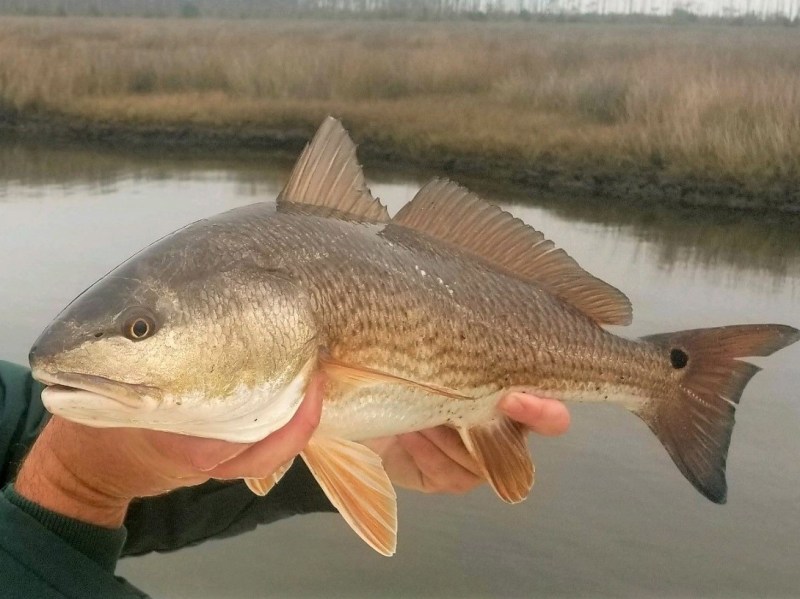
Capt. Mauser prefers to catch and release a few fish from each school and then move on while they are still happy, resisting the temptation to bang on the red drum for too long. Continued fishing pressure shuts down the school and eventually pushes redfish out of the area. If you back off after a couple of successful catches, the fish will likely stay in the neighborhood, making it easy to come back to them on another day.
This allows you to continue enjoying scouting new water each trip, knowing you have a few spots to fall back on as the tide turns. If we play nice and don’t get greedy, redfish are fairly predictable creatures of habit during the winter, allowing the opportunity to get out on the water and scratch the itch when we need it most.