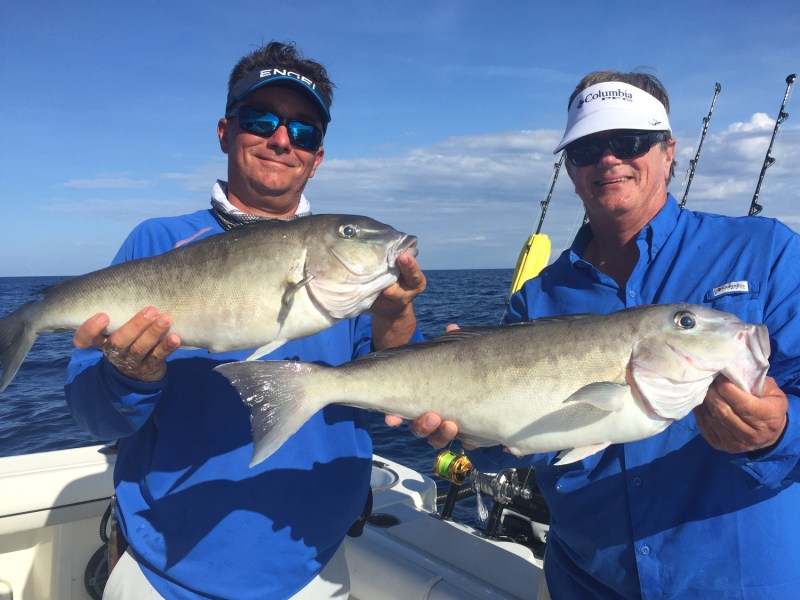
Summer brings fair winds and calm seas, perfect conditions for deep-drop bottomfishing. Be prepared to work up a sweat battling leviathans from the deep. The pay-off is fresh fillets fit for a king.
Tilefish Fishing off New Jersey
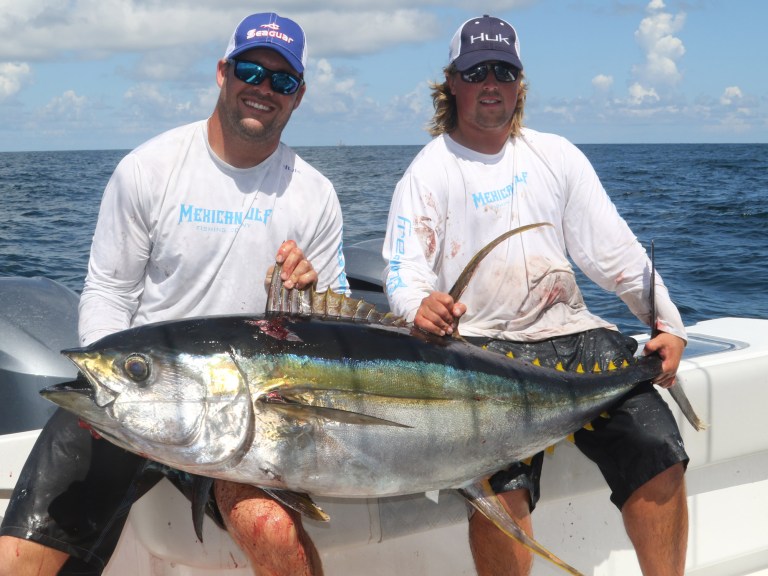
Warm water and light currents bring deep-water bottomfish into shallower water where Capt. Denis Katliarov meets them in the 100-foot headboat Voyager. Fishing out of Point Pleasant, New Jersey, Voyager runs 36- and 48-hour trips year-round to fish 300 to 1,200 feet of water.
“In the summer, we can fish farther up the bank, and we don’t have to deal with as many dog sharks,” Katliarov says. The captain recommends using a stout rod and reel spooled with 50-pound braided line, “something capable of fishing up to 3 pounds of lead,” he says.
Katliarov sees all manner of tilefish bait on the boat, but he favors fresh squid. “Some guys swear by salmon strips, but tilefish are opportunistic feeders who are not going to turn down a strip of squid,” he points out.
Bottomfishing in South Florida
“I’m one of the few captains who anchors my boat for bottomfishing,” says Capt. Jack Kobinger. That’s because anchoring off Miami, Florida, in deep water and strong current is not recommended for inexperienced skippers.
“I’ve been anchoring since the mid-80s,” Kobinger says. Coordinating current and wind then dropping the anchor and positioning the boat over the target takes practice. “And a lot of rope,” Kobinger adds. Anchoring improves his ability to target the most productive live bottom and wrecks.
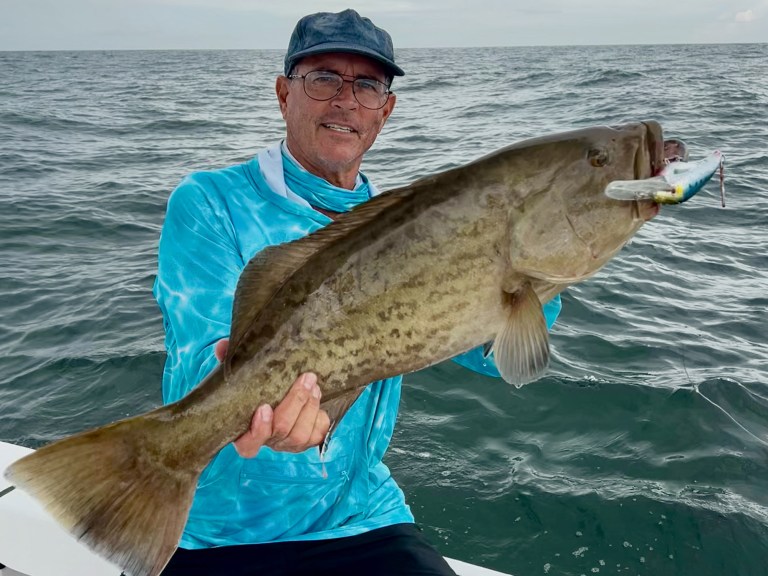
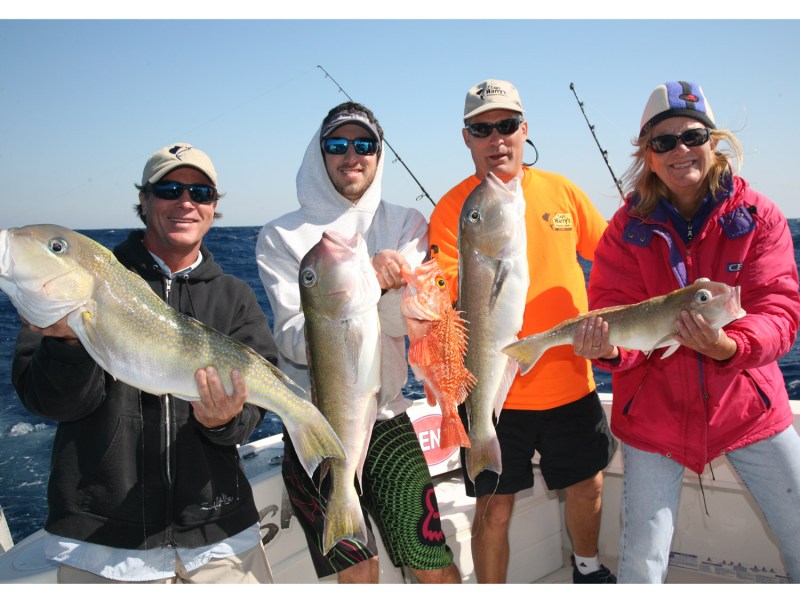
“Power drifting is a safer option, but not as productive,” he says. Kobinger fishes up to 300 feet deep for mutton and cubera snapper. He uses a three-way-rig with live threadfin herring or pinfish for bait. Moving deeper, he drifts for golden and blueline tilefish using a lay-down rig. “I know I’m fishing in the right place if my sinker gets sucked into the muddy bottom,” he says.
Texas Coast Deep-Dropping
Capt. Scott McCune has noticed more people deep-drop fishing off Rockport, Texas. “The equipment is better, making fishing a lot easier,” he explains. Compact electric reels, rechargeable batteries and the option to hand crank make deep-drop fishing more fun.
McCune fishes ledges, rocks and semi-submerged rigs in 1,000 to 1,200 feet of water for tilefish, snapper and grouper. “Some people fish heavy vertical jigs, but I prefer squid on a bottom rig,” he says. McCune adds that his secret bait is a chunk of fresh tuna. “The chunk of tuna stays on the hook so I’m not wasting bait,” he says.
Lingcod and Rockfish in the Pacific Northwest
Off the coast of Washington state, deep-drop season is only open for 30 days each year. Capt. Rhett Weber of Mutineer Charters awaits the season opener to fish virgin ground for the biggest rockfish and lingcod. “We had a week last season when every day we caught a lingcod over 40 pounds,” he says. P
ipe jigs and herring are popular baits, but Weber’s boat offers live sand dabs (small sole) as lingcod candy. “We catch hundreds of sand dabs and keep them in the bait tanks,” he says. Weber says lingcod do not hesitate when slurping up a sand dab. “I don’t have to use a treble hook trailer,” he adds.