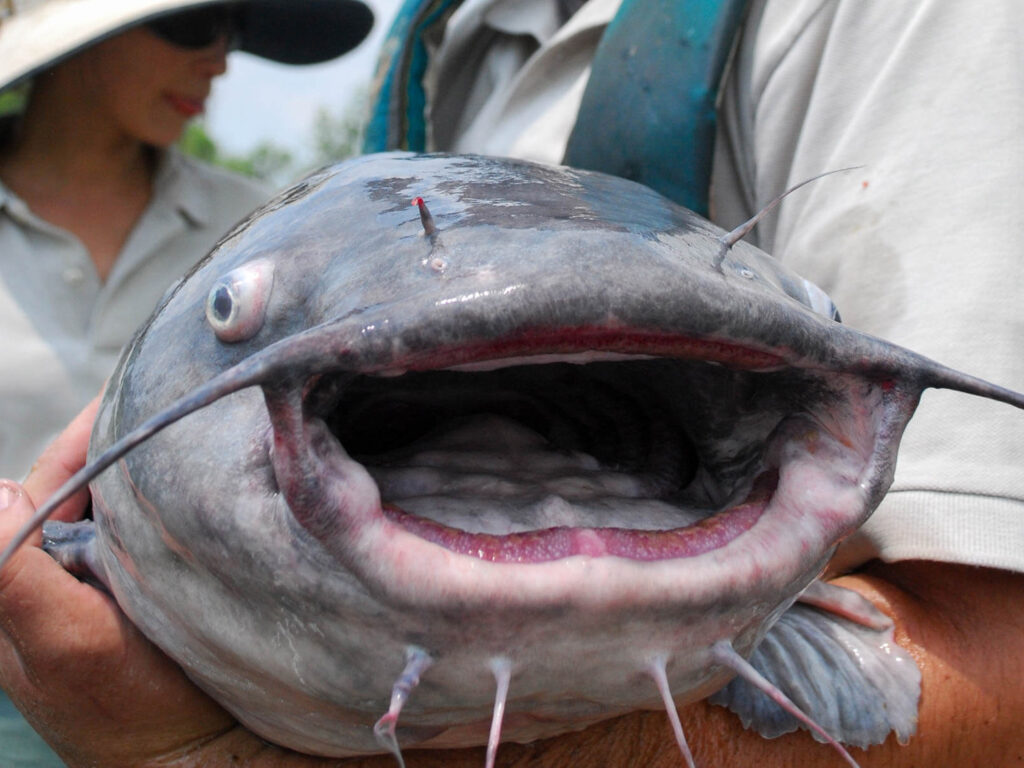
Invasive blue catfish are a big problem in the Chesapeake Bay. Recently, the U.S. Department of Agriculture (USDA) announced $6 million in grant funding to turn those blue cats into food. The funding will be available to help seafood processors ramp up production of blue catfish products.
Additionally, USDA and the Maryland Department of Agriculture are launching a one-year pilot program to purchase up to $2 million worth of blue catfish meat to feed families in need through food banks and other food distribution programs.
Introduction of Invasive Blue Catfish
These two programs are the latest salvo in a battle against blue catfish that has raged since it became apparent the species is harming native ecosystems and fisheries of the bay and its tributaries. Blue catfish are native to the Mississippi, Missouri and Ohio River basins in the central United States. They were introduced to the James and Rappahannock rivers by the Virginia Department of Wildlife Resources in the mid-1970s.
Under the assumption that salt water would prohibit the spread of a freshwater species, Virginia stocked blue catfish to give anglers something to fish for as numbers of striped bass declined. They unleashed a scourge that now threatens the region’s iconic fisheries. Blue catfish now inhabit every tributary to the Chesapeake and the bay itself. Branson Williams, invasive fisheries program manager at the Maryland Department of Natural Resources, said in some waters blue cats make up 70 percent of the total biomass.
The Blue Cat Threat
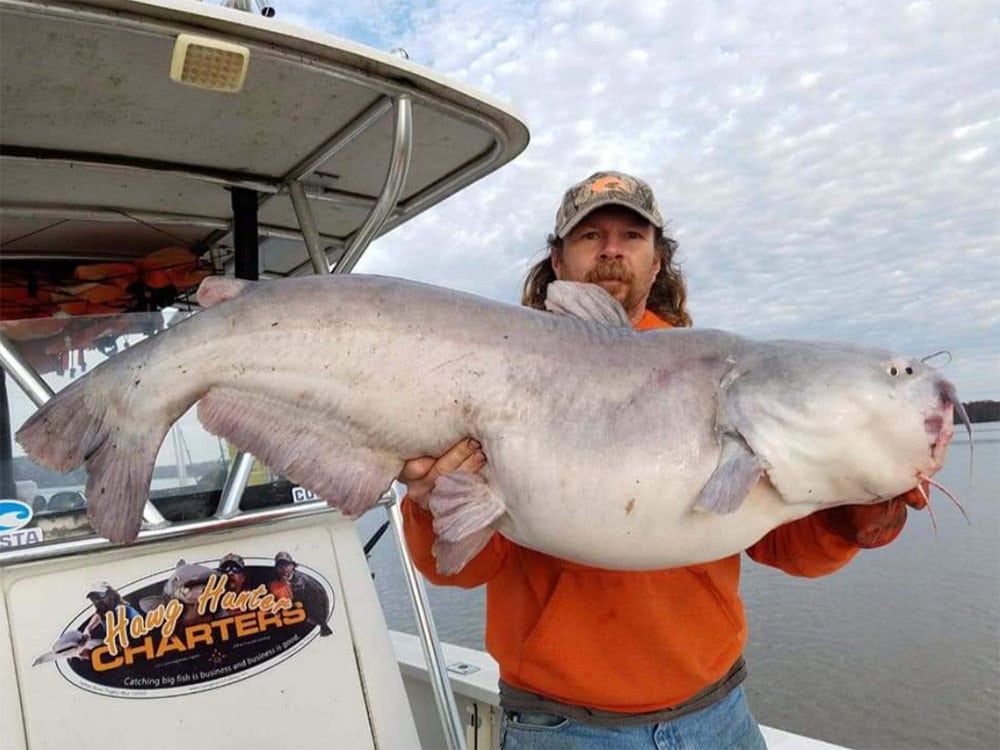
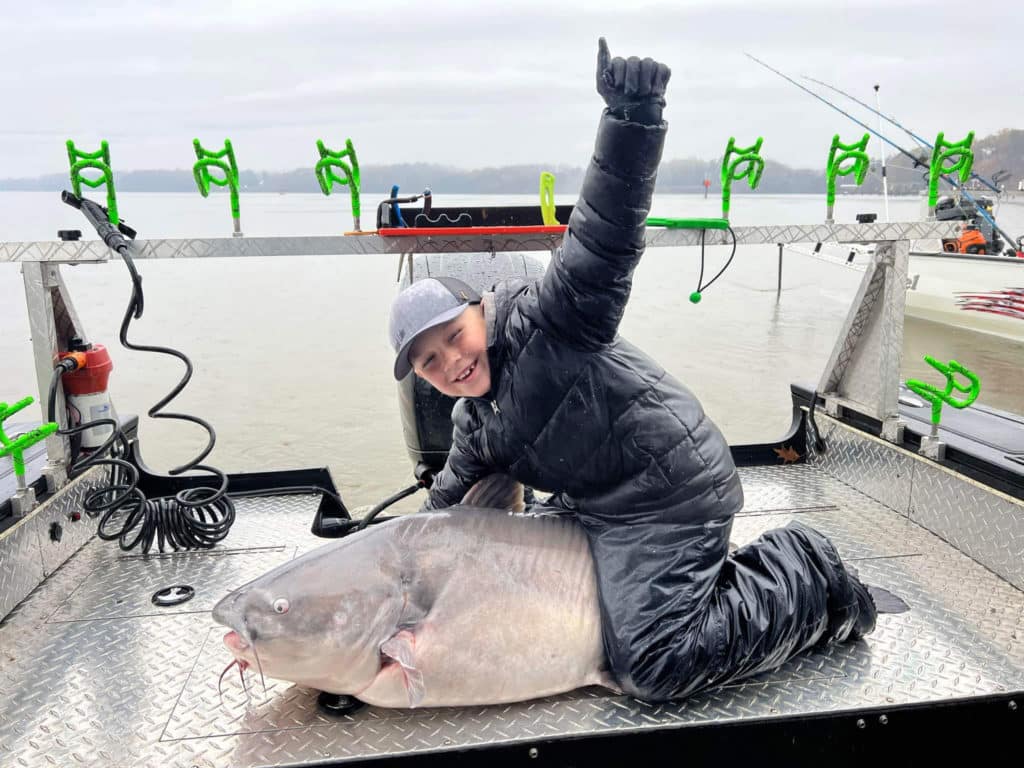
With the ability to grow larger than 100 pounds, blue catfish are voracious feeders that have been blamed for declining populations of everything from baitfish to blue crabs and stripers. More than 80 different prey species have been recovered from the stomachs of Chesapeake blue catfish and include everything from clams in the shell to blue crabs, ducks, striped bass, white perch, American shad and white catfish.
“At this point, eradication isn’t possible,” Williams said. Controlling the population is the only option to reduce the harm caused by the species. The key to reducing blue catfish numbers is to create a human appetite for them.
Promoting Chesapeake Catfish Harvest
In addition to promoting commercial harvest and processing of invasive blue catfish, Maryland and Virginia are actively trying to change opinions of the species among recreational anglers. They are prized by freshwater anglers in their native range because they fight hard and are made of delicious white, flaky meat.
Maryland has no size limit, bag limit or closed season for blue catfish. Virginia has no limits, except that anglers may keep just one fish longer than 32 inches. The reason for Virginia’s length limit is to promote increased angler participation because of available trophy-sized fish, and thus increase overall pressure on the species.
A word of warning before you go fill your freezer with catfish fillets: Both Maryland and Virginia have fish consumption advisories for blue catfish and other species for the Chesapeake Bay and its tributaries. Check the Maryland advisories and the Virginia advisories and harvest from areas with lower pollutant levels. Also, larger catfish retain more potentially dangerous chemicals in their flesh. The smaller ones taste better, anyway.
USDA Blue Catfish Grants
USDA grant funding will be made available through The Meat and Poultry Processing expansion program to help independent seafood processors expand operations.
Funding is available to modernize processing facilities and equipment, adopt new technologies and train workers, among other activities that will result in an increased processing capacity of invasive, wild-caught catfish.
Eligible projects may receive grants from $250,000 up to $1 million. Successful applicants must be able to cover 50 percent of their total project cost. Applications must be submitted through Grants.gov by 11:59 p.m. on October 6, 2025.