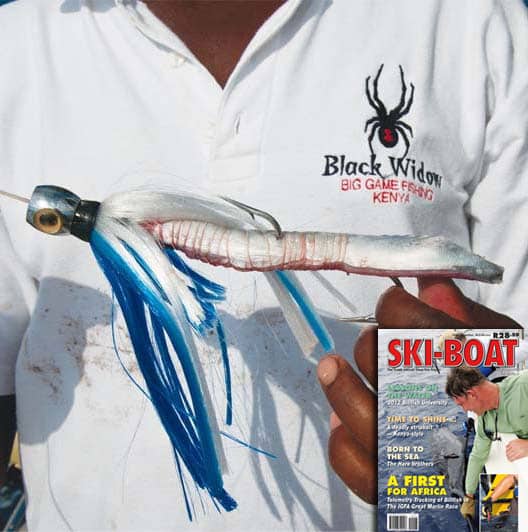
Strip baits are a must in Kenyan waters, and every charter boat captain in this region stresses their importance in targeting billfish.
“Give them a taste to come back to,” says local Captain Stewart Simpson. “When the small ‘bills’ are shoaling and there is activity in the spread, the taste and smell of fish flesh turns on the marlin and sailfish to attack a bait with greater ferocity.”
The following process first appeared in the South African fishing journal SKI-BOAT. It is a very simple, detailed, step-by-step series on how to cut and rig the bellyshines from a baitfish.
While it’s true that bellyshine off any gamefish is good, there is no doubt that certain species produce a more preferable strip that, after decades of experience, has been shown to be more appealing to the sailfish and marlin in Kenyan waters than that of other fish. The top-three gamefish for this purpose are kawakawa (little eastern tuna), small yellowfin tuna and dorado.
At the outset, I need to acknowledge the assistance of the two deckies on the Black Widow — Nixon Nyieni and Adam Lenga — who assisted me by preparing the necessary strips for photographing this process. — Erwin Bursik, Publishing Executive, SKI -BOAT
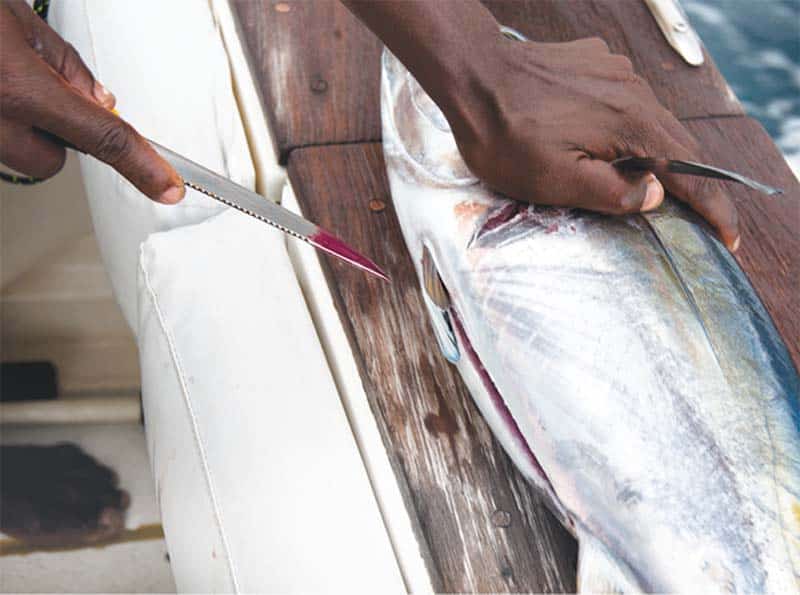
It’s best to get the bellyshine off a fish less than 8 kilograms (17 1/2 pounds). If we get a yellowfin tuna over that weight, although it will be kept for an emergency, it becomes more difficult to make a small, thin strip bait. Obviously, if one is pulling a bigger lure or kona in the 9- to 12-inch class and hooks up to 10/0 or 12/0, then the bigger, thicker strip will work. I have shown in detail how to remove the bellyshine from a 5-kilograms (11-pound) yellowfin tuna.
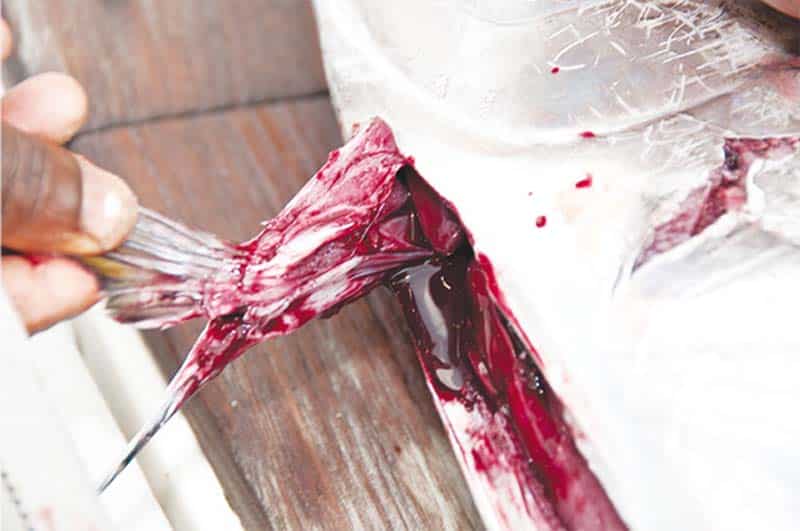


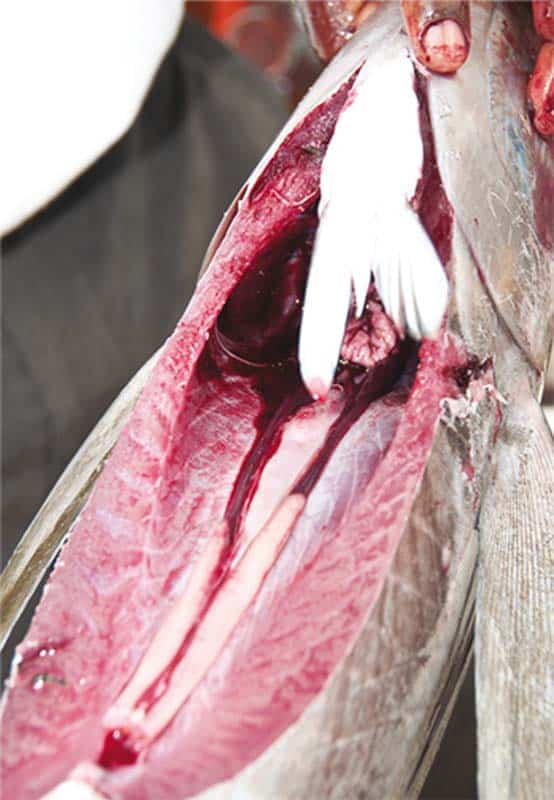
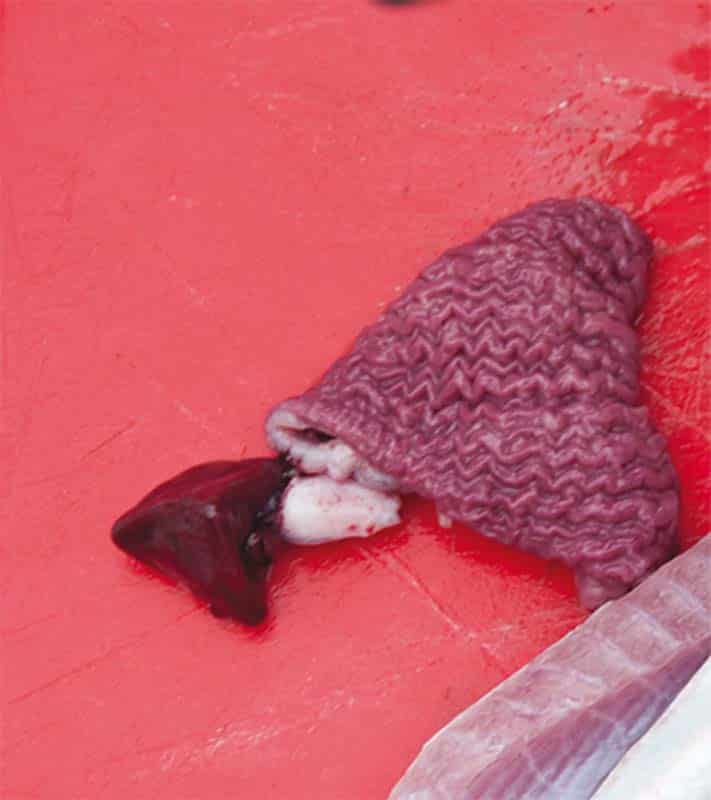
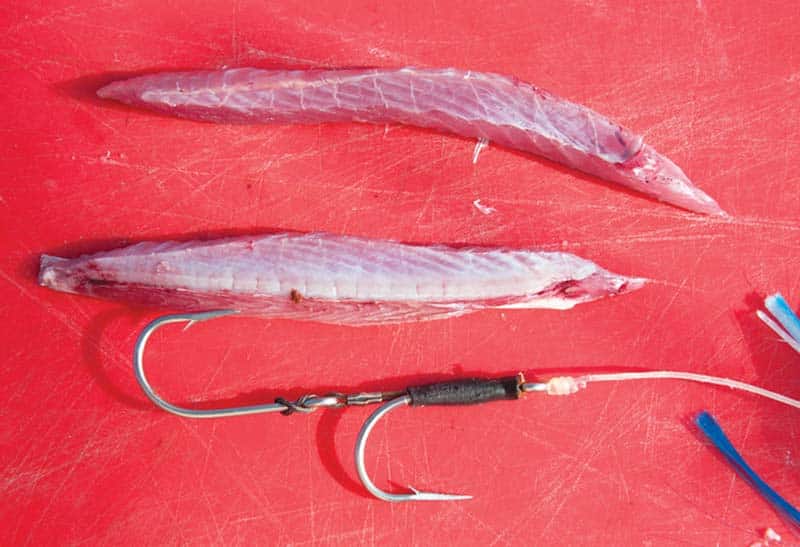
Note: Bellyshines from kawakawa make some of the best strip baits, as they are thinner than those of the yellowfin or other pelagic gamefish. They therefore last longer than a strip bait cut from the thicker walled fish’s bellyshines. A dorado shine is a great second choice.
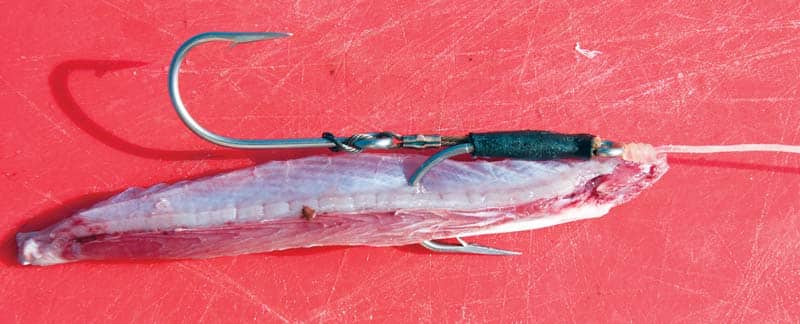
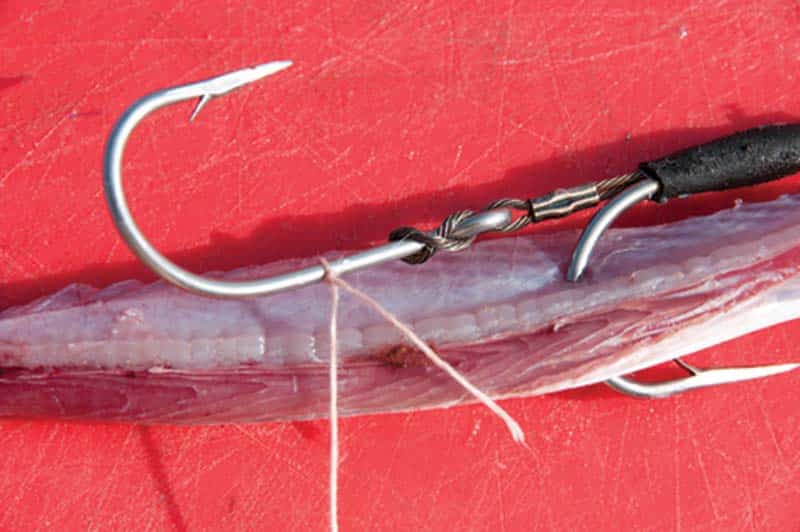
Take note that it is essential to use the correct thread or binding material to ensure the finished strip is 100 percent perfect. While waxed thread is sometimes used, none of the crews in Kenya recommend it. They use a white thread that is used for the industrial sewing of grain bags. While it’s easily and cheaply available in shops in Kenya, it is hard to find in South Africa. Crochet cotton is a fair substitute.
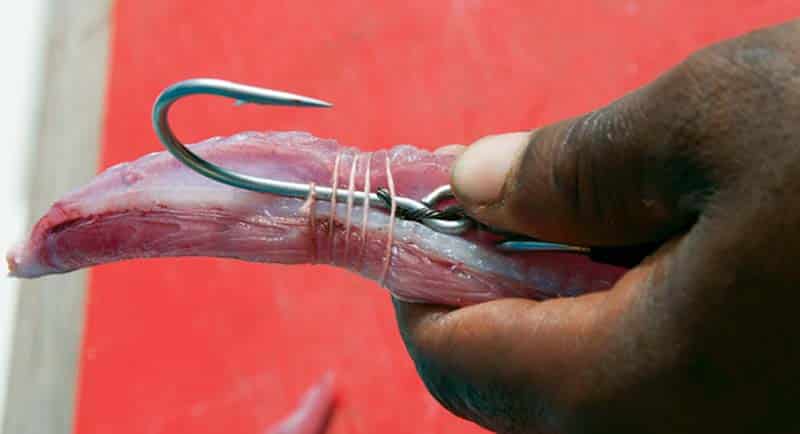
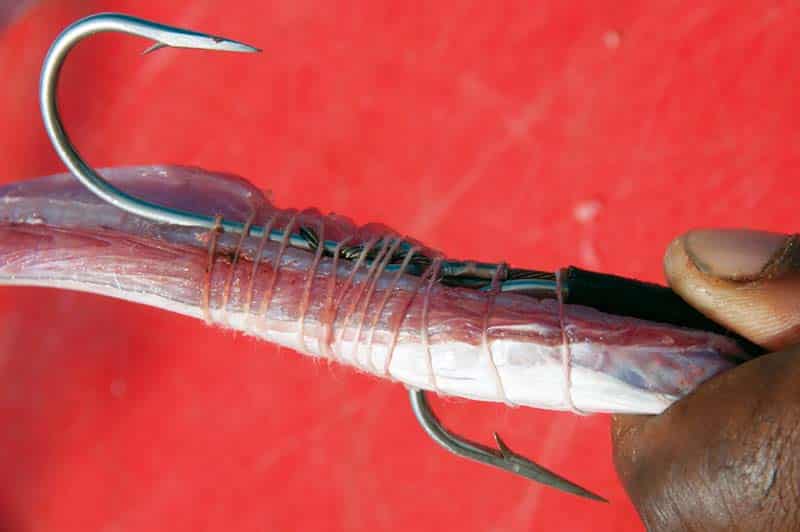

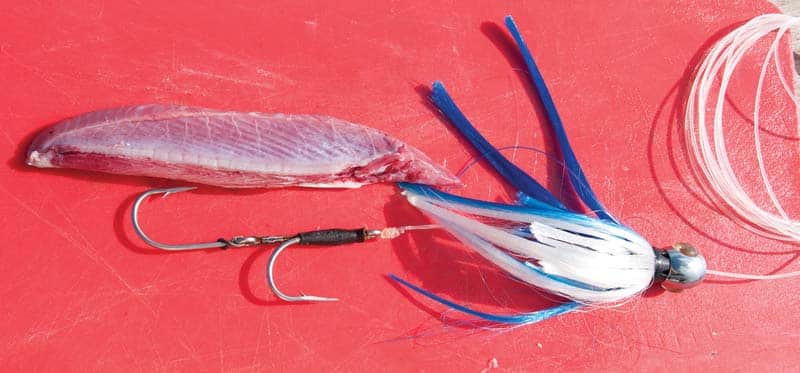
One has to emphasise that although this procedure of preparing the strip bait may look easy, this is definitely not the case. To get it right, one needs a lot of practice. Cut your own bellyshines, tie the strip onto a tandem hook rig, and then, even if it looks great, put it into the water alongside your craft, pull it in the clear water not affected by prop wash, and watch how it swims. It must swim straight, with no tendency to spin, and with only the aft “tail” providing a bit of action.
The length of the skirt of the lure used varies for sailfish and marlin, as does the speed at which you will pull your spread. Generally, shorter skirts are used for targeting sailfish, whereas the length of the skirt shown in picture nine is an example of those used when trolling faster for marlin.
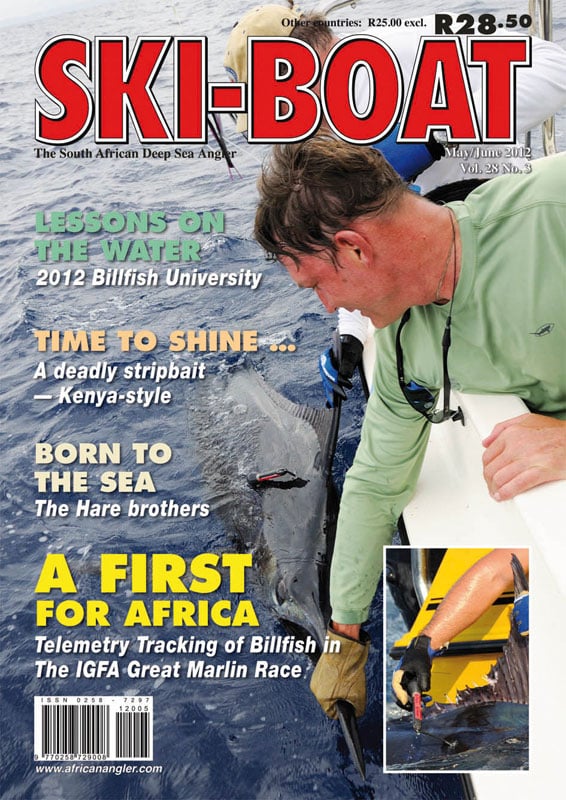
Special thanks to our friends at SKI-BOAT magazine for lending us this great tutorial!
SKI-BOAT is published six times a year in South Africa.