The arrival of striped bass on the beaches in New England is an annual celebration that begins as an inside rumor whispered among locals that surfcasters are catching stripers.
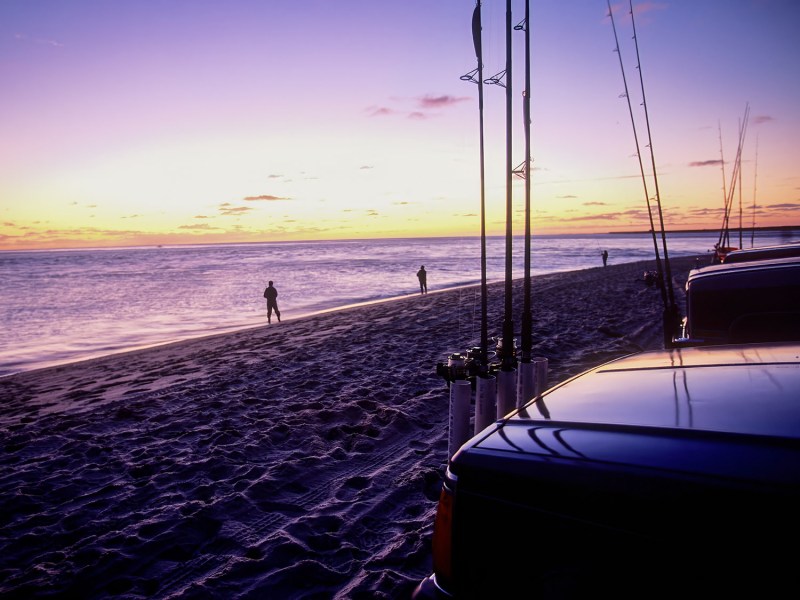
It was late with threatening skies when that rumor reached me, but I loaded up my old Wagoneer with weather gear, waders, plenty of tackle, a sleeping bag, some hot coffee, snacks and headed to the beach. I followed the off-road vehicle access lanes onto the beach and parked near a few others high on the beach ridge.
A cold rain had started, and I waited to see if it would pass. It didn’t. Peering through the dark wet windshield, I started rethinking my decision as the wind and rain became stronger. That’s when a bright flash of lightening illuminated the entire beach, showing a silhouetted line of undaunted surfcasters, casting into the dark breakers. Bent rods meant “fish on!”
Another flash revealed them again, unfaltering, casting lures and catching fish. Now the decision was either to gear up and join the action or chance the wait. I decided “safety first” in a thunderstorm. The onshore wind whistled and rain peppered the windows as I watched bold fishermen casting and catching fish. I closed my eyes for a second and listened to the soothing sounds of rolling thunder, weather and waves and drifted asleep.
I awoke with red hues beaming over the horizon; the other fishermen were gone. I pulled out my thermos of still-hot coffee, a cinnamon bun, and relished the sunrise while sipping coffee. I felt a warm sense of gratitude to experience this poignant moment of solitude. Now was the time to gear up and give it a try. Dawn and dusk are key times preferred by many seasoned anglers. Fishing in the dead of night can also produce some amazing catches.
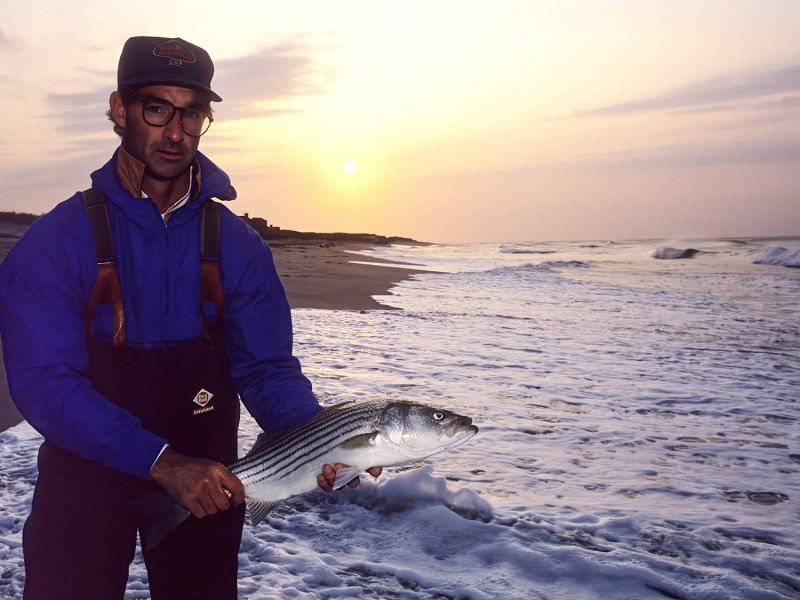
Fishing the Spring Striper Migration
Surfcasting and fly fishing for striped bass, bluefish and bonito are popular on the shorelines of New England. A predictable series of events marks the onset of spring fishing season along the coast, particularly around Cape Cod, Martha’s Vineyard and Nantucket Island. First, when you hear spring peepers start shrilling, it’s time to start cleaning your gear. Striped bass are the first to arrive. After spawning in Mid-Atlantic coastal estuaries, one population swims north, following emerging baitfish toward New England and Maine.
A second event is the simultaneous spring migration of American eels leaving freshwater systems to spawn in the Sargasso Sea. They are excellent live bait if you can find or catch them. Third is the inland migration of herring and alewives (river herring), also returning to freshwater spawning sites. The final event to fully claim the spring return of stripers is that some lucky angler has landed one, and then droves of bass fishermen show up at beaches.
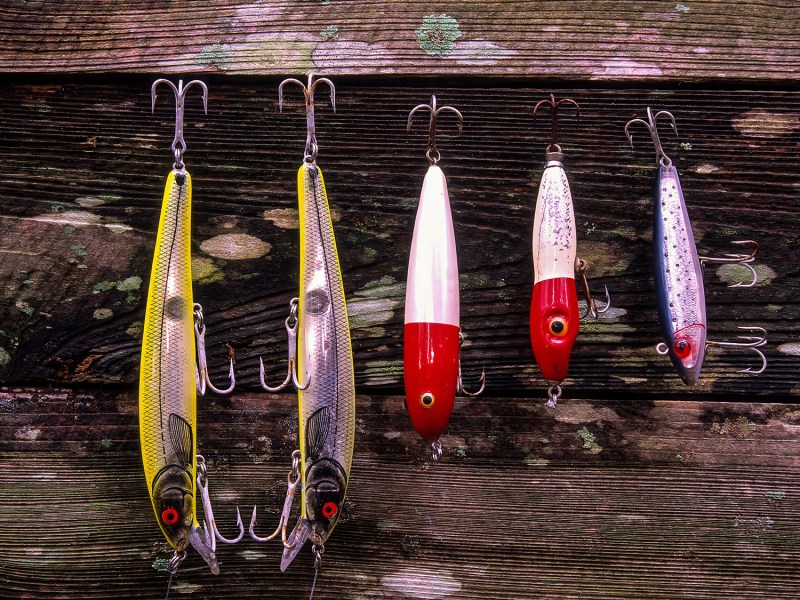
Fly Fishing and Surfcasting to Spring Stripers
Stripers are opportunistic, feeding on small schooling fish, sand eels, squid, crabs and crustaceans. Smaller stripers typically arrive first around May, with larger fish showing up with warmer water temperature peaking in June. It’s common knowledge among locals that when stripers feed on a particular prey, they can ignore other kinds of food.
Fly fishermen use flies that imitate their prey; Clouser Minnows and patterns mimicking sand eels, squid and crabs are popular. Having a variety of skinny, wide, long, or surface flies is wise. Knowledge of local prey, timing and season can increase your chances. I fish with a light 6000-size Penn Battle IV spinner and plugs such as a Cotton Cordell Red Fin or a Bomber Long A, alongside my friends fly fishing at night when tides flood in and out of shallow flats of eel grass.
At night with only a headlamp, I cast into darkness and slowly retrieve the swimmer. On a sudden strike, I quickly set the hook. A big splash on the surface shows the location, and the expected hard pull-back as the fish runs with the drag streaming line.
In the day, I’ve caught large stripers in the surf and fished to schools of smaller, actively feeding stripers close to shore. Casting into these pods is a surefire way to hook-up. Either way, you don’t need a boat, and surfcasting artificial lures or fly fishing are effective means of catching fish. I’ve used heavier (3- or 4-inch, 2- or 3-ounce) spoons like the Diamond Jig A27, Acme Moonshine Casting Spoon, or Deadly Dick Diamond Lure that have a faster retrieve. Small, slim Acme Kastmasters are good for imitating sand eels.
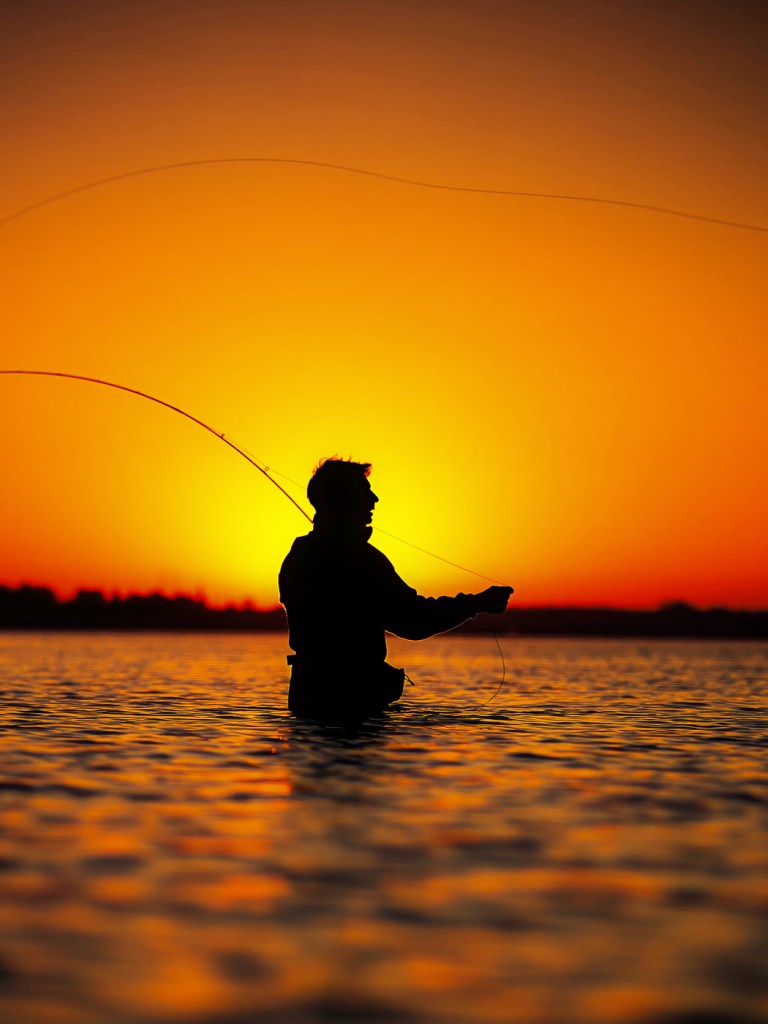
Status of Striped Bass
Based on biological assessments and decline in spawning, NOAA classifies Atlantic striped bass as overfished, but under current regulations the population is said to be rebuilding. Conservation measures have prompted many anglers to adopt catch-and-release practices.
You can reduce post-release mortality by handling fish gently and keeping them in water whenever possible; minimizing physical damage improves their chances of survival. Many anglers are replacing treble hooks with singles, and some are crushing barbs to further reduce injury.
NOAA Fisheries report that the current fisheries management plan promotes sustainable populations for responsible harvest under US regulations. Knowing daily bag and size limits before you fish is important for all species and may change based state and federal rules.
New England Summer Surf Fishing
As water temperature warms around June, stripers peak and then move to deeper water until fall, when there’s another, even stronger nearshore run of large stripers. As the striper bite wanes, bluefish and bonito (Atlantic bonito and false albacore) become abundant. That’s when you get the summertime blues, when bluefish show up during July and August.

Bluefish Fishing from the Beach
Bluefish are battleship fighters. Adults can average 2 to 3 feet long and weigh 15 pounds or more. As schooling predators, they feed on smaller fish. Oily slicks or the scent of a feeding frenzy can lead you to a “bluefish blitz.” Watch for diving birds.
Blues are strong fighters and fly fishing can be challenging. Topwater plugs or poppers, like Roberts Ranger or pencil poppers imitate frantic baitfish. Having a variety of tackle is wise. Bluefish will charge poppers, chasing and slamming them out of the water with other blues joining the frenzy. Strong leaders prevent chafing from line-strikes and losing plugs.
Retrieving too fast will outpace the fish. Experiment with modest to fast retrieval speeds. Some fishermen remove the hook just to watch the action. Silver spoons and jigs work well, too. Weighted plugs allow easy casting with surf rods that can fling a plug beyond the breakers.
I fish an 11-foot surf rod and a classic Penn 704Z spinning reel with 20-pound, light green monofilament line when surfcasting. I’ve had this rig forever, but the type of gear varies among anglers. A modern recommendation might be the Penn Slammer IV (7000-7500) or equivalent, and most anglers prefer stronger, thinner braided line with heavy fluorocarbon or mono leaders for long casts and durability.
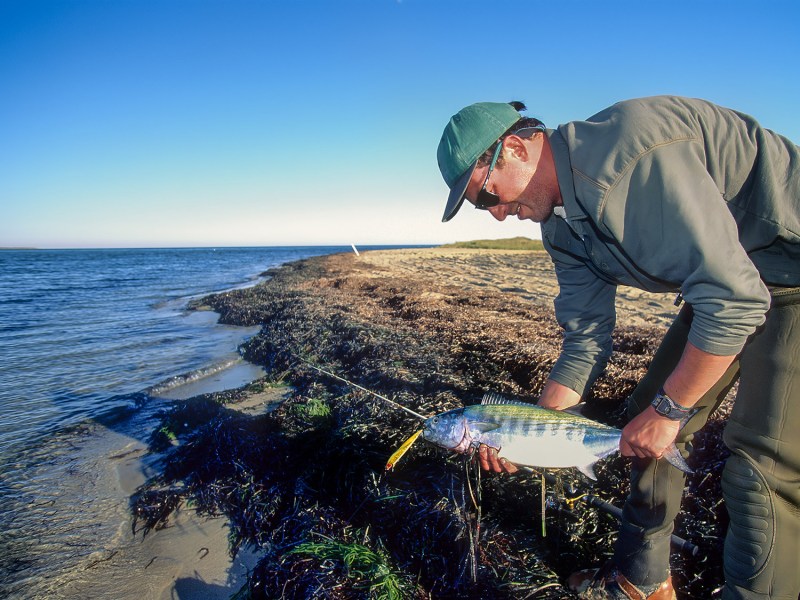
Surfcasting to Bonito
Atlantic bonito and false albacore show up from late summer to fall. They are voracious predatory species, hard fighters and lots of fun on light tackle using fast-retrieve minnow-like spoons and jigs, and slower surface swimmers, too. Atlantic bonito can get up to 12 pounds and 30-inches long.
Knowing how tide and wind influence fishing helps in picking the right spots. Strong currents rip across sandy shoals, carrying baitfish in the back flow. Predatory fish wait along the deeper edges of the rip. Be careful if wading; these currents can carry an unwary person out to sea.
Knowing the seasonal abundance of different species is also helpful. Success is not always assured, but choosing the right kinds of bait and gear increases the odds. Local bait and tackle shops are a wealth of knowledge, just ask; they want you to be successful. Then again, seasoned fishermen understand that the terms “fishing and catching” are strongly correlated with persistence.
Surfcasting requires a little skill. Many popular spots that consistently produce may be crowded. Safety in crowded areas in the frenzy of eager fishermen is essential. Cast straight to avoid tangles and accidents, be respectful of others and be ready to shrug off the antagonism of some very territorial-minded fishermen.