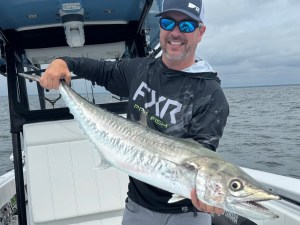
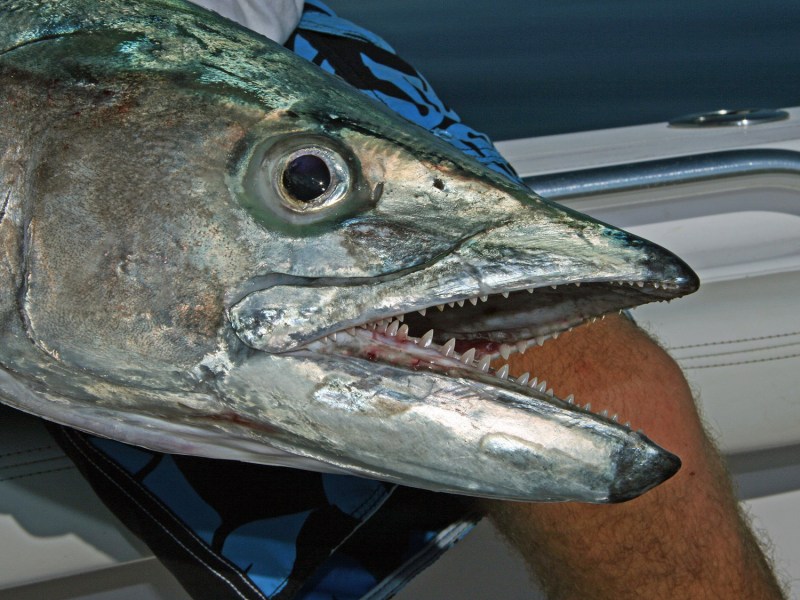
More than 30 years ago, I heard Florida’s Capt. Dave Mistretta describe a kingfish as “a 30-mile-per-hour hell-bent silver missile.” To this day, I haven’t found a more fitting description.
Known to biologists as Scomberomorus cavalla, anglers generally call them kingfish, king mackerel or simply “kings.” Regardless of terminology, these speedy fish bring astounding ferocity fueled by feeding aggression and backed by a mouthful of flesh-ripping choppers.
To that point, specialized kingfish rigs are designed to beat the kingfish at its own game. Trolling diving plugs and spoons, or casting hefty topwaters and even large baitfish-pattern flies will tempt plenty of eating-sized schoolie kings, but if you’re looking for the giant “smoker” kings of 30-plus pounds, presenting live baits for kingfish such as menhaden, blue runners, mullet or sardines delivers the greatest consistency.
We’ll discuss that in a moment. For now, let’s run down some of the most popular destinations for kingfish fun. These ports offer convenient launch facilities and charter boat options, with many of them hosting kingfish tournaments.
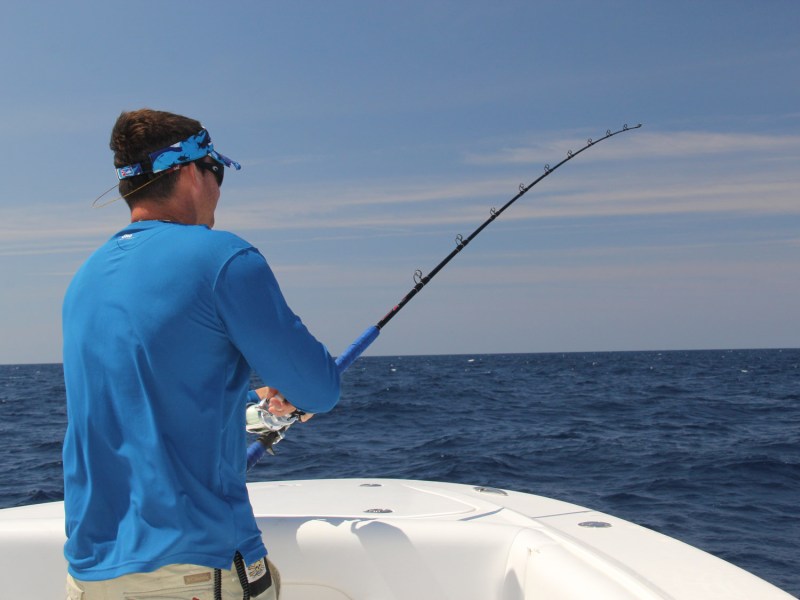
North Carolina Kingfish Fishing
We must start our list in the state generally regarded as the birthplace of modern king mackerel tournaments—North Carolina. With three major capes, lots of barrier islands—including the world-famous Outer Banks—the Tar Heel State boasts a rich history of competitive king mackerel fishing.
Hatteras, N.C.
There are several good options here, but we’ll start with Hatteras. Situated toward the lower end of the Outer Banks, on the north side of its namesake inlet, this remote destination is reachable from the north by following US Highway 64 from the mainland to Nags Head and then driving down N.C. State Road 12.
From the south, take the ferry from Swan Quarter or Cedar Island out to Ocracoke Island’s south end. At the north end of Ocracoke, another ferry connects to Hatteras.
In town, the Graveyard of the Atlantic Museum describes the infamous Diamond Shoals extending off Cape Point and the hundreds of shipwrecks claimed by the colliding Gulf Stream and Labrador currents that once drove southbound ships onto these treacherous shallows. Today, those wrecks, along with various hard-bottom sites make Hatteras a kingfish destination worth the trip. Launch or charter a boat at Hatteras Harbor.
Morehead City, N.C.
Tucked inside Cape Lookout, Morehead City and neighboring Beaufort both offer convenient access to Atlantic waters via Beaufort Inlet. Menhaden (locally called “pogies”) are abundant here, especially around Harker’s Island, east of Beaufort. Jump off from Morehead City Yacht Basin.
Southport, N.C.
The Cape Fear River runs along this historic southern town, where the river opens into the Atlantic and prime kingfish waters. Kingfishing is best in spring and fall around shoals and livebottom, when top-notch king mackerel tournaments launch from Southport. Even pier fishermen get in on the kingfish action when the bite gets hot. Morningstar Marinas at Southport houses several charter operations and is close to the launch at the city docks.
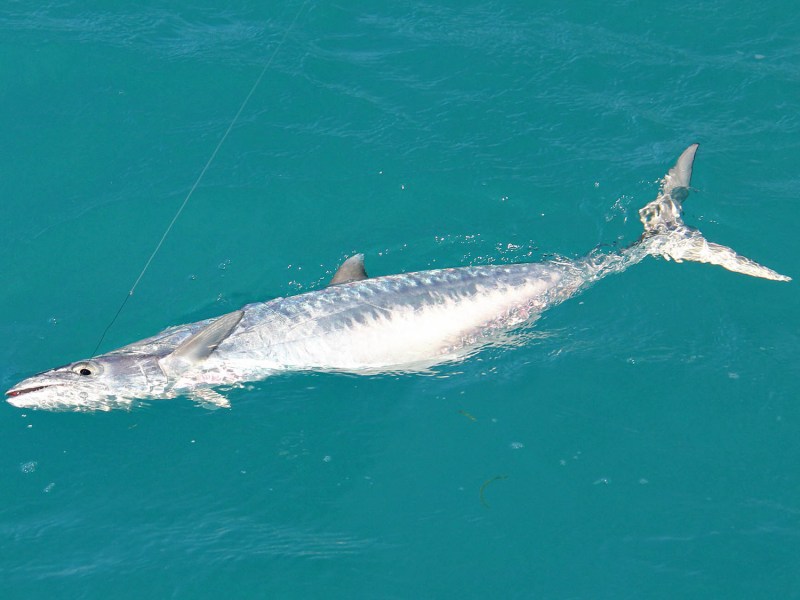
King Mackerel in the South Atlantic
Farther south along the Atlantic Coast, South Carolina and Georgia offer strong options for traveling kingfish anglers. Historic port cities dish out plenty of activities for lay days.
Georgetown, S.C.
At the top of Winyah Bay, where the Waccamaw, Great Pee Dee, Black, and Sampit rivers merge, Palmetto State anglers launch kingfish missions from a town known for its history as a colonial port, prominent rice and indigo producer and a Revolutionary War site. The base of fishing operations is Georgetown Landing Marina.
Savannah, Ga.
Famous for its cobblestone streets, grand oaks, historic waterfront and Chippewa Square — the site of those beloved Forrest Gump bench scenes — Savannah is also recognized as “America’s Most Haunted City.” Fortunately, those who make the run down the namesake river and past Tybee Island find numerous kingfish sites, including the consistently productive Gray’s Reef. Launch kingfish expeditions from Bull River Marina.
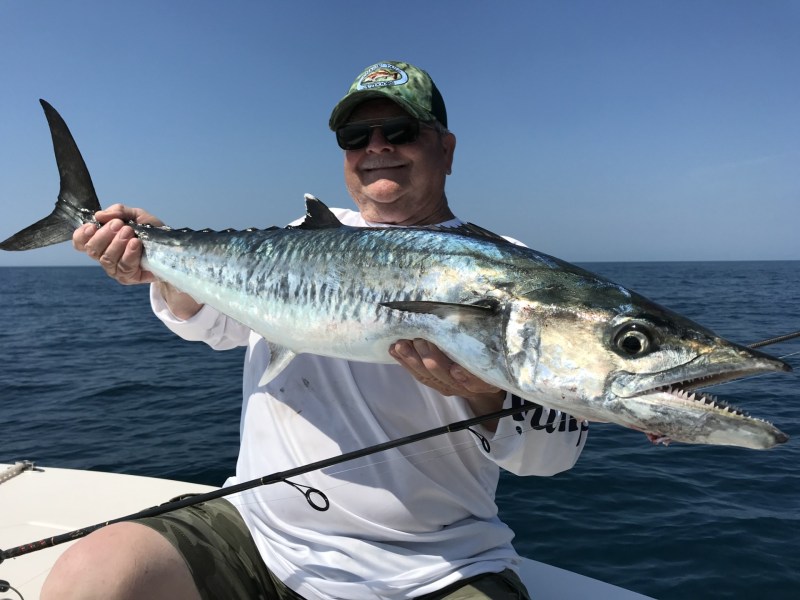
Kingfish Fishing in Florida
Florida bills itself as the “Fishing Capital of the World,” and that distinction includes plenty of kingfish opportunities as well as big-name tournaments for king mackerel.
Jacksonville, Fla.
Home to one of Florida’s longest-running and most prestigious fishing events, the Greater Jacksonville Kingfish Tournament (GJKT), the state’s largest city sits on its longest river, the north-flowing St. Johns. On its way to the Atlantic Ocean, via Mayport Inlet, the river passes vast marsh acreage where anglers often cast net mullet, menhaden and other live baits on the way out to chase kings. Jim King Park and Boat Ramp hosts the GJKT and its associated festivities each year.
Fort Pierce, Fla.
This fishing-heavy east coast city is home to the National Navy SEAL Museum, which displays weapons, vehicles and other naval artifacts. Kingfish anglers launching their own missions have easy access to Atlantic hotspots like Bethel Shoal through the Fort Pierce Inlet out of Fort Pierce City Marina.
Key West, Fla.
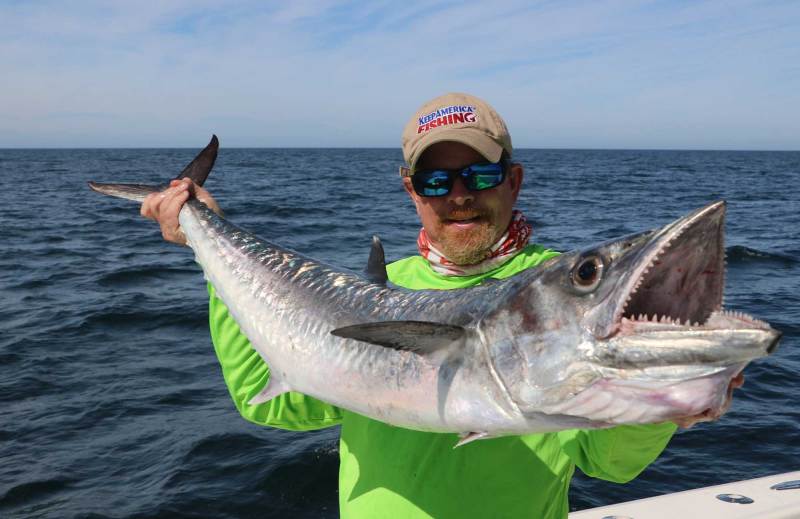
Kingfish are a year-round possibility in the Florida Keys; however, December through March finds massive numbers of kings converging from the Atlantic and eastern Gulf coasts. Wrecks, reefs and current lines attract giant smokers of 50-plus pounds. There’s no shortage of charter, launch and slip options in Key West. Check out Oceans Edge Key West Resort & Marina.
Charlotte Harbor, Fla.
Boca Grande Pass, internationally known as the “Tarpon Capital of the World,” sees daily tides washing loads of baitfish between Cayo Costa on the south side and Gasparilla Island on the north. These buffet lines don’t go unnoticed by kingfish, so it’s no surprise that tournament-winning kings have been taken well inside the harbor. Offshore reefs also attract plenty of whopper kings, as do the beaches flanking the pass. Boca Grand Marina is ground zero.
Madeira Beach, Fla.
The town on the north side of Johns Pass is home to one of the state’s most tenured kingfish tournaments — the Old Salt Fishing Foundation King of the Beach. As the name implies, giant fall kings are regularly taken a couple of football fields off the sand, while those opting to blast offshore find several reef, wrecks and ledges giving up the meat. The Sand Key Hard Bottom, a large natural reef up the coast is a known kingfish magnet. Renowned Hubbards Marina has everything you need.
Gulf of Mexico Kingfish Fishing
Kingfish are a popular target across the Gulf of Mexico, which offers many ports that provide quick and easy access to bait-rich waters where king mackerel hunt.
Dauphin Island, Ala.
Known as the “Sunset Capital of Alabama,” this laid-back island at the west side of Mobile Bay offers a strategic launching point for fishing anywhere from the western Florida Panhandle to waters off the Mississippi Coast. Anglers heading to the Gulf will pass historic Fort Gaines, which—in addition to being a great area for inshore fishing—features original cannons and a blacksmith shop. Set out from Dauphin Island Marina.
Venice, La.
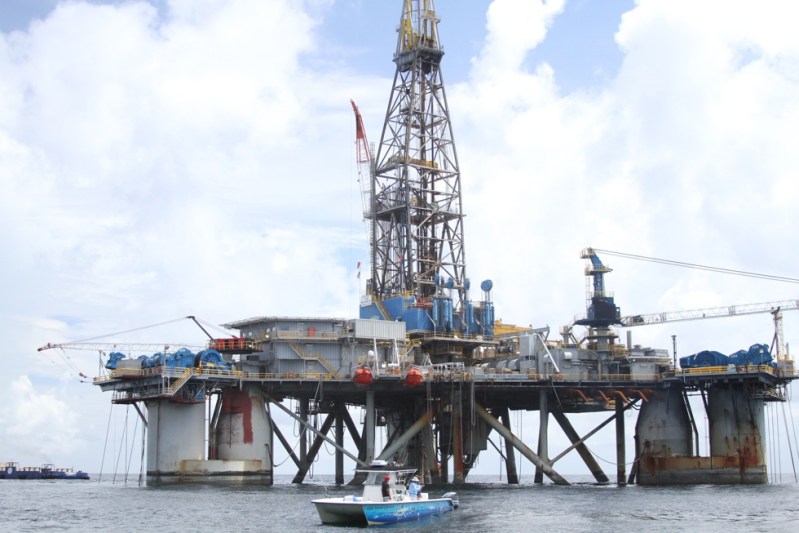
The last populated port on the Mississippi River, Venice earns its “End of the World” moniker with an unmistakable detachment steeped in Delta ambiance. Sitting at the southern end of Louisiana Highway 23, Venice finds recreational anglers sharing waters with shrimpers, oystermen and crew/work boats the keep the nearshore and offshore oil and natural gas rigs functioning.
An 11-mile run from Venice takes you to the Head of Passes where the river splits into three main outlets: Pass-A-Loutre (east), South Pass (center) and the aptly named Southwest Pass (the main commercial shipping route). From there, anglers find loads of big kingfish around the offshore platforms, where massive schools of blue runners (locally, “hard tails”) and other forage serve as predator magnets.
The only reason to visit Venice is to fish, hunt or work the oil rigs, and Venice Marina or Cypress Cove Marina are base camps for world-renowned inshore and offshore fishing in the Gulf.
Port Aransas, Texas
Flanked by Aransas Bay to the north and Corpus Christi Bay to the south, Port Aransas is widely recognized as the “Fishing Capital of Texas.” Aransas Pass offers direct access to the Gulf for anglers headed to oil and gas platforms, wrecks or ledges, but big kingfish are often taken around the jetties, especially on outgoing tides. The city docks at Dennis Dryer Municipal Harbor are your gateway to the action.
Best Rigs and Tackle for Kingfish Fishing
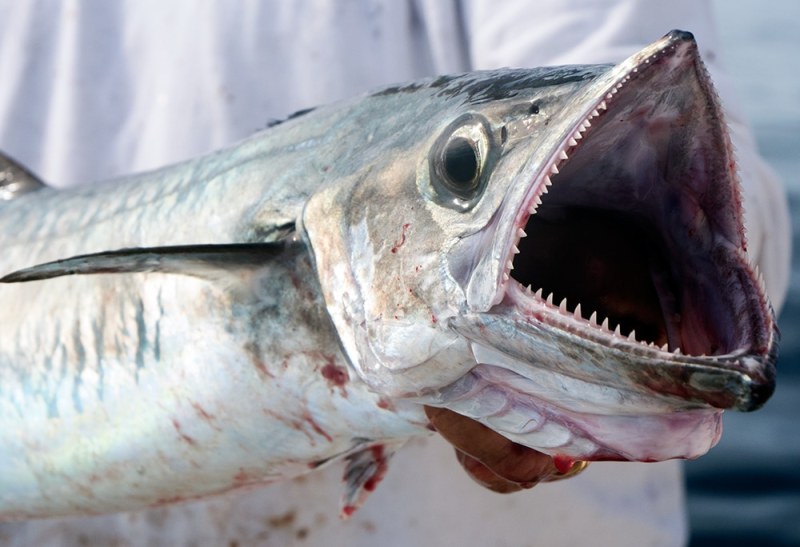
Wherever you look for kingfish action, the same rules apply: Manage those sharp teeth and a slashing attack or you’re going to lose a lot of tackle. Kings are built for speed and equipped to slice through larger prey to immobilize the meal. That means you need a plan for hooking what bites and keeping the fish pinned all the way to the boat.
For starters running a 4- to 5-foot wire leader between the main line and the bait helps minimize the risk of “tail whipping,” where the line ends up parallel to the fish on those long runs. Beyond this, the most vital part of kingfish rigging strategy is the terminal tackle known as a stinger rig.
Think of this as a department store’s loss prevention department. When kings slash their meals in half, they often miss a single hook, but the stinger minimizes such loss by positioning sharp points at both ends of a bait.
How to Rig a Stinger Rig
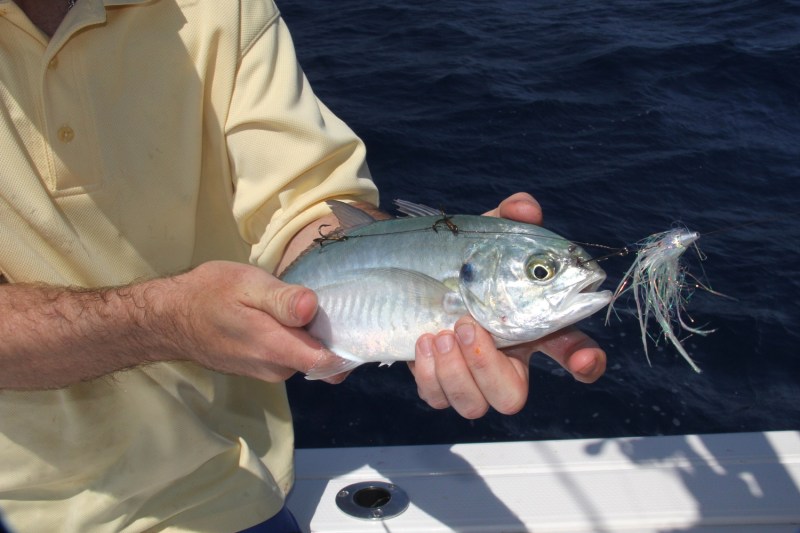
Comprised of a main hook (usually a single) with a treble hook trailing on a 3- to 4-inch wire segment, the basic stinger rig can be adjusted to accommodate bait size by shortening or lengthening the stinger wire.
Tie your mono or fluorocarbon main line to the top end of a barrel swivel and link the other end to your leader wire. Attach the wire leader with a haywire twist secured with five barrel wraps and then use that same connection method to affix the lead hook and its trailing stinger hook.
Some anglers add their stinger segment to the bend of the lead hook, but attaching it to the eye presents a more secure connection. This arrangement also yields a more streamlined rig.
Rig your kingfish bait by setting the lead hook through the nose or forehead, and lightly pin one treble point in the bait’s side. Allow slack in that stinger segment, because pinning a bait too tightly can impede the swimming motion.
Frozen ribbonfish offer an appealing target on downriggers, but you’ll need an adjusted rig. Replace the standard lead hook with a narrow jig and enough stinger segments for the bait’s length. Set the jig through the ribbonfish’s jaws (bottom-to-top) to keep the mouth closed while trolling, and pin those stingers along the flank with sufficient slack to facilitate swimming motion.