Crystal-clear water, beer and beautiful beaches are what most people have in mind when they think of the Spanish island Mallorca. But the largest of Balearic Islands in the gorgeous western Mediterranean Sea offers so much more, especially for anglers.
This is an exciting fishery on an upward trend thanks to international protections for several game fish species. From May to July, giant bluefin tuna and albacore come into the Mediterranean to spawn just east of Mallorca. In August, dolphinfish do the same.
Additionally, swordfish and a very special big-game fish, the elusive Mediterranean spearfish, can be caught year-round along with smaller bluefin tuna up to 200 pounds.
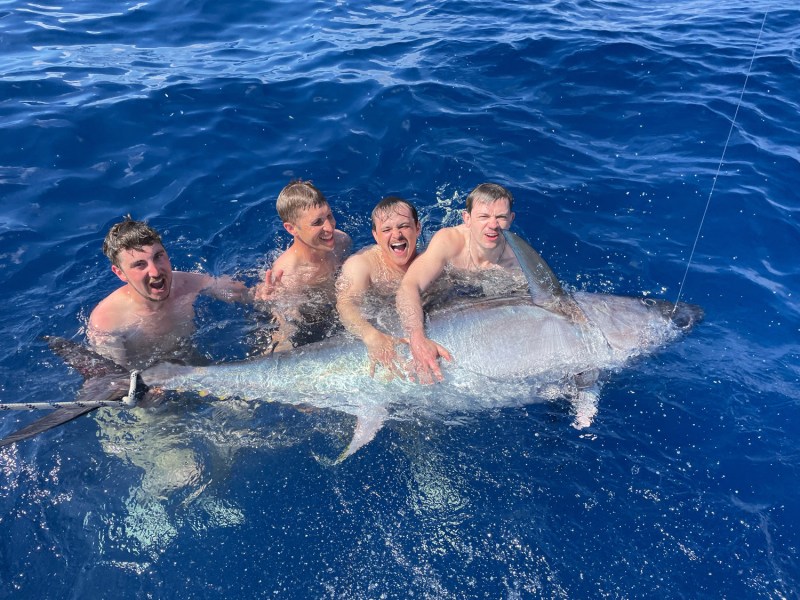
Bluefin Tuna Rebounds Internationally
Feeding grounds for mighty bluefin tuna exist just 8 miles out of Mallorca’s Puerto Cala Figuera. Mackerel and sardines congregate right on the drop-off from 300 feet to 5,000 feet, which draws the tuna close to shore.
Since their near depletion in the early 2000s, the bluefin population is rapidly regaining numbers. Around the turn of the century, international trawlers used the Strait of Gibraltar as slaughtering grounds for tuna as the fish moved into the Mediterranean to spawn. The trawlers harried tuna schools along their path to spawning grounds close to the Balearic Islands. Spotter planes were used to deploy nets around whole schools of slow-moving bluefin tuna.
Thankfully, conservation initiatives were enacted before this magnificent species was fished past the point of no return. Organizations such as the International Commission for the Conservation of Atlantic Tunas (ICCAT) stepped in and urged governments to implement strict rules and regulations for the species, which was on the brink of being wiped off the face of the earth.
In the last 20 years, the population rallied back to good numbers, and in 2021 bluefin tuna was taken off the International Union for Conservation of Nature’s Red List, and its status was moved to “least concern.”
Nowadays, bluefin tuna that spawn off the coast of the Balearics mix with stocks that spawn in the Slope Sea off the Atlantic Coast of the United States as well as with giants that spawn in the Gulf of Mexico. With heavy regulation of fisheries internationally, tuna have even begun showing up on the coasts of Denmark and Norway, where they haven’t been seen in numbers since the 1960s.
Bluefin Tuna in the Mediterranean Sea
Out of Mallorca, we now fish year-round and catch smaller bluefin tuna between 80 and 200 pounds with ease, demonstrating the effectiveness of conservation initiatives. An interesting side effect of the collapse and rebound of bluefin tuna in the Med. is white sharks stopped following tunas when the bluefin population declined. There are almost no white sharks anymore, and we never lose fish to them. There are only a few large shark sighting annually, mostly of blue sharks.
Fishing for Giant Mediterranean Bluefins
Giant bluefin tuna arrive in our waters in mid-May, and they are without question the most powerful fish in the Mediterranean. With long, unstoppable runs, relentless pressure and pure strength, many first-time anglers are genuinely shocked by the raw power these fish unleash.
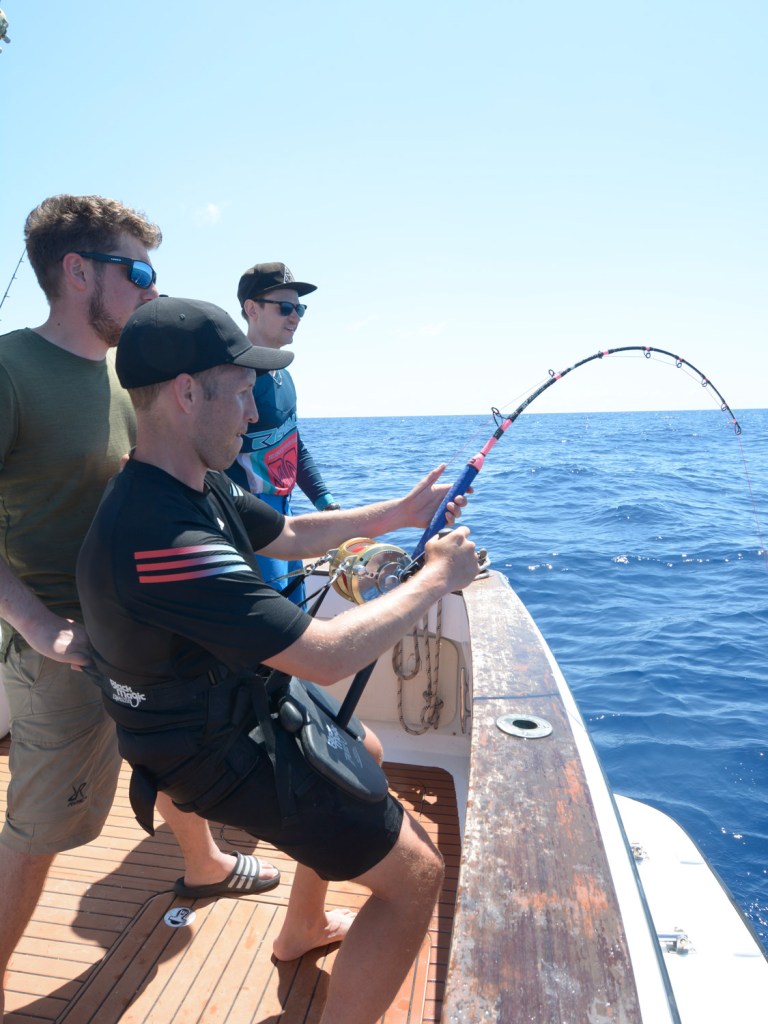
Most bluefin tuna we encounter range between 400 and 650 pounds. They are true heavyweights that demand respect. We fish by chumming heavily, and once the tuna move in, the hookup often happens very quickly. Every battle is fought stand-up, giving you a direct, uncompromising connection to the fish. No shortcuts. No fighting chairs. Just you, the rod, and one of the ocean’s strongest predators.
With a lot of luck, we encounter massive schools numbering in the hundreds—a spectacle few anglers ever witness. The bluefin remain around the island until the end of June when they return to the Atlantic after spawning.
We fish exclusively with live bait, caught fresh on the spot to ensure we are in the area where the bluefin are feeding. On many days, we chum up the mackerel beneath the boat instead of the tuna. Those swarming mackerel bring tuna in from a distance.
A strict catch-and-release policy is enforced for bluefin tuna. These fish are fully protected, and preserving the future of the species is a responsibility we take seriously.
Mediterranean Longfin (Albacore) Tuna
On the other hand, longfin tuna (albacore) can be taken home. They have the same season as giant bluefin, when they also come to Mallorcan waters to spawn. We like to put out a spread to troll for longfin tuna over more than 8,000 foot depths while searching for the big schools of bluefin.
Some of the Best Spearfish Fishing in the World
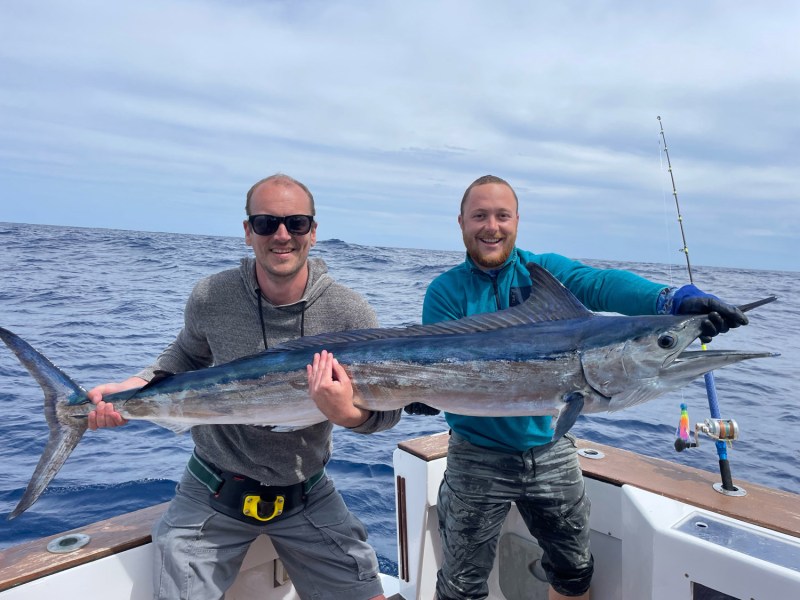
While trolling for albacore, we also encounter one of the most elusive big-game fish of all, the Mediterranean spearfish. If you want to check a spearfish off your bucket list, there is no better place to do it than off the Spanish coast of the Mediterranean.
Different species of spearfish can be found worldwide, but I would argue there is no destination for catching them as reliable as in front of our island. They also spawn here, and a strict catch-and-release rule imposed in 2019 ensures a stable population. The spearfish fishing has been getting better every year.
Spearfish are an option year-round. As we don’t have marlins in the Mediterranean, it is possible to troll for them with lighter gear. A fish of 50 pounds is a formidable adversary with 50-pound-class rods, which also withstand runs from giant tuna in open water.
In fall, spearfish eat a lot and seem to have the most strength. There are fewer spearfish around in winter, but they are always large ones because smaller fish migrate to warmer areas.
Mediterranean Mahi-Mahi Fishing
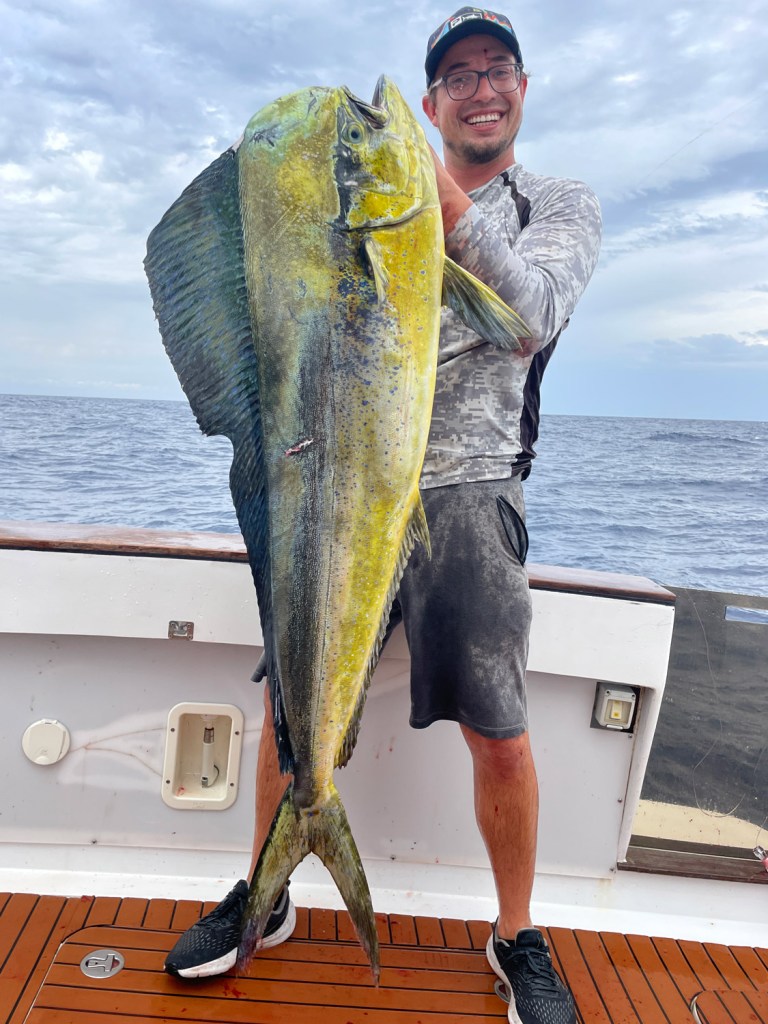
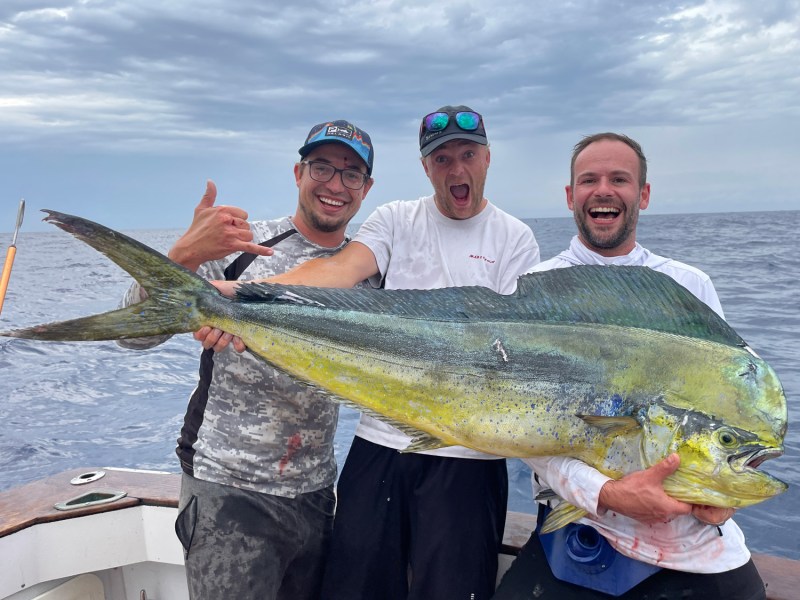
As fall approaches, mahi-mahi congregate in large groups after spawning in open water. The entire island goes crazy for dolphinfish, which we call Llampuga. Through September, October and November, schooling-sized mahi are everywhere.
Growing faster than nearly every fish in the ocean, dolphinfish grow to 10 pounds quickly and are the perfect leaping sport fish. We also see plenty of larger 20-plus pound mahi-mahi in fall.
Dolphinfish are one of our favorite species to eat as sashimi or simply cooked fresh in the pan soon after the catch.
Night Fishing off Mallorca
Sixgill Sharks
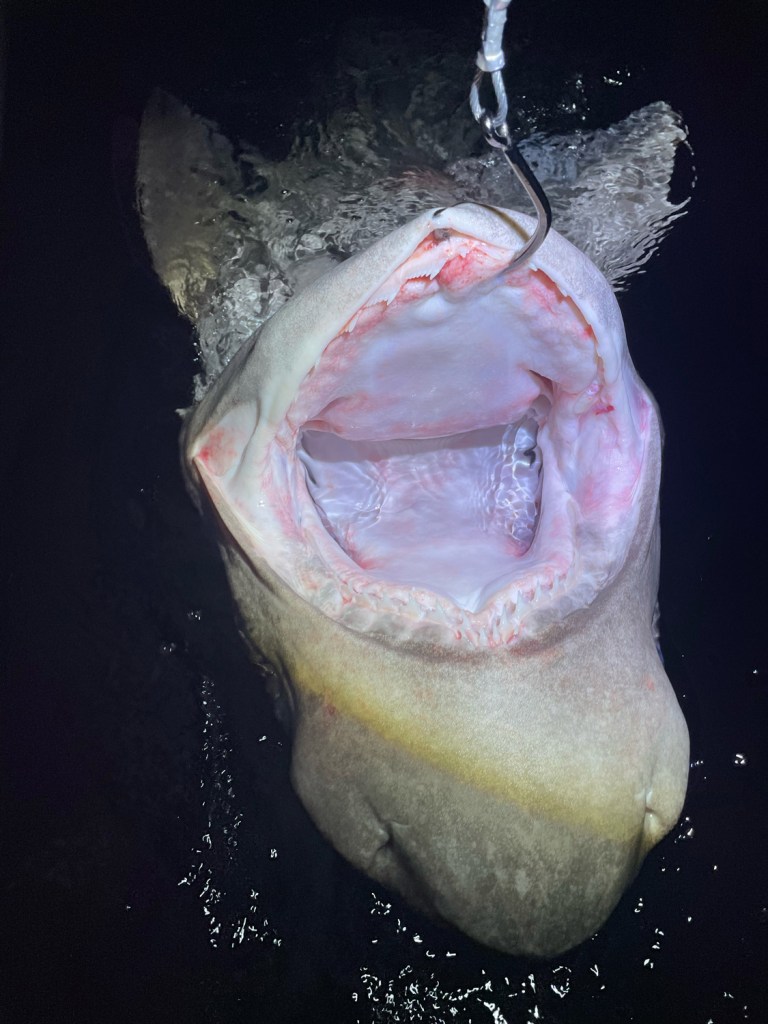
Floating under the stars and fishing for many different species of bottomfish is captivating. Off Mallorca, our primary big-game targets at night are swordfish and sharks. We catch a lot of bluntnose sixgill sharks, which typically weigh between 450 and 850 pounds.
They are a sight to behold behind the boat, slashing around and exposing jaws full of razor-sharp teeth. Mallorca is one of few destination fisheries where sixgill numbers are this high, and they seem to be increasing every year.
Scientifically, little is known about these fish, and we are hoping for funding to help researchers gather more information about this fascinating species. The fight with a sixgill shark is not the most thrilling, but it is grueling. They are strong and know how to use their massive weight to their advantage.
Swordfish
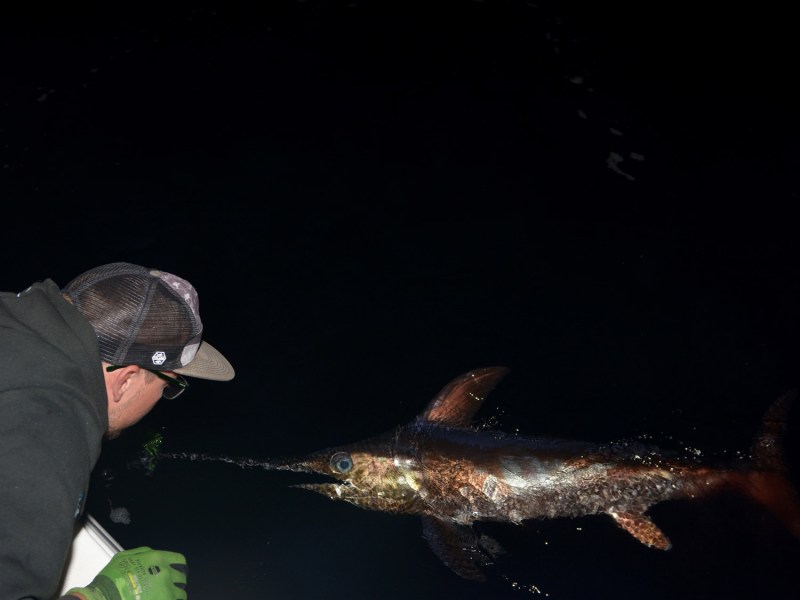
Swordfish are the second big predator we catch at night. They grow slower in the Mediterranean than anywhere else in the world, so they don’t get as large as they do in the Atlantic. However, the catches are reliable and the stocks are good.
Two big spawning areas, one between the Balearics and the strait of Gibraltar and one in the eastern Med., called Levantine Sea, are the stable basis for a good population. Swordfish from the western Atlantic do not mix with those in the Mediterranean, according to scientific research.
To catch them, we try to go out during a full moon. Fishing for them over shallow (300-foot) depths, at night is a unique experience. We fight them with light tackle with our 50-pound-class rods and Accurate Boss Fury 600 reels.
Because the baits are only set to 50 feet deep, the angler is immediately connected to the fish, and this provides an exceptionally fun fight with these top predators.
For bait, we use live southern shortfin squid (Illex coindetii) and European flying squids (Todarodes sagittatus), which can reach maximum lengths of 4 feet. Even the small swordfish have no problem cutting these big squid up into bite-size snacks.
If the larger squids show up, catching them is interesting fishing in and of itself. It is a lot of fun catching them on light jigging rods, as they are typically found in depths greater than 1,000 feet and we fish with electric reels and stiff rods. These squid are also delicious, so we frequently wait for the bite while munching on freshly caught squid with garlic.
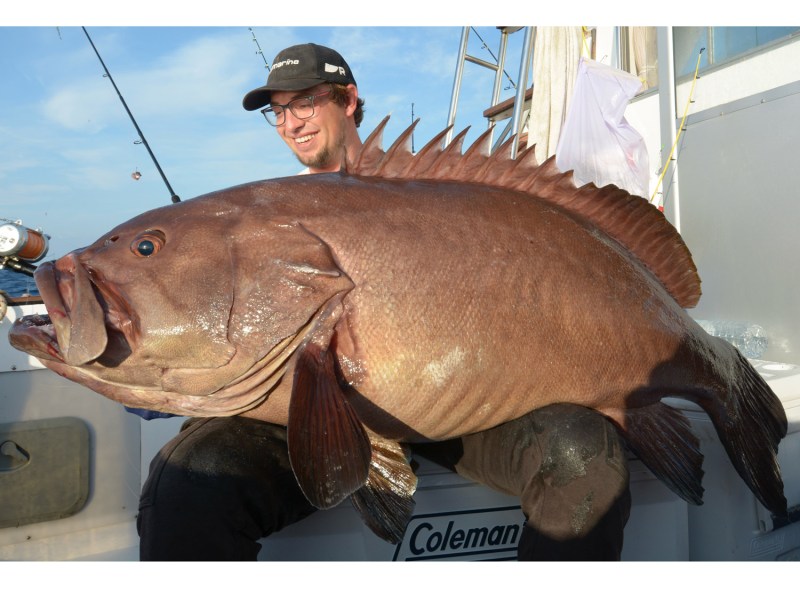
Thanks to conservation measures of the last couple decades, the Mediterranean off the Spanish Balearic Islands is on the rise as a sport fishery. We have good big-game opportunities, shots at rare species and delicious fish to eat.
Near the opening to the Atlantic, The fishery changes every year. In 2023, we saw an awesome run of skipjack tuna, which gave us 30-plus-fish days for more than a month. We can never predict what the upcoming year will bring, but patterns we gladly embrace are the sharp rise in the bluefin tuna population and lay days spent enjoying the gorgeous beaches and vibrant culture of the Spanish Islands in the Mediterranean.
Capt. Jonas Bock fishes with Balearic Fishing Charter in Cala Figuera, Mallorca, Spain.