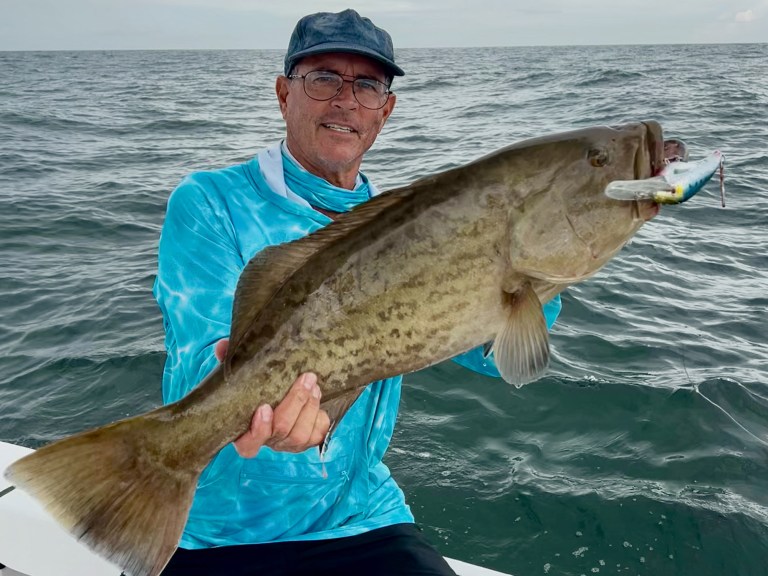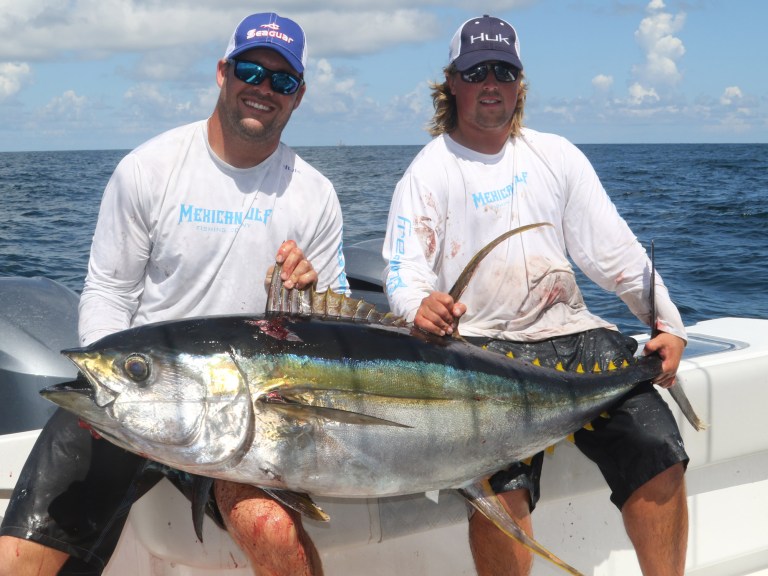
Inshore action is firing off if you know where to look. Across the country, winter resists the start of spring, but savvy anglers know where and when to find the season’s first inshore fishing opportunities.
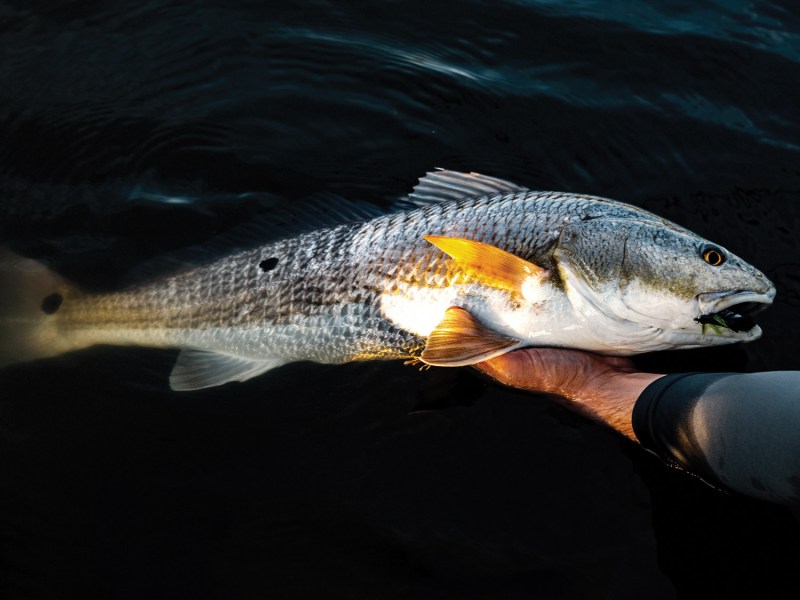
Catch Mid-Atlantic Redfish in Bays and Creeks
In shallow bays and marsh creeks of the North Carolina coast, redfish are the first fish to shake off the winter blues. Capt. Chris Kimrey of Mount Maker Charters in Morehead City is anxious to chase reds in the backwaters.
“Redfish in March is a zero or hero mission,” Kimrey jokes. Clear, cold water makes reds scattered and spooky. “When we find them, the fishing is on fire,” he says.
Kimrey searches marshes and grass flats, but one of his favorite hot spots is along the oceanside beach. “When the wind is offshore, I can move the boat close to the beach and look for schools of slot redfish behind the shorebreak,” he says. A 1/4-ounce jig head and soft plastic is a go-to, but Kimrey likes fishing a small gold spoon for cool-weather reds.
“I can work the spoon deep or shallow and around oysters or grass,” he says. With the large number of small redfish Kimrey encountered in the fall, he expects fantastic action early spring slot-sized reds.
Read Next: 21 Top Redfish Lures: Elevate Your Inshore Action
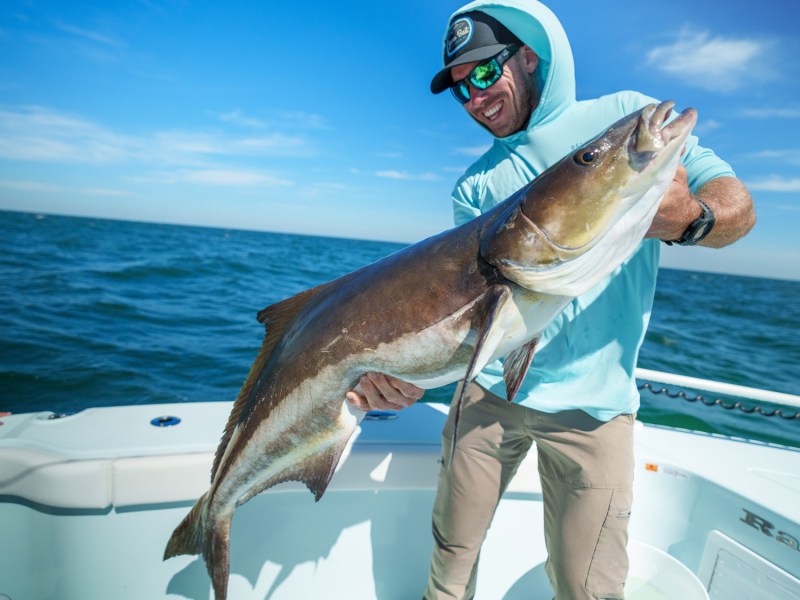
Cobia Fishing in Key West
“Tarpon and permit fishing are great, but everyone is talking about cobia,” reports Capt. Pepe Gonzalez of Fishinkeywest.com.
Gonzalez fishes for tarpon by anchoring in Key West Harbor and soaking live pinfish. He starts by chumming with cut pinfish. “As soon as tarpon smell blood, they come running,” he says. Recently, Gonzalez has encountered cobia in his tarpon spread.
He also sees cobia on rockpiles and wrecks where he targets permit schools. The permit travel in groups of males or females. “The females are giant, up to 50 pounds,” Gonzalez says. When he spots a school, he casts a whole crab on a ½- to 1 1/2-ounce jig head. “At first the fish may not see the bait, then I give it a slow jig, the whole school turns and it’s on,” he says. When the water is too murky to see permit, Gonzalez fishes the crab 5 feet under a bobber.
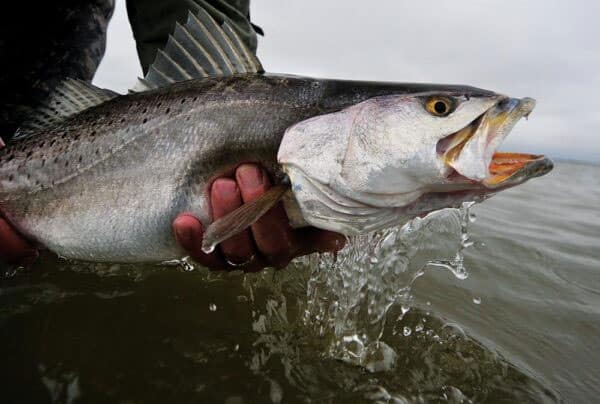
Gator Trout on Florida’s Big Bend
Capt. Dillan Allen of Cedar Key, Florida brags, “Some people call a speckled trout over 20 inches a gator, but I hold that distinction for fish over 24 inches.”
Fishing the deep sloughs and holes between marsh islands, Allen finds big trout early in the year. “When the water starts to warm, the fish move onto the shallows during the flood tide,” he explains. March is windy along the Big Bend, so Allen fishes the leeward side of the barrier islands where the water is calmer and clearer.
He rigs a ⅛- to ¼-ounce jig head and a soft-plastic worm 24 to 36 inches under a popping cork. He recommends anglers experiment with the popping pattern until the fish respond. Allen says every day is different; sometimes fish want a noisy approach and other times they only respond to quieter popping action.
“They almost always hit on the pause,” he says. To cover shallow water, he casts the jig without the popping cork. “Just bounce it along the bottom,” he says. Speckled trout are year-round residents of Cedar Key, but early spring is the best time to find a trophy.
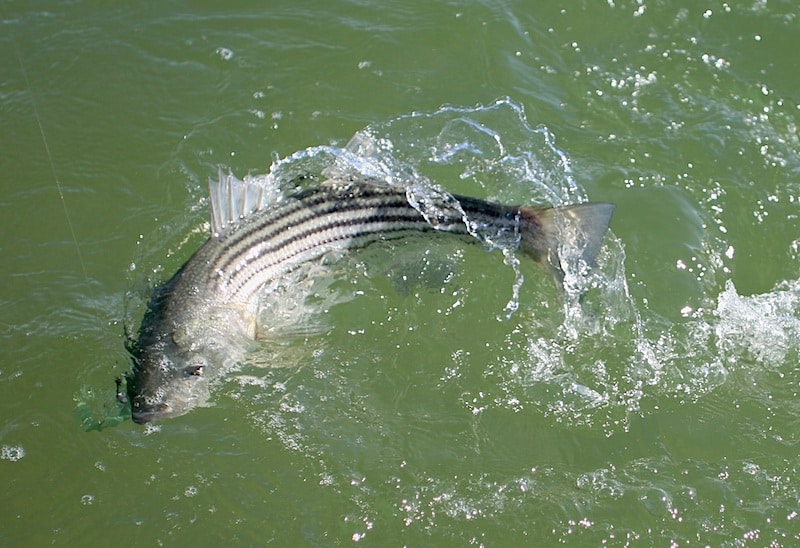
Striped Bass on San Francisco Bay
In early spring, shad exit the tributaries of San Francisco Bay and striped bass move shallow to meet them. Capt. Mike Copithorne of Off the Hook Fly Fishing says striped bass fishing is better than ever.
“Fifteen years ago, the Napa River estuary was essentially devoid of life,” he admits. After rip-rap and concrete barriers were replaced with natural wetlands, the birds, animals and fish returned. “It’s a complete transition,” he says.
Now anglers target striped bass year-round, but Copithorne says spring and fall are best. Copithorne stresses playing the tides and moon to find the best action. “When the moon is full, striped bass feed through the night, making them harder to catch during the day,” he says.
Copithorne looks for striped bass at the confluence of current and structure indicated by seams and rips on the water’s surface. First thing in the morning and just before dark, he casts a topwater fly with a 7-weight rod. When the sun is high, he switches to a sinking line and Clouser Minnow. Copithorne casts the fly and then rips it back to the boat. “I call it chuck-and-duck fishing,” he laughs.