
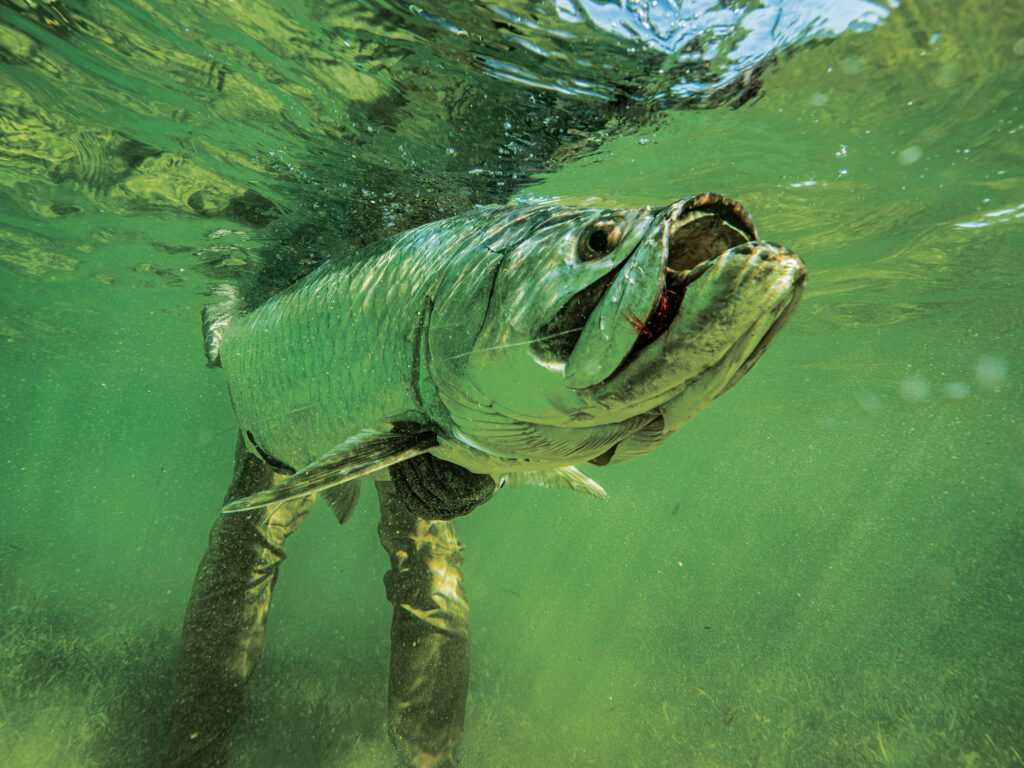
It’s the biggest state in the Lower 48 with the sixth longest coastline. At 367 miles, the Gulf Coast is easy to cover in a week on the road. Start in Galveston fishing the rock jetties, and then drive down Highway 35 to wade fish the flats around Corpus Christi. After a few days waist deep in the brine tangling with trophy speckled trout, ride the ribbon of highway south down 69 East to South Padre Island, where tarpon, king mackerel and bull redfish wait. Late summer, after the season’s worst heat subsides, is the best time to find the widest variety of target fish.
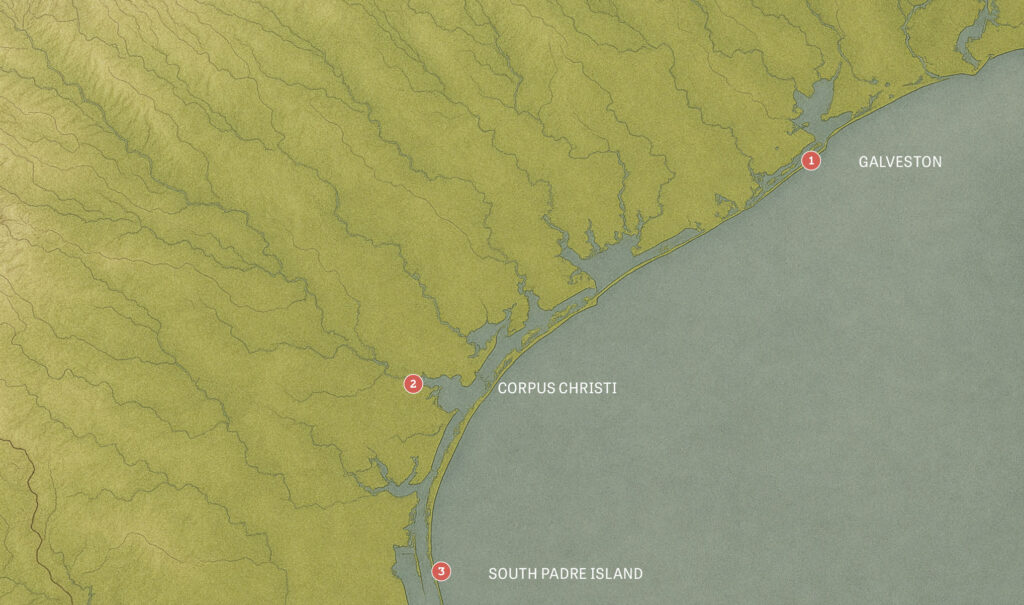
1. Galveston
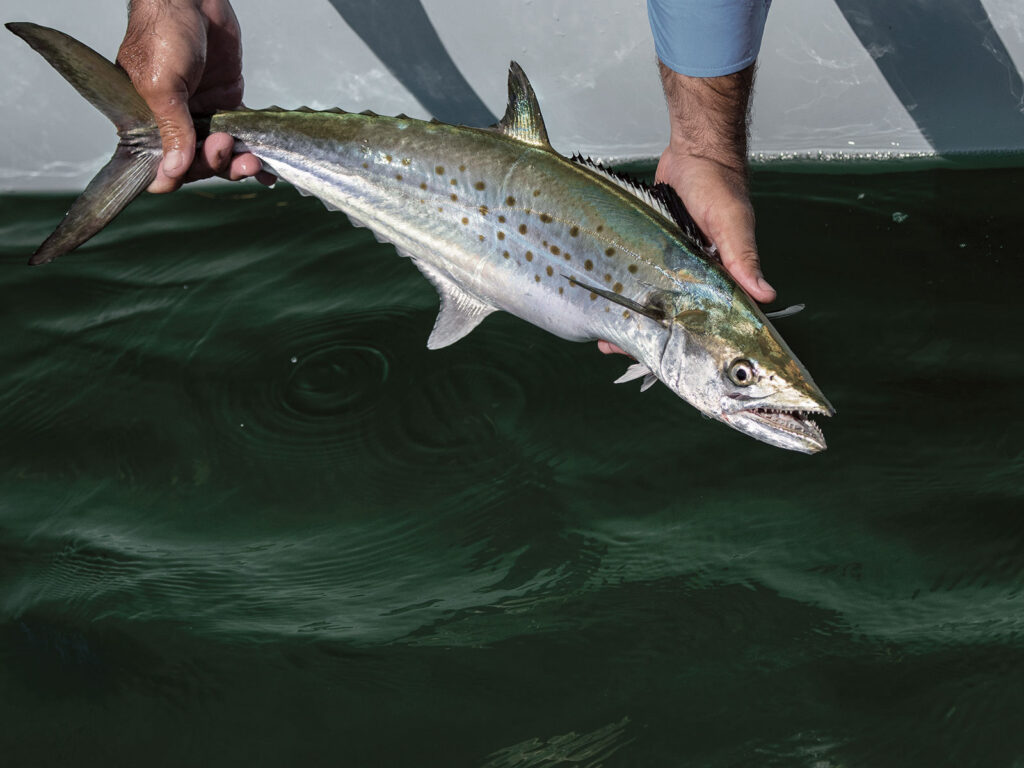
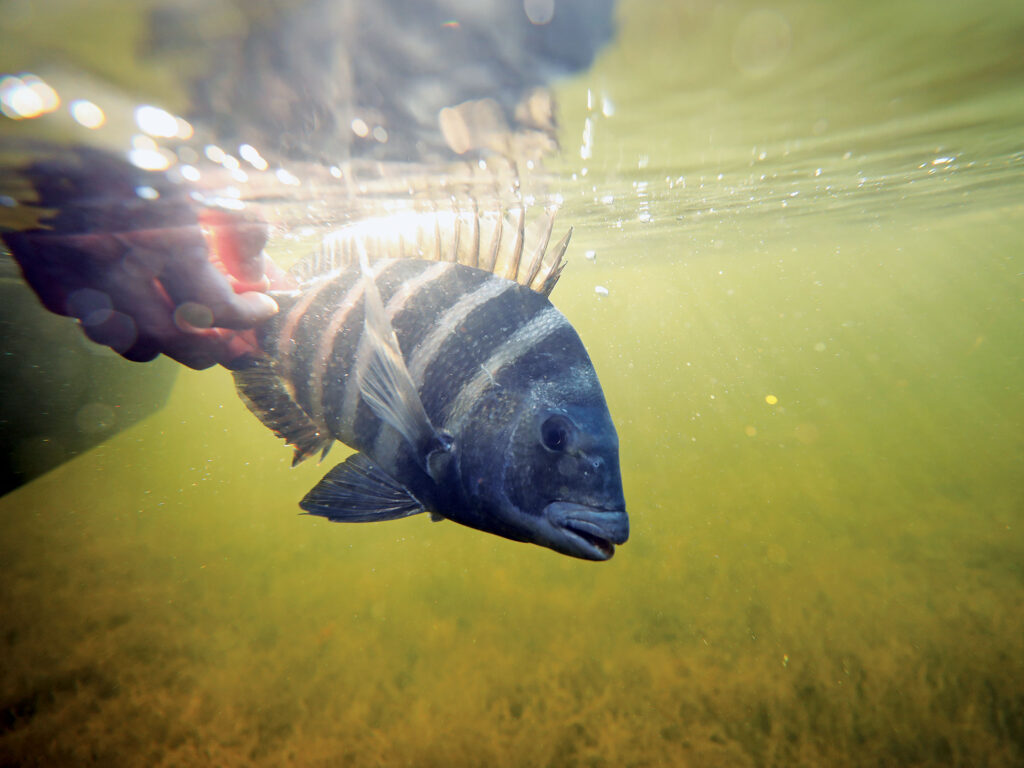
Finding fish in Galveston is easy; just head to the rock jetties with a bucket of live shrimp. “The jetties offer consistently good fishing,” says Capt. Sharky Marquez of Out Cast Charters. The best action is in late summer when clear water rolls in from the Gulf. Marquez says, “The clear water has higher salinity and brings in Spanish mackerel, redfish, trout, sheepshead and black drum.”
Launch at the Galveston Yacht Basin or Texas City Dike and head to the inlet jetties. “Search for the clearest water along the structure,” Marquez suggests. Signs of fish actively feeding is another signal to stop the boat.
Marquez anchors within 10 feet of the structure. “Wind and current at my back helps position the boat in casting distance of the rocks,” he says. He rigs a live shrimp under a popping cork on a 20-pound fluorocarbon leader and adjusts the leader length to position the bait a few inches above the rocks.
Cast the rig within a few feet of the structure. “The lure has to land inches off the rocks,” Marquez says. He only gives his rig a few minutes to soak before retrieving and casting again.
Marquez also uses a drop-shot with a live shrimp on a 1/0 kahle hook 3 feet above a 1/2-ounce weight. His favorite tactic is free shrimping with a live shrimp on a kahle hook 8 inches behind a split shot. “I choose the largest, palm-size, shrimp to provide extra casting weight,” he says.
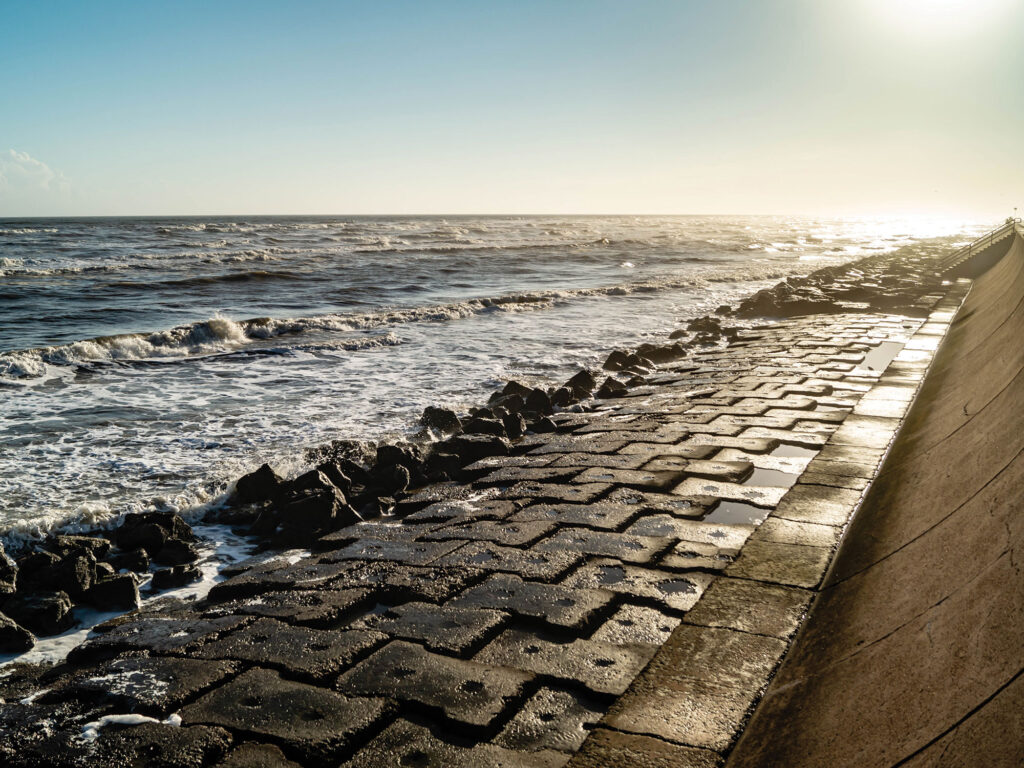
Boat and kayak anglers take advantage of the great fishing along the rock jetties, while shore anglers can target the Galveston Seawall jetties and fish from the 61st Street Pier. “The pier is open 24 hours with bright lights to attract fish at night,” Marquez adds.
In many locales, Academy Sports + Outdoors treats fishing as an afterthought. It’s different in Galveston, where it’s staffed by fishermen who know the local scene. Looking for something with more of a local flavor? Stop in at Serious Tackle in nearby La Marque.
If you need a place to stay, Out Cast Charters operates Bayside Lodge with rooms for up to 18 people. The lodge is close to fishing, attractions and the beach. If the wife and kids need a break from fishing, take them to the Galveston Island Historic Pleasure Pier, an amusement park with rides, midway games and a 5D theater all elevated over the Gulf.
Read Next: The Guide to Texas Redfish Fishing
2. Corpus Christi
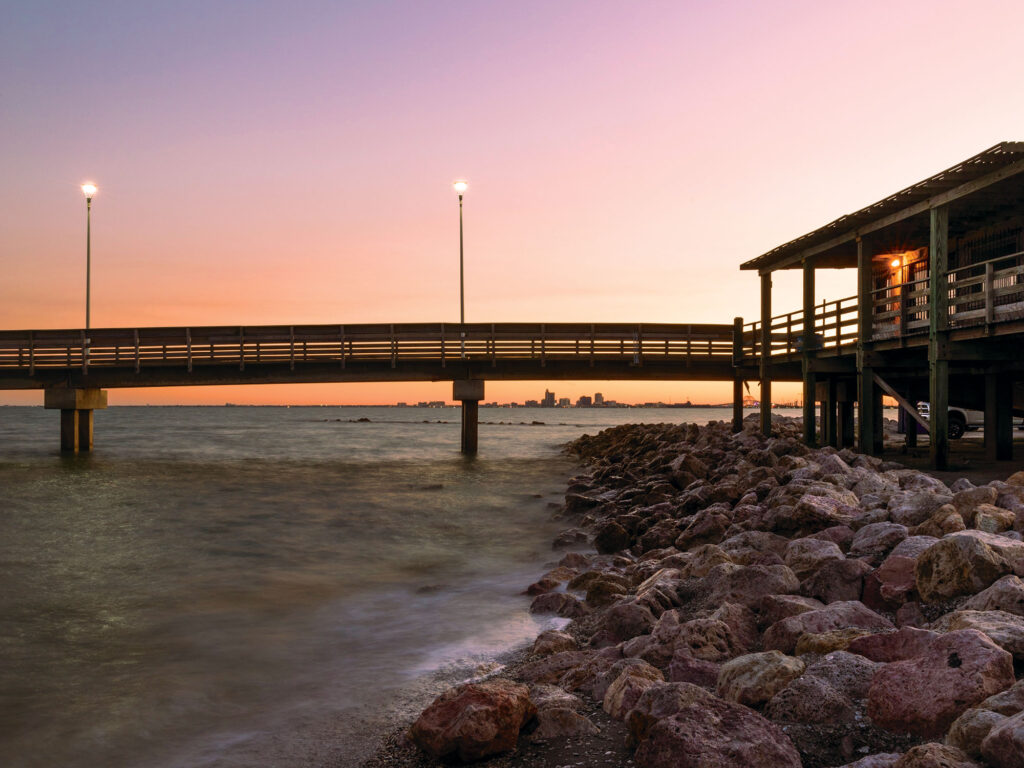
In the center of the Coastal Bend, between Baffin Bay and Aransas Pass, Corpus Christi is ground zero for world-class inshore fishing. “And there is plenty of public access,” says Capt. Joey Farah of Farah’s Backwater Fishing Adventures.
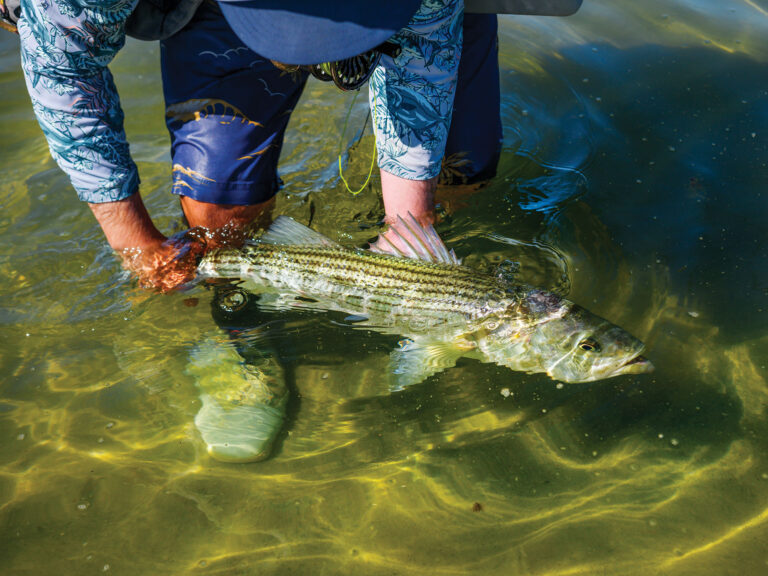
Starting in the south, Baffin Bay is a landlocked bay with water five times saltier than the Gulf of Mexico. Launch a skiff or wade fish from the Bird Island Basin Campground. “There are miles of grass shoreline in both directions,” Farah says. The bay is peppered with large rocks, the remnants of fossilized worm casings, that attract huge speckled trout.
Corpus Christi hosts multiple options for public access. Farah recommends fishing the jetties at Mustang Island, Packery Channel and Port Aransas. An access road running parallel to JFK Causeway allows anglers to drive up and fish. On the land side of the causeway, Roy’s Bait and Tackle has everything you need. Farah called it, “the jewel of the Texas coast. The staff is knowledgeable and ready to answer questions.”
If you’re into pier fishing, there are a couple good options. Indian Point Pier, which juts out into the northern part of Corpus Christi Bay, is a great place to target black drum. Cole Park Pier is on the western shore of the bay. It’s open year-round and lights up at night to attract speckled trout and sand trout.
To the north, Matagorda Island stretches out with miles of uninhabited marsh and coast from Port Aransas to Port O’Connor. It is open to beach driving, and the backwaters invite wade and kayak anglers.
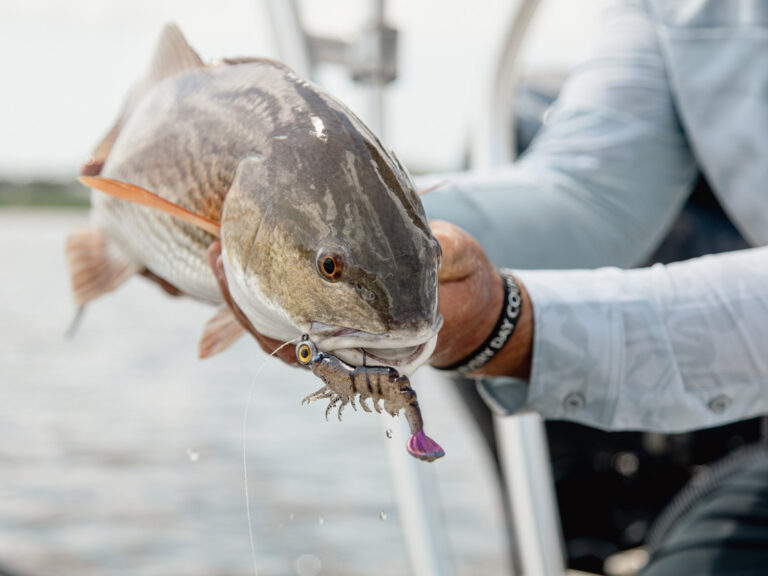
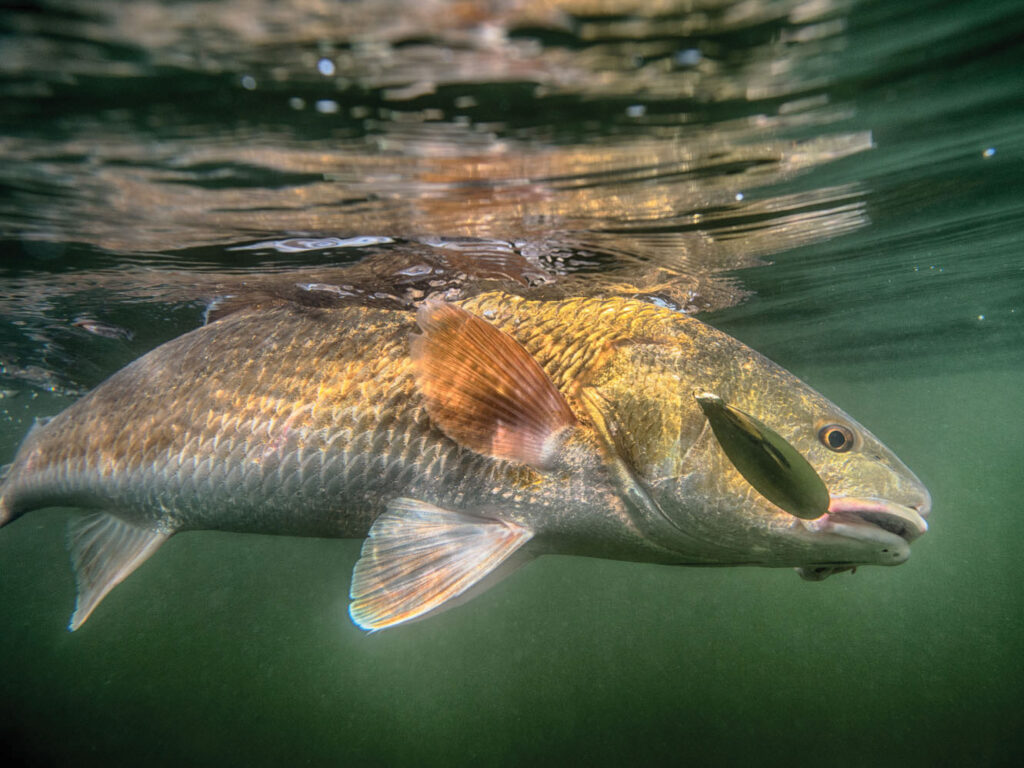
Farah relies on a few rigs for most of his fishing. “Nothing beats a live shrimp under a popping cork,” he says. For artificials, use a 5-inch Down South Super Model soft-plastic on a 1/16- to 1/8-ounce jig head. “I like Key lime for redfish and purple rain for trout,” Farah says.
To fish the shallows, Farah follows the tides. “The fish move deeper when the tide drops. Then work towards the shore on the flood.” He suggests starting shallow and searching for bait.
3. South Padre Island
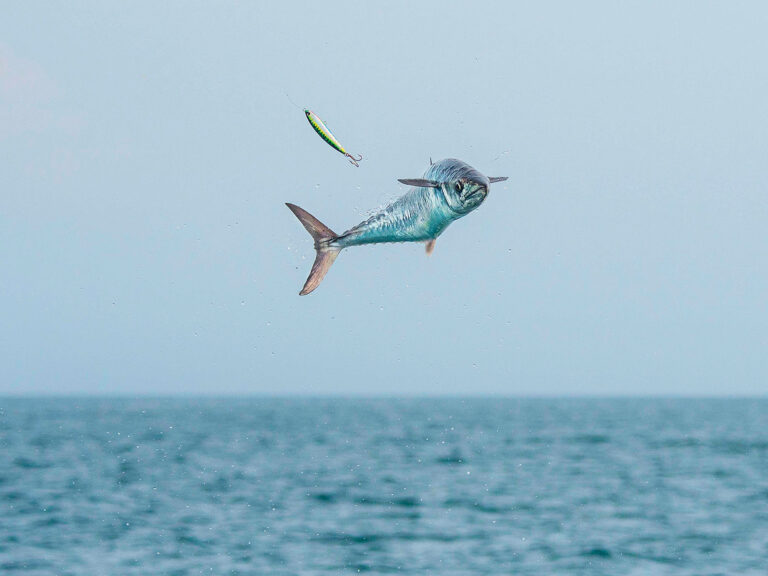
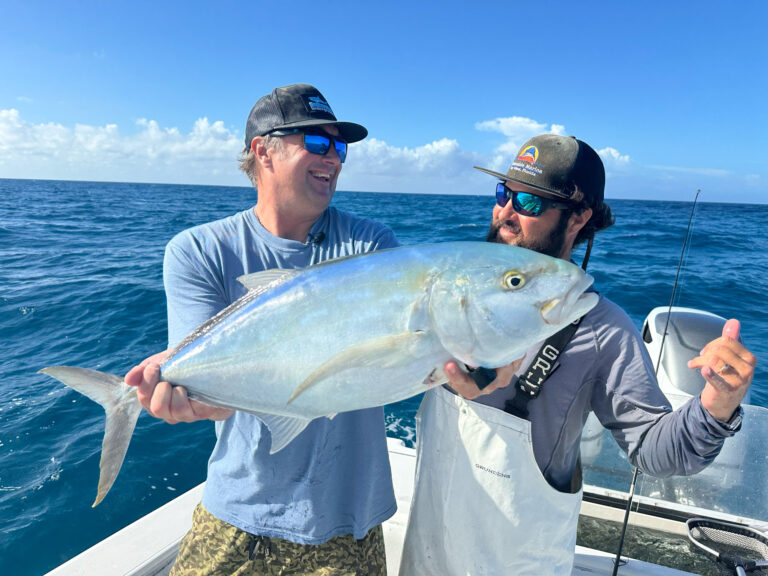
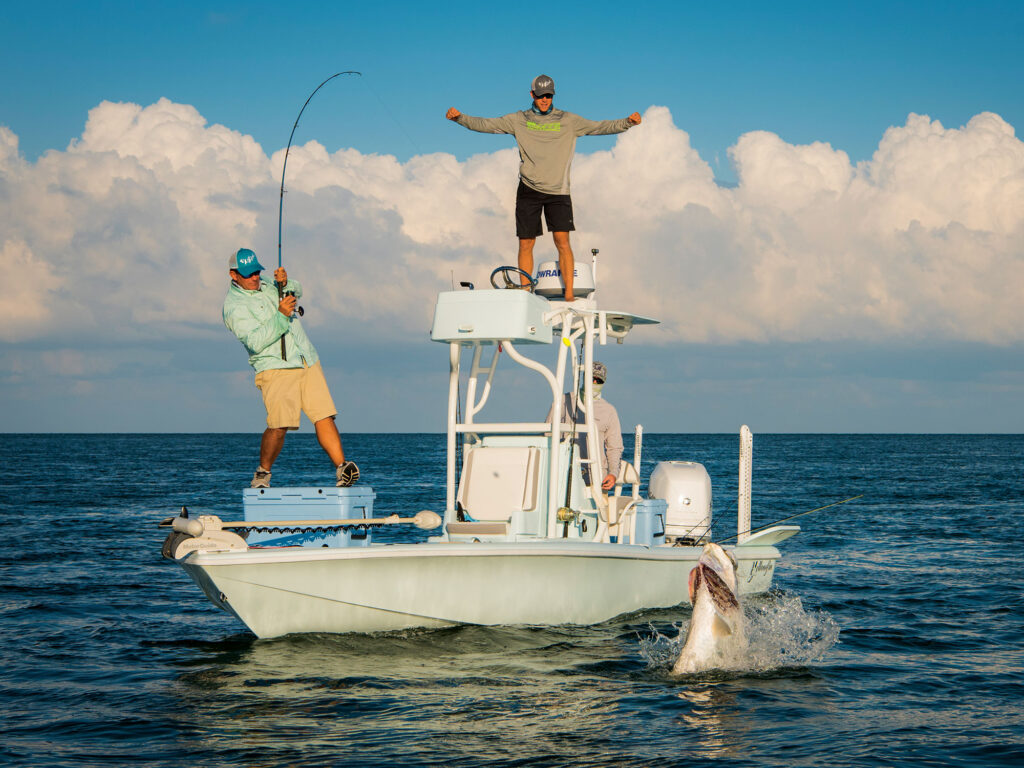
“To target the most species, visit South Padre Island in September and August,” Capt. Brian Barrera says. He lists redfish, speckled trout, flounder and black drum in the backwater and king mackerel, red drum, crevalle jack and tarpon in the Gulf. “When the weather is nice, I run deeper for red snapper,” he adds.
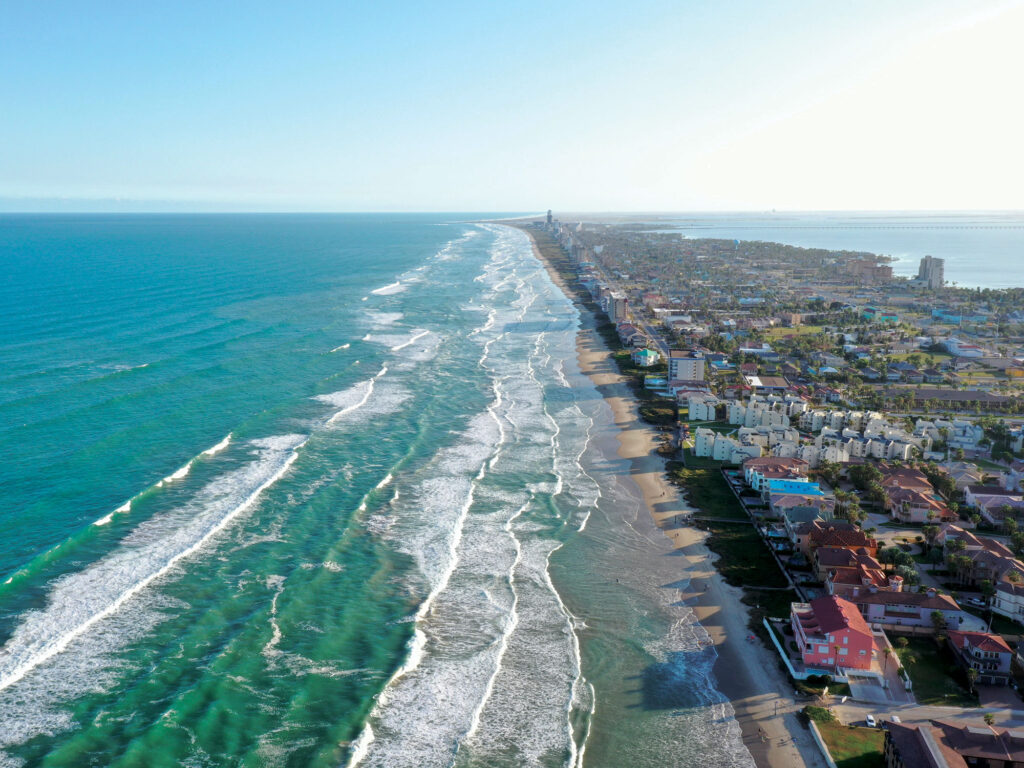
The real magic occurs along the beach. In late summer, mullet and menhaden show up and predators are close behind. Barrera recommends launching at Jim’s Pier and running out of the pass. “I look for red drum and tarpon along the beach,” he says. Jim’s Pier is a tackle shop staffed by locals who will point you in the right direction.
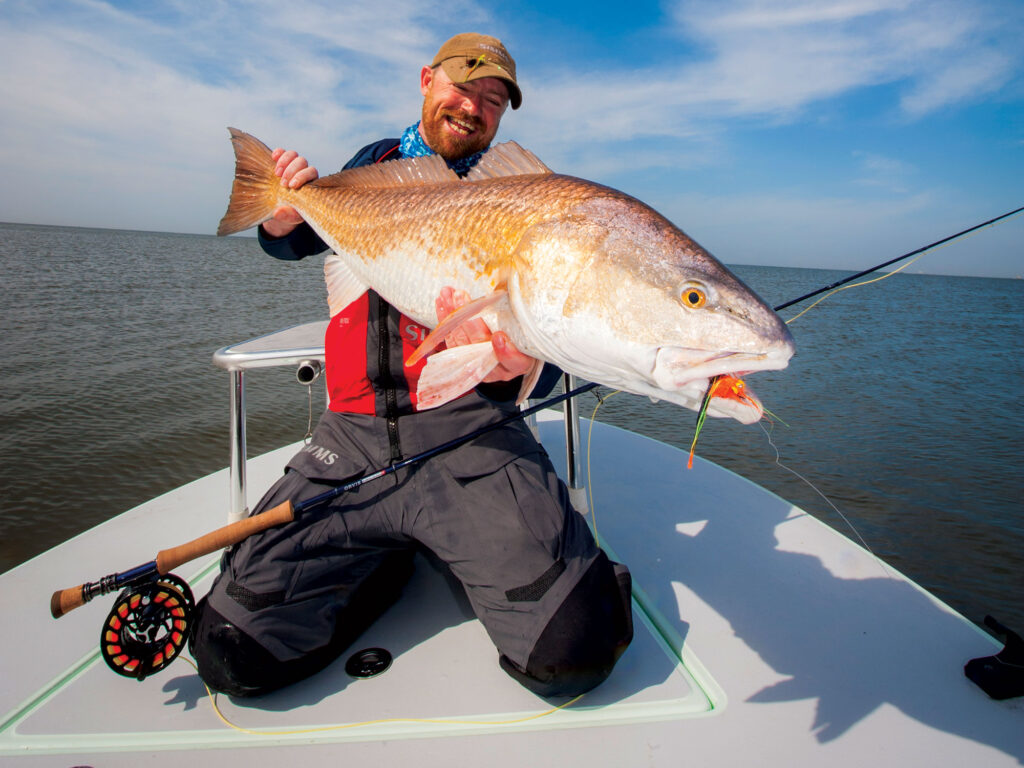
To target kings and tarpon, Barrera anchors near the inlet and fishes live baits. “The best conditions include cloud cover and a two-tide day,” he says. On a recent trip, Barrera arrived before sunrise with a live well full of menhaden. “We caught three king mackerel and released a 170-pound tarpon,” he says. On the way back to the dock, he boxed a half-dozen seatrout for dinner. “Seatrout and redfish are our bread and butter,” he says. Sea Ranch Restaurant & Bar is a local place that will cook your fresh catch with preparations like fish enchiladas with poblano sauce.
Leaving from Jim’s Pier, Barrera heads south to South Bay or north to the flats of Holly Beach for trout and drum. Barrera catches most fish on a small jig head and soft plastic. Wade-fishing anglers are in luck. “One of the best wade-in spots is behind the convention center,” Barrera says. Tortuga Flats spreads out around the South Padre Island Convention Center with access from Padre Boulevard.
More Info
What to Pack: PENN Bull Nose Pliers are corrosion resistant, and included tools like replaceable line cutters and knot cinchers give them hundreds of uses on the water. Perhaps the most important use on Texas inshore waters is hook removal out of range of a hardhead catfish’s venemous spines.
Get Out of the Boat: With the bottom composition of Texas’s shallow flats, wading is more effective than fishing from a boat in many locations, especially for the large and wary speckled trout the Lonestar State is famous for.