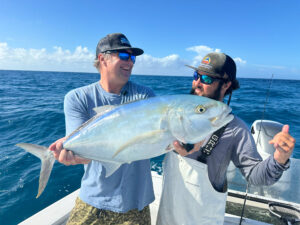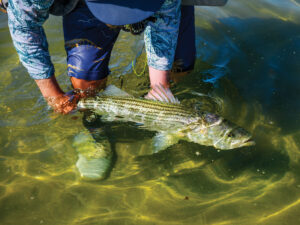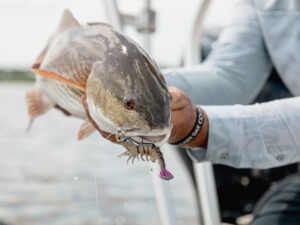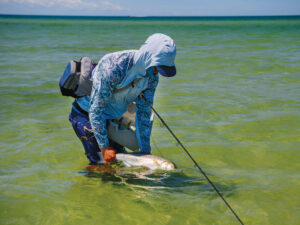

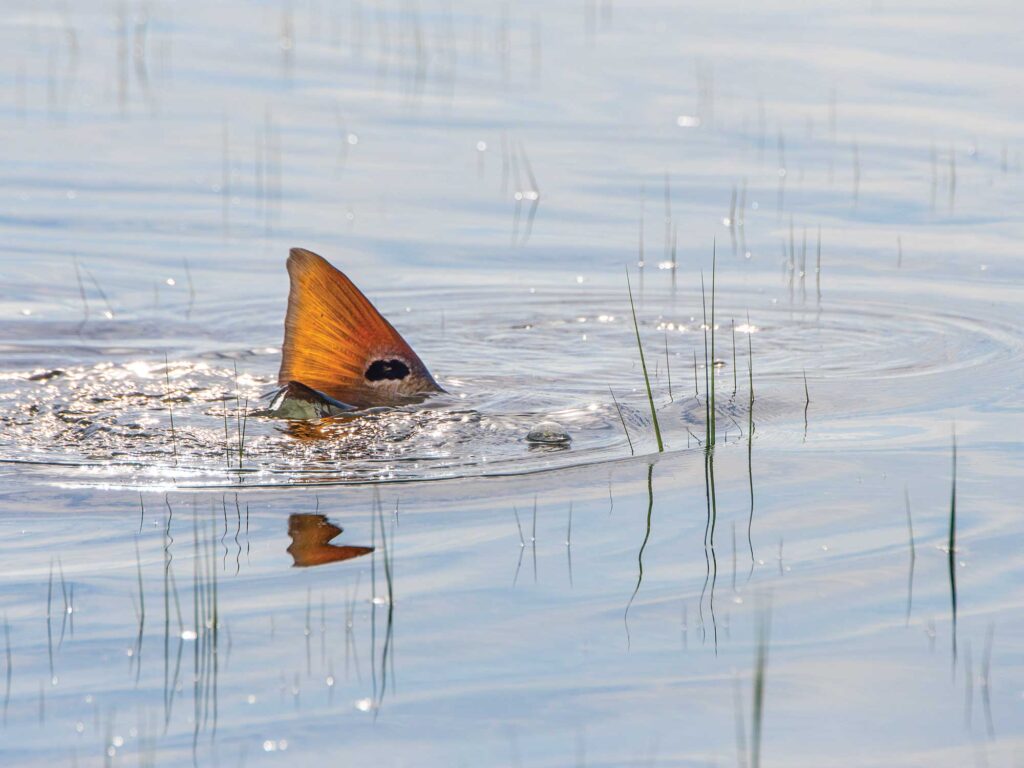
Along the North Carolina coast, Cape Hatteras, Cape Lookout and Cape Fear reach out into the Atlantic Ocean putting anglers closer to tuna, marlin and wahoo and creating massive bays and shallow marshes that host speckled trout, redfish and flounder.
From north to south, a 287-mile fishing road trip should begin in fall with tuna off the northern Outer Banks, where the Gulf Stream swings to within 30 miles of shore. Then, drive down the famous NC Highway 12 for 100 miles with the ocean on the left and the sound on the right. Hop on a ferry at Ocracoke to Cedar Island and pick up the action chasing reds and specks in the marshes behind Atlantic Beach and Morehead City.
A few more hours south, the Cape Fear River brings fresh water to warm salt water and attracts bait and king mackerel. Island hopping down the North Carolina coast from Cape Hatteras to Cape Lookout and Cape Fear puts anglers in range of epic onshore, inshore and offshore fishing.
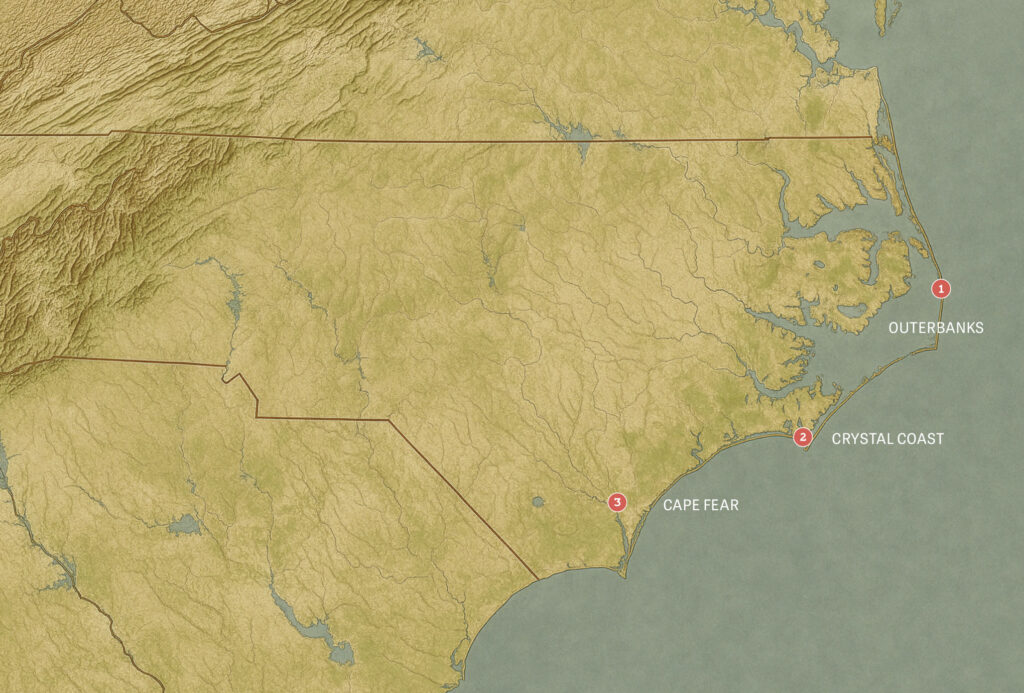
1. Outer Banks
Hatteras Island is bounded by Oregon Inlet on the north and Hatteras Inlet on the south, combining two of the world’s most famous fishing destinations in one island. At the confluence of the Gulf Stream and Labrador Current, the island sits in the center of northern and southern migrations.
You’ll want to stay a few days, and Rodanthe offers equal access to Oregon Inlet and Hatteras Inlet. The village doesn’t have a hotel, but it does have reasonable rates for cottage rentals where you can wash the boat and clean fish.
Offshore, yellowfin tuna stage where the water temperature and color change cross the 100-fathom drop. Anglers troll skirt-rigged ballyhoo at 6 knots, expecting a multiple knockdown known as a “tuna whammy.” On the rocks south of Diamond Shoals Light, work vertical jigs and topwater lures for blackfin tuna. Late fall is prime time for wahoo out of Hatteras Inlet. As soon as the water goes from blue green to deep blue, put out the high-speed plugs and troll at 12 knots.

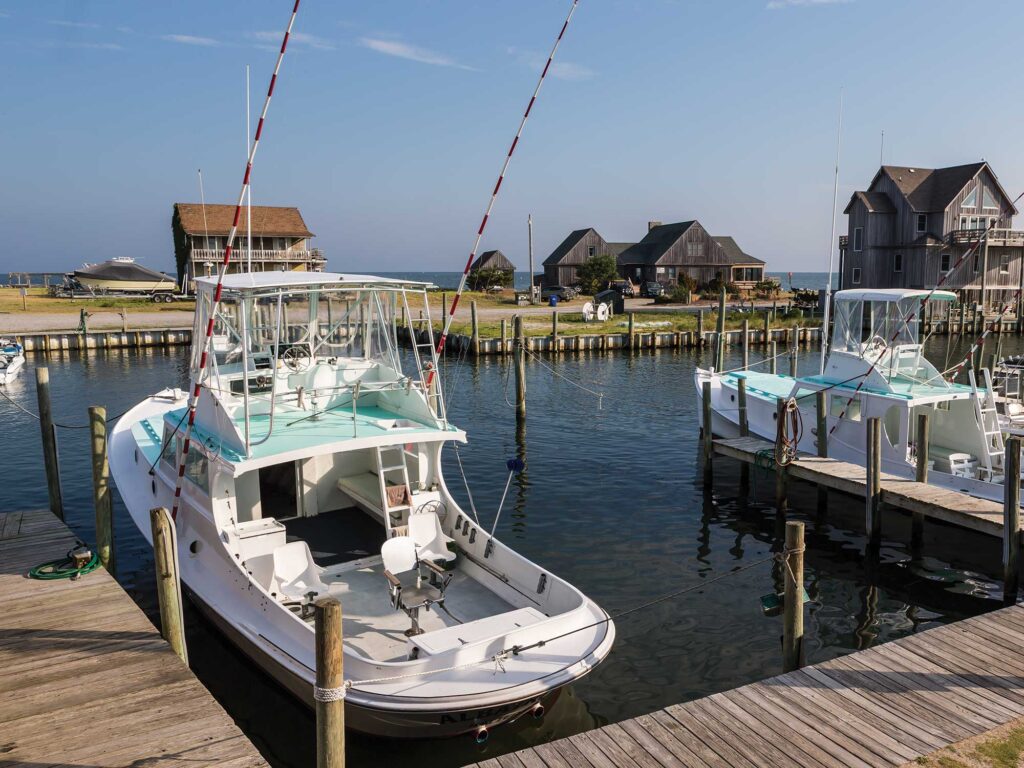
After a brisk day on the water, find a table, order seafood and watch the infamous charter fleet bring in the day’s fresh catch at Oregon Inlet Fishing Center. The heart of the area’s charter industry has undergone a complete rehab, adding a full-service restaurant to the tackle shop and ship’s store.
When the wind turns hard northeast and the sea is too rough for boats, anglers hit beaches and piers for red drum up to 50 pounds. September through November, big reds storm the beaches from Nags Head to Buxton. Use a 12-foot surf rod, called a Hatteras heaver, to launch an 8-ounce sinker and a large chunk of mullet beyond the breakers. Fighting a bull redfish through raging surf is one of the most immersive experiences in fishing.
Read Next: A Guide to Fishing North Carolina’s Crystal Coast

2. Crystal Coast
Make your way south on NC Highway 12 to where the Crystal Coast beckons with smaller crowds and excellent inshore fishing. Dr. Bogus, aka Dr. Richard Ehrenkaufer of ncoif.com, has covered Crystal Coast fishing with his Dr. Bogus Fishing Report since the 1990s. “Fall is my favorite time to fish,” he says. The weather is cooler, the tourists head home and speckled trout and redfish are on fire. The mullet run ushers in the best inshore action of the year.
Ehrenkaufer recommends launching at the Radio Island Boat Ramp. “Head north to the area called Haystacks or south and fish around the inlet,” he says. Another option is running behind Shackleford Banks to Cape Lookout’s 1,500-foot-long jetty for redfish, speckled trout, black drum and flounder. Fishing a live shrimp under a slip-cork is a no brainer, or throw a MirrOlure MirrOdine to target large trout and reds.
Up at Atlantic Beach, stop at Chasin’ Tails Outdoors to get current intel, bait and tackle. If you’re near Emerald Isle, Reel Outdoors has you covered. When the family wants a break from fishing, take a water taxi from Harkers Island to Cape Lookout to see the wild ponies and collect shells. Sneak along some surf rods and spoons for reds and false albacore.
Since you won’t be eating albies, you’ll want some fresh local seafood. In Morehead City, Sanitary Fish Market and Restaurant was started by a charter captain and fishmonger in 1983. It’s a Crystal Coast institution that seats 500 for fresh dockside seafood with a view of the waterfront. At Snapperz Grill and Steam Bar on Emerald Isle, dive into the Snapperz Original Steam Pot with local shrimp and littleneck clams under a snow crab cluster.
Ehrenkaufer says fishing is good at the inlet jetties. For casting distance, he likes a 3/4-ounce Kastmaster spoon. “To target bluefish and Spanish mackerel, I work it high in the water column or slow down my retrieve to target redfish and speckled trout,” he says.
3. Cape Fear
At the southern end of your expedition, the Cape Fear River dumps into the Atlantic Ocean and draws bait and predators close to shore. Where the fresh and salt water meet, Capt. Jerry Dilsaver finds king mackerel feeding on menhaden. “The river creates two zones, dirtier water south of the cape and clearer water to the north,” Dilsaver explains. Finding the confluence is the first step to finding kingfish.
Actually, gearing up is the first step. On NC 133, just before the bridge over the Intracoastal to Oak Island, Dutchman Creek Bait and Tackle is a small family-owned shop packed with gear relevant to the local fishery. Need bait and tackle once you’re on the island? Check out Oak Island Sporting Goods.
To catch kings, Dilsaver loads up with menhaden and heads to an artificial reef or shipwreck within a few miles of shore. “We have wrecks from the Civil War through both World Wars,” he says.
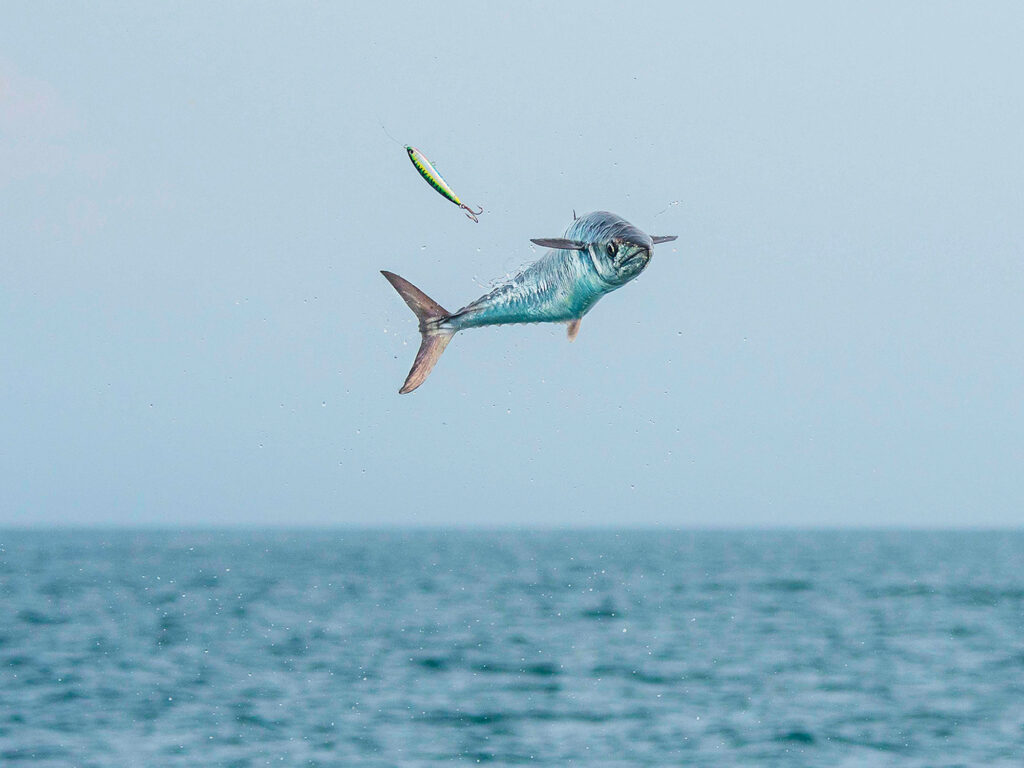
Dilsaver rigs live bait on a stinger rig and slow trolls at 2 knots. Another option is speeding up to 5 knots and pulling size 3 1/2 Huntington Drone Spoons. “The spoons allow me to cover more water searching for fish,” he says. If you’re fishing from your own boat, you’ll need a good 12-foot king mackerel gaff like the AFTCO Whip Gaff. A pissed off smoker king is not to be trifled with.
Pier fishing can also deliver big rewards in the Cape Fear area. Kingfish are a primary target off the end of the boards, and anglers also encounter Spanish mackerel, red drum and tarpon. On the north side of the cape, try your luck at the Carolina Beach, Kure Beach or Wrightsville Beach piers. On the south side, Oak Island Pier and Ocean Crest Pier are good spots to deploy a two-rod trolley rig. “One rod is the anchor line and the second rod dangles the live bait from the anchor line,” Dilsaver explains. The live rig also produces Spanish mackerel, red drum and tarpon.
More Info
Lay Day Activity: Harness the famous Outer Banks wind to hang glide from the East Coast’s highest sand dunes at Jockey’s Ridge State Park. The wind provides lift while the sand makes for a soft landing.
Lay Day Activity: Due west of Cape Fear, Green Swamp Preserve is a 16,000-acre longleaf pine savannah that’s home to 14 species of carnivorous plants, including wild Venus flytraps and native orchids. Wear waterproof boots; some of the trails are under a couple inches of water.
Local Knowledge: You can fish the Emerald Isle beach from your vehicle with a beach pass, which is available at emeraldisle-nc.org.