The winter pilchard bite in Key West is action packed. Inshore and offshore waters offer spectacular opportunities along patch reefs ledges, humps and weed lines. Phenomenal inshore snapper, grouper and mackerel fishing is almost surpassed by prolific offshore action for tuna, jacks and sailfish, but the key to success in any arena is first procuring a livewell full of pilchards.
Live Chumming and Live Baiting with Pilchards
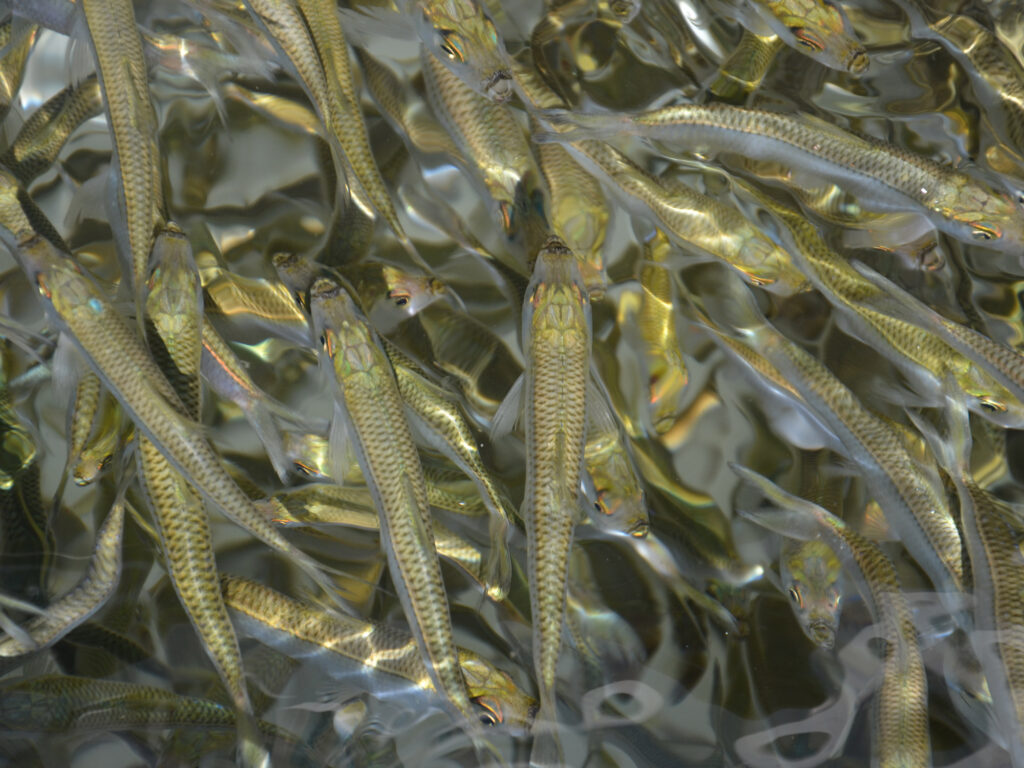
You’re going to want as many pilchards (scaled sardines) as you can keep alive this time of year when fishing out of Key West. Pilchards run thick from fall through winter, and every fish you want to catch will be looking for pilchards to feast on.
The key to a good bite is inciting the bite, which means live chumming frequently with pilchards. Identify structure or current that is likely to hold fish and create your own pilchard school behind the boat. Gamefish will show up to investigate and then enjoy the buffet.
A word of advice: Managing your livewell is important for a full day moving from inshore to offshore. Use plenty of live chum to get the bite going, but use the smaller pilchards inshore, saving the larger ones to catch larger fish when you move offshore. It’d be a pity to run out of big, juicy live pilchards when the tuna show up.
Fishing Key West Patch Reefs
I set out to film an episode of Saltwater Underground with Capt. Jack Walker of Match Point Charters in Key West, and the game plan was to put a mixed bag of inshore and offshore species together. The first stop was out to the patch reefs in 60 to 90 feet of water, where we found a rip line and set up on anchor.
Walker proceeded to load a half-cut fat wiffleball bat full of lively pilchards from the livewell and sprayed them out behind the boat. It doesn’t take long for the disoriented pilchards to ball up behind the stern. In a matter of minutes, it draws in the food chain. Yellowtail, mangrove and gray snappers are usually the first to show in the slick, as they filter up the water column to inspect the commotion.

How To Rig and Fish Pilchards
Pluck a pilchard from the livewell, rig it through the nose or eyes on a ½-ounce teardrop jig head on a 20-pound-test Seaguar fluorocarbon leader, and pitch it into the slick. Leave the bail open for a pickup and then allow a two- to three-second count for the fish to run off line before engaging the bail for the hook set.
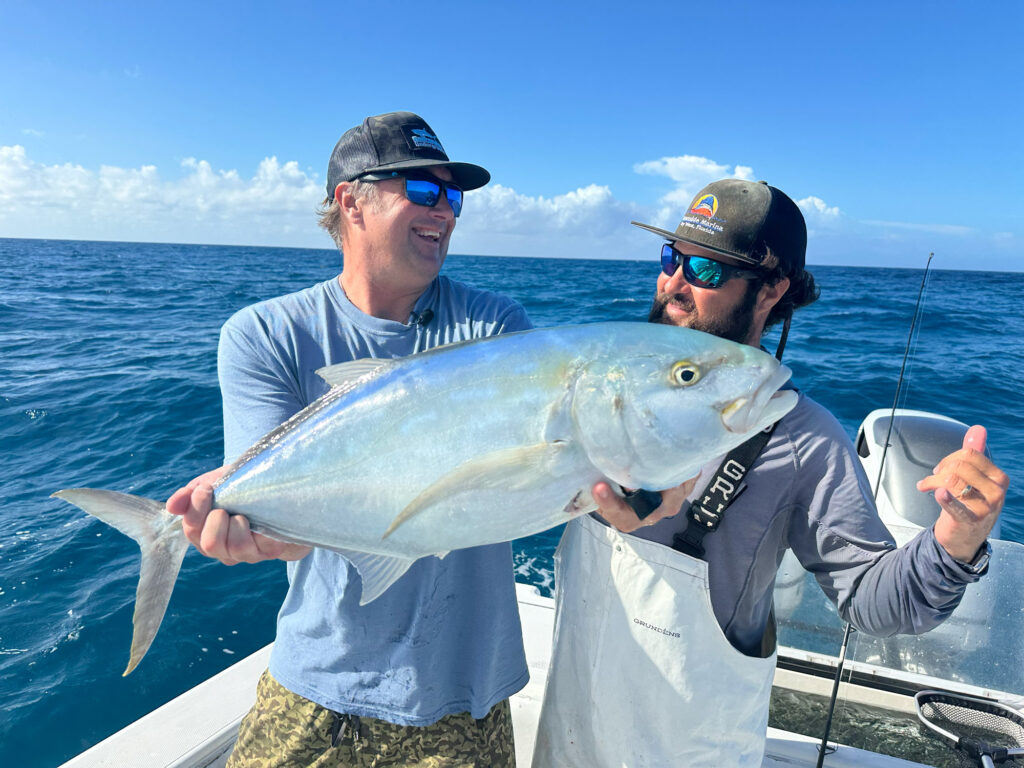
Walker uses up the smaller 2- to 3-inch pilchards for snapper fishing, but keeps 4- to 5-inchers ready to deploy when larger fish move in. Eventually, bulky yellow jacks and crevalle jacks move into the slick, and then come the speedsters: Spanish, cero and king mackerels.
If the jack-attack occurs, heavier 25- to 30-pound fluorocarbon leader is recommended to prevent a snapped line. Also, when the mack-attack arrives, bulk up your leader diameter to prevent cut-offs and have a rod rigged and ready with a slim metal lure to cast out and rip back to the boat to score on artificials.
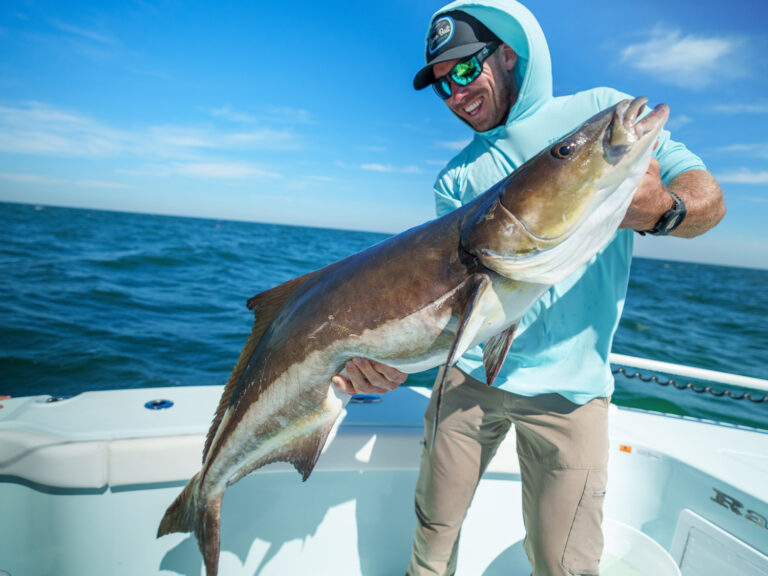
Once the feeding frenzy begins on those pilchards, prized jewels in the form of cobia are bound to come in and inspect the slick. Cobia will suck down a live pilchard, and they will also hit a 1-ounce bucktail tipped with a pilchard. The key to success is to keep the slick going, and thus the fish interested, with a spray of pilchards sent out once every minute or two.
Fishing Offshore with Pilchards
After fishing inshore patch reefs, more opportunity abounds offshore in the 150- to 250-foot depths. Save your largest pilchards in the well for this stretch. Look for rips, weed lines, ledges and humps offshore. Anywhere there is some contour or visual structure, change is likely to harbor fish.
Once a target area is established, start the slick as usual. Start slinging pilchards behind the boat to create your own bait ball. Send back freelined pilchard baits on size 1/0 to 2/0 Mustad live bait hooks.
Raging Blackfin Tuna, Amberjack and Sailfish off Key West
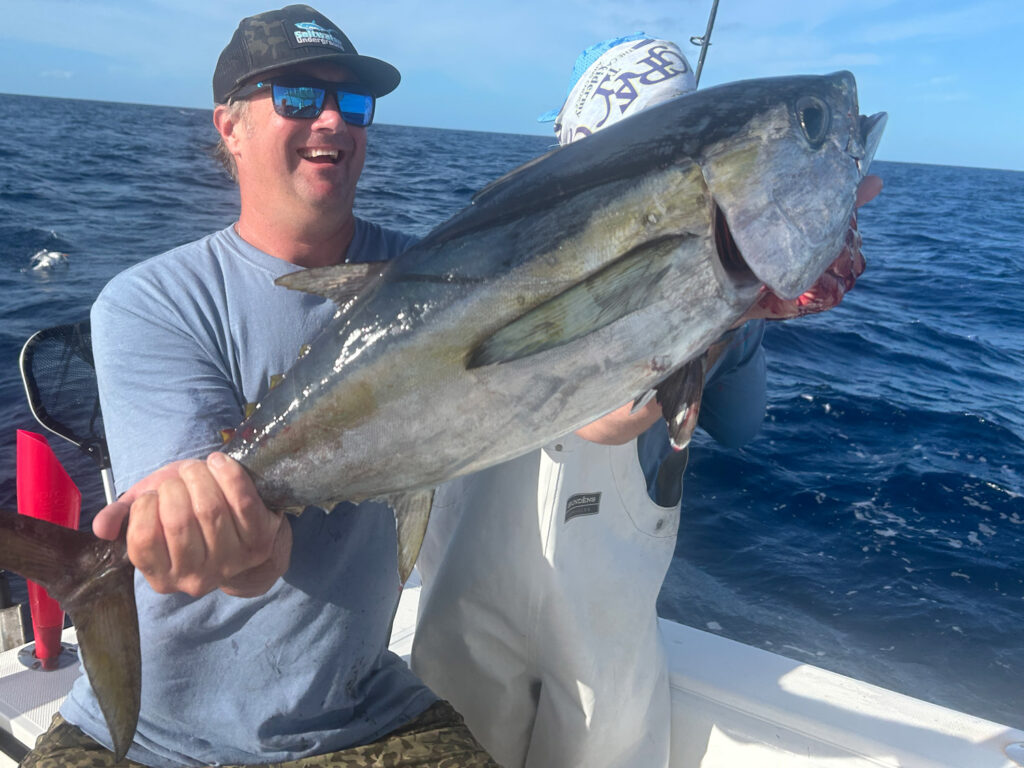
The thrill of the larger baits in the bluewater off Key West is blackfin tuna raging through the area to crush the baits. Multiple tuna hookups are commonplace once the chew gets started, and as the tuna feed, bigger denizens become aware from below and come check out the surface feed.
This is the primo time to drop down metal Shimano 100g to 180g butterfly jigs and either yo-yo or speed jig. A whipping, flashing presentation frantically coming up through the water column will garner attention from any predatory species in the area. Greater amberjack will crush the jigs with reckless abandon, where as great barracuda will beeline to slice and dice the fleeting metal.
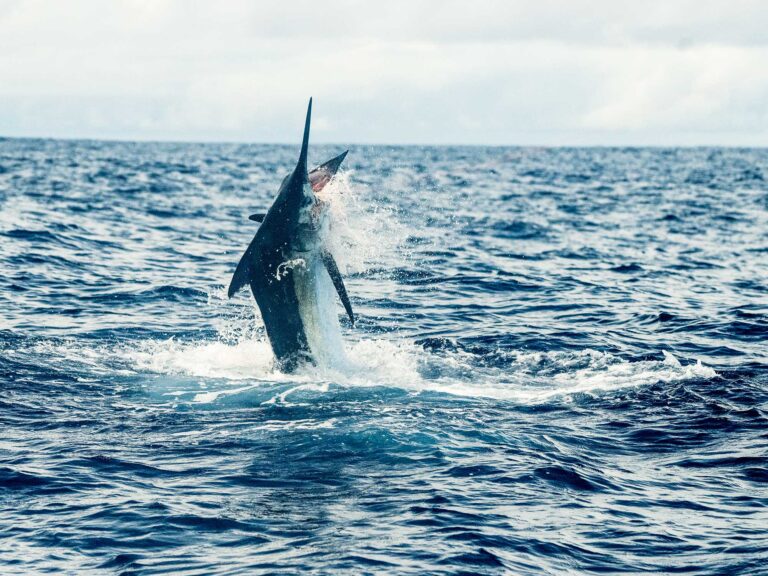
It’s not always down deep where the action occurs. Always keep a keen eye out for sailfish breaching the water’s waves, as the slick gets them billing around sticking baits and flaring their sails in the water. If that occurs, you may get lucky with a simple freelined pilchard, but more often, success comes when you send up kite baits fixed with the largest of the live pilchards. Live goggle eyes also invariably get crushed by billfish with high-flying aerial antics to ensue.

What are the Best Rods and Reels for Inshore and Offshore?
For pilchard fishing the patch reef for smaller snapper and grouper, rods should be 6-1/2 to 7-foot medium/fast action with Daiwa BG 5000 reels. For blackfin tuna, AJ’s and bigger yellow jacks, step up to a 6000 size reel and 7-foot medium/heavy spinning rods strong enough to pull fish off structure. When sailfishing, a Shimano Talica 16 to 20 model matched with a 7-foot Daiwa Darkwater rod is preferred.
Any journey out off Key West is a near guaranteed success either on the patch reefs or offshore. Do not forgo the morning session to cast net plenty of pilchard baits, as they are the lifeline to your success. Even though big goggle eyes are probably a better bait when specifically targeting sailfish or big king mackerel, various sized pilchards are the ultimate spread of baitfish to both target and land the spectrum of species from snappers to sails.
Check out the Saltwater Underground Key West episode at: youtube.com/@nickhonachefsky