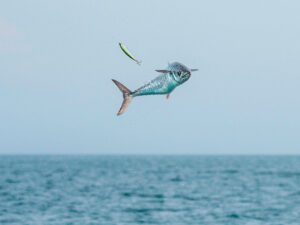
Way off the coast of Baja Mexico, the Alijos Rocks jut out of the Pacific Ocean, attracting wahoo, yellowtail and yellowfin tuna. Watch how quickly a wahoo bite happens on the San Diego long-range boat Royal Star. The video starts when anglers cheer out and alert the captain that two anglers hooked up to wahoo on the troll. As the boat slows, anglers (that weren’t trolling off the stern) cast irons, wahoo bombs and live bait off the back, hoping to hook a wahoo from the school.
Black arrows mark anglers in the video that are hooked tight to wahoo. Notice how each fishermen is dragged around the boat, following their fish? Mates do an even better job of coaching the angler, maneuvering the hooked line in and around other lines, and making the gaff shot when necessary. On long-range boats out of San Diego, California, there is no fighting chair. Anglers bring aboard heavy tackle and fighting belts to battle fish mano-a-mano.
Our Long-Range Trip
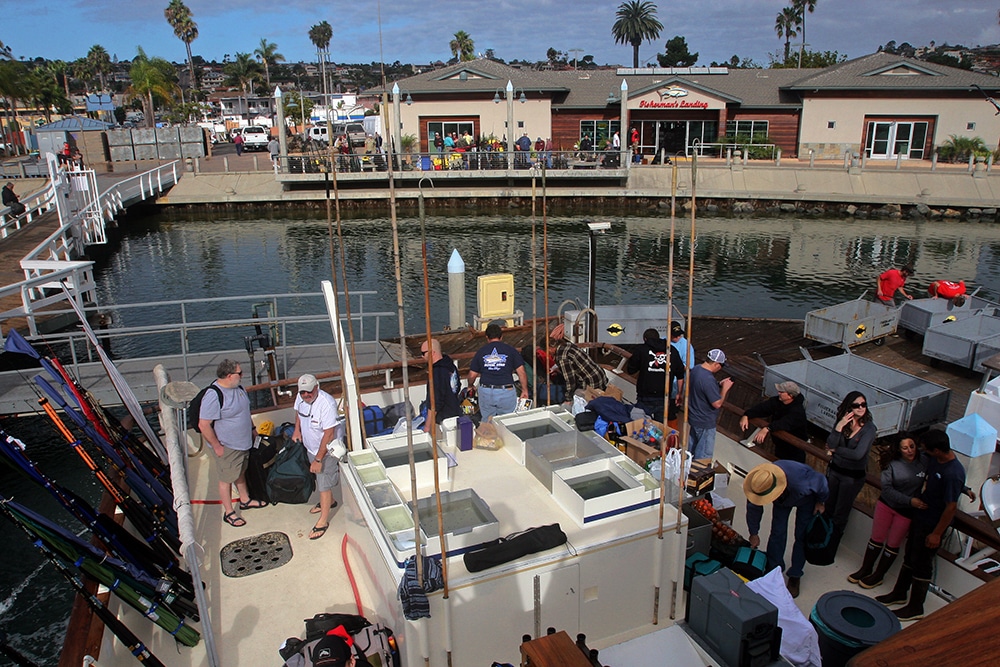
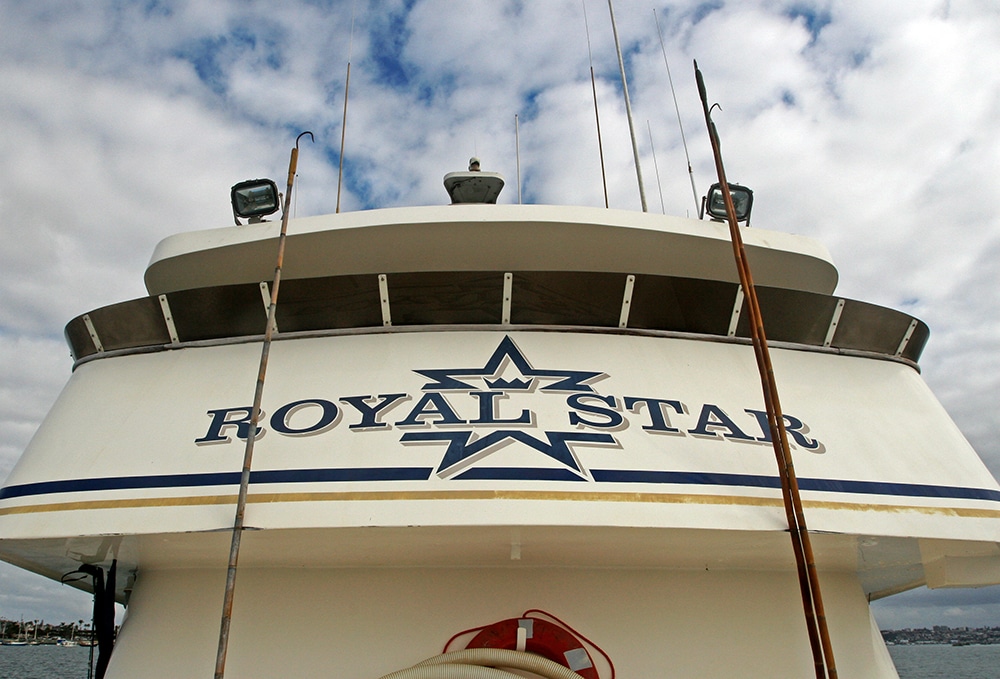
Many great long-range fishing trips begin at San Diego’s Fisherman’s Landing. I wouldn’t say you have to be the best fisherman to go on one of these trips, but you do have to be dedicated. We boarded the Royal Star, a custom-built boat capable of handling 25-plus anglers.
One of the fishiest areas during our long-range trip was Alijos Rocks. Three main volcanic islets punch through the water’s surface in the middle of the Pacific Ocean. We never got too close to the rocks, instead fishing the steep drop-offs from the rocks.

Though wahoo are a seasonal catch here, we hooked plenty in November. Giant yellowtail and yellowfin tuna are also common catches at the rocks.

We fished aboard the Royal Star, a 92-foot vessel with 12 air-conditioned staterooms for two, plus 5 heads and 4 showers. On this trip the boat was captained by Tim Ekstrom, a top navigator with decades of experience and part owner of the boat.
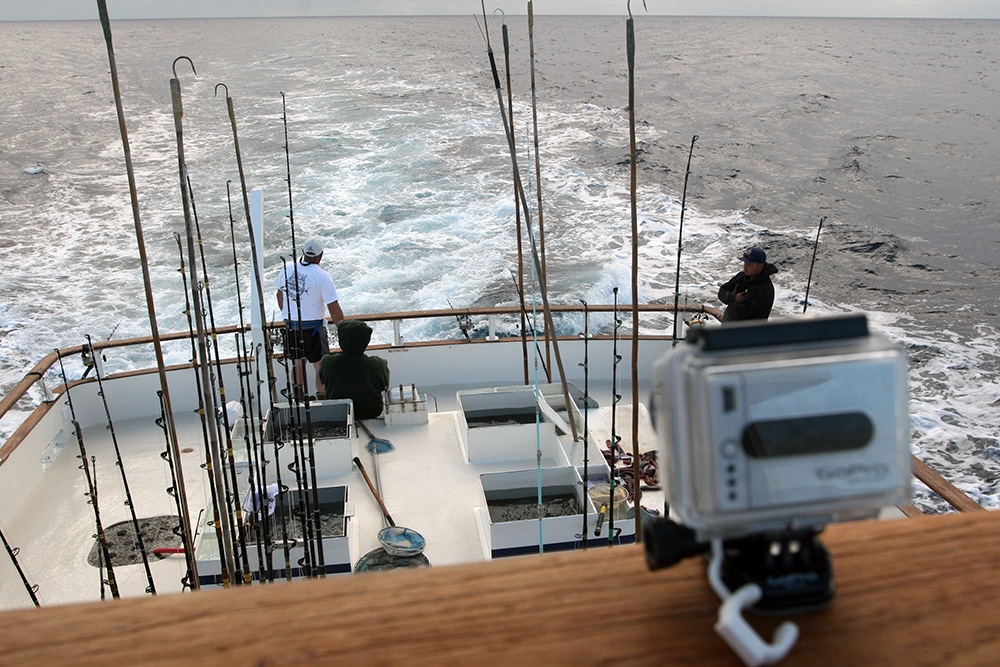
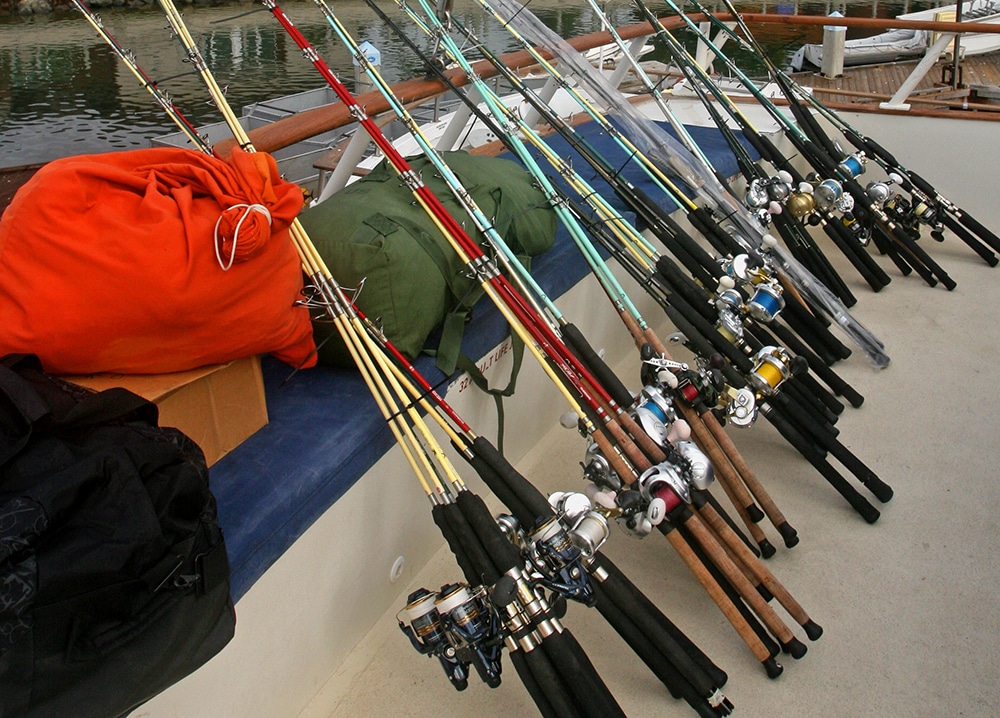
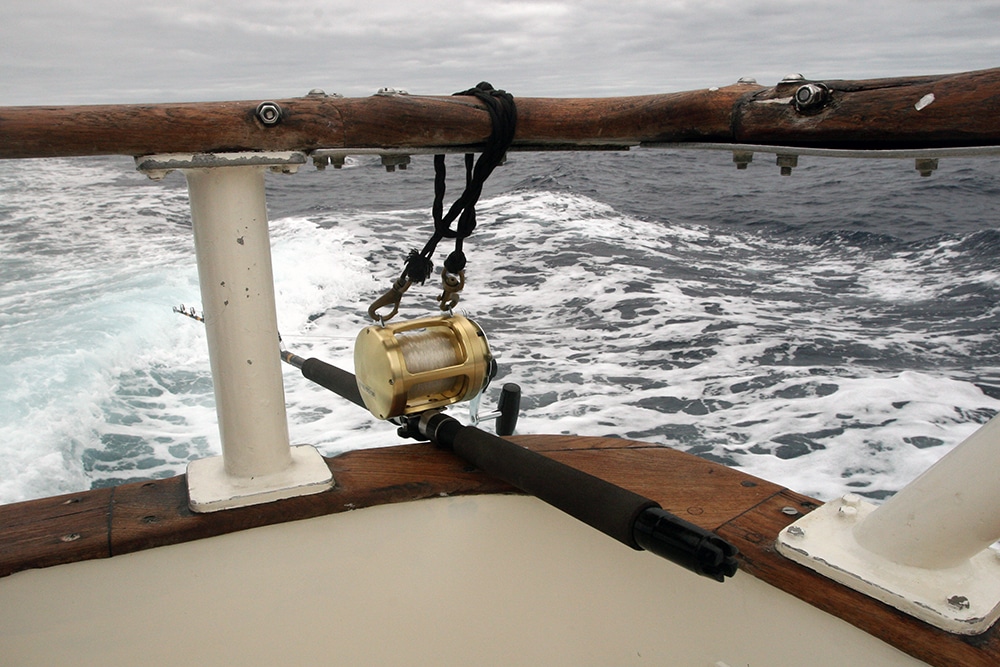
A prime spot to keep your tackle boxes and rods are the shelves located just forward of four livewells at the stern. This way, you can grab new tackle, different rods or re-rig close to the action. Missed opportunities arise when the bite’s “wide open” and you can’t find your gear.

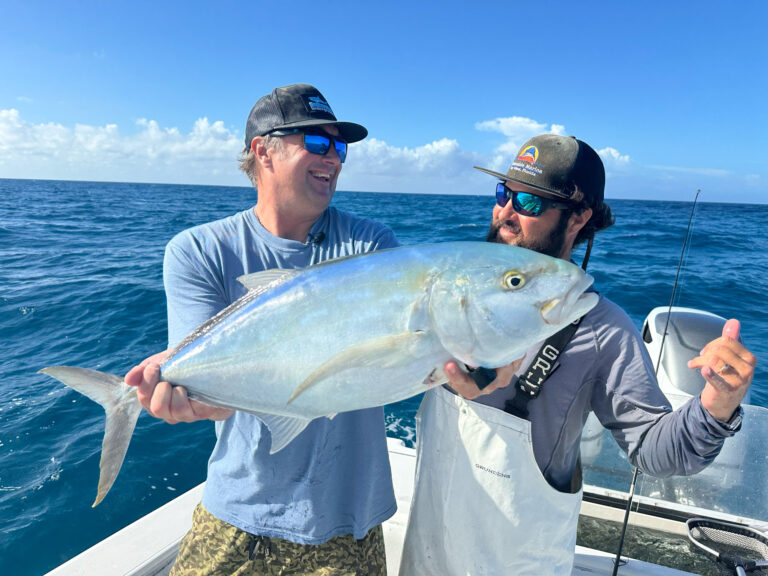
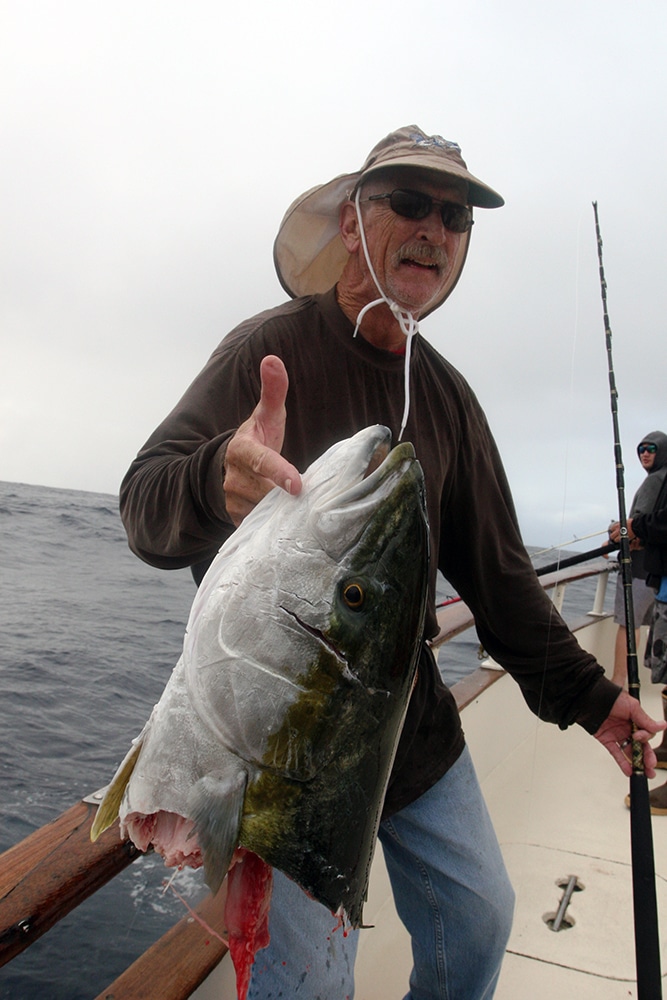
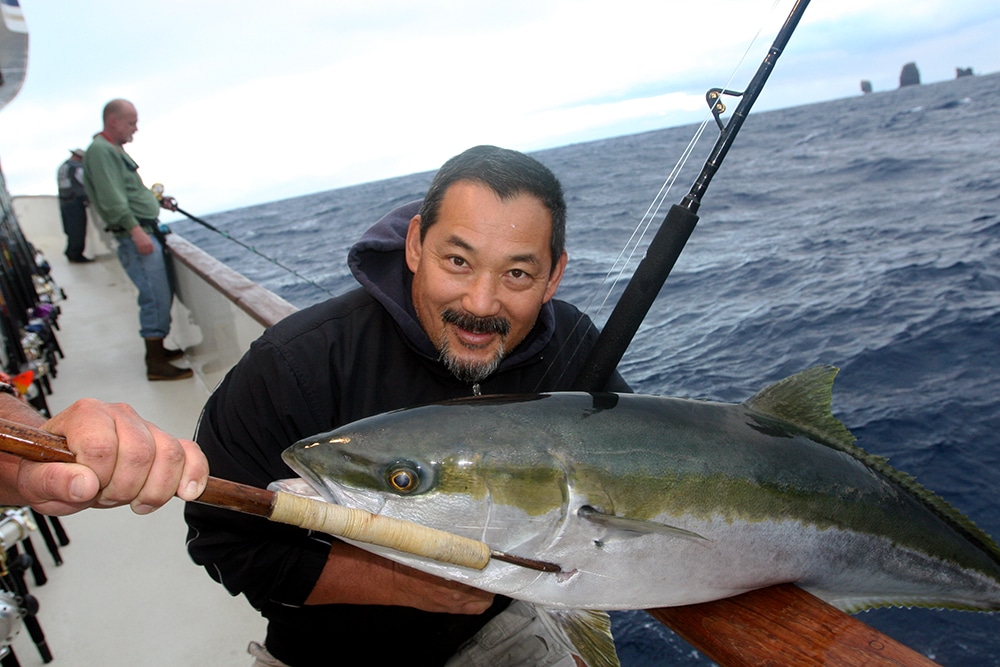
Many fishermen believe the next world record yellowtail could come from these rocks. Yellowtail fight and look similar to amberjack found in the Atlantic Ocean. I have no problem admitting that yellowtails taste much better than AJs, but the jury is still out on which species fights harder.

Before the boat ever left San Diego Harbor, one important stop was for live bait — bait pens float in line, near the mouth of the bay. Bait is vitally important for long-range trips, with many anglers depending on high-quality offerings to tempt trophy gamefish. Baits are sometimes caught on-site (called “making bait”) at the various fishing locations.


Back at the rocks, the wahoo bite was on fire. Anglers hooked wahoo while trolling lures such as Braid Marauders or Yo-Zuri Bonita or casting lead-head skirts called wahoo bombs.

Tallies for yellowtail, yellowfin tuna, bluefin tuna, skinnies (wahoo) and dodo (dorado) are kept for each angler to stay within Mexican fishing limits. At the left side of the board are numbers — those numbers each represent an angler on the boat. Mates place a tag with your individual number to the tail of each fish you keep. The board itself rests in a “grab” baitwell.

Marc Mills, of Shimano, brought aboard close to 100 rod-and-reel setups for anglers to use. Plus, he rigged some of the rods with Shimano wind-on leaders and a plethora of different Shimano metals. Some of the favorite rigs on the boat included the Talica II, Orca poppers, Stella SW, and Tranx.
While cruising between spots, Mills gave seminars to anglers interested in new Shimano products. Based out of Irvine, California, Shimano often tests their latest tackle for toughness on these long-range trips.


Heading toward Alijos Rocks, the Royal Star rendezvoused with the Royal Polaris. The Polaris was returning back to port from its own fishing trip and had left-over bait that we gladly took. Throughout the entire 11-day trip, we saw no more than a handful of boats on the water.


Besides fly-lining baits, wahoo bombs were one of the most effective presentations for wahoo. Anglers preferred casting gear over spinning gear by a far margin.
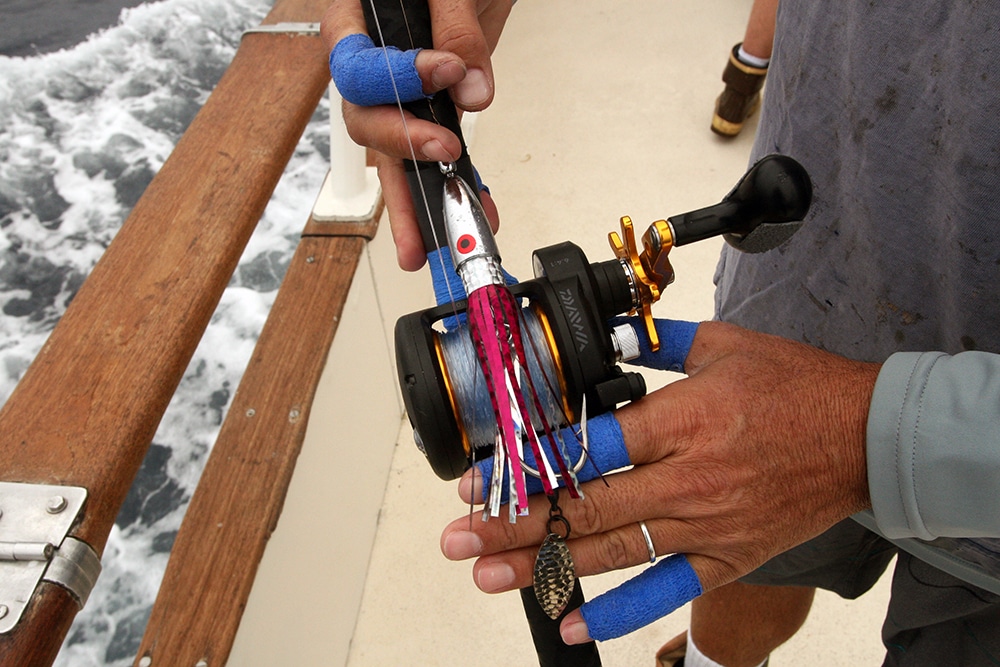
The most productive way to catch wahoo was by trolling Marauder-or Bonita-style plugs. Four anglers trolled lures at the same time while searching for wahoo schools.
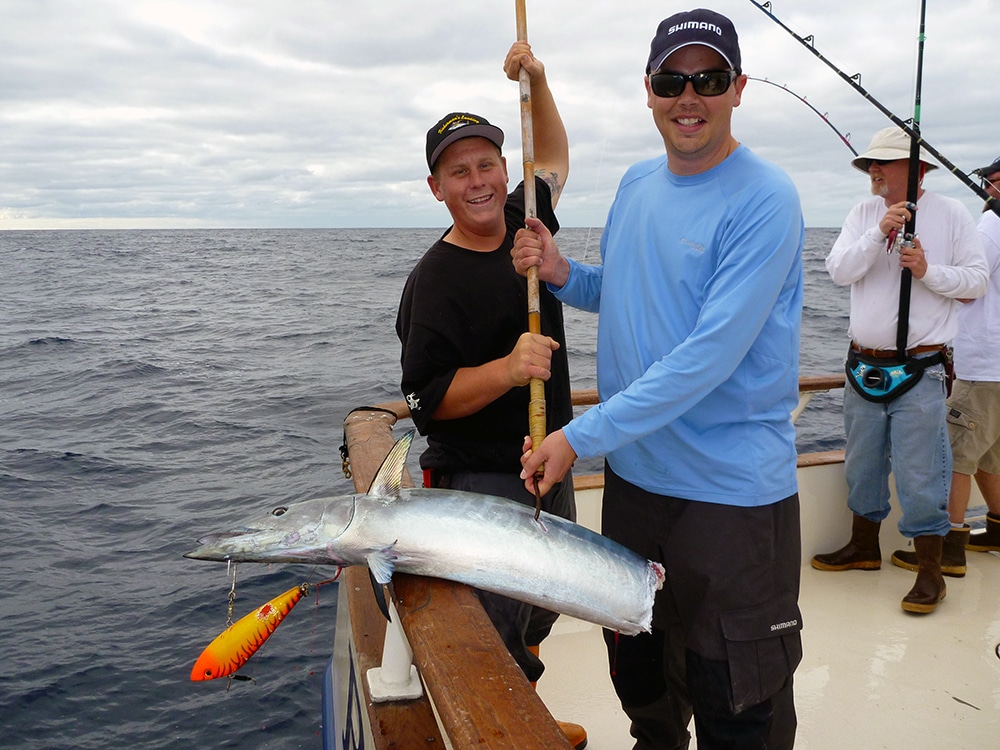

The mates on long-range boats tend to be highly adept at getting fish in the boat, whether it’s gaffing a fish or untangling lines of anglers fighting fish.

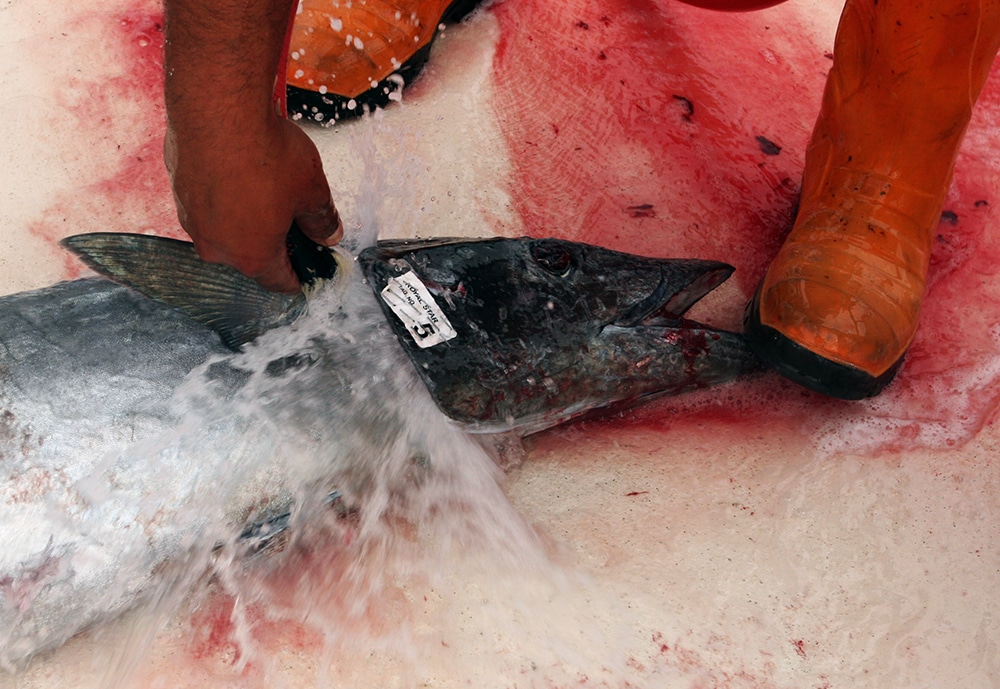
When the wahoo action is hot, sometimes there’s not enough time to get the ‘hoos cooled down immediately. For a short while, wahoo can load up the deck.

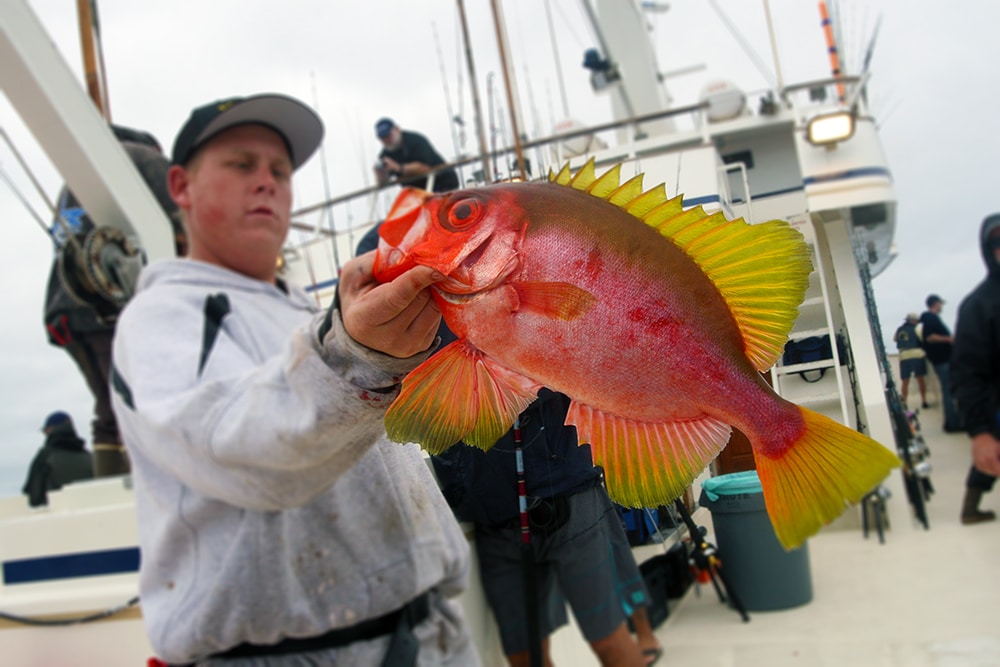
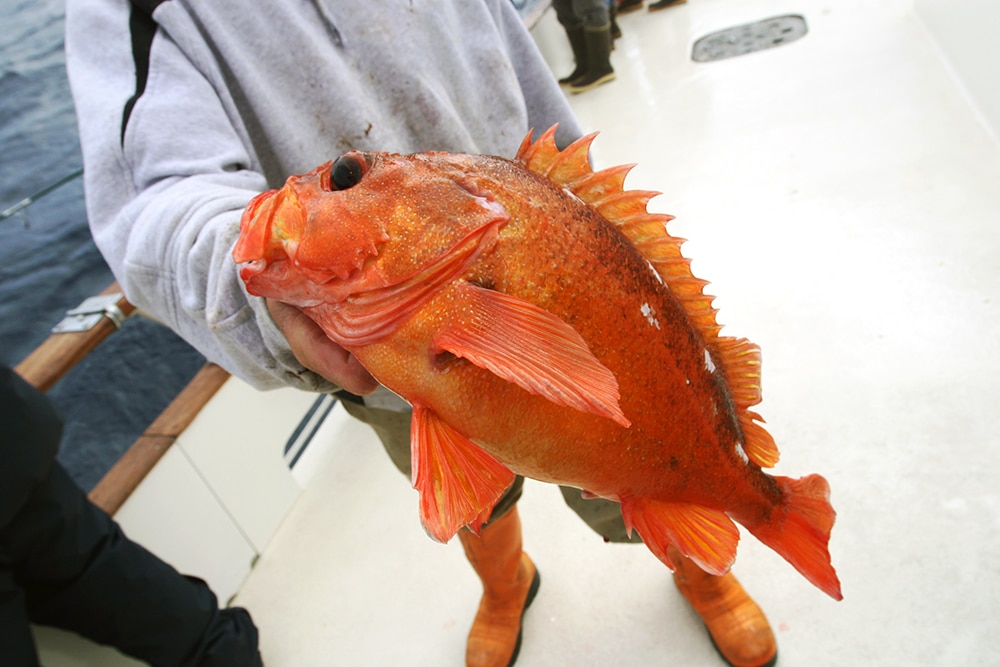
Besides fish like wahoo and yellowtail, other species were caught bottom-fishing near the rocks such as this big eye. Mostly, they’re released back to the ocean unless they’re particularly tasty.
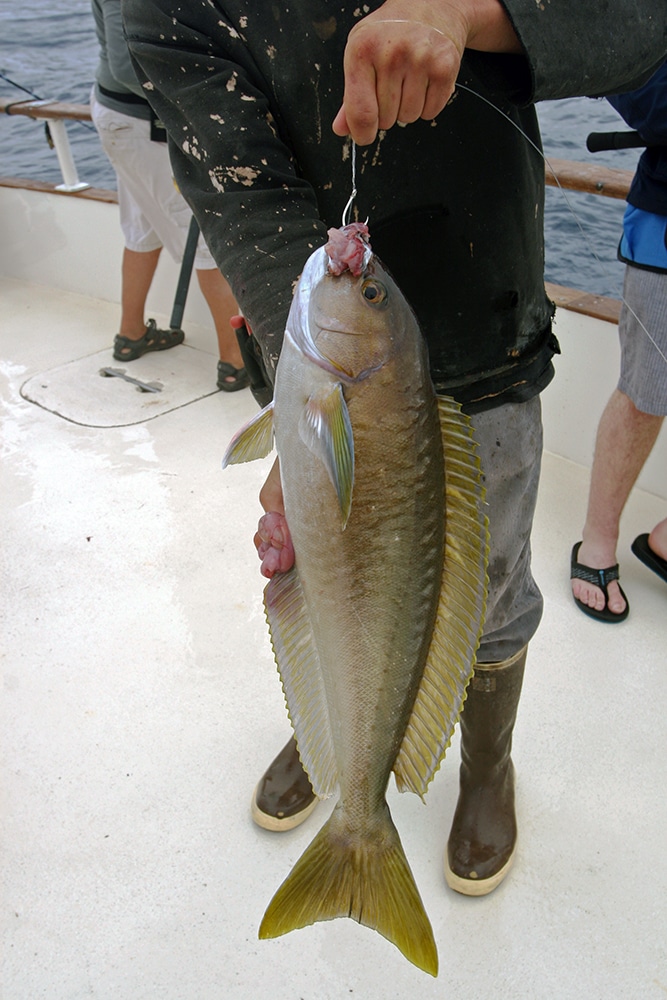
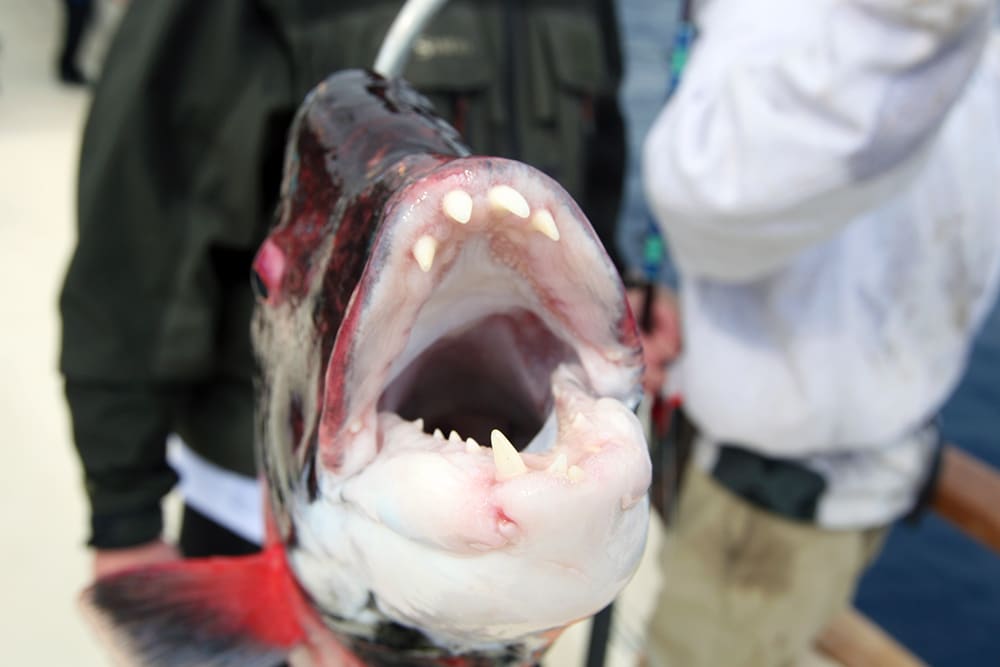
The ocean whitefish was a common catch on live bait when targeting yellowtail on the bottom.

Some anglers set up GoPro cameras to catch the fishing action when it’s happening.