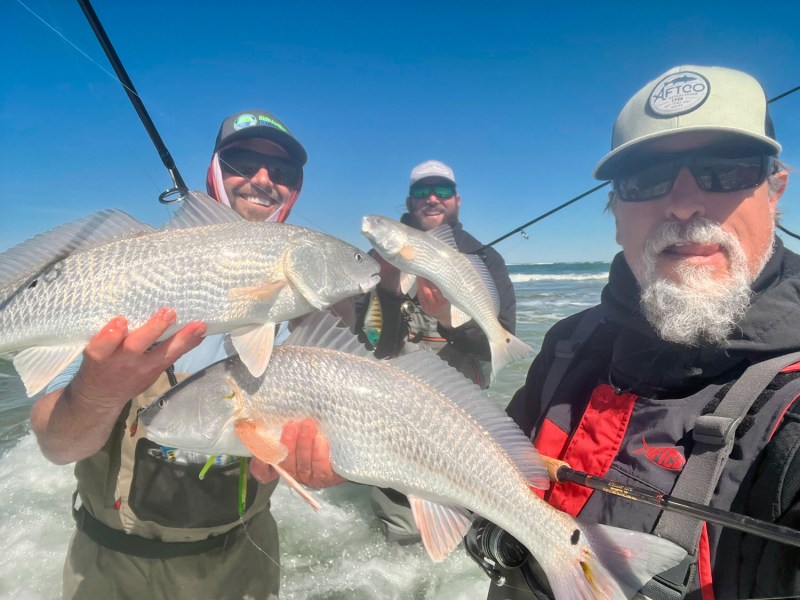
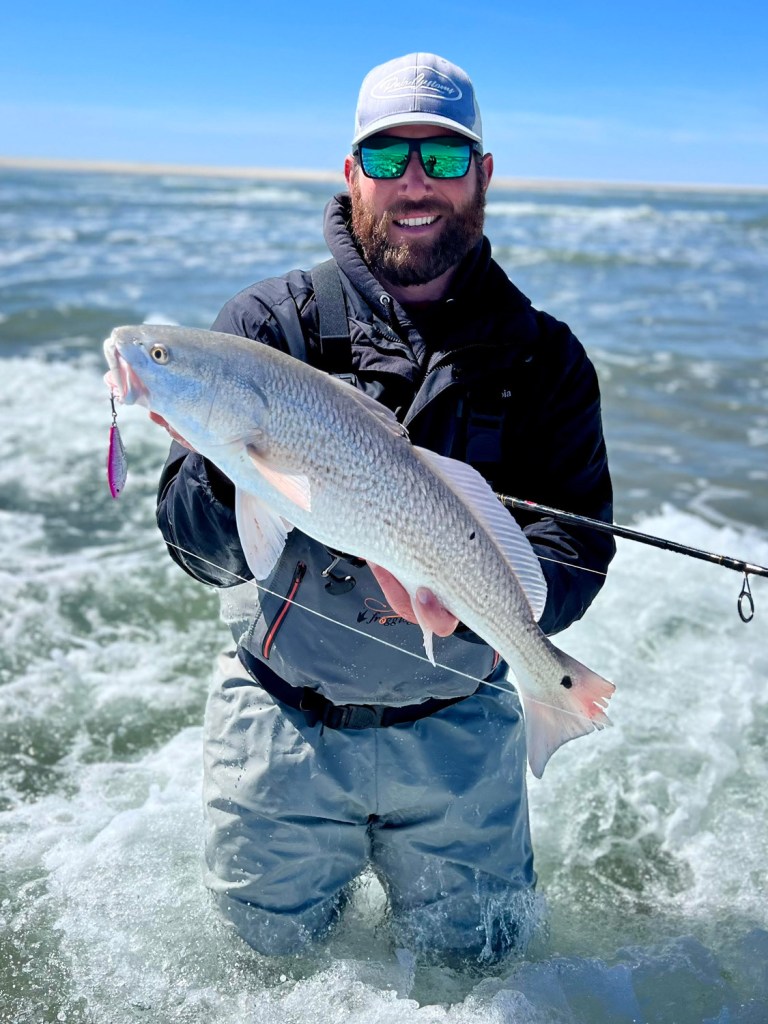
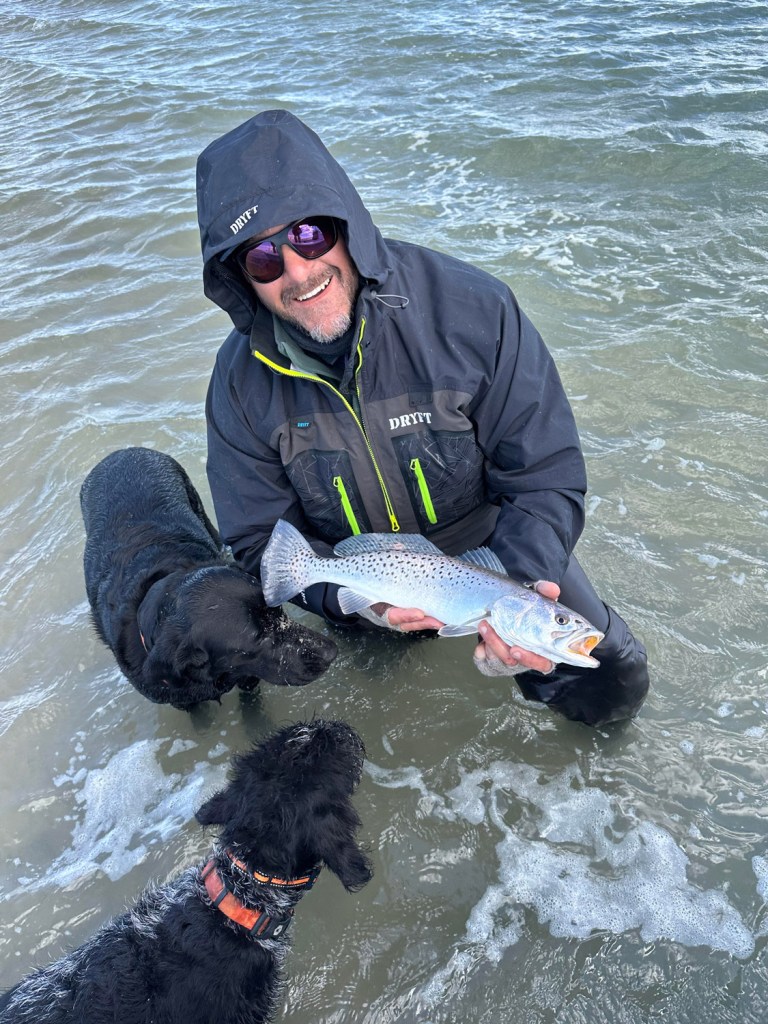
Some of the best surf fishing of the year takes place when the weather is coldest. During the cold snaps of January and February, hardy fishermen on the North Carolina coast will find speckled trout and red drum feeding just off the beach.
When local estuarine waters experience a significant temperature drop, resident inshore species push out in search of warmer, more consistent environments. Many red drum and seatrout seek out deeper waters up the river systems that are not as susceptible to major temperature shifts. However, a good portion of the fish population heads out to the ocean to find comfort and forage.
Red drum and speckled trout instinctively stage near ocean inlets and shallow shoals surrounding the predominant capes along the North Carolina coast. A special breed of fisherman frequents these areas where the abrupt change in trajectory of the coastline stacks fish up in the surf. The network of shallow sloughs and holes that run parallel to shore creates funnel points and ambush zones, allowing gamefish to obtain easy meals while conserving energy. Huge schools of fish can congregate in these pockets that form within casting distance of shore, giving anglers a great option for outdoor fun during the dead of winter.
Winter Surf Fishing Safety
Many of the prime beaches for surf fishing on the Outer Banks are difficult to reach and require planning to be in the right place at the right time. Cape Lookout National Seashore and the surrounding Down East community is quite isolated. Shackleford Banks, Core Banks and Portsmouth Island are all uninhabited and only accessible by boat, so many anglers connect with a local guide to help learn their way around. As the locals say, there is a lot of water in Core Sound, but it is spread mighty thin, so it’s easy to run aground if you are unfamiliar with the area.
Safety is imperative when venturing out to wild places, especially in frigid temperatures. It is best not to fish alone at this time of year; all it takes is one stumble in the water with waders on to find yourself in trouble. Conscientious anglers always make sure to have good communications capabilities and file and stick to a well-communicated float plan. Dress in layers appropriate for the season, as it can be a cold and wet ride back home. Conditions can change quickly, so go ahead and put on the PFD.
Once you cross the sound and arrive at a good spot on the backside of one of the barrier islands, be mindful of the tides. Walking away from the boat for several hours means things will certainly change, so plan ahead so you don’t get stranded. Use a bow and stern anchor, so the boat doesn’t swing in the current as the tide turns, leaving you high and dry. A good pair of waders with a snug-fitting wading belt is a must, and it’s recommended to have an extra change of dry clothes onboard just in case. The cape is an amazing place, but you don’t want to be stuck there for long unprepared.
How to Find Fish in the Surf
Utilizing the boat on the sheltered sound side of the island as home base, plan ahead and take a minimalistic approach before you walk across the marsh to the beach. You don’t want to to carry a lot of unnecessary stuff, so plan accordingly.
Remain mobile as you actively search, making blind casts into the suds until you find pockets of water that hold fish. Water flows in a predictable manner, so train your eyes to recognize the patterns that form on the surface as deeper water flows close to shore.
Being on foot allows you to work the area effectively to find the zones that hold fish. We spend a lot of time walking the beach scouting, especially during low tide. Once you find the right zone with good topography, fish the deeper holes that form as the tide rises.
Best Rods and Reels for Surf Fishing
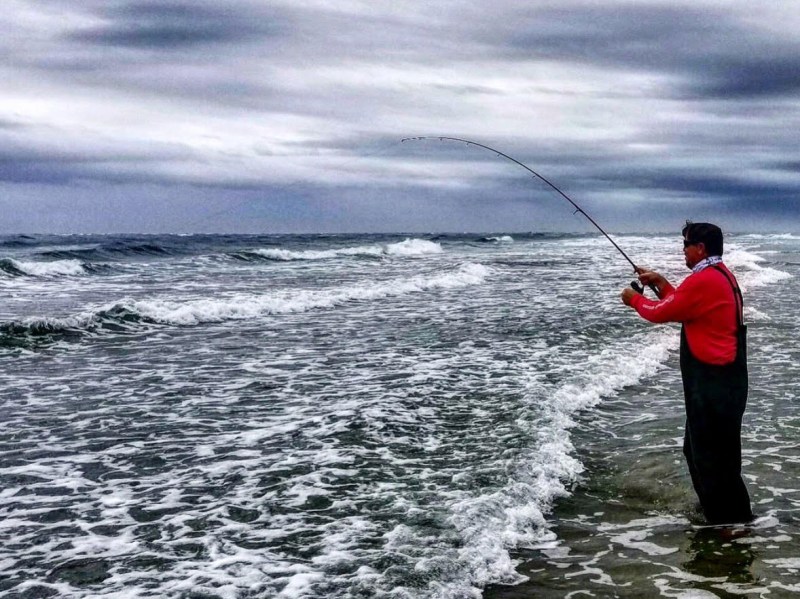
This style of surf fishing does not require heavy tackle capable of chunking 4 ounces of weight a long distance. My standard setup is a 7-foot, 6-inch medium-light rod paired with a 3000-class reel spooled with 15- to 20-pound braid. A lot of the action happens right at your feet, providing fun opportunities to sight-cast to fish with artificial lures and relatively light tackle. You should not need much more than a couple of rods, sand spikes and a small bag or bucket to keep pliers and a few chosen lures close by.
On many beaches, you can spot the outer sandbars thanks to the crashing waves. The breaks that form in those sandbars are often the most productive zones. Anglers are often surprised to see just how close deeper water may push to shore.
Make sure to wear polarized sunglasses, as you can often see fish in the backs of the waves. Some days you have them swarming around your feet. Big speckled trout and huge schools of red drum hold in these sloughs, feeding aggressively in cold water as long as there is bait around.
Best Lures for Surf Fishing
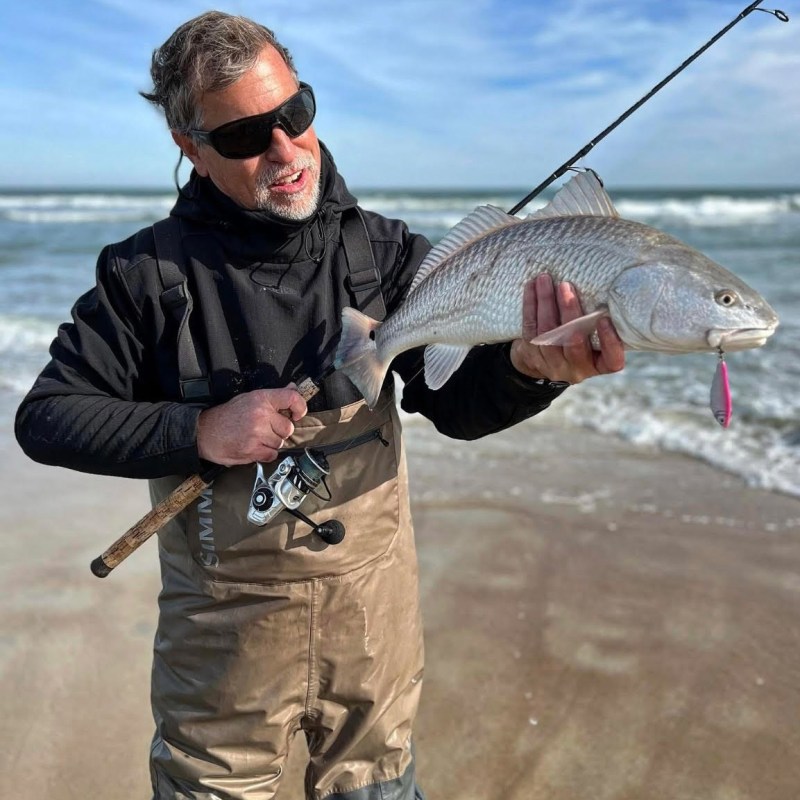
We often see mullet and small menhaden or shad seeking out shelter and comfort in the same area, so soft plastics work well. Many fishermen utilize a tandem rig as a search bait, with curly tail grubs on jig heads just heavy enough to keep the lure bouncing on the bottom. Hard baits like MirrOlures and Rapala SubWalks also work well, as they allow you to fish at different depths easily with a slow suspending presentation. When the tide drops out and it’s necessary to make longer casts, metal jigs like a Clarkspoon Shad Jig are the ticket for reaching the schools holding on the outer bar.
If you plan with a minimalistic approach with safety in mind, the coldest days at the beginning of the year may be some of the most memorable days you will see. There is certainly something rewarding about catching quality fish from shore during the middle of winter. With some solid preparation, one can safely enjoy great light-tackle action in a truly special place where an old, checkered lighthouse still lights the path, wild horses roam free and fishing is good year-round.
Local Guides to the Action
- Capt. Noah Lynk: Noah’s Ark Charters
- Capt. Joe Tunstall: Carolina Traditions Guide Company
- Capt. Jake Geary: Reely Living Charters