Close

Login

Logging In
Invalid username or password.
Incorrect Login. Please try again.

not a member?

Signing up could earn you gear and it helps to keep offensive content off of our site.

olander blog header new2
Articles, posts and more...
Posted on Oct 11, 2012 in Top Shots
Hang 'Em High?
by Doug Olander
dead marliln 0
newsport.com.au
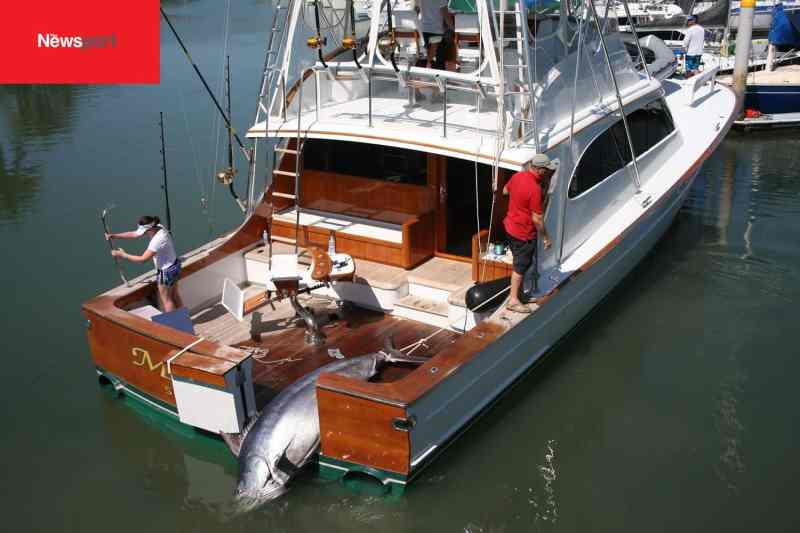
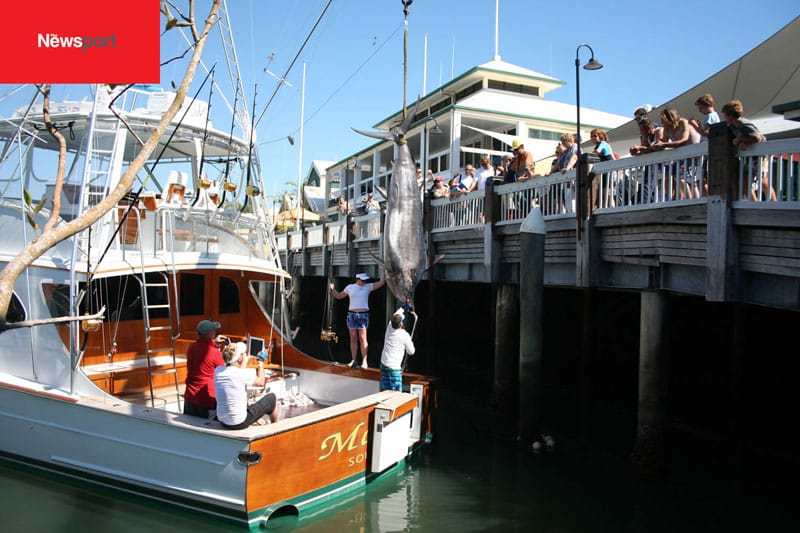
The sight greeting visitors at a Port Douglas, Australia, marina.

“How sad to watch one of the most beautiful creatures on our earth be subjected to such treatment.”

“Stop killing the oceans for sport and greed.”

“I am glad my children didn’t have to see the appalling sight of such a magnificent creature being killed in the name of sport.”

Those are but a small and very typical sampling of more than 20 comments — as I write this — generated by a report of a near-grander black marlin brought in to be weighed at a Port Douglas, Australia, marina. Most comments came from Australia but some from other countries, including the United States.

Wherever the comments came from, they were nearly unanimous in expressing the same sentiment: The sight of a huge and very dead black marlin hanging from a gantry is shameful.

Those who brought the fish into port maintained that it had died on the line, 300-plus feet down. Some of the comments expressed skepticism about that, but of course we know that can and does happen — sometimes.

Whether or not you accept that explanation, and whether or not you agree that it’s shameful to bring the fish in (with no apparent plan to eat it, by the way), I don’t think you can reasonably disagree with this statement:

Stringing up a large, dead marlin at a marina is simply bad for our sport.

It’s a point I’ve made before and, as long as some anglers/skippers keep doing this, will undoubtedly make again.

If you doubt that this is actually bad for recreational fishing, click on “report” above and read the comments for yourself. It’s obvious that many come from non-anglers; rather than writing off such comments because they came from individuals who don’t fish, that status should make their reaction all the more important.

That is, these reactions come from the general public. You know: the same general public whose support we’ll need in ongoing struggles for angler access and limitations on marine-protected-area closures, for fair allocation of resources and so on.

Provoking the sort of reaction you see here by offloading dead marlin at a marina is obviously not the way to get support.

It is, rather, a good way to alienate the larger population from our sport. It is an ideal way to play into the hands of those who want to spread the word that recreational fishing is barbaric and needlessly destructive.

Fortunately, very few billfish anglers have any interest in stringing up dead billfish for photos or a weight. Unfortunately, it takes only a few to taint the rest of us good apples.

My thought is simply this: Don’t bring dead marlin or sailfish back to a marina. Even if one dies on the line, it doesn’t have to be hung up for the world to see. I think that’s a message worth stating and worth passing on.


newsport.com.au
 

Comments (9) Post A Comment

Indeed this season on Australia's east coast is looking like a bumper marlin season, probably due to two very good wet seasons in the past couple of years bringing nutrients into our offshore areas. This kick starts the food chain and allows much greater survival of +1 and +2 year old billfish. Because of this, anglers targeting billfish this season will need to have a contingency plan in place whenever they go to sea with respect to what they will do with the billfish they catch. Even though the vast majority of recreational angler interaction with billfish these days is catch (tag) and release, in Australia representatives from PEW have certainly tried to use photos of strung up marlin at weighbridges to lobby government officials in Canberra (our nations capital) in an attempt to justify their calls for closure of the entire coral sea to all fishing as part of their global ocean legacy campaign. Personally, I would suggest that today, in most circumstances, billfish should only be taken if they are fatally injured and going to be eaten by its captors, and/or the fish is going to be used for scientific research. Most of what is known by science about billfish has only been obtained through scientists' co-operation with recreational anglers, so recreational anglers tagging or taking fish for research is a very valid use of this renewable resource. Even if an exceptional fish is taken for a record attempt, the game fishing clubs involved with weighins are often collaborating with science providers who are (or should be) alerted to the opportunity to collect samples as a matter of course. Nevertheless, even catch and release anglers should have contingencies in place to cater for those rare instances where a fish may die on the line. In these instances, small fish are very good eating, but fish larger than a few hundred pounds can have very high mercury levels (due to deposition of atmospheric mercury into the marine food chain by burning of fossil fuels like coal), making them unsafe to eat in any great quantity (and you will have a large quantity of flesh to eat in a 300 pound marlin...). So, for the reasons Doug describes, anglers need to think very carefully if targeting large billfish regarding what they will do if a fish dies on the line, including checking to make sure their clubs have all appropriate contingencies covered before they go.

0 Good Comment?

At the end of the day, Dan, we may have some differemces on best ways to tackle the problem, but we certainly agree that as anglers we all face relentless, international forces that would hamstring our pursuit of the sport. That agreement is critical and, as you say, it’s to our mutual benefit that we can discuss such things in a reasoned and productive way. We have some supposedly pro-fishing voices on this side of the pond whose shrill invective and name-calling within our ranks is the sort of self-destructive response that the real enemies of fishing must love to see. Glad no one in this thread has felt the need to resort to that sort of rhetoric.

+2 Good Comment?

Doug I completely understand where you are coming from, I once held the same opinion myself, but people like Imogen will never be happy, they will always want more, the structure of their empire needs to feed on us and they will continue to feed on us until we are no more.

Unfortunately this type of reaction is no longer restricted to the our iconic species like the billfish, I can show numerous examples of a family going out and catching a legal bag of fish posting the picture on the net and being crucified by fellow anglers, on our bread and butter fish, in a climate where over the last few years fishing has been constantly improving. I do agree with you that this perception from the general public is a huge problem, but I feel we need to start doing things to change this perception ratter then just go along with it.

We live in a time when we have been disengaged from the reality of where our food comes from, and fishing has been one of the soft targets as a result of this, recently when British school kids where asked where a tomato comes from, most kids answer “the shop”. Almost every single fishing show that goes to air here has that classic shot when they say we will keep this one for dinner and that’s where they cut the shot, killing the fish is nothing to be ashamed about its all part of fishing, as information for anglers goes humanly and effectively killing the fish is as important as what bait to use, yet we have been conditioned to now think that this is no longer appropriate to show on TV.

But my greatest concern is that this anti-fishing campaign is going to distract from what we should be doing to protect not only our sport, hobby, way of life or whatever it happens to be, but the species that we all enjoy targeting. The example of the Black Marine was used by the advocates for the Coral sea Marine Parks to protect their spawning ground from fishing which everyone agrees is only a very small activity in the area, and that the area is in fantastic shape, yet the nursery area of the Black Marlin which happens to be in the lagoons of the Great Barrier reef marine park is being decimated, this same area after the recent heavy rains saw a fish kill where numerous fish species, dugongs and sea turtles where washing up dead, so while all the attention has been placed on removing the few people fishing from a very healthy area, little if any action has been taken to do something about this vulnerable nursery area, and that’s probably my point more than anything that by going along with this agenda that has been set for us by these groups, I believe we become part of the problem, we are way behind in this game.

We are probably a little different in here in Australia in my life time I have witnessed hunting and shooting being vilified so much that we recently had two Olympic athletes reprimanded and sent straight home after their events in London for simply posting a picture of themselves holding firearms in a legitimate legal gun shop in America during a training camp, even hunting feral animals is frowned upon here, and seen as something barbaric. We have a situation here in a marine sanctuary (no fishing zone) where the very large numbers of New Zealand fur seals have decimated the local penguin population and our unique giant cuttlefish, yet any talk about doing something to control the these seal numbers is quickly shut down, instead they have increased the no fishing area.
If we let this status quo continue the next campaign we see will be to stop catch and release fishing, they will claim that is cruel and unnecessarily inflicting injury and pain to fish just for sport, just for our enjoyment! How do we counter that PR campaign?

Sorry for high jacking your article thank you for your time and I think is great to be able to have a discussion on issues like this openly and sensibly, if anyone is interested in finding out more about what’s happening down under with some of these issues have a look at the We Fish blog.

http://wefishaustralia.blogspot.com.au/

cheers

0 Good Comment?

For the most part, Dan, we agree. I know well of your ongoing battles Down Under with Pew to keep the entire Coral Sea from being closed; SPORT FISHING has been in the forefront among U.S. magazines to report on that (and decry it). In fact, I’ve also pointed out in editorials that once the Coral Sea “falls,” Pew could conceivably go after the Gulf of Mexico next (though Pew denies this). Where we differ is that you feel we can’t let the “antis” dictate our actions, and any reluctance to proudly display dead billfish is just that. On the other hand, I believe that if we foster and promote a general feeling in the public -- and I mean the vast population of general public, not those “fish huggers” with a dog in this hunt -- that the antis are right and fishermen are rapers of nature, then we’re playing right into the hands of the imogen zethovens of the world who want to shut us out. That general population knows little about how anglers are true conservationists and, sadly, a picture IS worth a thousand words. Men stringing up a huge marlin to get a photo -- when we like it or not -- does send a message. So you may label a call to avoid hanging dead billfish in crowded marinas as restricting ourselves, but I call it simply being smart (and in my mind very proactive) in our ongoing battle to maintain our rights to fish. Let’s not give Imogen more ammunition to rile up the public who can certainly make the difference in our future opportunities to fish or not.

+1 Good Comment?

As a recreational angler from Australia, who is at the fore front of the battle to protect what we as anglers do, I have to disagree with you Doug.

There has been a relentless ant-fishing campaign over the last 20 years and its time we as anglers stop pandering to them in an futile attempt to appease them, they will never be happy until they are successful in totally restricting what we do. This anti-fishing campaign has been brutal, not only greatly influencing the general public but a great deal of angler as well, with their propaganda and lies.

Not only is recreational fishing if managed properly sustainable, has fantastic health benefits to those participating, has been responsible in providing vital information on species like the Marlin, fundamental in understanding and ensuring the survival of these species, but as a food source few other food sources would be able to compete with recreational fishing, on sustainability, lack of environmental impact and the carbon and water footprint.
Here in Australia we are just about to impose marine parks on our Coral Sea, the Black Marlin area. While the government and all the advocates agree that recreational fishing in the area is only a very small activity, and that the area is in pristine condition. They still chose to restrict us, while totally ignoring the real threats that the area faces today. We have had 300 marine scientist sign a document that included the request to not encourage catch and release fishing in the area, for marine scientist to be against catch and release fishing, a tool vital in their work, shows that this is a political statement not a scientific one, but more importantly shows what we are up against. The great danger is not that they will restrict us but that this anti-fishing campaign has distracted not only the advocates but the public at large from the real threats our marine environment faces.

Yes the opinion of the general non fishing public is important, but we must stop being reactive and start be proactive, if we want our kids and future generations to enjoy what we enjoy, otherwise we will compromise ourselves into a position were fishing is seen as an activity of the past. We should be proud of what we do and not ashamed of it, and in this ever increasing online world, full of people that require no more than 3 sec to hit the like button in an attempt to somehow appease there conscious, armed with not even the basic information on the issue, we are up against it, but if we start compromising for their benefit then it’s already all over.

We should not be so keen to unnecessarily restrict what we do our selves, others will do that for us soon enough!

0 Good Comment?

Some excellent points made in the three posts here, and I appreciate the chance to elaborate a bit. I agree that when a marlin truly cannot be resuscitated, scientists should be provided with tissue samples or the chance to take them. Otherwise, I would personally like to see all marlin released; I believe they’re worth far more alive than as food, and there are plenty of other, smaller, fast-growing pelagics that most anglers agree taste better. Yes, I’d like to see all tournaments adopt a release format. (There will always be those marlin beyond saving to provide scientists with tissue samples.) Of course if a marlin is beyond reviving and a boat does elect to bring it back to the dock for whatever reason, I’m hardly suggesting it somehow be hidden from view, but I do believe hanging it up for bragging-rights photos is unnecessary and counterproductive. As the comments I cited indicate, the great majority of non-angling public who see this find it offensive. Our sport is increasingly under siege, and if we alienate the non-angling public (that would see and remember a dead fish like this but never see the many more released alive), it can only hurt us.  

+1 Good Comment?

In North Carolina, we host the Big Rock Blue Marlin tournament every June, where tournament leading fish are brought to the dock. After being weighed at the dock these fish are taken to a local university's marine research facility. Organs and otoliths from these fish are harvested, frozen, and shipped to researchers around the world, providing valuable information for the conservation of these species. Before you demonize those who bring these fish to the dock, consider the positives that come from harvested fish. While it may seem counterintuitive to harvest fish we want to conserve, some individuals must be taken in order to broaden our understanding.

+2 Good Comment?

Doug, while i do not condone the wanton killing of billfish, i must respectfully disagree with some of the points you are making above. First, if it is legal to do so, i don't see anything wrong with a fisherman taking a billfish as long as the fish is going to be eaten and not just strung up for pictures. According to the report you have linked above in your editorial, numbers of black marlin are on the rise once again in Australian waters, thanks no doubt to the hard work of scientists, fishermen, and conservationists intent on rebuilding and preserving these fish stocks. If that is truly the case, then i believe modern fisheries science has done a fine job of proving that the impact we have as recreational anglers on depleting fish stocks is minimal at best.

This particular fish was reported to have died during the fight, so I struggle with your suggestion that the fish should have been cut away and not taken in to the marina, where i'm assuming it was later consumed. I understand your argument and it's pertinence to the importance of returning the fish to it's natural environment and allowing nature to absorb it's nutrients, but humans, and particularly fishermen, are part of the circle of life too and should therefore be allowed to enjoy the reward at the conclusion of the hunt!

Again, I certainly don't condone targeting billfish for personal consumption with any degree of great regularity, particularly when you consider all of the other prolific and tasty species swimming out there, but i do support retention of billfish where it is legal to do so. There will always be naysayers out there who protest the killing of such animals, just as there are people out there who oppose the killing of elk, deer, chickens, pigs, or cows. To condemn fellow anglers for acting within their rights, especially when you consider that marlin stocks are allegedly on the rise in Australian waters, is unfair in my humble opinion. It could very easily be argued that the excitement a big fish brought to the scales creates new interest in our industry and sport, perhaps in a time when it is required the most.

Yours Truly,

Capt Josh Temple

0 Good Comment?

As a fisheries researcher, I would ask anglers to bring dead animals back not to be hung up and displayed as trophies, but for the benefit of scientific research. As a whole, fisheries science is extremely lacking in biological samples and accurate information on most species, especially those highly migratory species such as billfish. Anglers would do the world a great benefit by contacting the nearest marine science facility or local authorities to inquire about providing samples in the unfortunate event that animals like this are brought up dead.

+2 Good Comment?
post a comment
  • Anonymous comments will appear after it has been approved by a moderator.
  • Login or Register Now for your comment to appear immediately.
Please note: your comment will appear after it has been approved by a moderator. If you login or register your comment will appear immediately
The content of this field is kept private and will not be shown publicly.
All submitted comments are subject to the license terms set forth in our Privacy Policy and Terms of Use