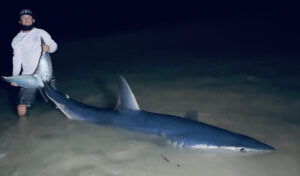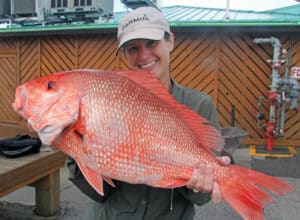
Cape Hatteras National Seashore Recreation Area (CHNSRA) in North Carolina is one of the premier surf fishing locations in the United States, attracting anglers from all across the country for once-in-a-lifetime angling opportunities. Off-road vehicle (ORV) access to CHNSRA is essential for surf fishing from the beaches, as well as many other recreational activities. However on December 20, 2010, the National Park Service (NPS) announced its decision to approve an ORV management plan that closes extensive areas of the seashore to the public and severely limits ORV access, far outweighing what is needed to address resource protection. The final ORV plan, which went into effect on February 15, 2012, poses serious issues for the local economy, which is largely dependent upon tourism and recreation.
Background
Executive Order 11644 of 1972 requires federal agencies permitting ORV use on agency lands to make regulations for such use. Due to this order, the NPS developed an ORV Management Plan for the CHNSRA. The NPS maintains that ORVs must be regulated in a manner that appropriately addresses resource protection—including threatened and endangered species—and potential conflicts among the various CHNSRA users. The NPS adopted a new management plan that went into effect on February 15, 2012 and closes extensive areas of the seashore to public access beyond what is needed for reasonable resource conservation.
Since ORVs are necessary to access many sportfishing areas of the CHNSRA, the concern is that the ORV Plan has given little consideration to economic impacts to any segment of the sportfishing industry and the communities that depend on sportfishing. The implementation of the ORV Plan poses serious questions about the future of recreational fishing in the CHNSRA and presents a serious challenge to sportfishing.
**Legislation to Restore Access **
Legislation to reinstate the Park Service’s Interim Protected Species Management Strategy governing ORV and pedestrian access, which was subject to a public process and withstood environmental review was introduced into both the House and Senate eariler this year. The legislation will overturn the newly adopted ORV management plan, and a similarly onerous 2008 Consent Decree that has guided park management for the last three years. H.R. 4094 and S. 2372 will restore reasonable ORV and pedestrian access to Cape Hatteras National Seashore while also appropriately conserving resident wildlife.
On June 19, 2012, the Preserving Access to Cape Hatteras National Seashore Recreational Area Act passed the U.S. House of Representatives as part of a package of public lands bills. Attention is now turned to the U.S. Senate. Click here to send a message to your Senators in support of S. 2372, which will help bring recreation back to the Cape Hatteras National Seashore Recreation Area.
Click the link below to log in and send your message:
http://www.votervoice.net/groups/COASTAL/advocacy/?IssueID=29307&AdminPreview=True&SiteID=-1
–– Source: CCA North Carolina